Netanyahu calls Iran threat 'immediate'; Eisenkot sees no need to act before a government; Liberman warns
As Likud and Yashar negotiate, Netanyahu says critics play down Iran for political reasons, Eisenkot points to 440 kg of enriched uranium, and Liberman says a solo strike driven by politics would be a 'manifestly illegal order.'
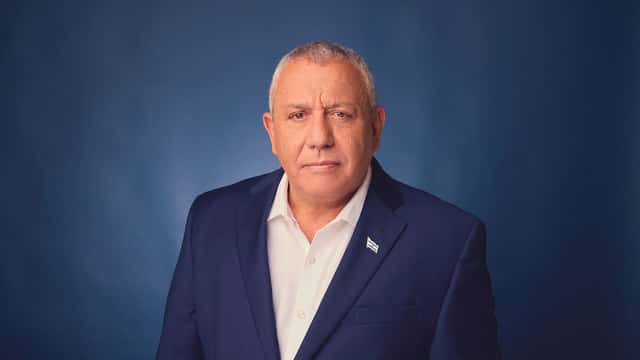
Caretaker Prime Minister Benjamin Netanyahu said on Monday that Iran's threats against Israel are real and "immediate," and that people who play them down do so "for political reasons." His remarks came hours after Gadi Eisenkot, the Yashar leader who holds the mandate to form Israel's next government, told his faction he saw no Iranian threat that required action before a new government is formed.
The exchange, at faction meetings in the Knesset on Nov. 23, brought a debate about a possible new strike on Iran into the middle of coalition talks between Eisenkot's Yashar and Netanyahu's Likud. Avigdor Liberman, the Yisrael Beytenu leader who chairs the Knesset's Foreign Affairs and Defense Committee, went further. He warned that a solo Israeli strike without U.S. participation, if driven by politics, should be treated as "a manifestly illegal order," The Jerusalem Post reported.
The debate follows reports by Al-Monitor columnist Ben Caspit, citing Western diplomatic sources and Israeli officials, that Netanyahu has been pressing Washington for a short and intense air campaign. Netanyahu has not publicly confirmed any such proposal. Iran's government rejects U.S. claims about its weapons programs and says it would answer any attack.
What Netanyahu said#
Netanyahu spoke in a press statement before the Likud faction meeting. "Those who downplay the threats against us do so for political reasons," he said, according to The Jerusalem Post. He tied the threat to his call for a broad government. "An overwhelming majority of the country's citizens who see Israel as the nation-state of the Jewish people yearn for a unity government," he said. "This yearning stems from a simple understanding that our ability to secure our future in the face of the great threats surrounding us depends on our unity."
He said each side would need to be "flexible," and named the draft of ultra-Orthodox men as an example. The Haredi parties, he said, "must be part of the unity government." He also said there was "a desire to reach agreements that will put an end to the division among us." "Where there is a will, there is a way," he said. "And we, and I, have that genuine will."
Netanyahu again ruled out a government that includes the Arab parties Ra'am and the Joint List. "We cannot agree to a government in which supporters of terrorism are partners and hold power," he said.
What Eisenkot and Liberman said#
Eisenkot addressed Iran at his own faction meeting. "Regarding Iran, I do not currently see a direct and immediate threat to the State of Israel that requires action before the formation of a government," he said, according to The Jerusalem Post. "The most serious threat from Iran is those 440 kilograms of enriched uranium that have still not been destroyed or removed. We need to focus on them."
Eisenkot is a former chief of staff of the Israel Defense Forces. He received the mandate from President Isaac Herzog on Nov. 8. That gives him 28 days to form a government, with an option of a 14-day extension. Earlier on Monday he said Yashar was "entering the negotiations in good faith." He said there would be "no compromise on establishing a state commission of inquiry, universal service, changing the security reality, and protecting democracy."
Liberman spoke first at a classified session of the defense committee's intelligence subcommittee. IDF Chief of Staff Eyal Zamir and Knesset Speaker Matan Kahana attended, the Post reported. He then addressed the issue at a faction meeting closed to the media.
"Recently, reports have appeared in the American and Israeli media regarding chemical weapons that Iran is trying to obtain," Liberman said. "If this is true, it is a serious threat, but not one that necessitates or justifies immediate independent action without American participation." He added: "If such a decision is made by the cabinet, it will be a decision stemming solely from political and personal interests, and therefore such a decision must be treated as a manifestly illegal order."
"The concern is that Netanyahu may see an attack on Iran as his last political way out," Liberman said. Under a standard set by Israeli courts, a "manifestly illegal order" is one that soldiers must refuse. Liberman did not say what evidence led to his concern, and the subcommittee session was closed. The reports reviewed for this article did not include a Likud response to his remarks.
The Knesset arithmetic behind the talks#
The Oct. 27 election left Netanyahu's bloc without a majority in the 120-seat Knesset. Final results gave his bloc 53 seats and Eisenkot's bloc 48. Arab parties won the remaining 19.
Neither bloc can reach 61 seats alone. Eisenkot can reach a majority with Arab parties or with defectors from Netanyahu's camp. Netanyahu argues for a unity government of the two largest blocs.
Source: The Jerusalem Post, Nov. 23, 2026
Show the numbers
| Bloc | Seats |
|---|---|
| Netanyahu bloc | 53 |
| Eisenkot bloc | 48 |
| Arab parties | 19 |
Arab votes have already helped Eisenkot's bloc on procedure. They backed it to win control of the Knesset's Arrangements Committee. Inside the bloc, leaders disagree about where to go next.
Yair Golan of the Democrats wants a government with the Arab parties. "We have 67 seats to replace Netanyahu," he said on Monday, according to The Jerusalem Post. "This is a realistic alternative that must be seriously examined. We have an excellent partnership with [Ra'am party leader] Mansour Abbas." He also linked the coalition to Iran. "Netanyahu is doing everything in his power to drag Israel into a war with Iran and ignite the West Bank," Golan said. "We cannot leave the steering wheel in his hands."
Liberman and Naftali Bennett of B'Yachad have drawn a red line against a government with the Arab parties, the Post reported. Bennett has backed a unity government with Likud on the condition that Eisenkot leads it first. "If we discover that Netanyahu is seeking to waste time rather than pursue unity under Eisenkot's leadership first, he will bear the consequences," Bennett said. Golan warned Bennett that "whoever keeps Netanyahu in power endangers the country's security." 567 Politics has covered the bloc's earlier split over a unity government.
The talks so far#
Negotiating teams from Yashar and Likud met for about four hours on Sunday, the second round of talks, the Post reported. Another meeting was set for Monday evening. Yashar has also filed a bill to set up a state commission of inquiry into the Oct. 7, 2023, Hamas-led attack. Netanyahu's government repeatedly blocked such a commission. The bill is reportedly expected to come to a preliminary vote on Wednesday. With Arab party votes, the bloc could have a majority to pass it, the Post reported. 567 Politics has reported on the bloc's inquiry bill and other early legislation.
- Election leaves Netanyahu's bloc without a majority
- Herzog gives Eisenkot the mandate, with 28 days and an optional 14-day extension
- Yashar and Likud teams hold a second round of talks, about four hours
- Netanyahu, Eisenkot and Liberman clash over Iran; a third round of talks is set for the evening
- Preliminary vote on the state inquiry bill reportedly expected
- Eisenkot's initial 28 days end, unless extended
Source: The Jerusalem Post
The Al-Monitor reports#
On Nov. 20, Al-Monitor reported that Netanyahu was pushing for "an immediate, short and hard-hitting strike against Iran." It cited Western diplomatic sources. The report said concerns were mounting in Israel over Tehran's intentions to develop chemical and biological weapons and to fortify the Pickaxe Mountain site. The sources acknowledged that political calculations in both countries were significant factors.
According to the Post's summary of the report, Israel's latest proposal calls for an intensive bombing campaign of four to seven days rather than an all-out war. A senior Israeli official told Al-Monitor that Israel was trying to convince the Trump administration that it had a window to act before Democrats take control of Congress in January. The same official said Americans were suspicious of Netanyahu's urgency.
"There are things that must be done to erode Iran's capabilities and prevent it from making its facilities immune, and this can be achieved in a relatively short time and at low cost," the official said. The official said Netanyahu's envoys, new Mossad chief Roman Gofman and former strategic affairs minister Ron Dermer, had met skepticism about the prime minister's motives. A senior Israeli political source put it this way: "Suddenly there is an unusual sense of urgency, and suddenly we absolutely must strike right now."
An earlier Al-Monitor report, on Nov. 17, cited Israeli security sources. It said Netanyahu fears Iran will move its nuclear program so deep underground that even the most powerful bombs cannot reach it. Israel's security chiefs share that concern but "see no immediate need for action," the report said. 567 Politics earlier reported on Zamir's reported view of the timing. These accounts rely on unnamed sources and could not be independently confirmed.
A former Mossad chief's view#
Also on Monday, former Mossad director David Barnea said Israel should launch a third war against Iran when conditions allow. He said the aim would be to stop Iran from getting nuclear weapons and to topple the government. He spoke at the ELNET conference in Jerusalem, The Jerusalem Post reported.
"We need to act with speed and determination in order to bring about the fall of this regime," Barnea said. "If this means going to war again, then that is what we need to do. For whoever asks: when is the right time to act? My answer is at the moment when it is possible." He said no diplomatic deal with Iran would ever hold. He also said a nuclear-armed Iran would threaten Europe as well: "today against Israel, tomorrow against Europe."
- CNN, citing U.S. officials, reports Iranian contingency plans for a chemical or "dirty bomb" attack
- Al-Monitor reports Israeli security chiefs see no immediate need for strikes
- Iran's Foreign Ministry rejects the chemical and biological weapons claims
- Al-Monitor reports Netanyahu is pushing for a short, hard-hitting strike
- Iran's deputy foreign minister says "the window of diplomacy is still open"
- Netanyahu, Eisenkot, Liberman and Barnea speak; the Guards chief warns of a "decisive" response
Source: Al-Monitor, Iran International, Iran International, The Jerusalem Post
Iran's response#
Iran denies the weapons claims. On Nov. 19, Foreign Ministry spokesman Esmaeil Baghaei rejected U.S. President Donald Trump's claims that Tehran was exploring chemical and biological weapons. He compared them to the claims used to justify the 2003 invasion of Iraq. "The allegations keep changing, but the underlying narrative remains disturbingly familiar," he wrote on X, Iran International reported.
On Monday, Revolutionary Guards commander Ahmad Vahidi warned the United States and Israel that the Guards would respond to any threat or attack wherever it came from, Iran International reported. He said the response would be "decisive" and would make the other side regret its actions. On Sunday, Deputy Foreign Minister Kazem Gharibabadi said talks with the United States were continuing and "the window of diplomacy is still open." He said Iran was ready for any scenario. Parliament Speaker Mohammad Bagher Ghalibaf said the state of "neither war nor peace" could not go on.
The regional backdrop is tense. Seven tankers have been hit in the Strait of Hormuz since Nov. 16, the Joint Maritime Information Centre said, according to the same report. Britain and several Gulf Arab states have privately urged Washington not to launch new strikes, Bloomberg reported. 567 Politics has also covered U.S.-Iran contacts and Israeli strike preparations.
What comes next#
Liberman's warning was aimed at a possible cabinet decision. Netanyahu leads the caretaker cabinet until a new government is sworn in. The Likud–Yashar talks were set to continue on Monday evening, and the inquiry bill is due for a preliminary vote on Wednesday. Eisenkot's first deadline falls in early December.
Eisenkot's camp has said it is willing to talk about unity, but it has not agreed to serve under Netanyahu. Netanyahu has not said whether he would accept a government led first by Eisenkot. Whether the Iran debate pushes the two sides together or further apart is likely to be tested at the next round of talks.
Differing perspectives
Does Iran pose a threat that requires Israeli action before a new government is formed?
Each position is summarized as its supporters make it, with equal weight and in alphabetical order. A summary is not an endorsement; the evidence for each is weighed in the story above.
Iran will answer any attack, while diplomacy stays open
Who holds it: Iranian officials, including Guards commander Ahmad Vahidi, Deputy Foreign Minister Kazem Gharibabadi and Speaker Mohammad Bagher Ghalibaf
Vahidi warns that the Revolutionary Guards will give a decisive response to any threat or attack, wherever it comes from, and says the United States and Israel have been discouraged from acting. Gharibabadi says talks with Washington are continuing and the window of diplomacy is still open, but that Iran is ready for any scenario. Parliament Speaker Mohammad Bagher Ghalibaf says the state of neither war nor peace cannot go on and that removing the threat requires lasting deterrence.
In their words: Iran International ↗
No immediate threat; a solo strike for political reasons would be illegal
Who holds it: Gadi Eisenkot (Yashar) and Avigdor Liberman (Yisrael Beytenu)
Eisenkot says he sees no direct and immediate Iranian threat that requires action before a government is formed, and that the focus should be the 440 kilograms of enriched uranium not yet destroyed or removed. Liberman says reported chemical weapons efforts, if true, are serious but do not justify independent action without the United States. He argues such a cabinet decision would stem from political and personal interests and must be treated as a manifestly illegal order.
In their words: The Jerusalem Post ↗
Strike again when conditions allow, with the aim of ending the regime
Who holds it: David Barnea, former Mossad director
Barnea argues that no diplomatic deal with Iran will ever hold, because Tehran has kept a military-focused nuclear program for decades. He says Israel must act with speed and determination to bring about the fall of the regime, even if that means another war, and that the right time is when all the factors make it possible. He warns the threat is against Israel today and against Europe tomorrow.
In their words: The Jerusalem Post ↗
Yes: the threat is real and immediate, and unity is needed to meet it
Who holds it: Caretaker Prime Minister Benjamin Netanyahu (Likud)
Netanyahu says Iran's threats against Israel are real and immediate, and that those who play them down do so for political reasons. He argues that Israel's ability to secure its future against the threats around it depends on unity, which is why most citizens want a broad national government. He says both sides must be flexible, including on the Haredi draft, and that the Haredi parties must be part of that government.
In their words: The Jerusalem Post ↗
Cite this article
567 Politics staff. “Netanyahu calls Iran threat 'immediate'; Eisenkot sees no need to act before a government; Liberman warns.” 567politics. Published 2026-11-23. https://www.567politics.com/news/israel-netanyahu-iran-threat-immediate-eisenkot-no-action-before-government-liberman-manifestly-illegal-november-2026
Wikipedia citation
{{cite news |title=Netanyahu calls Iran threat 'immediate'; Eisenkot sees no need to act before a government; Liberman warns |url=https://www.567politics.com/news/israel-netanyahu-iran-threat-immediate-eisenkot-no-action-before-government-liberman-manifestly-illegal-november-2026 |work=567politics |author=567 Politics staff |date=2026-11-23 |language=en}}CSL-JSON for reference managers
{
  "id": "https://www.567politics.com/news/israel-netanyahu-iran-threat-immediate-eisenkot-no-action-before-government-liberman-manifestly-illegal-november-2026",
  "type": "article-newspaper",
  "title": "Netanyahu calls Iran threat 'immediate'; Eisenkot sees no need to act before a government; Liberman warns",
  "URL": "https://www.567politics.com/news/israel-netanyahu-iran-threat-immediate-eisenkot-no-action-before-government-liberman-manifestly-illegal-november-2026",
  "container-title": "567politics",
  "language": "en",
  "author": [
    {
      "literal": "567 Politics staff"
    }
  ],
  "issued": {
    "date-parts": [
      [
        2026,
        11,
        23
      ]
    ]
  }
}Citations identify this article and its publication date. Assess the reporting and its linked sources before using it as evidence.
Read this article as Markdown or JSON. Cite the original page and retain its sources, dates and qualifications.
Embed this article summary
Paste this HTML into your page. The summary stays linked to the full story and updates with it. No account required.
<iframe src="https://www.567politics.com/embed/news/israel-netanyahu-iran-threat-immediate-eisenkot-no-action-before-government-liberman-manifestly-illegal-november-2026?theme=auto" title="Netanyahu calls Iran threat 'immediate'; Eisenkot sees no need to act before a government; Liberman warns by 567politics" width="100%" height="440" style="border:0;max-width:100%" loading="lazy"></iframe>
<p style="font-size:14px">Netanyahu calls Iran threat 'immediate'; Eisenkot sees no need to act before a government; Liberman warns by <a href="https://www.567politics.com/news/israel-netanyahu-iran-threat-immediate-eisenkot-no-action-before-government-liberman-manifestly-illegal-november-2026" rel="nofollow">567politics</a></p>
<script async src="https://www.567politics.com/embed.js"></script>
READ BEYOND 567POLITICS
Alternate sources & perspectives
Independent coverage and primary evidence to help you compare arguments. A link is not an endorsement; perspective labels describe the linked material.
- primary evidence
Netanyahu: Iranian threats 'are real,' those downplaying them do so for political reasons ↗
The Jerusalem Post
Netanyahu's statement before the Likud faction meeting, plus Eisenkot's negotiating red lines.
- primary evidence
Liberman warns Netanyahu against independent Iran strike, political motive could deem it 'illegal' ↗
The Jerusalem Post
Liberman's and Eisenkot's remarks on Iran, with a summary of Al-Monitor's report.
- right argument
Israel should launch third Iran war when right time comes to topple regime, ex-Mossad chief says ↗
The Jerusalem Post
David Barnea at the ELNET Jerusalem Summit.
- left argument
Golan warns Bennett against unity gov't with Netanyahu, says it 'endangers Israel' ↗
The Jerusalem Post
Democrats leader Yair Golan on Iran, the Arab parties and a 67-seat alternative; Bennett's conditions.
- independent analysis
Israel seeks swift air campaign against Iran as Trump weighs options ↗
Al-Monitor
Ben Caspit, Nov. 20, citing Western diplomatic sources and Israeli officials.
- independent analysis
Netanyahu, Israeli military chiefs at odds over timing, urgency of Iran strikes ↗
Al-Monitor
Ben Caspit, Nov. 17, citing Israeli security sources.
- other perspective
Iran's Guards chief warns US and Israel of response wherever threats originate ↗
Iran International
Vahidi, Gharibabadi and Ghalibaf statements; tanker incidents in the Strait of Hormuz.
- other perspective
Iran rejects Trump's claims about chemical and biological weapons ↗
Iran International
Foreign Ministry spokesman Esmaeil Baghaei's rejection of the weapons claims.
Reviewed 2026-11-23. Hand-picked sources opened on Nov. 23, 2026: Israeli party leaders in their own words via The Jerusalem Post, Al-Monitor's reporting on Israeli strike proposals (paywalled beyond the opening), and Iranian officials' statements as reported by Iran International.