Is Putin Playing Jared Kushner? What the Record Shows, and What It Doesn't
Five sessions with Putin have not moved Russia's main demand. Critics say Trump's envoy is being used; defenders say this is how wars end.
No public evidence proves that Vladimir Putin is manipulating Jared Kushner, and none rules it out. The charge is about what happens inside closed meetings and inside one negotiator's judgment. Outsiders can see neither.
The record is easier to test. Kushner, President Donald Trump's son-in-law and envoy, has sat with Putin five times in a year. Russia has not moved off its main territorial demand. This week Kushner called the Russian leader a "grandmaster of politics" in a podcast interview, The Hill reported.
Critics read those facts as proof that an amateur is being flattered and used. Defenders read them as the normal cost of talking to an adversary to end a war. This article sets out both readings, the evidence behind each, and the outcomes that would show which one is right.
Five sessions with Putin, and one demand that has not moved#
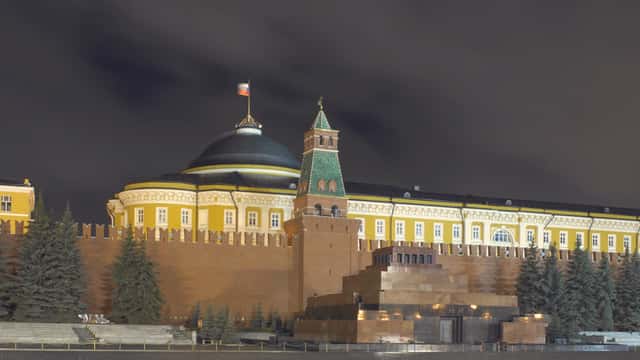
Kushner works on the Ukraine war alongside special envoy Steve Witkoff. The pair first met Putin together at the Kremlin on December 2, 2025, when a Kremlin aide said Russia agreed with some points of the U.S. plan and not others. Newsweek counts four more sessions in 2026: January 22, September 5, a video call on October 21 and November 12.
The latest trip followed two days of talks in Abu Dhabi on November 10 and 11. Those were the first direct Russian-Ukrainian discussions in nine months, the Associated Press reported. They produced a prisoner swap and no breakthrough. Our earlier report on the Abu Dhabi track describes the weeks of dispute over when that round would happen.
One fact runs through every meeting. Putin has kept his demand that Ukraine withdraw from the Donbas, and Kyiv refuses.
- First Kremlin meeting; Russia accepts some points of the U.S. plan and rejects others
- Four hours in Moscow; Russia agrees to three-way talks with Ukraine
- Three hours and a dinner at the Kremlin; the envoys go on to Kyiv
- Witkoff meets Putin in St. Petersburg; Kushner joins by video
- Kremlin meeting after the Abu Dhabi talks end without a breakthrough
Kushner's legal status is disputed too. He takes no government salary, and a watchdog group's lawsuit argues he cannot hold the role without Senate confirmation. The White House counsel says his work complies with the law, the Associated Press reported.
What Kushner said about Putin#
The interview behind this week's debate was recorded for MD MEETS, a podcast hosted by Axel Springer chief executive Mathias Döpfner. It was released on November 25.
Kushner described Putin as organized, well prepared and a historic figure. He said he and Witkoff believe Putin wants peace. He credited Putin with restraint for not using nuclear weapons, CNN reported. He also said Putin is not interested in an immediate ceasefire, according to Ukrainska Pravda.
Those are a negotiator's impressions of private talks. They are not independent evidence of what Putin intends. Russian state media gave the remarks wide play, Newsweek reported.
The case that Putin is playing him#
Critics, many of them former diplomats, make six arguments.
He repeats Kremlin framing. The United States has called for a new "European security architecture" as part of a settlement. Daniel Fried, a former assistant secretary of state for Europe, says that idea is a Kremlin talking point and that the envoys do not understand the issue. Former National Security Council official Eric Ciaramella and EU foreign policy chief Kaja Kallas raised similar objections, the Philadelphia Inquirer reported.
Russia has conceded nothing. After five sessions, Moscow's core demand is unchanged. Nigel Gould-Davies, a former British diplomat, compared the September meeting to "Groundhog Day," according to Newsweek. Political scientist Maria Popova goes further. Writing in Policy Magazine, she argues that the meetings mainly collect Russian demands to press on Ukraine, and that Washington keeps crediting Moscow with concessions it has not made.
He treats a war like a business deal. Former U.S. ambassador to Russia Michael McFaul objected to Kushner's talk of an outcome that benefits both sides, arguing that it rewards conquest. Retired diplomat Ian Kelly told the Associated Press that Russia's leaders want the land itself and are not moved by investment offers.
Business interests cloud the talks. The first 28-point peace plan grew out of meetings with Kirill Dmitriev, a sanctioned Russian official who runs the country's sovereign wealth fund. It drew criticism as tilted toward Moscow, Reuters reported, and was later revised. In October, reports said Putin had raised a sale of Lukoil's foreign assets with the envoys, and that some would-be buyers had business ties to the Kushner and Witkoff families. The same reports found no sign that either man would profit, IBTimes UK noted. Those investors have since left the bidding group, which narrows that concern.
His business record makes him an easy mark. This is the bluntest form of the charge. After leaving the White House in 2021, Kushner built his firm, Affinity Partners, largely on money from authoritarian governments. Saudi Arabia's sovereign wealth fund put in $2 billion. Representative Jamie Raskin, the senior Democrat on the House Judiciary Committee, says about 99% of the firm's funding comes from foreign nationals, and he calls Kushner's two roles a "glaring and incurable conflict of interest" in an April letter. To critics, that history tells every foreign ruler how to approach him. In their view, a man who has taken an autocrat's money before is easy to tempt again, and Putin is following a path that Gulf rulers already paved.$
Photo: Andrew Shiva / Wikipedia, CC BY-SA 4.0, cropped. Source file.

He lacks the background. Kushner is a real estate investor, not a Russia specialist. One U.S. official told the Inquirer, without being named, that this is what happens when businesspeople run negotiations.
Put together, the critics' picture is of a flattered amateur. A former intelligence officer gives him long meetings, dinners and praise, and he goes home repeating his host's account of the war.
The case that he is not being played#
Kushner and his defenders answer each point.
Praise is a negotiating tool. Speaking well of a counterpart costs nothing and keeps him at the table. In the same interview, Kushner allowed that people may dislike what Putin has done. His remark that Putin does not want an immediate ceasefire is not what a man who believed everything he was told would say.
The talks have produced results. Russia agreed in January to three-way talks with Ukraine. November brought the first direct Russian-Ukrainian negotiations in nine months and a prisoner exchange. During the envoys' September visit, the two sides paused strikes on each other's capitals, according to Sinclair's national desk.
Moscow is not getting its way. The 28-point plan was cut back after Ukraine and European governments objected. Putin's foreign policy aide, Yuri Ushakov, later complained that most of the American proposals came from Ukraine and Europe and would not suit Russia, The Hill reported. The envoys brief President Volodymyr Zelensky after each Kremlin visit. Kushner says European delegates will join the next round, though CNN reported that Russia was evasive about that.
He has a record. Supporters point to his first-term Middle East diplomacy and his part in the Gaza hostage deal. A State Department spokesman called him "a world-class negotiator," according to the Associated Press, and Trump says he brings Kushner in to close deals.
Gulf money is not Russian money. Kushner says he has not used diplomacy to benefit himself, his firm or its investors, and that lawyers have reviewed his arrangements. He told New York Magazine he has raised no money since Trump's reelection. Our review of five years of Affinity's SEC filings found that its reported assets doubled to $6.16 billion in two years, and that the filings do not show whether new Gulf money or investment gains drove the rise. The foreign governments reported to have backed the firm are Gulf states. None of the reporting cited here shows Russian money in it.
The defenders' picture is of a pragmatist doing unglamorous work. Wars end at a table, in this view, and someone has to sit at it.
The 2016 history both sides cite#
This is not Kushner's first encounter with Russian outreach.
- Meets Ambassador Kislyak, then state banker Sergey Gorkov
- Tells Senate staff that none of his Russian contacts was improper
- Mueller report finds no criminal conspiracy with Russia
- A peace plan shaped in meetings with Kirill Dmitriev becomes public
- Calls Putin a grandmaster of politics after a fifth session
Source: PBS NewsHour, The Moscow Times, Reuters
Special counsel Robert Mueller's 2019 report described Kushner as a leading target of Russian efforts to reach the incoming Trump team, McClatchy reported. In December 2016 he met Russia's ambassador, Sergey Kislyak, and then Sergey Gorkov, the head of a sanctioned state bank. A banker told investigators that Gorkov said Putin had approved the trip, The New York Times reported. Kushner called the Gorkov meeting diplomatic. He also denied press reports that he had proposed a secret back channel, PBS NewsHour reported.
Mueller found no evidence of a criminal conspiracy between the Trump campaign and Russia, as The Moscow Times summarized. Kushner was never charged.
One name connects 2016 to 2026. Dmitriev, who now sits across from Kushner in the peace talks, was examined by Mueller over his contacts with the Trump transition. The Daily Beast later reported that he and Kushner kept in touch during Trump's first term.
Critics read this as a decade of patient cultivation. Defenders read it as a relationship that investigators examined without bringing charges, and that now gives Washington a working line to Moscow. Our record of Kushner's documented controversies sorts each of these episodes into allegation, finding and response.
What would settle the question#
Outcomes will answer this, and four are worth watching.
- The final terms. Compare any agreement with Russia's opening demands. A deal that hands Moscow the rest of the Donbas and caps Ukraine's army would support the critics. A deal with enforceable security guarantees for Kyiv would support the defenders.
- What happens when Russia stalls. If talks go on with no cost to Moscow for refusing to move, the argument that Putin is buying time gains weight. New pressure would cut against it.
- Who signs willingly. A settlement that Ukraine and its European allies endorse differs from one imposed on them.
- The records. Democrats who take over House committees in January plan to demand documents from Kushner and Witkoff. Emails, investor lists and the timing of decisions would test the conflict-of-interest charge in either direction.
Until then, the same facts support two accounts. In one, a novice is being managed by a master. In the other, a dealmaker is doing what it takes to end a war. The public record does not yet show which is true.
Differing perspectives
Is Jared Kushner well placed to negotiate with Vladimir Putin on behalf of the United States?
Each position is summarized as its supporters make it, with equal weight and in alphabetical order. A summary is not an endorsement; the evidence for each is weighed in the story above.
Change the approach to Moscow
Who holds it: Political scientist Maria Popova and several former U.S. and British diplomats
These critics argue that repeated Kremlin meetings have won no Russian concessions and mainly gather Moscow's demands for use against Kyiv. They point to Putin's unchanged insistence that Ukraine give up the Donbas and say Washington keeps crediting Russia with compromises it has not offered. In their view, long meetings and warm treatment let Putin look cooperative while he keeps fighting, and the envoys' inexperience matters less than Washington's readiness to accept that framing.
In their words: Maria Popova in Policy Magazine, September 6, 2026 ↗
Keep Kushner at the table
Who holds it: Jared Kushner, the White House and the State Department
Kushner and administration officials argue that ending a war requires sustained contact with the adversary and an accurate read of what he wants. They point to Russia's agreement to three-way talks, the first direct Russian-Ukrainian negotiations in nine months and a prisoner exchange. Kushner says his assessment is that Putin wants peace, while acknowledging that a ceasefire remains elusive, and says Washington is coordinating its proposals with Ukraine and European governments.
In their words: MD MEETS podcast, Axel Springer (Kushner interview, November 25, 2026) ↗
Separate his business from his diplomacy
Who holds it: Rep. Jamie Raskin and other congressional Democrats
Raskin argues that Kushner cannot serve as a U.S. negotiator while running an investment firm funded almost entirely by foreign nationals, including $2 billion from Saudi Arabia's sovereign wealth fund. He says that dependence gives foreign governments financial leverage over an American envoy and could bend U.S. policy toward their interests. He is seeking Kushner's communications with foreign officials and backers to test whether ethics, bribery or foreign-agent laws were broken.
In their words: House Judiciary Committee Democrats, April 17, 2026 ↗
Cite this article
Patrick Karsh. “Is Putin Playing Jared Kushner? What the Record Shows, and What It Doesn't.” 567politics. Published 2026-11-28. https://www.567politics.com/news/is-putin-playing-jared-kushner-ukraine-talks-record-november-2026
Wikipedia citation
{{cite news |title=Is Putin Playing Jared Kushner? What the Record Shows, and What It Doesn't |url=https://www.567politics.com/news/is-putin-playing-jared-kushner-ukraine-talks-record-november-2026 |work=567politics |author=Patrick Karsh |date=2026-11-28 |language=en}}CSL-JSON for reference managers
{
  "id": "https://www.567politics.com/news/is-putin-playing-jared-kushner-ukraine-talks-record-november-2026",
  "type": "article-newspaper",
  "title": "Is Putin Playing Jared Kushner? What the Record Shows, and What It Doesn't",
  "URL": "https://www.567politics.com/news/is-putin-playing-jared-kushner-ukraine-talks-record-november-2026",
  "container-title": "567politics",
  "language": "en",
  "author": [
    {
      "literal": "Patrick Karsh"
    }
  ],
  "issued": {
    "date-parts": [
      [
        2026,
        11,
        28
      ]
    ]
  }
}Citations identify this article and its publication date. Assess the reporting and its linked sources before using it as evidence.
Read this article as Markdown or JSON. Cite the original page and retain its sources, dates and qualifications.
Embed this article summary
Paste this HTML into your page. The summary stays linked to the full story and updates with it. No account required.
<iframe src="https://www.567politics.com/embed/news/is-putin-playing-jared-kushner-ukraine-talks-record-november-2026?theme=auto" title="Is Putin Playing Jared Kushner? What the Record Shows, and What It Doesn't by 567politics" width="100%" height="440" style="border:0;max-width:100%" loading="lazy"></iframe>
<p style="font-size:14px">Is Putin Playing Jared Kushner? What the Record Shows, and What It Doesn't by <a href="https://www.567politics.com/news/is-putin-playing-jared-kushner-ukraine-talks-record-november-2026" rel="nofollow">567politics</a></p>
<script async src="https://www.567politics.com/embed.js"></script>