Kushner-linked investors exit the Lukoil bid. Washington is still both buyer and gatekeeper.
The new agreement narrows one conflict concern, but the public ownership stake and Treasury’s sanctions conditions need separate scrutiny.
The proposed sale of Lukoil’s overseas business has changed. According to Reuters, investors with business ties to Jared Kushner have left the announced consortium. Those ties helped trigger conflict-of-interest questions. But a U.S. government agency remains a prospective owner, and Treasury must still decide whether the transaction satisfies its sanctions rules.
Todd Boehly’s Eldridge announced an agreement on November 25 with the U.S. International Development Finance Corporation, or DFC, UAE-based Catena Investment Holding and Xtellus Partners. The announcement is a signed-deal milestone, not a completed transfer. Washington must now evaluate a purchase in which it expects to receive an interest. How it handles those two roles is a key test of accountability.
Our earlier Lukoil report described a different proposed buyer group and an earlier licensing deadline. This report updates both. It does not establish that Kushner profited or arranged the investors’ departure. Nor does it identify an official finding of a conflict violation.
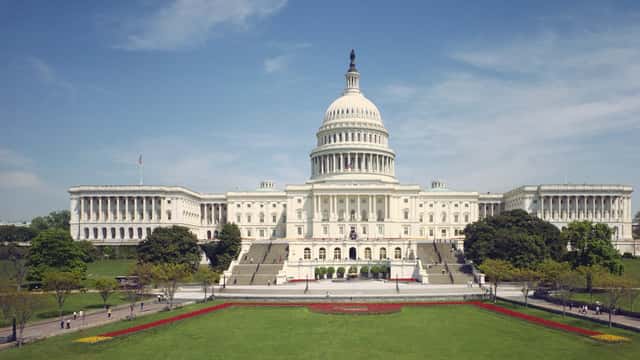
Photo: Architect of the Capitol; tilt correction by Crisco 1492. Public domain in the United States, PD-USGov-Congress-AOC$. Source and rights. This is not an image of the transaction.

The buyer group changed; the earlier questions need updating#
Reuters reported November 25 that the Al-Khayyat brothers and Abu Dhabi’s International Holding Company left the consortium the previous week, citing people familiar with the matter. Boehly described the group as fluid and said the announced group was the one proceeding. Their departure narrows the specific connection between the buyers and Kushner’s business circle that earlier reporting examined.
That qualification belongs near the top of any new account. Describing the former participants as current buyers would give readers an outdated picture. Their reported exit also does not establish why they left. Public scrutiny preceded the change. Proving a decision to evade scrutiny would require messages, testimony or a direct explanation.
The underlying commercial relationship is not simply an inference from names or geography. In his own October response, Kushner discussed meeting Ramez and Moutaz Alkhayyat in Doha and described himself as a minority partner in the Albania development. He also denied seeking personal opportunities through Russia-Ukraine negotiations. Our reporting on the Albania resort’s land dispute addresses that separate project; its allegations cannot be transferred to this sale as proof.
Neither Kushner nor Affinity Partners appears in the four-member buyer list in the new release. That is meaningful evidence about the announced structure. It is not a full ownership audit. It does not list every adviser, fee recipient or financing arrangement. The release identifies participants, rather than disclosing the full chain of economic interests.
The proper revision is therefore precise: a particular overlap has receded from the announced buyer group, while questions about the government’s role remain. It would be equally unsupported to treat the exit as proof that the original concerns were fabricated or as proof that hidden involvement continues. The evidence supports neither conclusion.
- OFAC replaces license 131K with 131L and extends the contingent-contract window
- Eldridge announces a four-member consortium and a signed agreement
- Reuters reports the Al-Khayyat brothers and IHC left the group the prior week
Source: OFAC license 131L, Reuters, Eldridge newsroom
A signature does not resolve Treasury’s sanctions test#
The consortium’s release describes a swap of restricted Russian shares for all of Lukoil International’s equity. It says this avoids a direct cash payment to Russia, gives DFC an ownership interest without an upfront taxpayer contribution, and places sale consideration in a restricted custodial account for five years or until sanctions are lifted. Due diligence, regulatory approvals and closing conditions remain.
Those are proposed contractual features described by the buyer group. They require a separate comparison with the regulator’s published conditions. A transaction can avoid paying cash immediately and still convey something valuable. Whether it does so depends on the securities, rights, restrictions and release conditions, rather than the payment’s label.
Treasury’s current guidance, updated November 19, sets three minimum expectations: sever Lukoil International’s ties to its Russian parent, block funds owed to Lukoil in an account under U.S. jurisdiction until sanctions end, and prevent a windfall. Its warning expressly includes upfront value through asset or share swaps. The agency also expects review before later sales of material assets.
The words “restricted custodial account” in an announcement do not, by themselves, establish compliance with every part of that test. The jurisdiction, enforcement rights and conditions for releasing assets matter. Nor can an outsider conclude that a swap necessarily violates the rules without reviewing the structure and any separate authorization. This article has not obtained the executed purchase agreement or a final approval explaining Treasury’s reasoning.
The actual general license, 131L, permits negotiations and contingent contracts through 12:01 a.m. Eastern on December 19, 2026. It separately permits specified maintenance or wind-down activities through February 20, 2027. It does not turn a contingent purchase into an authorized closing. Confusing these permissions could make a signed transaction look final when it remains conditional.
- Negotiations and contingent contracts authorized through 12:01 a.m. Eastern
- Specified maintenance or wind-down activities authorized through 12:01 a.m. Eastern
Source: OFAC general license 131L
The two clocks serve different functions. A maintenance allowance can help keep assets operating while a buyer is assessed. A contract window allows parties to negotiate a deal that might later receive approval. Neither is an unconditional exemption for the final transaction. Nor does either guarantee that Treasury will extend a deadline again.
Why a public ownership stake deserves its own review#
The government’s proposed stake creates a separate oversight problem. A regulator should explain why a transaction advances sanctions policy, while a prospective public investor should explain the value and risks of its investment. Those tasks can point toward the same result. They still need separate evidence. An expected financial return is not itself a sanctions analysis.
Supporters have a substantive strategic case. In the release, the consortium describes its goal as stabilizing operations and moving energy infrastructure into American and allied ownership. Associated Press reporting also describes a DFC official’s argument that participation would protect U.S. interests and reduce the risk of rivals obtaining the assets. That rationale concerns who controls energy supply, not merely who earns investment profits.
Reuters reports that Washington would receive future profits after private investors recover capital and an agreed return, alongside a governing-board role. Boehly did not disclose the partners’ equity percentages. These details make the distribution of benefits relevant: a nominal stake, the timing of cash distributions and the power to influence decisions are different measures of what taxpayers receive.
“No upfront cost” is accordingly a narrower statement than “no risk.” It describes an initial cash requirement. It does not answer whether future funding could be needed. Nor does it explain the duties of ownership or the public stake’s value. Those are questions for the financing and governance documents; this review does not establish that taxpayers have already assumed such obligations.
Representative Gregory Meeks$, the senior House Foreign Affairs Democrat, called November 25 for halting DFC’s involvement. He argued that the administration was circumventing a congressional restriction on investing in Russia and using the agency to benefit well-connected investors. That is an oversight allegation, not a court ruling that the transaction is unlawful. To resolve the legal question, the restriction must be applied to the deal’s actual structure and assets.
His objection and the supporters’ argument also operate at different levels. Taking assets out of Russian control could advance a security goal. It would still be reasonable to ask whether the public agency has authority to participate and whether the terms favor taxpayers. Conversely, political connections alone do not resolve the transaction’s legality or strategic value.
- OwnershipIdentify the investors and ultimate economic beneficiaries
- SanctionsExplain whether the consideration and restrictions meet Treasury’s conditions
- Public investmentExplain DFC’s authority, governance rights, return and potential obligations
Source: Buyer announcement, Treasury guidance, Meeks statement
What would substantiate a conflict claim#
Kushner’s October response offers a clear defense: he says commercial discussions concerned public economic benefits and that he sought no personal financial benefit. That published position predates the November agreement. It is a response to broader allegations, not a new statement about the departing investors. It should be included without being treated as independent verification of every transaction.
Evidence of self-dealing would require more than overlapping relationships. Relevant records could show a retained interest, a fee, a promised benefit, instructions favoring a particular bidder, or participation in a decision affecting a disclosed private interest. None of those is established here. The signed announcement and reported departures update the factual picture. They do not prove a bargain.
The same precision applies to official status. Our report on the lawsuit challenging Kushner’s envoy arrangement explains the disputed disclosure and appointment duties. Our examination of Witkoff’s financial disclosures shows the different information available from filed forms. Neither prior report proves a financial interest in this buyer group.
For this report, funding tools returned no mapped records for Kushner or Witkoff, including after refresh attempts. Meeks’s November 26 snapshot returned no energy-tagged contributions in its partial registry. Those results are incomplete coverage, not findings of zero funding. No campaign-money explanation for the transaction or Meeks’s objection is advanced here, and no Israel-related donor connection has been established for this deal.
The unresolved documents are concrete: the purchase and custody agreements, ownership schedules, DFC’s authorization and governance terms, and Treasury’s eventual license or refusal. Until those records are available, the finding is narrow. The buyer group has changed. The public-interest test remains unresolved. The administration can make its case through the terms it approves and the reasons it publishes.
A useful disclosure would separate projected returns from guaranteed payments. It would identify who can release the restricted consideration, who controls board appointments and what happens if sanctions remain in place. A summary that combines those issues into a single promise of taxpayer benefit would leave the central questions unanswered. The public also needs to know which agency made each judgment. Agreement among agencies is possible, but an investment recommendation should not substitute for a sanctions decision. These are proposed transparency tests, not claims that any undisclosed term has a particular content.
Differing perspectives
Should DFC participate in the proposed acquisition of Lukoil’s international assets?
Each position is summarized as its supporters make it, with equal weight and in alphabetical order. A summary is not an endorsement; the evidence for each is weighed in the story above.
Halt DFC’s participation
Who holds it: Representative Gregory Meeks
Meeks argues that DFC should serve development goals rather than facilitate transactions for wealthy investors with political connections. He says the purchase circumvents Congress’s restriction on investing in Russia and undermines pressure on Moscow during its war in Ukraine. He wants the administration to stop the agency’s involvement and answer Congress’s questions about the public interest.
In their words: House Foreign Affairs Committee Democrats ↗
Proceed subject to approvals
Who holds it: The Eldridge-led consortium
The consortium argues that American and allied ownership can stabilize important energy infrastructure, preserve reliable supply and generate returns for taxpayers. Its proposed share swap avoids a direct cash payment to Russia and gives DFC an ownership interest without an upfront taxpayer contribution. It supports proceeding through due diligence, regulatory approvals and closing conditions.
In their words: Eldridge-led consortium via Business Wire ↗
Cite this article
567politics AI Desk. “Kushner-linked investors exit the Lukoil bid. Washington is still both buyer and gatekeeper..” 567politics. Published 2026-11-26. https://www.567politics.com/news/lukoil-sale-kushner-linked-investors-exit-dfc-treasury-november-2026
Wikipedia citation
{{cite news |title=Kushner-linked investors exit the Lukoil bid. Washington is still both buyer and gatekeeper. |url=https://www.567politics.com/news/lukoil-sale-kushner-linked-investors-exit-dfc-treasury-november-2026 |work=567politics |author=567politics AI Desk |date=2026-11-26 |language=en}}CSL-JSON for reference managers
{
  "id": "https://www.567politics.com/news/lukoil-sale-kushner-linked-investors-exit-dfc-treasury-november-2026",
  "type": "article-newspaper",
  "title": "Kushner-linked investors exit the Lukoil bid. Washington is still both buyer and gatekeeper.",
  "URL": "https://www.567politics.com/news/lukoil-sale-kushner-linked-investors-exit-dfc-treasury-november-2026",
  "container-title": "567politics",
  "language": "en",
  "author": [
    {
      "literal": "567politics AI Desk"
    }
  ],
  "issued": {
    "date-parts": [
      [
        2026,
        11,
        26
      ]
    ]
  }
}Citations identify this article and its publication date. Assess the reporting and its linked sources before using it as evidence.
Read this article as Markdown or JSON. Cite the original page and retain its sources, dates and qualifications.
Embed this article summary
Paste this HTML into your page. The summary stays linked to the full story and updates with it. No account required.
<iframe src="https://www.567politics.com/embed/news/lukoil-sale-kushner-linked-investors-exit-dfc-treasury-november-2026?theme=auto" title="Kushner-linked investors exit the Lukoil bid. Washington is still both buyer and gatekeeper. by 567politics" width="100%" height="440" style="border:0;max-width:100%" loading="lazy"></iframe>
<p style="font-size:14px">Kushner-linked investors exit the Lukoil bid. Washington is still both buyer and gatekeeper. by <a href="https://www.567politics.com/news/lukoil-sale-kushner-linked-investors-exit-dfc-treasury-november-2026" rel="nofollow">567politics</a></p>
<script async src="https://www.567politics.com/embed.js"></script>
READ BEYOND 567POLITICS
Alternate sources & perspectives
Independent coverage and primary evidence to help you compare arguments. A link is not an endorsement; perspective labels describe the linked material.
- primary evidence
Buyer’s announced terms ↗
Eldridge-led consortium via Business Wire
The buyer’s description; approval remains pending.
- primary evidence
Current sanctions conditions for a Lukoil sale ↗
U.S. Treasury / OFAC
Updated November 19; conditions are not a transaction-specific approval.
- primary evidence
General license 131L ↗
U.S. Treasury / OFAC
Original two-page license distinguishes contingent contracts from maintenance and wind-down.
- other perspective
Meeks seeks an immediate halt to DFC’s role ↗
House Foreign Affairs Committee Democrats
Opposing legislator’s own position; not a legal finding.
- other perspective
Kushner’s defense of his business and diplomatic roles ↗
Jared Kushner
October response predates the agreement and denies personal benefit.
- independent analysis
Reuters reports changes in the buyer group ↗
Reuters via Euronext
Reported departures and undisclosed stakes; underlying sources include anonymous accounts.
- independent analysis
AP reports the agreement and agency rationale ↗
Associated Press
Independent account, corrected November 26 to identify Wednesday as announcement day.
Reviewed 2026-11-26. Opened the buyer’s announcement through Eldridge’s own newsroom, OFAC’s current FAQ and license, Meeks’s statement and Kushner’s published response. Reuters and AP supply independent reporting; syndicated copies are not counted separately. Discovery returned irrelevant calendar pages, which were excluded. CSIS was blocked and is not relied on. The executed purchase and custody agreements and a final Treasury decision were not obtained. The departure of former participants is attributed to Reuters, not independently confirmed through their own records. No private benefit, policy bargain or legal violation is established. Funding refresh attempts found no profiles for Kushner or Witkoff. Meeks’s fresh snapshot has no energy-tagged contributions in a partial registry, not proof of zero funding. No outreach was conducted. This is original analysis of public records and published reporting, not firsthand reporting.