Iran weighs Vance letter as Qatar mediates, but says talks wait on its seven conditions
Iranian envoys met Qatari mediators in Doha. Tehran calls U.S. outreach a positive step; Rubio says Trump has not decided on new strikes after the midterms.
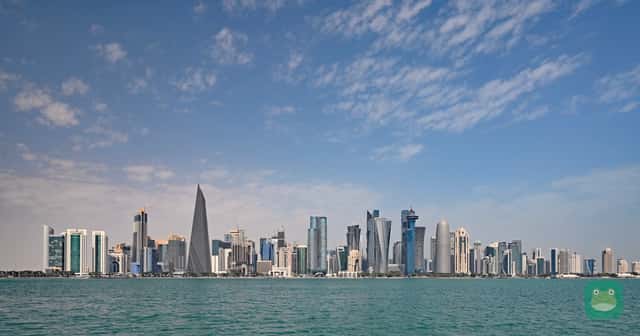
Iranian negotiators met Qatari mediators in Doha on Saturday, October 31, in the latest attempt to restart talks between Tehran and Washington before the U.S. midterm elections on Tuesday. The meeting followed more than 12 hours of talks in Tehran on Friday. It also came days after Vice President JD Vance$ sent a letter to Iran's top security official. Iran's leaders now say they are studying that letter and describe its tone as a change. At the same time, they repeat that they will not return to formal negotiations until their own list of conditions is met.
The stakes are high on both sides. The war that began with U.S. and Israeli strikes on February 28 is in its ninth month. A June memorandum that paused the fighting broke down weeks later. The Strait of Hormuz, a key route for Gulf oil, remains contested, and the United States keeps a naval blockade on Iranian ports. U.S. officials have not ruled out new strikes once the voting is over, and Iran's military leaders say any attack would draw a response with no geographic limit. This article sets out what is known about the talks, what each government says it wants, the arguments made in Washington for and against a return to force, and what remains unclear.
What happened in Tehran and Doha#
According to Reuters reporting carried by Al-Monitor, Iranian negotiators held talks with Qatari mediators in Doha on Saturday. A source briefed on the negotiations told Reuters that the Doha meeting followed more than 12 hours of discussions between Iranian and Qatari envoys in Tehran on Friday. The same source said the talks were being coordinated through regular contacts with Washington. CNBC separately reported, citing an official source, that the Qatari team's aim was to restart direct negotiations between the United States and Iran. CNBC said Axios first reported the Tehran talks.
The National, a newspaper based in Abu Dhabi, reported that a Qatari government aircraft spent about 16 hours in Tehran between Friday and Saturday, based on flight-tracking data. It also reported that Pakistan, Qatar, Egypt and Turkey have all worked to narrow differences between the two sides.
The Qatari proposal has a specific shape. Reuters' source said the Qataris brought a seven-day plan to Tehran a week earlier. Under it, the United States and Iran would take daily steps to build trust before broader peace talks. A senior Iranian official told Reuters on Friday that Tehran did not find that proposal satisfactory. Iran has offered its own seven-day plan since September, which President Donald Trump has so far rejected. Iran's plan calls for Washington to lift the port blockade, unfreeze assets and approve an Iranian-backed route through the strait, after which the strait would reopen, Reuters reported.
Foreign Minister Abbas Araghchi gave a different account of the timing in an interview with Al Jazeera. "The Qatari side proposed shortening the implementation period of the Iranian proposal to five days," he said. "We have reached a proposal at this stage that reduces the implementation period to two days." He said one of his aides was in Qatar to continue the consultations. Neither the Qatari government nor the U.S. government has publicly confirmed the two-day figure, and we could not verify it independently.
The Vance letter#
The letter at the center of the latest round was sent to Mohsen Rezaei, secretary of Iran's Supreme National Security Council. Axios reported on October 28, citing a U.S. official, that Vance stressed that any negotiations to head off U.S. strikes "require discussions on the nuclear issue." The official said Vance suggested sending the letter to Rezaei and that "the President was enthusiastic about the letter." The Wall Street Journal first reported the letter, according to Axios.
The Guardian reported that the letter was sent on Sunday, October 25, after mostly Qatari mediation. Its diplomatic editor wrote that the letter asks Tehran to make commitments on its nuclear program at the start of a process. That process would lead to the reopening of the strait within seven days in return for U.S. sanctions relief. The Guardian also reported why Washington chose Rezaei rather than Araghchi or chief negotiator Mohammad Ghalibaf. In its account, U.S. officials judged that decision-making power sits with figures closest to the Islamic Revolutionary Guard Corps. These are the newspaper's accounts of the letter. The text has not been published.
Trump has described the letter more narrowly. He told reporters on Wednesday that it was about medical supplies. "Basically, it's getting supplies in to help people that are not well," he said, as quoted by Axios and Reuters. Trump said he approved it on that basis. The gap between his description and the accounts from U.S. officials and newspapers has not been explained publicly.
Rezaei spoke about the letter on Iranian state television late on Saturday. "I have studied the letter, but I have not yet answered it. Their tone has completely changed, and this is a good sign," he said, according to The National. He declined to give details because Washington had not made the contents public. Araghchi told Al Jazeera that the U.S. attempt to open the door to talks and understanding was "a positive step." He added a warning: "If Washington's goal in sending this letter is to stir up discord, it would be yet another mistake to add to its previous ones."
What Iran is asking for#
Iran's leaders say their demands have not changed. Araghchi told Al Jazeera that there were "no plans currently for meetings with US officials" and called reports of imminent contact "merely media speculation." "We see no need to meet with the Americans at this stage. Our conditions are clear, and mediators are continuing their consultations regarding them," he said.
He listed several of those conditions in the same interview. They include lifting sanctions imposed after what he called the Islamabad memorandum, reducing U.S. forces in the region, restoring waivers for Iranian oil sales and releasing frozen funds, including those held in Qatar. Al Jazeera's correspondent in Tehran said that figure includes $6 billion held in Qatar. Araghchi also asked for recognition of shipping routes through the strait that Iran had discussed with Oman, and the closure of other routes. He said mediators had also presented proposals on the nuclear file. Iran was reviewing them "as part of the second phase."
Rezaei said Iran would not resume negotiations or reopen the strait until Washington met seven conditions, The National reported. Those include an end to hostilities, the lifting of port restrictions and the release of frozen assets. Ghalibaf made a similar point on X, according to the Guardian: "The carrot-and-stick approach has no effect on Iran. Progress can only be achieved once Iran's seven conditions have been agreed upon."
What Washington is asking for#
Secretary of State Marco Rubio spoke about the talks on Saturday after hosting G20 foreign ministers in Atlanta. Reuters quoted him as saying, "There are multiple talks. Talks have actually never stopped." He declined to set a timeframe for the Qatari effort. Trump would "prefer to solve it diplomatically," Rubio said. "But I think what the president expresses to you is incredible confidence that if we needed to do something militarily, we would have the ability to do it." The National quoted him as saying, "If there is a diplomatic solution, we would be open to it." It reported that he said any deal must address core U.S. security concerns. Rubio said Trump had not decided whether to resume strikes.
The central U.S. demand is about sequencing. Axios reported that Washington wants Iran to restart nuclear negotiations before it receives any sanctions relief. Iran wants the blockade lifted, funds released and oil sales allowed first. The Guardian reported that the United States wants early, specific commitments on removing Iran's stockpile of highly enriched uranium. Iran has proposed blending the stockpile down instead, so that it can no longer be used for a weapon, and is resisting the return of UN inspectors, the paper reported. Some form of third-party guarantee has been discussed, with China often mentioned, according to the same report.
Trump has kept both options in public view. CNBC reported that on Tuesday he said the war would end "whenever I want it to," and that any end would need a "total statement" that Iran would never have a nuclear weapon. The last confirmed U.S. strikes on Iran took place on September 1, according to CNBC.
Military signals on both sides#
The diplomatic contacts are taking place alongside military preparations. Supreme Leader Ayatollah Mojtaba Khamenei issued a statement on his official Telegram account on Saturday. He said that "any level or type of threat must be met with an immediate, impactful, and geographically unrestricted response," Reuters and CNBC reported. Iran's armed forces chief of staff, Major General Ali Abdollahi, said Iran had "a new stockpile of enemy targets and assets," according to Al Jazeera. Rezaei also said Tehran was debating whether to lift its ban on nuclear weapons if hostilities resumed, though no decision had been taken, Reuters reported. That is a statement by an Iranian official about internal debate. It is not evidence of a decision or of weapons capability.
At sea, CNBC reported that Iran said four tankers struck mines in the strait on Friday, and that the British military's UKMTO maritime security service reported a crude tanker hit by an unknown projectile. An Iranian provincial official said U.S. forces attacked two fishing boats near Qeshm Island; CNBC said that report had not been independently confirmed and that U.S. Central Command had not immediately responded. Brent crude futures for December settled at $117.64 a barrel on Friday, up 2.4%, the highest close since the end of April, according to CNBC.
Hamidreza Azizi, an analyst at the International Crisis Group, summarized the Iranian approach on X, as quoted by The National: "For now, diplomacy and military preparations are proceeding simultaneously." He wrote that Tehran's position appears to be that an agreement remains possible, "but another war would be fought under different rules and on a much wider battlefield."
The case for keeping military pressure on Iran#
Supporters of the administration's approach argue that pressure is what brought Iran back to the table. Sen. Tom Cotton, an Arkansas Republican who chairs the Senate Intelligence Committee, set out that view in a May interview with Arkansas Money & Politics. He said the blockade "is effective because it denies them of up to $500 million of export oil revenue every day" and that "they can't last very long under those conditions." "We need to finish the job and make it clear that we won't tolerate them threatening free commerce on the high seas," he said. He also argued that Iran "didn't abandon their nuclear ambition" after earlier strikes. That interview predates the current talks, and Cotton's revenue figure is his estimate, which we could not check against an official dataset.$
Trump has framed the choice in similar terms. In an interview with Fox News on October 25, he said, "Do I make a deal with them or do I finish them off? That's the only question," according to Iran International. Separately, he told reporters that Iranian leaders "want to make a deal. But the problem is, will they hold the deal?" Supporters of this view point to the collapse of the June memorandum as evidence that only verifiable, front-loaded nuclear commitments are worth accepting. The U.S. demand that nuclear talks come before sanctions relief rests on that argument.
Rubio's message on Saturday combined both elements: diplomacy is preferred, but Washington has, in his words, the "ability" to act militarily if needed. Backers of this approach say that a credible threat of force gives mediators leverage that they would not otherwise have.
The case against renewed strikes#
Critics argue that a return to force would widen the war and that Congress has not authorized it. Sen. Chris Murphy, a Connecticut Democrat, said at a Middle East Institute briefing that he had received "a fairly detailed conversation about what the war plan would be," according to the Guardian. He sharply criticized the plan and said it "will lead to devastating escalation and the likely destruction of our commitment to the rule of law." He added that there had been open reporting "as to the civilian infrastructure we may be targeting." Murphy's description of the plan has not been confirmed by the Pentagon, and the plan itself is classified.$
Opposition in Congress has not been limited to Democrats. On September 24, the Senate voted 49 to 50 on a war powers resolution that would have blocked further strikes without congressional approval, the Washington Post reported. Four Republicans, Sens. Rand Paul$, Susan Collins$, Lisa Murkowski$ and Thom Tillis$, voted with Democrats in favor. Sen. John Fetterman$, a Pennsylvania Democrat, voted against. Sen. Angela Alsobrooks$ did not vote.
Analysts quoted by Al Jazeera put the emphasis on sequencing. Rouzbeh Parsi of Lund University said any progress in Tehran was most likely on "the sequencing of the first steps needed to establish the barest of trust." Those who favor diplomacy argue that early, smaller steps such as humanitarian supplies or partial port access may be the only path to the larger nuclear deal Washington wants.
How the arguments hold up#
Both camps rely on claims that are hard to test from the outside. The "pressure works" argument points to Iran's return to mediated talks, but Iranian officials still publicly reject the U.S. sequence, so the evidence that pressure has changed Iran's core position is limited so far. The "strikes would backfire" argument relies on briefings and war plans that are not public, and on predictions about escalation that cannot be confirmed in advance.
One framing deserves care. Trump's line, "Do I make a deal with them or do I finish them off?," presents two options. The talks described by Reuters, Al Jazeera and the Guardian include other paths, such as phased steps, third-party guarantees and humanitarian measures. Calling it a choice between only two options would be a false dilemma if those paths remain open. It is fairer to read the remark as rhetorical pressure rather than as a literal list of policy options, and it does not by itself show what the administration will do.
Public opinion#
Representative polling shows the war has been unpopular in the United States. A Pew Research Center survey of 5,062 U.S. adults, conducted September 28 to October 4 on its online American Trends Panel, asked half the sample (2,527 adults), "Do you approve or disapprove of how Donald Trump is handling the U.S. military action against Iran?" According to the survey's topline, 65% disapproved and 33% approved. Among Republicans and Republican-leaning independents, 63% approved, down from 69% in March. Among Democrats and leaners, 9% approved. Asked how long the military action would last, 47% said more than another year. The survey asked about Trump's handling of the conflict, not specifically about resuming strikes after the midterms, and it was conducted before the Vance letter. Pew's short report and topline do not state a margin of error for this question, and we did not obtain one.
We did not find representative polling of Iranian public opinion on the talks. Iran's state media and officials' statements are not a substitute for that evidence.
Funding context for the U.S. officials named#
Under our methodology, we review federal campaign finance records when reporting on U.S. politicians' policy actions. Vance's most recent campaign was his 2022 Senate race in Ohio. Its principal committee reported receiving $5,000 from U.S. Israel PAC on September 30, 2022, according to an FEC itemized filing listed on his FEC candidate page, which we checked against the FEC's public data on November 1, 2026. That is a domestic U.S. political action committee, not money from any foreign government. Our partial topic registry for that cycle also lists $1,800 from To Protect Our Heritage PAC. These figures cover only registered committee receipts, exclude individual donors, and are not a total of Vance's career funding. They do not show that any contribution influenced his letter to Iran.
Murphy is not on the ballot this year. Our snapshot of his principal committee for the 2026 cycle, drawn from his FEC candidate record and retrieved October 31, listed no itemized committee receipts for that cycle and none in our partial Israel-related registry. That covers one cycle only and is not a statement about his funding in earlier races. Our funding records for Cotton and Rubio had not finished collection or verification when this article was published, so we report no figures for them rather than infer zero.
What to watch#
Several questions remain open. Iran has not formally answered the Vance letter, and neither government has published its text. The two-day timetable Araghchi described has not been confirmed by Qatar or Washington. Rubio said Trump has not decided whether to resume strikes, and the White House has not said what would trigger that decision. The talks also overlap with Israel's political transition. Trump urged Israelis to keep Prime Minister Benjamin Netanyahu in office so the two could "finish the job," according to Iran International. Israel's final count left Netanyahu's bloc short of a majority, and the coalition timetable set by President Isaac Herzog will shape who speaks for Israel in the coming weeks.
The next fixed date is Tuesday's U.S. election. Abbas Khamayar, a former Iranian diplomat, told Al Jazeera that he expects the current situation to hold until then. After that, the timing depends on decisions in Washington and Tehran that neither side has announced.
Differing perspectives
Should the United States keep military pressure on Iran, including possible new strikes after the midterms?
Each position is summarized as its supporters make it, with equal weight and in alphabetical order. A summary is not an endorsement; the evidence for each is weighed in the story above.
Make any end permanent
Who holds it: President Donald Trump
Trump said Saturday that ending the campaign earlier would have let Iran rebuild its nuclear capabilities: "I've got to make it permanent. That's the only reason I'm doing it as long as I'm doing." Asked about new strikes, he said: "There's a possibility I will. There's also a possibility we'll have a nice big beautiful agreement." On Oct. 25 he said: "Do I make a deal with them or do I finish them off? That's the only question."
In their words: Iran International, updated Nov. 1, 2026 ↗
The plan will lead to devastating escalation
Who holds it: Sen. Chris Murphy, D-Conn., member of the Senate Foreign Relations Committee
At an Oct. 28 Middle East Institute event, Murphy described a classified briefing on the war plan and said: "Their plan … will lead to devastating escalation and the likely destruction of our commitment to the rule of law." He said it would prolong the war in ways that are "devastating for our security interests." He also said: "Every first year law student could tell you that this war is illegal."
In their words: Truthout, citing the Middle East Institute event, Oct. 29, 2026 ↗
Cite this article
567 Politics staff. “Iran weighs Vance letter as Qatar mediates, but says talks wait on its seven conditions.” 567politics. Published 2026-11-01. Updated 2026-11-02. https://www.567politics.com/news/iran-qatar-mediation-vance-letter-november-2026
Wikipedia citation
{{cite news |title=Iran weighs Vance letter as Qatar mediates, but says talks wait on its seven conditions |url=https://www.567politics.com/news/iran-qatar-mediation-vance-letter-november-2026 |work=567politics |author=567 Politics staff |date=2026-11-01 |language=en}}CSL-JSON for reference managers
{
  "id": "https://www.567politics.com/news/iran-qatar-mediation-vance-letter-november-2026",
  "type": "article-newspaper",
  "title": "Iran weighs Vance letter as Qatar mediates, but says talks wait on its seven conditions",
  "URL": "https://www.567politics.com/news/iran-qatar-mediation-vance-letter-november-2026",
  "container-title": "567politics",
  "language": "en",
  "author": [
    {
      "literal": "567 Politics staff"
    }
  ],
  "issued": {
    "date-parts": [
      [
        2026,
        11,
        1
      ]
    ]
  }
}Citations identify this article and its publication date. Assess the reporting and its linked sources before using it as evidence.
Read this article as Markdown or JSON. Cite the original page and retain its sources, dates and qualifications.
Embed this article summary
Paste this HTML into your page. The summary stays linked to the full story and updates with it. No account required.
<iframe src="https://www.567politics.com/embed/news/iran-qatar-mediation-vance-letter-november-2026?theme=auto" title="Iran weighs Vance letter as Qatar mediates, but says talks wait on its seven conditions by 567politics" width="100%" height="440" style="border:0;max-width:100%" loading="lazy"></iframe>
<p style="font-size:14px">Iran weighs Vance letter as Qatar mediates, but says talks wait on its seven conditions by <a href="https://www.567politics.com/news/iran-qatar-mediation-vance-letter-november-2026" rel="nofollow">567politics</a></p>
<script async src="https://www.567politics.com/embed.js"></script>
READ BEYOND 567POLITICS
Alternate sources & perspectives
Independent coverage and primary evidence to help you compare arguments. A link is not an endorsement; perspective labels describe the linked material.
- primary evidence
Secretary of State Marco Rubio at a Press Availability (Oct. 31, 2026) ↗
G20 Information Centre, University of Toronto (copy of State Department transcript)
Full transcript of Rubio's remarks after the G20 foreign ministers' meeting, including his description of Iranian attacks on shipping.
- primary evidence
How every senator voted on the Iran war powers resolution ↗
The Washington Post
Senator-by-senator record of the 49-50 vote on H.Con.Res. 89 on September 24, based on Senate data.
- primary evidence
Iran conflict remains deeply unpopular as many Americans expect it to go on for months ↗
Pew Research Center
Survey of 5,062 U.S. adults, Sept. 28-Oct. 4; the linked topline gives question wording.
- independent analysis
Iranian envoys meet Qatari mediators as threat looms of US strikes after midterms ↗
Al-Monitor (Reuters report)
Reuters account of the Tehran and Doha meetings, the competing seven-day plans and Rubio's comments.
- independent analysis
Iran considers Vance letter amid renewed Doha peace push ↗
The National (Abu Dhabi)
Gulf-based reporting on Rezaei's comments, flight data on the Qatari aircraft and regional mediators.
- other perspective
Iran FM says US outreach a 'positive step' as delegation in Qatar for talks ↗
Al Jazeera
Interview with Iranian Foreign Minister Abbas Araghchi setting out Tehran's conditions; Qatar-funded broadcaster.
- independent analysis
Vance tells top Iranian official negotiations must address nuclear program ↗
Axios
U.S. official's account of the letter's content and the dispute over sequencing.
- left argument
JD Vance letter may offer last chance to avert fresh conflict between US and Iran ↗
The Guardian
Reports Sen. Chris Murphy's warning that the strike plan would cause 'devastating escalation'; also covers the letter's reported terms.
- right argument
Sen. Tom Cotton Talks Iran, Farm Bill and More ↗
Arkansas Money & Politics
Sen. Tom Cotton's case for the blockade and for 'finishing the job'; May 2026 interview that predates the current talks.
- right argument
Trump says US and Israel must 'finish the job' ↗
Iran International
Reports Trump's Fox News remarks framing the choice as a deal or renewed force; London-based outlet critical of the Iranian government.
- independent analysis
Qatar in talks with Iran to restart U.S. negotiations, source says ↗
CNBC
Covers Qatar's aim, Khamenei's warning, tanker incidents and oil prices.
Reviewed 2026-11-01. The talks pit governments against each other more than U.S. left and right, so sources are grouped as primary records (Rubio's press availability transcript, the Senate war powers roll call, Pew's survey), reporting from Gulf, U.S. and British outlets, and argument sources for and against renewed strikes. The State Department's own transcript page could not be loaded during research, so a G20 Research Group copy is listed. The Vance letter text has not been published, and we found no representative polling of Iranian public opinion. Sen. Murphy's office website blocked automated access, so his remarks are sourced to the Guardian's report.