Burnham says he is open to a formal slavery apology but rules out reparations before Commonwealth summit
Caribbean leaders welcomed the shift but still seek reparations. Campaigners called it insufficient, and polls show most Britons oppose payments.
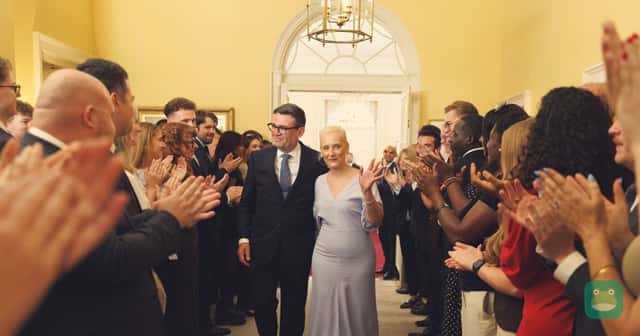
Prime Minister Andy Burnham said on Friday, October 30, that he is "open" to calls for a formal apology on behalf of the British state for Britain's role in the transatlantic slave trade. In the same article he ruled out financial reparations. The statement came two days before Commonwealth leaders meet in Antigua and Barbuda, where Caribbean governments plan to press both demands.
Caribbean leaders mostly welcomed the change in tone and said they still disagree on money. Campaigners in Britain and the Caribbean called it a step that falls short. Reform UK has proposed visa penalties for countries that demand reparations. Polling shows most British adults oppose payments.
What Burnham wrote#
Burnham set out his position in an opinion article in the Guardian, published Friday evening. He called the transatlantic slave trade "a brutal and barbaric violation" of the people trafficked. "I want to express my sorrow and regret for the pain and suffering of so many millions of people," he wrote. He added that the trade still "shapes our world today."
He then made the offer that marks a change from past governments. He said the government is offering structured talks with "those affected by the transatlantic slave trade." He continued: "Listening to calls for a formal apology on behalf of the British state will form an important part of this process, and I am open to them."
On money he held to the position of his predecessors. "Some have called for financial reparations for the slave trade. I do not believe that is the right answer," he wrote. "I do not think that British people today can be held liable for historical wrongs, however heinous, that happened in a different age under different laws and in which they played no personal part."
Instead he offered a package aimed at the present. He wrote that debt-servicing costs in the poorest and most vulnerable countries are at their highest in more than 25 years. He added that more than 40% of those countries spend more on interest than on health. He said he wanted "a new drive on debt" to help them repay "over a longer time period and with better rates." He said he had asked former Prime Minister Gordon Brown to help with that work. The Guardian's news report said the effort is expected to eventually include organizations such as the IMF. The op-ed also promised support for the energy transition, for educating women and girls, and for giving smaller countries "a louder voice on the world stage."
The Independent reported that Chancellor John Healey, Foreign Secretary Ed Miliband and Brown will join Burnham at the summit.
Burnham framed the move in patriotic terms. "Having these difficult conversations to safeguard the Commonwealth for the future is the right thing to do. It is also the patriotic thing to do," he wrote. He drew on his home city's history. He noted that Manchester's cotton industry was built on the work of enslaved people. He also cited the cotton workers who voted in 1862 to stop handling cotton picked by enslaved people.
Why now#
The Commonwealth heads of government meeting, known as Chogm, runs from Sunday, November 1, to Wednesday, November 4, in Antigua and Barbuda, according to the Guardian. King Charles III, who is head of state of several Caribbean countries, will attend. The BBC reported that during the first leg of his Caribbean tour, in the Bahamas, the King referred to "the suffering of the past." In Guyana he visited the site of a rebellion of enslaved people against British authorities.
LBC reported that the King acknowledged "great suffering and injustices of the past" on Wednesday but did not apologize. It also reported that the government has not advised him to offer an apology or reparations. The King acts on ministers' advice on such matters. The Guardian reported on Saturday that Buckingham Palace told Dorbrene O'Marde, chair of the Antigua and Barbuda reparations support commission, in a letter that questions about reparations are for the British government.
The BBC reported that Downing Street sees a stronger Commonwealth as in the UK's interest at a time when China and Russia are seeking influence. It noted that Russian President Vladimir Putin hosted a Russia-Africa summit in Moscow this week. A government source told the BBC the move was "morally the right thing to do."
Pressure had been building all year. In March the UN General Assembly adopted a resolution describing the trafficking and racialized chattel enslavement of Africans as the gravest crime against humanity. The Guardian reported that 123 countries backed it. The UK was among 52 that abstained. It said it recognized the gravity of the issue but objected that the text risked creating a hierarchy of historical atrocities. In June, Barbados Prime Minister Mia Mottley announced a Caribbean manifesto setting out the "moral, ethical and legal case" for reparations. In September, Jamaica lodged a petition to the King seeking legal advice on its reparations claim. The Guardian reports that the Privy Council will hear it in March.
Two years ago, at the last Chogm in Samoa, Commonwealth leaders agreed that "the time has come" for talks on reparations, the Guardian reported, although then-Prime Minister Keir Starmer said the subject would not be on the agenda. As recently as last week, Commonwealth Secretary-General Shirley Ayorkor Botchwey said a formal apology from the King "wouldn't hurt," according to the Guardian.
How far the position has moved#
The British government has never formally apologized for slavery or offered reparations, the BBC notes. Burnham's own government restated the no-reparations line in September. When a Jamaican delegation delivered its petition, the prime minister's official spokesman said, "The UK does not and will not pay reparations," according to the Daily Mail. He added that it was "right that we acknowledge the wrongs of the past."
The Guardian described Friday's article as going "further than any previous prime minister towards offering a formal apology." Any formal statement will depend on the talks, so no apology has been made. Burnham's words of "sorrow and regret" are a personal expression, not a state apology.
The money question has a specific history. The BBC notes that when Parliament abolished slavery across most of the empire in 1833, plantation owners were paid for the loss of the people they had enslaved. The UK finished paying off the debt taken on to fund those payments in 2015. The Daily Mail reported that the payments totaled £20 million, then about 40% of the Treasury's annual income.
Caribbean governments: welcome, with reservations#
Mottley, who has led the push for reparations, thanked Burnham for "breaking new ground." Her statement, quoted by the Guardian, said: "On reparations in particular, our views differ, and we will say so plainly and respectfully. Honest disagreement on some questions should not hold back progress on the many others where we can readily agree." She listed areas where she believes agreement is possible: an apology, investment in health and education, development partnership and "fairer terms on debt for vulnerable states, as called for by the Bridgetown Initiative."
Antigua and Barbuda Prime Minister Gaston Browne, the summit host, called the statement "a significant and welcome development." In a statement published by Antigua News Room, he said he particularly welcomed the debt proposals. "The Caribbean's longstanding position on reparatory justice remains unchanged," he wrote. He said differences over compensation should be handled through talks but "need not prevent progress in areas where agreement is possible." He asked that the talks have "a firm timeline."
Jamaica's prime minister, Andrew Holness, linked the change to his country's legal action. "We welcome this development, coming in the wake of our legal petition which is now before the privy council," he said, according to the Guardian. Bahamas Prime Minister Philip Davis said the issue "concerns the enduring consequences of slavery and the importance of justice, acknowledgment and meaningful redress."
Reparations campaigners: necessary, not enough#
Campaigners were more critical. Ralph Gonsalves, former prime minister of St. Vincent and the Grenadines, told the Guardian an apology is the first point in the Caribbean Community's 10-point plan but "though necessary, is insufficient." He added: "If they are not going to entertain reparations, what is the conversation about? Nothing."
O'Marde called the statement "a movement in the correct direction" but said, "We reject the decision that financial reparations will not be on the table." Sir Hilary Beckles, who chairs the Caricom reparations commission, took a softer line. He told the Guardian he believed Burnham "is carrying the broad middle of British opinion on this matter" and that money "need not be a stumbling block."
Denis O'Brien, founder of the Repair Campaign, told the BBC the statement was "disappointing" and did not go far enough. "The British Government must stop obfuscating and give a full and formal apology now," he said.
In Antigua, James Knight of Citizens for Reparatory Justice told the Guardian that protests are planned during the summit. The Guardian also reported that the Caricom commission could not secure unanimous Commonwealth agreement for foreign ministers to advance discussions on the issue.
The view from Labour's left#
Bell Ribeiro-Addy, the Labour MP who chairs the all-party parliamentary group for Afrikan reparations, welcomed the acknowledgment on BBC Radio 4's Today program. But she said the government had "still fallen short of a formal state apology and that actually costs nothing." She argued that the focus on cash misreads the demand. "My worry is the focus on financial reparations, and I think that is deeply problematic and has not quite listened to what people have said," she said. She told the BBC that, to her knowledge, no invoice for financial reparations has been presented to the UK.
The view from the right#
567politics did not find a statement on Burnham's article from Conservative leader Kemi Badenoch or from Reform UK leader Nigel Farage as of Saturday morning Eastern time. Reform UK has set out a policy against reparations. 567politics did not find a recent Conservative Party policy statement on the issue; the column cited below is the view of its author, not party policy.
In April, Reform's home affairs spokesman, Zia Yusuf, said a Reform government would stop issuing visas to nationals of countries that demand reparations, the Telegraph reported. He said Britain "made huge sacrifices to be the first major power to outlaw slavery and enforce this prohibition" and called demands on taxpayers "insulting." Reform has also pledged to cut foreign aid to those countries.
In a ConservativeHome column on October 16, the writer Sarah Ingham argued that demands "should be turned down flat." She wrote that today's Britons "bear no responsibility for the evils of enslavement. We can acknowledge and regret its horrors, but we cannot be blamed and have nothing for which to atone." She said campaigners rarely acknowledge the Royal Navy's role in suppressing the trade. In September, the former Supreme Court justice Lord Sumption called Jamaica's legal claim "nonsense" on the Today program, according to the Daily Mail.
Burnham's stated reason for rejecting payment, that people today "played no personal part," is close to Ingham's. The difference is over whether the state should consider a formal apology.
The sums under discussion are large. A 2023 report from the University of the West Indies, backed by former International Court of Justice judge Patrick Robinson, concluded that the UK owed more than £18 trillion to 14 Caribbean countries, according to the Telegraph. Ingham cites a 2023 Brattle Group estimate of about $24 trillion for Britain. These are advocacy and academic estimates, not claims any government has formally presented.
What polling shows#
The most detailed recent public poll found for this article is from YouGov. It interviewed 3,023 adults in Great Britain online from April 11 to 17, 2025, according to its published tables. Results were weighted to be representative. YouGov wrote up the results in March 2026. The question asked whether respondents would support the UK "paying reparations to countries affected by Britain's transatlantic slave trade between 1662 and 1807."
- 24% supported reparations, 60% opposed and 16% did not know.
- Among Black adults, 71% supported; among white adults, 66% opposed.
- Among 2024 Green voters, 53% supported. Opposition stood at 82% of Conservative voters and 90% of Reform voters.
- Among 18-to-24-year-olds, 43% supported and 41% opposed.
The tables do not report a margin of error. By 567politics' calculation, sampling error for a simple random sample of that size would be about ±2 percentage points, though online panel polls do not have a true random-sample error. The poll is 18 months old and asked about payments, not about an apology. 567politics did not find recent published polling on a formal state apology, so the public's view on the specific step Burnham is weighing is not measured here.
What to watch#
- Whether an apology is issued at Chogm. Burnham committed to listening to calls for one, not to making one. Watch whether the summit communiqué mentions talks, a timeline or an apology.
- The structure of the talks. Browne asked for "a firm timeline." Neither the op-ed nor Downing Street has said who would take part, how long it would run or what it would produce.
- Debt terms. Brown's role and any IMF involvement will show whether the debt offer is a new commitment or a framework.
- The Privy Council petition. Jamaica's case, due to be heard in March, could put legal questions on the table that political talks cannot settle.
- Domestic politics. How the Conservatives and Reform respond will shape whether the issue becomes a UK election dividing line. It follows Burnham's devolution talks with the Scottish and Welsh first ministers this week.
For background on how British parties stand on other policy areas, see our United Kingdom issues guide. Our methodology page explains how 567politics handles polls and contested claims.
Differing perspectives
Should Britain offer a formal apology and financial reparations for its role in the slave trade?
Each position is summarized as its supporters make it, with equal weight and in alphabetical order. A summary is not an endorsement; the evidence for each is weighed in the story above.
Apology and dialogue, not reparations
Who holds it: Prime Minister Andy Burnham
Burnham wrote that he wants "to express my sorrow and regret" and that calls for a formal apology on behalf of the British state are something "I am open to." On payments he wrote: "I do not think that British people today can be held liable for historical wrongs, however heinous, that happened in a different age under different laws and in which they played no personal part."
In their words: Andy Burnham in The Guardian, Oct. 30, 2026 ↗
Apology plus reparatory justice
Who holds it: CARICOM chair Philip J. Pierre
Pierre welcomed the dialogue offer and said "No British Prime Minister has gone this far before." He said CARICOM does not accept that reparations are "not the right answer" and that reparatory justice "has never been about individual guilt. It is about the responsibility of states and institutions." He said: "An apology without repair is incomplete."
In their words: Antigua News Room, CARICOM statement ↗
Turn reparations down outright
Who holds it: Dr. Sarah Ingham, ConservativeHome columnist
Ingham wrote that demands for reparations "should be turned down flat" and that "British institutions should not surrender to moral blackmail." She argued that today's Britons "bear no responsibility for the evils of enslavement." In her words: "We can acknowledge and regret its horrors, but we cannot be blamed and have nothing for which to atone."
In their words: ConservativeHome, Oct. 16, 2026 ↗
Cite this article
567 Politics staff. “Burnham says he is open to a formal slavery apology but rules out reparations before Commonwealth summit.” 567politics. Published 2026-10-31. Updated 2026-11-02. https://www.567politics.com/news/burnham-slavery-apology-reparations-caribbean-october-2026
Wikipedia citation
{{cite news |title=Burnham says he is open to a formal slavery apology but rules out reparations before Commonwealth summit |url=https://www.567politics.com/news/burnham-slavery-apology-reparations-caribbean-october-2026 |work=567politics |author=567 Politics staff |date=2026-10-31 |language=en}}CSL-JSON for reference managers
{
  "id": "https://www.567politics.com/news/burnham-slavery-apology-reparations-caribbean-october-2026",
  "type": "article-newspaper",
  "title": "Burnham says he is open to a formal slavery apology but rules out reparations before Commonwealth summit",
  "URL": "https://www.567politics.com/news/burnham-slavery-apology-reparations-caribbean-october-2026",
  "container-title": "567politics",
  "language": "en",
  "author": [
    {
      "literal": "567 Politics staff"
    }
  ],
  "issued": {
    "date-parts": [
      [
        2026,
        10,
        31
      ]
    ]
  }
}Citations identify this article and its publication date. Assess the reporting and its linked sources before using it as evidence.
Read this article as Markdown or JSON. Cite the original page and retain its sources, dates and qualifications.
Embed this article summary
Paste this HTML into your page. The summary stays linked to the full story and updates with it. No account required.
<iframe src="https://www.567politics.com/embed/news/burnham-slavery-apology-reparations-caribbean-october-2026?theme=auto" title="Burnham says he is open to a formal slavery apology but rules out reparations before Commonwealth summit by 567politics" width="100%" height="440" style="border:0;max-width:100%" loading="lazy"></iframe>
<p style="font-size:14px">Burnham says he is open to a formal slavery apology but rules out reparations before Commonwealth summit by <a href="https://www.567politics.com/news/burnham-slavery-apology-reparations-caribbean-october-2026" rel="nofollow">567politics</a></p>
<script async src="https://www.567politics.com/embed.js"></script>
READ BEYOND 567POLITICS
Alternate sources & perspectives
Independent coverage and primary evidence to help you compare arguments. A link is not an endorsement; perspective labels describe the linked material.
- primary evidence
British people can't be made to pay for the wrongs of slavery - but we must confront our complicated history ↗
The Guardian (op-ed by Andy Burnham)
The prime minister's own statement of his position: open to calls for a formal apology, against financial reparations, and proposing a debt drive.
- primary evidence
Statement by Prime Minister of Antigua and Barbuda on the remarks of British Prime Minister Andy Burnham concerning slavery and reparatory justice ↗
Antigua News Room
Full text of the summit host's response, welcoming the debt offer while restating the Caribbean position on reparations.
- primary evidence
YouGov Survey Results: Reparations ↗
YouGov
Published tables: 3,023 GB adults, April 11-17, 2025; 24% support and 60% oppose UK reparations payments.
- independent analysis
Andy Burnham open to calls for formal apology for Britain's role in slave trade ↗
The Guardian
News report with reactions from Mottley, Holness, Davis, Gonsalves, Beckles and O'Marde, plus UN resolution background.
- independent analysis
Burnham 'open' to calls for slavery apology but not reparations ↗
BBC News
Includes Bell Ribeiro-Addy's Today programme interview, Downing Street's Commonwealth rationale and the 1833 compensation history.
- left argument
'Reparations now': King and Burnham face protests at Antigua Commonwealth summit ↗
The Guardian
Sets out reparations campaigners' case and planned protests, including Citizens for Reparatory Justice and the Caricom commission's vice-chair.
- independent analysis
Burnham 'open' to calls for Britain to offer apology for slavery - but rules out reparations ↗
LBC
Reports that the government has not advised the King to apologize and his remarks in the Bahamas.
- independent analysis
Andy Burnham 'open' to calls for formal British apology for slavery - but rules out reparations ↗
The Independent
Names the ministers joining Burnham at the summit.
- independent analysis
Andy Burnham opens door for formal transatlantic slave trade apology ↗
GB News
Right-of-centre broadcaster's straight news account, including the Repair Campaign's criticism.
- right argument
Reform: We'll block visas for countries that demand slavery reparations ↗
The Telegraph
Reform UK's Zia Yusuf sets out the party's opposition to reparations and its visa and aid proposals.
- right argument
Sarah Ingham: There's a quite simple answer to the question of reparations for slavery - just say no ↗
ConservativeHome
Conservative columnist's case that today's Britons bear no responsibility and that demands should be refused.
- independent analysis
Do Britons support reparations for the slave trade in principle? ↗
YouGov
YouGov's March 2026 write-up of the poll, with breakdowns by ethnicity, age and vote.
Reviewed 2026-10-31. Primary evidence: Burnham's own Guardian op-ed, the Antigua and Barbuda prime minister's statement, and YouGov's published tables (fieldwork April 11-17, 2025, n=3,023 GB adults, online). Independent reporting from the Guardian, BBC, LBC, the Independent and GB News. Left argument: the Guardian's reporting of reparations campaigners (Repair Campaign, Citizens for Reparatory Justice, Caricom commission). Right argument: Reform UK's April 2026 visa policy as reported by the Telegraph and a ConservativeHome column; no statement from Conservative leader Kemi Badenoch or Reform leader Nigel Farage responding to the October 30 article was found by Saturday morning Eastern time. Daily Mail coverage of the September Downing Street line and Lord Sumption's comments was reviewed and used in the article. No recent published poll on a formal state apology was found. The discovery tool returned Wikipedia pages and unrelated boiler-company sites, none of which were used.