Big Bend border wall fight is fully briefed at the Supreme Court
A river guide and two nonprofits asked the justices to keep a judge's halt on Big Bend wall work. The government says the judge had no power to rule.
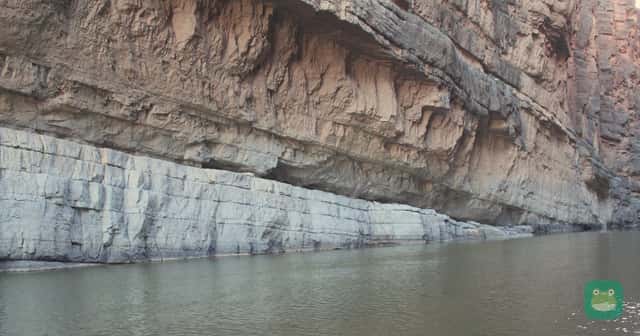
The fight over border-wall construction in the Big Bend region of West Texas is now fully briefed at the Supreme Court. On Thursday, October 29, the landowners and groups that won a lower-court order halting the work asked the justices to leave that order in place. The Trump administration had asked the Court on October 21 to lift it, and to go further by taking up the case and reversing the lower court without full briefing.
The case is Mullin v. Friends of the Ruidosa Church, No. 26A560. The Supreme Court docket shows that Justice Samuel Alito, who handles emergency applications from the Fifth Circuit, called for a response on October 22 and set a deadline of 4 p.m. on October 29. The plaintiffs filed on time. An immigration-restriction group filed a brief the same day supporting the government. The full Court could act at any time.
At stake is how far courts can review the Homeland Security secretary's power to set aside environmental and other laws to build border barriers quickly. Congress wrote that power in 1996 and strengthened it in 2005. According to the government, no court had ever upheld a challenge to the substance of a waiver until this one.
How the case reached the Court#
Starting in February, then-Homeland Security Secretary Kristi Noem and her successor, Markwayne Mullin, issued three waivers covering the Big Bend Sector, according to the government's application. They relied on Section 102 of the Illegal Immigration Reform and Immigrant Responsibility Act of 1996 (IIRIRA). That law lets the secretary "waive all legal requirements" needed "to ensure expeditious construction" of barriers and roads. In each waiver, the secretary found that the Big Bend area "is an area of high illegal entry." The waivers appear in the Federal Register at 91 Fed. Reg. 7297 (February 17), 91 Fed. Reg. 27969 (May 15) and 91 Fed. Reg. 46939 (July 27), according to the plaintiffs' brief.
The plaintiffs are the Friends of the Ruidosa Church, a nonprofit formed to preserve a historic church in Presidio County; Danny William Miller, a Rio Grande river guide and landowner; and the Center for Biological Diversity, an environmental group. The center filed the suit in April, the Texas Tribune reported.
IIRIRA limits these suits. Federal district courts may hear only claims "alleging a violation of the Constitution," and the only appeal is to the Supreme Court. That is why the case skipped the Fifth Circuit.
On October 2, U.S. District Judge Kathleen Cardone in El Paso barred DHS from building barriers or doing "ground disturbing activities" in the Big Bend Sector "until and unless" it complies with the laws the waivers set aside. Her written opinion followed on October 14.
Cardone's reasoning turned on the major questions doctrine. That doctrine says that when Congress gives an agency power over matters of vast economic or political significance, it must say so clearly. She called it a "constitutional … rule," which let her hear the claim despite IIRIRA's limit, SCOTUSblog reported. She then read the waiver power together with a neighboring provision that authorizes barriers "in areas of high illegal entry." Big Bend, she found, "comprises over 25% of the U.S.-Mexico border" but accounts for "between 0.3% and 2.2%" of apprehensions. "If the Big Bend Sector is an area of high illegal entry, so is every other sector, and the waiver authority would apply to the entire U.S.-Mexico border," she wrote.
On October 20, Cardone refused to pause her order. She agreed the government would suffer "at least some degree of irreparable harm" without a pause. But she wrote that the plaintiffs' environmental, economic and recreational harms outweighed it. The main harm to the government, she said, was "a temporary delay" while she decides pending summary judgment motions.
The government's application#
Solicitor General D. John Sauer's application makes two main arguments.
Jurisdiction. Sauer argues that Cardone had no power to hear the claim at all. The major questions doctrine, he writes, asks "whether Congress in fact meant to confer the power the agency has asserted." That is a question about statutory authority. Under Dalton v. Specter (1994), he argues, claims that an official exceeded statutory authority "are not constitutional claims." Treating them as constitutional would, in his view, erase the line Congress drew in IIRIRA.
The merits. Even if the doctrine applied, Sauer argues, Congress spoke clearly. IIRIRA "addresses head-on" whether the secretary can waive laws such as the Endangered Species Act and the National Environmental Policy Act. He notes that secretaries "issued waivers like these repeatedly for decades." He also argues that no court had ever sustained a challenge to the substance of a waiver before this one. He cites a 2019 ruling rejecting such a challenge by then-District Judge Ketanji Brown Jackson.
Harm and the balance of interests. The application says the Border Patrol apprehended over 89,000 people trying to cross in the Big Bend Sector between fiscal years 2021 and 2025, "and those are just the aliens who were detected." It cites growing drug seizures and says the Sinaloa and Juarez cartels operate across the border. A "300-plus-mile gap in border defenses," it argues, "would act as a dangerous magnet for cartels and other bad actors." Sauer points to Trump v. Sierra Club (2019), in which the Court allowed other border-wall work to go ahead while litigation continued. He asks the Court to pause the injunction, treat the application as a petition for review, and summarily reverse.
The plaintiffs' response#
The plaintiffs' response, filed by Eric Glitzenstein of the Center for Biological Diversity, runs 40 pages, according to SCOTUSblog.
It opens by warning that a pause would let the government "immediately resume blasting, bulldozing, road construction, and other border barrier-related construction" in one of the most remote parts of the country. The area includes Big Bend National Park, Big Bend Ranch State Park and "nearly 200 miles" of the Rio Grande Wild and Scenic River corridor, the brief says.
The record. The plaintiffs stress that the government "declined to call a single witness" or "introduce any evidence" at the evidentiary hearing. The plaintiffs presented six fact witnesses and two experts, the brief says. After the injunction, the government filed new declarations. The plaintiffs say those "identify the apprehension of just 18 individuals over a period of years, only some of whom were alleged to have crossed in Big Bend." They cite Cardone's finding that the sector has the lowest apprehension rates on the southern border, "lower than even the northern border's Buffalo Sector."
The government's own pause. The brief says that after construction began, and "following a bipartisan groundswell of intense opposition," DHS "voluntarily paused construction across a vast portion of the project area for weeks." That pause, it argues, "cannot be reconciled" with the claim that emergency relief is needed now.
The law. The plaintiffs argue that waiving "myriad federal, state, local, and tribal laws across vast geography," including "through national and state parks where border crossings are miniscule," is "a truly 'extraordinary' assertion of power," SCOTUSblog reported. "Whatever authority Congress delegated, it did not clearly authorize the sweeping exercise of power asserted here," they wrote. They argue Dalton stands only for the point that not every presidential action exceeding statutory authority is a constitutional violation, and that Sierra Club did not involve waivers.
Harm. Citing Cardone's findings, the brief says construction would cause injuries lasting "decades if not centuries," including fragmented wildlife habitat, altered water flows and damaged desert soils.
The government's supporters#
The Federation for American Immigration Reform (FAIR), which says it "strongly believes that a continuous wall on the southern border is in America's best interest," filed an amicus brief backing the government. Its two main headings argue that "the major questions doctrine is not constitutional" and that "the major questions doctrine is not implicated here."
The politics in Texas#
The project has drawn opposition from both parties in Texas. In August, the Texas Tribune reported that state Attorney General Ken Paxton, the Republican nominee in the Texas U.S. Senate race, said "destroying one of our state's greatest natural treasures with unnecessary roads and barriers is not smart border security." His Democratic opponent, state Rep. James Talarico, had spent weeks criticizing the plans, the Tribune reported.
Sen. Ted Cruz welcomed a construction pause and said "the tools needed to secure the border in Big Bend are likewise different than those needed in a dense urban environment," without condemning the project. Republican Gov. Greg Abbott said Mullin had "committed to me that they will not be building a wall or a fence in Big Bend National Park." Comptroller Don Huffines called a permanent wall through the park "one of the dumbest ideas I've heard in a long time." Former Land Commissioner Jerry Patterson, a Republican, called the issue "a huge liability" and pointed to "a $7.5 billion fix in no-bid contracts."$
The Tribune reported that the Big Bend Sector covers 517 of the border's 1,954 miles and accounted for 1.3% of the 237,538 apprehensions recorded across the border last fiscal year. CBP officials have repeatedly said there are no plans for a wall in the park itself, according to the Tribune. The plans include an access road and vehicle barriers in the park and 30-foot barriers on private land outside it.
Weighing the arguments#
For the administration. The government's strongest point is the text. Congress gave the secretary an explicit power to waive "all legal requirements," and it limited court review to constitutional claims. If the major questions doctrine is a tool for reading statutes, as FAIR and the government argue, then a claim built on it is statutory and falls outside what IIRIRA lets district courts hear. The government also argues that an open stretch of more than 300 miles invites cartel traffic, and that Congress meant these projects to move fast.
For the plaintiffs. The plaintiffs' strongest point is the record. The government offered no witnesses at the hearing. Its own numbers show Big Bend has the lowest apprehension rate on the southern border. And it paused construction for weeks on its own. If "high illegal entry" means anything, they argue, it cannot cover every mile of the border. They also note that the harm from blasting and road-building in a national park cannot be undone if they later win.
Claims to treat with care#
The government's figure of more than 89,000 apprehensions covers five fiscal years across a sector of several hundred miles. The plaintiffs' figure of 18 people refers only to individuals named in the government's later declarations. Neither number alone settles whether the area is one of "high illegal entry." The government's description of Cardone's order as a "judicial usurpation" of Congress's commands, and the plaintiffs' description of the waivers as an "extraordinary assertion" of power, are arguments, not findings. The legal questions remain open until the Court rules.
The Court's other immigration order this week#
On Tuesday, October 27, the Court declined to restore a 2024 rule that allowed immigration judges to suspend some deportation proceedings, a practice known as administrative closure. In a brief, unsigned order issued without comment, it turned down a request from Baltimore, New Haven, Columbus and the legal-services group Centro Legal de la Raza, SCOTUSblog reported. Texas sued over the rule in June. Within hours, the Justice Department and Texas asked Chief U.S. District Judge Reed O'Connor to enter judgment for the state, and he did so the same day. The challengers called the resulting judgment the product of "egregious collusion." The government said their request improperly tried to turn a dispute over whether they could join the case into "a far-reaching attack on the merits."
The calendar from here#
The government may file a reply. The Court can then grant or deny the stay, and it could also act on the request to take up the case. Cardone has summary judgment motions pending, so a final ruling in the district court could come first. Our United States election guide follows the Texas races where the issue has surfaced, and our profile of President Donald Trump covers his administration's border record.
This story concerns a court dispute over agency authority. The politicians quoted are commenting on it, not acting on it, so we did not include campaign-finance figures.
This AI-assisted report was prepared on October 30, 2026, from the court filings and news reports linked above.
Differing perspectives
Should the Supreme Court let border wall construction resume in the Big Bend Sector while the case continues?
Each position is summarized as its supporters make it, with equal weight and in alphabetical order. A summary is not an endorsement; the evidence for each is weighed in the story above.
A baseless injunction that halts a major portion of border wall construction
Who holds it: Solicitor General, for DHS Secretary Markwayne Mullin and CBP
In its Oct. 21 application, the government wrote: "This case involves a baseless injunction that halts a major portion of the construction of the border wall." It says Congress gave the secretary broad authority "to waive all legal requirements" needed for "expeditious construction," and stripped federal courts of jurisdiction over non-constitutional challenges to a waiver decision.
In their words: Application for a stay, U.S. Supreme Court No. 26A560, Oct. 21, 2026 ↗
Permanent alteration of an irreplaceable landscape
Who holds it: Friends of the Ruidosa Church, Center for Biological Diversity and Danny William Miller Jr., respondents
In their Oct. 29 response, the respondents say a stay would let the government "immediately resume blasting, bulldozing, road construction" in the Big Bend region. They write that the relief "would result in the permanent alteration of an irreplaceable landscape." They say the injunction "preserve[s] the status quo" while pending summary judgment motions are resolved.
In their words: Opposition to stay application, U.S. Supreme Court No. 26A560, Oct. 29, 2026 ↗
Cite this article
567politics News Desk. “Big Bend border wall fight is fully briefed at the Supreme Court.” 567politics. Published 2026-10-30. Updated 2026-11-02. https://www.567politics.com/news/big-bend-border-wall-supreme-court-filings-october-2026
Wikipedia citation
{{cite news |title=Big Bend border wall fight is fully briefed at the Supreme Court |url=https://www.567politics.com/news/big-bend-border-wall-supreme-court-filings-october-2026 |work=567politics |author=567politics News Desk |date=2026-10-30 |language=en}}CSL-JSON for reference managers
{
  "id": "https://www.567politics.com/news/big-bend-border-wall-supreme-court-filings-october-2026",
  "type": "article-newspaper",
  "title": "Big Bend border wall fight is fully briefed at the Supreme Court",
  "URL": "https://www.567politics.com/news/big-bend-border-wall-supreme-court-filings-october-2026",
  "container-title": "567politics",
  "language": "en",
  "author": [
    {
      "literal": "567politics News Desk"
    }
  ],
  "issued": {
    "date-parts": [
      [
        2026,
        10,
        30
      ]
    ]
  }
}Citations identify this article and its publication date. Assess the reporting and its linked sources before using it as evidence.
Read this article as Markdown or JSON. Cite the original page and retain its sources, dates and qualifications.
Embed this article summary
Paste this HTML into your page. The summary stays linked to the full story and updates with it. No account required.
<iframe src="https://www.567politics.com/embed/news/big-bend-border-wall-supreme-court-filings-october-2026?theme=auto" title="Big Bend border wall fight is fully briefed at the Supreme Court by 567politics" width="100%" height="440" style="border:0;max-width:100%" loading="lazy"></iframe>
<p style="font-size:14px">Big Bend border wall fight is fully briefed at the Supreme Court by <a href="https://www.567politics.com/news/big-bend-border-wall-supreme-court-filings-october-2026" rel="nofollow">567politics</a></p>
<script async src="https://www.567politics.com/embed.js"></script>
READ BEYOND 567POLITICS
Alternate sources & perspectives
Independent coverage and primary evidence to help you compare arguments. A link is not an endorsement; perspective labels describe the linked material.
- primary evidence
Docket No. 26A560, Mullin v. Friends of the Ruidosa Church ↗
Supreme Court of the United States
Filing dates, Justice Alito's Oct. 22 call for a response, and counsel of record.
- primary evidence
Application for a stay of the injunction (Solicitor General) ↗
U.S. Department of Justice, Office of the Solicitor General
The government's Oct. 21 jurisdiction, merits and harm arguments, and its request for summary reversal.
- primary evidence
Response in opposition to the application for a stay ↗
Center for Biological Diversity (counsel for respondents)
The plaintiffs' Oct. 29 response on the record, the construction pause, the major questions doctrine and environmental harm.
- right argument
Brief of amicus curiae Federation for American Immigration Reform ↗
Federation for American Immigration Reform
Advocacy group supporting a continuous southern border wall; argues the major questions doctrine is not constitutional and does not apply.
- primary evidence
Order denying motion to stay preliminary injunction (Oct. 20, 2026) ↗
U.S. District Court for the Western District of Texas (via CourtListener)
Judge Cardone's balance-of-harms reasoning for keeping the injunction in place.
- independent analysis
Groups ask Supreme Court to leave lower court order in place halting border wall construction in southwestern Texas ↗
SCOTUSblog
Summary of both sides' filings and Cardone's major questions reasoning.
- independent analysis
Court declines to restore Biden-era regulation allowing some deportation proceedings to be suspended ↗
SCOTUSblog
The Court's Oct. 27 order on the administrative-closure rule.
- independent analysis
Judge halts border barrier construction in Big Bend ↗
The Texas Tribune
The Oct. 2 injunction, the plaintiffs and DHS's stated goals.
- independent analysis
Texas Republicans tread carefully on Big Bend border plans ↗
The Texas Tribune
Reaction from Paxton, Cruz, Abbott, Huffines, Patterson and Democrats; sector apprehension figures.
Reviewed 2026-10-30. Built from the Supreme Court docket and filings in No. 26A560, the district court's stay denial, SCOTUSblog and Texas Tribune reporting, all opened and read on Oct. 30, 2026. Party filings are labeled primary evidence; FAIR's amicus brief is an advocacy filing supporting the government. The discovery tool returned only irrelevant results (films, sports, dictionaries), and we found no standalone opinion columns on the Oct. 29 filings to pair as left and right arguments, so none are listed. No Supreme Court ruling had been entered as of review.