US and Russia veto rival UN drafts, leaving the Western Sahara mission without a mandate after Oct. 31
Russia blocked a US text backing Morocco's autonomy plan; the US blocked a plain renewal. Morocco wants the mission out, and the Polisario Front thanked Moscow.
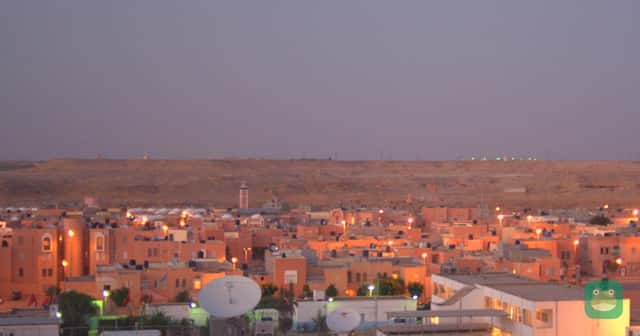
The United Nations peacekeeping mission in Western Sahara reached the last day of its mandate on Saturday, October 31, with no renewal in place. On Friday the Security Council adopted neither of two rival drafts. Russia vetoed a United States text that would have extended the mission for a year while renaming it and making Morocco's autonomy plan the "only basis" for talks. The United States then voted against a Russian text that would have renewed the mission unchanged. Within hours, Morocco's Royal Office said the mission's staff and equipment should leave the territory "in the coming days," while the Polisario Front thanked Russia for blocking the American draft.
The UN Mission for the Referendum in Western Sahara is known by its French acronym, MINURSO. The UN created it in 1991 to prepare a vote on the territory's future and to watch over a ceasefire between Morocco and the Algeria-backed Polisario Front. The referendum never took place. The outcome now depends on whether Council members find a late compromise, how the UN Secretariat handles a mission without a mandate, and how the two parties act on the ground.
What happened in the Council on October 30#
According to UN meetings coverage, the US draft (S/2026/868) received 11 votes in favor, one negative vote from Russia, which as a permanent member counts as a veto, and three abstentions. The Russian draft (S/2026/870), which would have extended the mandate to October 31, 2027, received three votes in favor (China, Somalia and Russia), one negative vote from the United States and 11 abstentions. A resolution needs at least nine votes in favor and no veto from a permanent member, so the Russian text would have failed even without the American vote.
The UN summary names China and Pakistan among the abstainers on the US draft; its list of three names repeats China, an apparent typographical error. The Polisario Front's statement after the vote, as reported by the Moroccan outlet Al Ayam 24, thanked China, Pakistan and Somalia for abstaining. Reuters, via the Straits Times, reported that France and the United Kingdom, along with eight elected members, backed the US resolution.
The independent monitoring group Security Council Report described how the two drafts reached the floor. The United States, which leads drafting on Western Sahara, circulated a zero draft on October 22 and two revisions. China and Russia objected to the second revision, and Russia circulated its own one-page text on the morning of the vote. Bahrain, Colombia, Denmark, the Democratic Republic of the Congo, France, Greece, Latvia, Liberia, Panama and the United Kingdom apparently supported the US text during negotiations, the group reported.
What each draft would have done#
The US text would have extended the mission to October 31, 2027 and renamed it the UN Mission in Western Sahara (MINUSO) from November 1, dropping the "R" for referendum. It asked the Secretary-General for proposals on the mission's structure, staffing and resources by January 30, 2027, according to Security Council Report. It described Morocco's expanded autonomy proposal as the "only basis" for continuing discussions and genuine autonomy under Moroccan sovereignty as the "most feasible" solution. It also asked the UN refugee agency to complete a registration of refugees in the Tindouf area of Algeria within six months.
The zero draft went further: it would have converted the operation into a special political mission in May 2027 and called autonomy the "only feasible" solution. Later versions changed "only" to "most" and added a commitment to a "mutually acceptable political solution" in line with the UN Charter, "including the principle of self-determination," Security Council Report wrote.
The Russian text was a straightforward one-year rollover with no change to the name or structure. Its preamble backed the UN envoy, Staffan de Mistura, and the United States in advancing this year's talks. Those talks, in Washington and Madrid, brought together Morocco, the Polisario Front, Algeria and Mauritania. It made no reference to Morocco's autonomy proposal.
The background: Resolution 2797 and the Secretary-General's review#
The vote came one year after Resolution 2797 of October 31, 2025. That resolution renewed the mission and, as DW reported, backed Morocco's autonomy proposal as the "most feasible" solution. It also asked the Secretary-General for a strategic review of the mission.
That review, sent to Council members on October 13, found broad agreement that the mission remained relevant but cited restrictions on movement and financial shortfalls, according to Security Council Report. Its options ranged from a leaner posture with mobile teams and satellite monitoring to reassessing the mission's presence if talks stalled. Secretary-General António Guterres recommended a one-year renewal and warned that the risk of escalation would rise without the mission, the Moroccan site Zawaya24 reported. The same report recorded 153 military observers deployed against an authorized strength of 218. Reuters, citing a Secretary-General report, put the mission at 155 military personnel and a cost of $62 million in the current budget year. We could not reconcile the small gap between the two personnel figures from the documents we reviewed.
Hostilities have continued at a low level since the Polisario Front said in November 2020 that it was resuming "armed struggle," Reuters reported.
The case for the US approach#
US Ambassador Mike Waltz framed the American draft as an attempt to align the mission with reality. He said the veto had been used to "preserve the letter 'R' for referendum in the mission's name, even though the United Nations has not been preparing to hold such a vote for decades," according to DW and Reuters. The UN summary quotes him rejecting "renewing mandates year after year for decade after decade." He noted that the mission's own website says referendum preparations ended more than 20 years ago.
According to Hespress English, Waltz said the mission spends about 80% of its time resupplying itself, that ground patrols east of the sand berm face restrictions and that aerial operations remain prohibited. He recalled that Kofi Annan raised the possibility of ending the mission in 2002, after 11 years and nearly $500 million in spending. We did not independently verify the 80% figure.
"Since this vote will result in a drawdown, we need to ensure that it be orderly and stable, that it protects UN personnel and addresses legitimate security and humanitarian needs," he told the Council, Hespress reported, citing AFP. He credited President Donald Trump with bringing the parties "back to the table" and said that diplomatic work "should not stop."
European members backed the American text while warning about what comes next. France's representative said an "abrupt closure" of the mission "would be exceedingly alarming in the context of resumed tensions," according to the UN summary. The United Kingdom voiced "immense disappointment" at the veto.
Morocco went further than the United States. Its Royal Office issued a statement, published in full by Hespress with the state news agency MAP. "A 35-year chapter has now come to a close," it said. It said the Council should now drop the issue from its agenda. The Secretary-General's reports and the envoy's briefings would no longer be needed. In its words, the UN political process "is thus suspended." Morocco "remains firmly committed to the ceasefire," the palace said. It also claimed that more than two-thirds of UN members support autonomy under Moroccan sovereignty. We did not find an independent count that confirms the two-thirds figure.
The case against the US approach#
Russia's ambassador, Vassily Nebenzia, argued that the American text would have prejudged the territory's status. "We stress the fact that the Security Council cannot automatically predetermine matters relating to sovereignty," he said, according to Reuters. "The Security Council must not give a blessing to such a one-sided approach." The UN summary records him calling it "a life-saving veto." In his view, dropping the "R" amounted to "the betrayal of the interest of the residents of the Tindouf camp."
China's representative said there had been insufficient consultation on the US draft and that "the Mission's mandate should not be used to exert political pressure," according to the UN summary. During negotiations, Security Council Report wrote, China argued that predetermining the outcome could undermine the parties' confidence and that keeping the mission's name and mandate would preserve continuity. Denmark, which supported the draft, had pressed during negotiations for self-determination to "meaningfully guide" the process rather than be subordinated to a predetermined result.
The Polisario Front had warned the Council in advance. In an October 22 letter to the Council president, published by the Sahrawi state agency SPS, its UN representative Sidi Mohamed Omar called the zero draft "an extremely dangerous, unprecedented departure" from international law. He cited the International Court of Justice for the position that sovereignty belongs to the Sahrawi people. He warned that the Front would "disengage from the peace process as a whole" if the draft passed without real changes. After the vote, Omar thanked Russia. He said the US text would have undermined "the free exercise by the Sahrawi people of their inalienable right to self-determination and independence," according to DW. The Front said it was studying the outcome and would publish its position later, Al Ayam 24 reported.
Algeria, which hosts the Tindouf camps, thanked Russia for its "technical rollover" and described the US text as "an egregious injustice," according to the UN summary. Morocco's representative replied: "Let these people go back to Morocco."
Where the evidence is thin and the arguments diverge#
On the facts, both sides agree that no referendum has been held and that the mission stopped preparing one long ago. The dispute is over what follows from that history. The United States argues that a mandate built around an abandoned task should be rewritten. Russia, China, Algeria and the Polisario Front argue that the original framework reflects a legal right that cannot be dropped because it has not been implemented.
Morocco's statement and some supporters of the US draft presented the choice as one between ending the status quo and keeping a failed mission. That framing leaves out options in the Secretary-General's own review, such as a leaner mission or a time-limited extension tied to political progress. On the other side, Russia's envoy called the US text a "betrayal" of camp residents. That charge sets aside the revised draft's reference to self-determination. It also skips its request for refugee registration, which Waltz tied to conditions in the camps. In both cases the dispute is over premises and priorities rather than a single provable fact.
Oxfam said that "the loss of MINURSO's monitoring and de-escalation functions risks undermining security and stability, with serious consequences to civilians," Reuters reported. Western Sahara Resource Watch is an advocacy group that backs Sahrawi self-determination. It wrote that if the mandate lapses, the legal basis for ceasefire monitoring and mine clearance "will become uncertain," though the wider UN political process would not end automatically. In the Council, Waltz had argued that the mission's monitoring is already constrained, and the Secretary-General's review acknowledged movement restrictions and staffing gaps.
This dispute does not map neatly onto left and right. The US draft drew support from governments as different as France, Bahrain, Colombia and Liberia, while the opposing camp includes Russia, China and Algeria. We have therefore labeled arguments by who made them rather than by ideology.
An independent assessment from before the vote#
The International Crisis Group, a conflict-prevention organization, published a detailed commentary on October 9 by its North Africa director, Riccardo Fabiani. It credits Washington with bringing Morocco and the Polisario Front into direct talks for the first time since 2019, with Algeria and Mauritania attending, in three rounds between January and February. It also recalls that the United States recognized Moroccan sovereignty during Trump's first term, in exchange for Morocco normalizing relations with Israel.
The commentary says the talks stalled after the United States and the UN pushed to make Morocco's plan the center of negotiations, which the Front rejects. It describes a Polisario rocket attack on the city of Smara in May. In June, Moroccan forces killed Lahbib Abdelaziz, son of a former Polisario leader. US officials also met the Sahrawi Movement for Peace, a smaller group that says it will negotiate over autonomy. Members of Congress have also filed bills to make the Secretary of State, now Marco Rubio, list the Front as a terrorist group. The administration has not backed them, the group wrote.
Crisis Group warned against ending MINURSO. It wrote that Morocco said in 2022 it would occupy the UN buffer zone if the mission left. The Front might then attack from Algeria or Mauritania, which could draw those neighbors into the fight. It urged confidence-building steps from both sides, including family visits between the camps and the territory and a unilateral Polisario truce. Its analysis is a forecast of risk, not a finding about what will happen.
Open questions on withdrawal, the ceasefire and the talks#
As of Saturday morning, Eastern time, we found no confirmed plan for a short-term extension, which Western Sahara Resource Watch said had been discussed. If none is adopted, the mission's legal authority lapses at the end of October 31.
Several questions remain open:
- Withdrawal timing. Morocco wants the mission's personnel, vehicles and equipment gone "in the coming days." The United States has called for an "orderly and stable" drawdown. We found no public UN Secretariat plan as of this writing.
- The ceasefire. Morocco says it remains committed to the ceasefire. The Polisario Front, which said in 2020 that it was resuming armed struggle, has not yet issued its formal position.
- The political track. Morocco says the UN process is "suspended." The United States says diplomatic work alongside the UN envoy "should not stop." Whether the Council keeps Western Sahara on its agenda is now itself in dispute.
How we reported this#
This story relies on the UN's official meetings coverage, the Moroccan Royal Office statement, the Polisario Front's October 22 letter, and reporting from Reuters, AFP, DW, Security Council Report and Crisis Group. The US Mission to the UN statement on the vote was not reachable when we checked. UN meetings coverage summarizes speeches rather than transcribing them. Western Sahara Resource Watch is an advocacy organization and is identified as such. Our methodology and editorial standards explain how we source, attribute and correct stories.
Differing perspectives
Should the UN Security Council keep the Western Sahara mission in place after its mandate expired?
Each position is summarized as its supporters make it, with equal weight and in alphabetical order. A summary is not an endorsement; the evidence for each is weighed in the story above.
A 35-year chapter has now come to a close
Who holds it: Royal Office of Morocco
In its Oct. 30 statement, the Royal Office said the non-renewal "is a major development and a significant step toward the definitive closure of the Moroccan Sahara issue at the United Nations." It said the mission's presence in the southern provinces "is expected to cease in the coming days" and that the Council's periodic meetings on the matter "would no longer be necessary."
In their words: Hespress English, Royal Office statement, Oct. 30, 2026 ↗
Any attempt to depart unilaterally ... is utterly unacceptable
Who holds it: Frente Polisario
In its Oct. 31 communique, the Polisario Front said it noted "with satisfaction" that the U.S. draft was not adopted. It said the mission was deployed on the two parties' mutual agreement, so "any attempt to depart unilaterally from this mutually accepted framework and alter the mission's mandate to align with the position of Morocco ... is utterly unacceptable."
In their words: Sahara Press Service, Polisario communique, Oct. 31, 2026 ↗
Mandates that haven't worked or cannot work
Who holds it: Mike Waltz, U.S. ambassador to the United Nations
After the Oct. 30 vote, the U.S. delegate said the draft was "a good faith attempt" to make the mission "fit for purpose." He added: "Renewing mandates year after year for decade after decade — mandates that haven't worked or cannot work — was not something we can support." He said any drawdown should be orderly and stable.
In their words: UN Meetings Coverage, Security Council, Oct. 30, 2026 ↗
Cite this article
567 Politics staff. “US and Russia veto rival UN drafts, leaving the Western Sahara mission without a mandate after Oct. 31.” 567politics. Published 2026-10-31. Updated 2026-11-02. https://www.567politics.com/news/western-sahara-minurso-vetoes-security-council-october-2026
Wikipedia citation
{{cite news |title=US and Russia veto rival UN drafts, leaving the Western Sahara mission without a mandate after Oct. 31 |url=https://www.567politics.com/news/western-sahara-minurso-vetoes-security-council-october-2026 |work=567politics |author=567 Politics staff |date=2026-10-31 |language=en}}CSL-JSON for reference managers
{
  "id": "https://www.567politics.com/news/western-sahara-minurso-vetoes-security-council-october-2026",
  "type": "article-newspaper",
  "title": "US and Russia veto rival UN drafts, leaving the Western Sahara mission without a mandate after Oct. 31",
  "URL": "https://www.567politics.com/news/western-sahara-minurso-vetoes-security-council-october-2026",
  "container-title": "567politics",
  "language": "en",
  "author": [
    {
      "literal": "567 Politics staff"
    }
  ],
  "issued": {
    "date-parts": [
      [
        2026,
        10,
        31
      ]
    ]
  }
}Citations identify this article and its publication date. Assess the reporting and its linked sources before using it as evidence.
Read this article as Markdown or JSON. Cite the original page and retain its sources, dates and qualifications.
Embed this article summary
Paste this HTML into your page. The summary stays linked to the full story and updates with it. No account required.
<iframe src="https://www.567politics.com/embed/news/western-sahara-minurso-vetoes-security-council-october-2026?theme=auto" title="US and Russia veto rival UN drafts, leaving the Western Sahara mission without a mandate after Oct. 31 by 567politics" width="100%" height="440" style="border:0;max-width:100%" loading="lazy"></iframe>
<p style="font-size:14px">US and Russia veto rival UN drafts, leaving the Western Sahara mission without a mandate after Oct. 31 by <a href="https://www.567politics.com/news/western-sahara-minurso-vetoes-security-council-october-2026" rel="nofollow">567politics</a></p>
<script async src="https://www.567politics.com/embed.js"></script>
READ BEYOND 567POLITICS
Alternate sources & perspectives
Independent coverage and primary evidence to help you compare arguments. A link is not an endorsement; perspective labels describe the linked material.
- primary evidence
Security Council fails to adopt two draft resolutions on MINURSO mandate (SC/16498) ↗
United Nations Meetings Coverage
Official record of both votes and members' explanations; its abstention list repeats China by mistake.
- primary evidence
Full Royal Office statement on end of MINURSO mandate and future of Sahara issue at UN ↗
Hespress English
Morocco's official position, reproduced in full by a Moroccan outlet.
- primary evidence
Polisario Front letter to the Security Council (SPS, Oct. 22) ↗
Sahara Press Service (Polisario/SADR official agency)
The Polisario Front's stated position on the US draft before the vote.
- independent analysis
Western Sahara: vote on a draft resolution renewing MINURSO's mandate ↗
Security Council Report
Nonpartisan briefing on the negotiations and the rival texts.
- independent analysis
US and UN will need more patience to resolve Western Sahara conflict ↗
International Crisis Group
Pre-vote analysis of US strategy and risks of ending the mission.
- independent analysis
Russia, US veto rival UN Western Sahara resolutions, leaving peacekeeping mission in limbo ↗
The Straits Times (Reuters)
Wire report with staffing and budget figures and Oxfam's warning.
- independent analysis
UN peacekeeping mission in Western Sahara to expire amid US-Russia vetoes ↗
DW
German public broadcaster's account of the votes and reactions.
- other perspective
US says MINURSO cannot continue unchanged after vetoing Russian Sahara resolution ↗
Hespress English
Moroccan outlet's account of the US explanation of vote by Ambassador Waltz.
- other perspective
US says it will support orderly MINURSO withdrawal after Security Council deadlock ↗
Hespress English (AFP)
AFP-sourced report on US plans for a drawdown.
- other perspective
US and Russia veto competing Western Sahara resolutions, leaving MINURSO's future uncertain ↗
Western Sahara Resource Watch
Advocacy group supporting Sahrawi self-determination; legal consequences of a lapse.
- other perspective
Polisario thanks China, Pakistan and Somalia after Council vote ↗
Alayam24
Moroccan outlet reporting the Polisario Front's reaction (Arabic).
- other perspective
Guterres report on MINURSO and mandate extension ↗
Zawaya24
Summary of the Secretary-General's report, including observer staffing figures.
Reviewed 2026-10-31. The dispute over MINURSO divides governments, not US left and right, so sources are grouped as primary records (UN, Morocco's Royal Office, the Polisario Front), independent analysis (Security Council Report, Crisis Group, Reuters, DW) and partisan or advocacy views from both sides of the conflict (Moroccan outlets and Western Sahara Resource Watch). The US Mission to the UN statement page and the AP story could not be loaded during research, so neither is listed.