Machado returns to Venezuela and presses for a 2027 vote as Washington sets out its election sequence
Machado thanked Trump and urged a 2027 vote; interim President Rodríguez promised elections with no date as the US laid out court and council reforms.
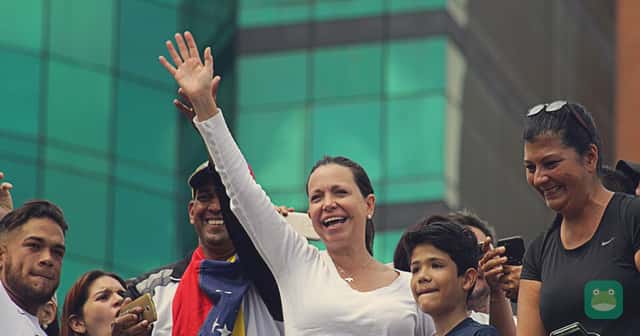
Venezuelan opposition leader María Corina Machado used her first news conference after returning from exile to press for a presidential election in 2027. She also thanked the Trump administration for the January operation that removed Nicolás Maduro from power. Speaking in Caracas on Thursday, October 29, the Nobel Peace Prize laureate called the country's move toward democracy "irreversible." She said she had received no message from the interim president, Delcy Rodríguez, and would not sit at the negotiating table herself.
Minutes earlier, Rodríguez went on state television to promise that elections would be held under a "renewed" electoral authority. She did not give a date. She also ordered security forces not to detain anyone without a court order, except in cases of crimes in progress.
The two speeches set out the main questions now facing Venezuela. They concern when a vote can happen, who controls the steps that lead to it, and how much the United States will push. In Washington, officials of the Trump administration have described a detailed sequence of reforms, but they have not committed to a year.
Machado's return and her first remarks#
Machado announced on Sunday, October 25, that she was back in Venezuela after about 10 months abroad. Tens of thousands of supporters greeted her in Caracas, Foreign Policy reported. She had left the country in December to collect the Nobel Peace Prize in Oslo. Al Jazeera reported that US special forces veterans with a group called Grey Bull Rescue helped her leave by boat after a year in hiding. She was most recently in Panama, according to Foreign Policy.
At Thursday's news conference, she credited President Donald Trump, his administration and Secretary of State Marco Rubio. "Thanks to their vision, their courage, and their action on January 3, the floodgate to freedom has been opened," she said, according to Al Jazeera and AFP. That date refers to the US operation that seized Maduro, who now faces drug trafficking charges in New York. He denies them.
She tied her call for a vote to the US plan. "US Secretary of State Marco Rubio has laid out a sequence of steps for moving toward a democratic transition that includes presidential elections in 2027," she said, as translated by DW. "The date of the election is the date of liberation." She did not give an exact timeline, the BBC reported. Before her return, her movement had sought presidential elections by July 2027 at the latest, Diario Las Américas reported.
Machado said her priorities included dismantling what she called the country's repressive system and freeing political prisoners. "I come to carry out a task and complete a mandate," she said, according to the BBC. She said she would not take part personally in the talks between opposition representatives and the government. She wished them well, saying she wanted an electoral body reformed so that every Venezuelan, at home and abroad, could vote.
She also dismissed as illogical Rodríguez's view that her government should oversee a transition of this size, the BBC reported. She has said before that she would run for president if an election were held.
Where Machado parts ways with Washington#
Machado praised the Trump administration, but she also criticized one of its signature policies. She faulted the oil agreement Washington reached with the Rodríguez government in August. "This agreement does not reflect the levels of transparency that Venezuelan society wants," she said, according to Al Jazeera and DW.
DW reported that she sidestepped questions about two Trump remarks. In January, Trump said she did not have enough support to lead Venezuela right away. On October 27, at a campaign rally in Corpus Christi, Texas, he said Venezuela "will become a prosperous country, and who knows? Maybe some day soon it'll become a prosperous 51st state," the Guardian reported. "That's possible," he added.
Her return also sits awkwardly with recent US policy. In recent months, the Trump administration told neighboring governments to block her return, Foreign Policy reported, citing multiple media outlets. On October 26, Rubio said the administration had told Venezuela's interim authorities "weeks and weeks ago" that Machado should be allowed back, the Associated Press reported. We could not find a public explanation that reconciles the two accounts.
Rodríguez's response#
Rodríguez was Maduro's vice president. She took over as acting head of state after his capture, under an order from the Supreme Tribunal of Justice. The Trump administration has backed her as interim leader.
In a short address on Thursday, she said: "There will be elections, all those that our Constitution requires, organized by a renewed electoral authority and with the world as witness." That is our translation of her remarks as reported by the Spanish news agency EFE. She said she had told security agencies that "no person be detained without a judicial order, except in cases of flagrant commission of a crime." She added: "We all have the right to think differently, without fear of reprisals of any kind." Peaceful protest is a constitutional right, she said, as long as it respects the physical and moral integrity of security officers.
Her tone toward Machado has been cooler. Of the crowds at the homecoming, she said on state television that "the show could have been avoided – the airports are right here," according to Al Jazeera. On Monday, without naming Machado, Rodríguez said the opposition leader should feel remorse for backing what she called the "external military-style aggression against Venezuela," Axios reported.
The political prisoner count#
Machado and rights groups say the release of political prisoners must come before any credible vote. The Venezuelan rights group Foro Penal counted 322 political prisoners as of October 26. Of those, 307 were men and 15 were women; 182 were civilians and 140 were military. Some 151 had been convicted and 171 had not. The group sent the list to the Organization of American States and the UN human rights office for verification, the Venezuelan outlet Panorama reported.
Foro Penal vice president Gonzalo Himiob called Rodríguez's order on warrants a positive step. But he noted that the Constitution already requires a warrant. In his view, repression will continue as long as people arrested without those guarantees stay in custody. Rubio has credited the US-backed talks with freeing hundreds of political prisoners, according to Diario Las Américas. We did not find a single public tally that reconciles the government, US and Foro Penal figures.
The US plan: courts first, then the electoral council, then a vote#
On October 26, a senior State Department official gave reporters the most detailed account yet of how Washington expects a vote to happen. The briefing was on background. A transcript was published by Mirage News.
The official described four steps:
- A new supreme court. The opposition, represented by the National Assembly elected in 2015, and the ruling PSUV party, represented by National Assembly President Jorge Rodríguez, have each named members to a nominating committee. It will propose 32 magistrates for the Supreme Tribunal of Justice. The National Assembly must then approve them. The goal is a new court "by mid-December."
- A new electoral council. A similar expert committee will name new members of the National Electoral Council, known as the CNE, without a vote in the National Assembly. By agreement of both sides, the CNE would become a technical body. It would no longer decide which parties may register or who may run.
- A declared vacancy. Rodríguez would then declare a permanent vacancy in the presidency. Under the Constitution, that starts a six-month period for a new election.
- An election date. The new CNE would set the date.
"If we don't have a new TSJ and we don't have a new CNE, we cannot have a credible election," the official said. The official argued that the 2024 vote failed because it was held under the old court and council. The official also said an earthquake had delayed the work by about eight weeks.
The same official argued that economic and security reforms matter too. "If you want a democratically elected government to succeed, you don't want them to inherit an economic apocalypse that brings it down," the official said. Axios reported that Venezuela's debt of about $300 billion and the loyalty of the security services are also on the US list.
Speaking the same day, Rubio would not commit to a date. "What if they just try to wait us out for two years? That's not going to happen," he said, according to Axios. "We have timelines that are agreed to, and so far they've met every one of the timelines." Under the most hopeful schedule, Axios reported, an election could come around June 2027. Administration officials told Axios that the vote could slip to 2028.
Rubio also issued what Axios described as a veiled warning. "You're not going to street-protest your way into a democracy," he said, without naming Machado. Foreign Policy reported that he called the US plan "the only game in town" and said Washington is ready to use tools such as sanctions as leverage on the interim government.
The oil deal in the background#
The oil agreement is the other half of US policy. ProPublica reviewed the 18-page agreement, signed for the United States by Rubio and Defense Secretary Pete Hegseth. It reported that the US government is taking a 35% stake in North American Blue Energy Partners (NABEP), the firm of Venezuelan businessman Alejandro Betancourt. The United States gets a discounted right to buy 20% of NABEP's oil and "first priority" on the rest for 50 years. A majority of the firm's seven-member board must be US citizens. Disputes go to a federal court in Texas. Some news reports have described the deal as giving the United States 20% of Venezuela's oil reserves; ProPublica's review of the text describes the 20% as a share of NABEP's output.
The White House defends the deal. "This historic deal marks a major step toward stabilizing Venezuela's economy after years of hyperinflation and almost no new investment, while more than doubling the United States' oil reserves," spokesperson Taylor Rogers told ProPublica. NABEP says Betancourt has never been charged with a crime.
Critics see it differently. Four ranking Senate Democrats wrote in a September letter that it was "unclear why the American public should support this attempt to entangle the United States with a relatively unknown foreign oil company," ProPublica reported. Machado has described Betancourt as involved in "obscene corruption," ProPublica reported, citing a New York Times interview. Rodríguez has called the agreement "historic."
Machado's camp argues that a vote would help the economy. Her team, and many Venezuelan analysts, say investors will feel safer after an election, Foreign Policy reported. Economist Asdrúbal Oliveros said in a radio interview that "María Corina's arrival forced the United States to define a road map" toward a vote.
How US politicians have responded#
Reactions in Washington have crossed party lines, though the emphasis differs.
On the right, Florida Republicans welcomed Machado's return. Sen. Rick Scott wrote on X that all political prisoners should be freed and that "elections must be called immediately," in our translation of his Spanish-language post as reproduced by Diario Las Américas. That is a faster timetable than the administration's. Rep. Carlos Giménez said in a video that with Machado in Venezuela, "we can follow those steps to eventually reach elections." That is again our translation. Rep. Mario Díaz-Balart called it "a historic moment for the Venezuelan people," in our translation. Rep. María Elvira Salazar wrote in an English-language post on X, also reproduced by Diario Las Américas, that "Venezuelans should decide what kind of country they want and who they want to lead it."$$
On the left, Democrats also welcomed the return while pressing the administration. Sen. Tim Kaine$ wrote on X that the United States should keep pressing the Venezuelan government to guarantee her safety. He also urged concrete steps toward free and fair elections as soon as possible, AlbertoNews reported. Democrats have aimed their sharpest criticism at the oil deal rather than the election plan. Former US diplomats and congressional staff told ProPublica the deal would likely face more scrutiny if Democrats win one or both chambers in the midterms.
Neither party's leaders have offered a detailed alternative to the State Department sequence that we could find.
Weighing the arguments#
The two main positions rest on different readings of the same history. The administration argues that the 2024 election failed because Maduro's allies controlled the court and the electoral council. It says replacing them must come first, and that a new government would fail if it inherited a broken economy and disloyal security forces. That argument has support in the record: the old CNE barred Machado from the 2024 ballot. Her supporters said their candidate, Edmundo González, won that vote, though officials declared Maduro the winner.
Machado's camp and some members of Congress argue that delay carries its own risks. Without a fixed date, the interim government could run out the clock, a concern Rubio himself raised. Foro Penal's count shows that hundreds of people remain in custody despite the new order on warrants.
Some claims cannot yet be tested. No Venezuelan election date exists. No new magistrates have been named. The oil deal's long-term benefits for Venezuelans depend on terms that, according to ProPublica, are still being negotiated. Whether the interim government will meet a mid-December deadline for a new court is the next concrete test.
How we reported this#
This story relies on the State Department's background briefing transcript and on statements by Machado and Rodríguez reported by AFP, DW, the BBC and EFE. It also draws on Foro Penal's count and on reporting from Axios, Foreign Policy, the Associated Press and ProPublica. Translations from Spanish are ours unless noted. Our campaign finance records do not yet include a verified Federal Election Commission snapshot for Secretary Rubio, so this story does not discuss donors; missing data does not mean no donations. We could not load the Associated Press's own story on the news conference, the Hill's roundup of congressional reactions or Foro Penal's website when we checked. Our methodology and editorial standards explain how we source and attribute claims.
Differing perspectives
When and how should Venezuela hold its next presidential election?
Each position is summarized as its supporters make it, with equal weight and in alphabetical order. A summary is not an endorsement; the evidence for each is weighed in the story above.
Elections organized by a renewed electoral authority
Who holds it: Delcy Rodríguez, interim president of Venezuela
In a national address on Oct. 29, Rodríguez said, in a translation from Spanish of EFE's report: "There will be elections, all that our Constitution mandates, organized by a renewed electoral authority and with the world as witness." EFE reported that she did not specify a date. She also said she instructed security forces that no one be detained without a judicial warrant, except in cases of flagrant crime.
In their words: El Universal (Mexico), via EFE, Oct. 29, 2026 ↗
Hold presidential elections in 2027
Who holds it: María Corina Machado, Venezuelan opposition leader
At a Caracas news conference on Oct. 29, her first public remarks since returning from exile, Machado said Secretary of State Marco Rubio "has set out a sequence of events aimed at moving toward a democratic transition that makes clear the holding of presidential elections in 2027." On the U.S. oil deal with Caracas, she said: "This agreement does not reflect the levels of transparency that Venezuelan society wants."
In their words: Al Jazeera and AFP, Oct. 30, 2026 ↗
Cite this article
567 Politics staff. “Machado returns to Venezuela and presses for a 2027 vote as Washington sets out its election sequence.” 567politics. Published 2026-10-31. Updated 2026-11-02. https://www.567politics.com/news/venezuela-machado-return-2027-elections-october-2026
Wikipedia citation
{{cite news |title=Machado returns to Venezuela and presses for a 2027 vote as Washington sets out its election sequence |url=https://www.567politics.com/news/venezuela-machado-return-2027-elections-october-2026 |work=567politics |author=567 Politics staff |date=2026-10-31 |language=en}}CSL-JSON for reference managers
{
  "id": "https://www.567politics.com/news/venezuela-machado-return-2027-elections-october-2026",
  "type": "article-newspaper",
  "title": "Machado returns to Venezuela and presses for a 2027 vote as Washington sets out its election sequence",
  "URL": "https://www.567politics.com/news/venezuela-machado-return-2027-elections-october-2026",
  "container-title": "567politics",
  "language": "en",
  "author": [
    {
      "literal": "567 Politics staff"
    }
  ],
  "issued": {
    "date-parts": [
      [
        2026,
        10,
        31
      ]
    ]
  }
}Citations identify this article and its publication date. Assess the reporting and its linked sources before using it as evidence.
Read this article as Markdown or JSON. Cite the original page and retain its sources, dates and qualifications.
Embed this article summary
Paste this HTML into your page. The summary stays linked to the full story and updates with it. No account required.
<iframe src="https://www.567politics.com/embed/news/venezuela-machado-return-2027-elections-october-2026?theme=auto" title="Machado returns to Venezuela and presses for a 2027 vote as Washington sets out its election sequence by 567politics" width="100%" height="440" style="border:0;max-width:100%" loading="lazy"></iframe>
<p style="font-size:14px">Machado returns to Venezuela and presses for a 2027 vote as Washington sets out its election sequence by <a href="https://www.567politics.com/news/venezuela-machado-return-2027-elections-october-2026" rel="nofollow">567politics</a></p>
<script async src="https://www.567politics.com/embed.js"></script>
READ BEYOND 567POLITICS
Alternate sources & perspectives
Independent coverage and primary evidence to help you compare arguments. A link is not an endorsement; perspective labels describe the linked material.
- primary evidence
Senior State Department official discusses Venezuela (briefing transcript) ↗
US State Department via Mirage News
Background briefing laying out the court, electoral council, vacancy and election-date sequence.
- primary evidence
Delcy Rodríguez promete elecciones con autoridad electoral renovada ↗
El Universal (EFE)
Interim president's televised pledge of elections and order against arrests without warrants (Spanish).
- independent analysis
Machado lauds Trump for 'freedom floodgate,' urges 2027 elections ↗
Al Jazeera (AFP)
Account of Machado's first news conference and Rodríguez's response.
- independent analysis
Machado says US backs 2027 election ↗
DW
Machado's remarks on the US sequence and her criticism of the oil agreement.
- independent analysis
Machado news conference coverage ↗
BBC News
Machado's priorities and her refusal to join the negotiating table.
- independent analysis
Venezuela's election roadmap after Machado's return ↗
Foreign Policy
Analysis of US leverage, the oil deal and investor views of an election.
- independent analysis
Rubio on Venezuela, Machado and elections ↗
Axios
Rubio's remarks on timelines and officials' estimate that a vote could slip to 2028.
- independent analysis
Rubio says Venezuela was told to let Machado return ↗
Associated Press via The Washington Post
Rubio's Oct. 26 account of US messages to the interim authorities.
- left argument
The terms of Trump's Venezuela oil agreement ↗
ProPublica
Review of the deal text; includes the White House defense and Senate Democrats' critical letter.
- right argument
Giménez, Salazar y Díaz-Balart respaldan regreso de María Corina ↗
Diario Las Américas
Florida Republicans' reactions, including Sen. Rick Scott's call for immediate elections (Spanish).
- left argument
Tim Kaine celebra regreso de Machado y pide mantener presión por elecciones ↗
AlbertoNews
Democratic senator's call to keep pressure for free and fair elections (Spanish).
- other perspective
Foro Penal: la represión seguirá mientras haya detenidos ↗
Panorama
Venezuelan rights group's political prisoner count and response to the warrant order (Spanish).
Reviewed 2026-10-31. Built from original reporting and official transcripts opened on Oct. 30-31, 2026. Automated discovery returned only unrelated results (a baseball player, a poet, a restaurant), so it was not used. Primary evidence is the State Department background briefing transcript and Rodríguez's televised remarks as reported by EFE. Right-of-center US views come from Florida Republican lawmakers via Diario Las Américas; left-of-center views come from Sen. Tim Kaine and the Senate Democrats' letter on the oil deal reported by ProPublica. We could not load the AP's own story on the news conference, the Hill's congressional roundup or Foro Penal's website; Foro Penal's figures are taken from Panorama's report.