Supreme Court weighs whether a Georgia DA's office can win on a defense it never pleaded
Younge v. Fulton DA asks whether employers and governments can raise an unpleaded defense at summary judgment if the plaintiff was not harmed.
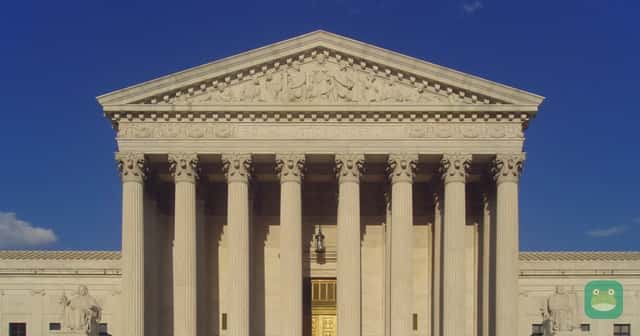
The Supreme Court heard a case on Monday, Nov. 2, that began when a Georgia prosecutor's office fired a top aide in 2019. Jasmine Younge says she was dismissed about two weeks after she told the district attorney she was pregnant. Lower courts never decided whether that was true. They ruled for the office on a defense it had not listed in its formal answer to her lawsuit.
The case is Younge v. Fulton Judicial Circuit District Attorney's Office, No. 25-352. The question is about court procedure, but it reaches far beyond one workplace. It asks what happens when a defendant forgets to plead a defense and raises it later, at the summary judgment stage. The answer could affect thousands of civil cases, including many brought against state and local governments.
The argument followed Maxwell v. Dinis, a First Step Act case heard the same morning. The Justice Department also filed an emergency request over California mail ballots that day.
The question before the Court#
The question presented starts with Rule 8(c)(1) of the Federal Rules of Civil Procedure. That rule says a party "must" plead "any" affirmative defense. An affirmative defense is a reason a defendant should win even if the plaintiff's account is true.
The Court agreed to decide two linked points. First, can a defendant that left a defense out of its answer still use it to win summary judgment, without amending or asking to amend the answer? Second, can it do so even when a scheduling rule, Rule 16(b)(4), would bar a late amendment? The Court granted review on March 30, 2026.
Summary judgment lets a judge decide a case without a trial when the key facts are not in dispute. Rule 15 governs changes to pleadings, and courts weigh factors such as "undue delay" in deciding whether to allow them. Rule 16 lets judges set deadlines. Once a deadline passes, a party needs "good cause" to change the schedule.
How the case began#
A SCOTUSblog preview by Rodger Citron lays out the history. Younge held a high-level job in the Fulton County District Attorney's Office for about two months. District Attorney Paul Howard fired her in July 2019. She sued later that year. Among her claims was that firing her over her pregnancy violated Title VII of the Civil Rights Act of 1964.
Title VII has an exemption that became the center of the case. The law's definition of "employee" leaves out members of an elected official's "personal staff" and "policymaking" appointees. If Younge fell into that group, Title VII would not cover her.
The DA's office did not raise that exemption in its answer. Discovery, the stage when each side gathers evidence, closed in January 2022 except for a few disputed matters. About two months later, at a hearing, the office said it would seek summary judgment based partly on the personal-staff exemption. According to the preview, the office said it learned of the defense only when its lawyer began drafting that motion. It never asked to amend its answer.
- July 2019Younge is fired about two weeks after telling the district attorney she was pregnant
- Later in 2019Younge sues the DA's office, including a Title VII pregnancy claim
- January 2022Discovery closes, apart from a few disputed matters
- March 2022The office says it will seek summary judgment on the personal-staff exemption
- The 11th Circuit affirms judgment for the DA's office
- March 30, 2026The Supreme Court agrees to hear the case
- Nov. 2, 2026The justices hear argument
A federal magistrate judge allowed the defense and recommended judgment for the office. The district court agreed. The U.S. Court of Appeals for the 11th Circuit affirmed. It applied its 1988 decision in Hassan v. U.S. Postal Service. Under that precedent, a court may consider an unpleaded defense if the plaintiff was not "prejudiced," or harmed, by the delay. The appeals court found that the record contained "copious discovery evidence" on the exemption's factors and that Younge had not been prejudiced.
Younge's argument#
Eric Schnapper of the University of Washington School of Law argued for Younge. "Pleading an affirmative defense is ordinarily a precondition for invoking that defense," he told the justices.
He said the 11th Circuit's approach "effectively rewrites Rules 8 and 12." He argued it lets a defendant skip Rule 16's good-cause standard "simply by moving for summary judgment." And he said it replaces the factors in Rules 15 and 16 with a "no-prejudice standard."
Younge's brief makes a text-based case. It notes that Rule 8(c)(1) uses "any" and Rule 12(b) uses "every." It says courts may not ignore the rules' plain words "in favor of a purpose-based standard of the court's own design." The brief also argues the 11th Circuit treats the two sides unequally. Plaintiffs who try to add new claims late, it says, are held to strict compliance with the same rules.
In rebuttal, Schnapper clarified his position. He said a defendant does not need a formal motion. A court "could treat a summary judgment motion as a motion to amend," he said. What matters, in his view, is that the court apply the standards of Rules 15 and 16.
The DA's office argument#
Stephen J. Petrany of the law firm Jones Day argued for the DA's office. He said Younge "was undisputably personal staff to an elected official." He acknowledged the office "mistakenly failed to plead this defense in its answer." But he said the mistake and its consequences are "two separate issues."
Petrany pointed to Rule 61, the rules' harmless-error provision. He also noted that other rules spell out when a party loses an argument, such as Rule 12(h). Rule 8 does not. He told the justices the rules once said a defendant waived any defense left out of the answer, but that language "was removed in 1966."
The office's brief says the "correct outcome on the merits here is not up for debate." It describes Younge's position as a "hypertechnical" approach that the rules and the Court have "long since abandoned." The test, the brief says, is whether the plaintiff "could have done anything materially differently" if the defense had been in the answer.
Petrany called the office's prejudice test "tougher than Rule 15." Several justices questioned that claim.
The states and other friends of the Court#
West Virginia Attorney General John McCuskey led a brief for 17 states supporting the DA's office. The signers include Georgia Attorney General Chris Carr and Oregon Attorney General Dan Rayfield. The brief says states are, apart from the federal government, the most frequent defendants in federal court. It warns that Younge's rule "would likely produce a steady stream of cases in which States will lose defenses that Congress gave them because of omissions that harmed no one."
The brief describes Younge's view of a defendant's answer as "a kind of tiger trap." It adds that the exemption at issue is itself a protection for state governments, as a matter of federalism.
The Washington Legal Foundation, a Washington-based legal advocacy group, filed in support of neither side. It asked the Court not to cast doubt on existing doctrines that let courts consider a forfeited defense in some cases. One example is "forfeiture of forfeiture," which applies when a plaintiff does not object to a late defense in time.
What the justices asked#
Justice Clarence Thomas opened by asking Schnapper what prejudice Younge suffered. Schnapper said she would have sought more discovery. One topic was whether the public saw her as speaking for the district attorney. Another was how closely the chief of staff supervised her. Thomas said, "I thought it was admitted that she was a member of his personal staff." Schnapper replied that the question turned on a "six-part test" and was disputed.
Justice Samuel Alito asked whether "undue delay" under Rule 15 is closely tied to prejudice. "If nobody was prejudiced... then why would it be undue?" he asked. He suggested "we're talking about a sliver, a sliver of cases" where there is undue delay without prejudice.
Justice Neil Gorsuch said the difference between the sides seemed to come down to delay. "The rubber meets the road when it comes to undue delay, I think, right?" he asked. Schnapper agreed.
Justice Elena Kagan suggested that a forgotten defense is "never waived" in the strict sense, because the rules allow amendment. "I'm hard-pressed to find something in what you said that I disagree with," Schnapper replied. Justice Amy Coney Barrett responded, "Try anyway," which drew a further explanation.
Justice Sonia Sotomayor said she saw "three different approaches" among lower courts. She said the D.C. Circuit requires a defendant to first file a motion to amend. She asked whether Younge wanted that rule imposed nationwide. Schnapper said that, given his "druthers," he would not take a position on that rule because it was not at issue here.
Justice Brett Kavanaugh said the question of whether "good cause" is required "is critical here." That standard, under Rule 16, is harder to meet than Rule 15's.
With Petrany, Barrett asked whether the office would object if the Court simply treated its summary judgment motion as a motion to amend under Rule 15. She suggested the office's real concern was Rule 16. She asked whether its worry was that the good-cause standard "would essentially mean that nobody can ever amend because good cause is really hard."
Justice Ketanji Brown Jackson pressed Petrany on incentives. If the prejudice test is harder than Rule 15, she asked, would defendants still move to amend? "But you didn't move to amend," she noted. Kagan observed that under Petrany's reading, Rule 16's good-cause question would never be reached.
The full argument transcript is posted on the Court's website. The argument ran from 11:12 a.m. to 12:08 p.m.
Why the case matters#
For workers who sue employers, the case is about notice. Younge's side argues that a plaintiff plans discovery around the defenses in the answer. A defense that appears late may leave her without evidence she would have sought.
For governments and businesses that get sued, the case is about mistakes. The states argue that lawyers drafting answers on short deadlines will sometimes miss a defense. They say a strict rule would keep weak cases alive over omissions that did not change the outcome.
The ruling could also shape how much discretion trial judges keep. A decision for Younge would steer courts toward the factors in Rules 15 and 16. A decision for the DA's office would let courts focus on whether the delay actually hurt the plaintiff. In his preview, Citron predicted the Court is unlikely to find the 11th Circuit's prejudice standard out of bounds. The justices' questions on Monday probed both sides.
More on federal policy debates is in our United States issues guide. Georgia's statewide contests are covered on our Georgia governor race page. 567 Politics explains how it presents competing arguments in its methodology.
Pending steps#
- A decision is expected by the end of the Court's term, usually late June or early July.
- If Younge wins, the case would likely return to the lower courts to apply Rules 15 and 16. Her Title VII claim could then move forward or face the exemption again under a different standard.
- If the DA's office wins, the judgment against Younge would stand.
This article was produced with AI assistance and reviewed against 567 Politics editorial standards. It is based on the Nov. 2 argument transcript, the question presented, the parties' merits briefs, two amicus briefs and the SCOTUSblog preview, as available on the afternoon of Nov. 2. The 11th Circuit's opinion and the district court record were not opened directly; they are described through the briefs and the preview. Campaign finance data is not included because this story is about a procedural case. The state attorneys general named here report campaign money to their states, not the FEC, and 567 Politics has no verified federal funding snapshot for Carr. The case does not involve a campaign.
Differing perspectives
Should a defendant be allowed to win summary judgment on an affirmative defense it never pleaded in its answer?
Each position is summarized as its supporters make it, with equal weight and in alphabetical order. A summary is not an endorsement; the evidence for each is weighed in the story above.
Allow the defense when the plaintiff was not prejudiced
Who holds it: Fulton Judicial Circuit District Attorney's Office; West Virginia and 16 other states
The DA's office argues that Rule 8 requires pleading defenses but does not say what happens when a defendant fails to, and that Rule 61 tells courts to disregard errors that do not affect substantial rights. It says the rules dropped automatic waiver of unpleaded defenses in 1966. A court should ask whether the plaintiff could have done anything materially differently. The states argue a strict rule would cost them defenses over harmless omissions.
In their words: Brief for respondent Fulton Judicial Circuit District Attorney's Office, Supreme Court docket No. 25-352 ↗
Keep existing forfeiture exceptions either way
Who holds it: Washington Legal Foundation (supporting neither party)
The foundation takes no position on the question presented. It argues that even if an unpleaded defense is forfeited, established rules still let courts consider it in some cases. One is forfeiture of forfeiture: a plaintiff who does not timely object that a defense was never pleaded can lose that objection. It asks the Court to write its opinion so that it does not disturb or cast doubt on those rules.
In their words: Brief of Washington Legal Foundation as amicus curiae, Supreme Court docket No. 25-352 ↗
Require amendment under Rules 15 and 16
Who holds it: Petitioner Jasmine Younge and her lawyers
Younge argues that Rules 8 and 12 say a defendant must plead any and every affirmative defense, and courts may not replace that text with a purpose-based test of their own. She says a defendant that left out a defense should have to amend its answer and meet the standards of Rule 15 and, after a scheduling deadline, Rule 16's good-cause requirement. She says the 11th Circuit's no-prejudice test lets defendants skip those rules.
In their words: Brief for petitioner Jasmine Younge, Supreme Court docket No. 25-352 ↗
Cite this article
567 Politics staff. “Supreme Court weighs whether a Georgia DA's office can win on a defense it never pleaded.” 567politics. Published 2026-11-02. https://www.567politics.com/news/supreme-court-younge-fulton-district-attorney-title-vii-affirmative-defense-argument-november-2026
Wikipedia citation
{{cite news |title=Supreme Court weighs whether a Georgia DA's office can win on a defense it never pleaded |url=https://www.567politics.com/news/supreme-court-younge-fulton-district-attorney-title-vii-affirmative-defense-argument-november-2026 |work=567politics |author=567 Politics staff |date=2026-11-02 |language=en}}CSL-JSON for reference managers
{
  "id": "https://www.567politics.com/news/supreme-court-younge-fulton-district-attorney-title-vii-affirmative-defense-argument-november-2026",
  "type": "article-newspaper",
  "title": "Supreme Court weighs whether a Georgia DA's office can win on a defense it never pleaded",
  "URL": "https://www.567politics.com/news/supreme-court-younge-fulton-district-attorney-title-vii-affirmative-defense-argument-november-2026",
  "container-title": "567politics",
  "language": "en",
  "author": [
    {
      "literal": "567 Politics staff"
    }
  ],
  "issued": {
    "date-parts": [
      [
        2026,
        11,
        2
      ]
    ]
  }
}Citations identify this article and its publication date. Assess the reporting and its linked sources before using it as evidence.
Read this article as Markdown or JSON. Cite the original page and retain its sources, dates and qualifications.
Embed this article summary
Paste this HTML into your page. The summary stays linked to the full story and updates with it. No account required.
<iframe src="https://www.567politics.com/embed/news/supreme-court-younge-fulton-district-attorney-title-vii-affirmative-defense-argument-november-2026?theme=auto" title="Supreme Court weighs whether a Georgia DA's office can win on a defense it never pleaded by 567politics" width="100%" height="440" style="border:0;max-width:100%" loading="lazy"></iframe>
<p style="font-size:14px">Supreme Court weighs whether a Georgia DA's office can win on a defense it never pleaded by <a href="https://www.567politics.com/news/supreme-court-younge-fulton-district-attorney-title-vii-affirmative-defense-argument-november-2026" rel="nofollow">567politics</a></p>
<script async src="https://www.567politics.com/embed.js"></script>
READ BEYOND 567POLITICS
Alternate sources & perspectives
Independent coverage and primary evidence to help you compare arguments. A link is not an endorsement; perspective labels describe the linked material.
- primary evidence
Docket No. 25-352: Younge v. Fulton Judicial Circuit District Attorney's Office, Georgia ↗
Supreme Court of the United States
Official docket listing every filing, the March 30, 2026 grant and the Nov. 2 argument date.
- primary evidence
Oral argument transcript, Younge v. Fulton Judicial Circuit District Attorney's Office (Nov. 2, 2026) ↗
Supreme Court of the United States
Full record of the argument and the justices' questions to both lawyers.
- primary evidence
Question presented, No. 25-352 ↗
Supreme Court of the United States
The Court's statement of the two procedural questions it agreed to decide.
- other perspective
Brief for petitioner Jasmine Younge ↗
Counsel for petitioner (Supreme Court filing)
Argues the rules' text requires amendment under Rules 15 and 16 before an unpleaded defense can be used.
- other perspective
Brief for respondent Fulton Judicial Circuit District Attorney's Office ↗
Counsel for respondent (Supreme Court filing)
Argues courts may consider an unpleaded defense when the plaintiff suffered no prejudice.
- other perspective
Brief of West Virginia and 16 other states as amici curiae supporting respondent ↗
State attorneys general (Supreme Court filing)
States, frequent federal defendants, warn a strict rule would cost them defenses over harmless omissions.
- other perspective
Brief of Washington Legal Foundation as amicus curiae supporting neither party ↗
Washington Legal Foundation (Supreme Court filing)
Asks the Court to preserve doctrines such as forfeiture of forfeiture whatever it decides.
- other perspective
Brief of amicus curiae Michael J. Showalter in support of respondent ↗
Showalter PLLC (Supreme Court filing)
Argues Rule 15 itself supplies the prejudice standard the lower court applied.
- other perspective
Brief of Professor Derek Muller as amicus curiae in support of respondent ↗
Counsel for Professor Derek Muller (Supreme Court filing)
Argues the modern federal rules deliberately moved away from rigid pleading formalism.
- independent analysis
Justices to decide whether failure to plead an affirmative defense prevents moving for summary judgment ↗
SCOTUSblog
Argument preview by Rodger Citron with the case history and both sides' positions.
- independent analysis
Younge v. Fulton Judicial Circuit District Attorney's Office (25-352) preview ↗
Legal Information Institute, Cornell Law School
Academic preview of the questions presented and possible effects of a ruling.
Reviewed 2026-11-02. Sources reviewed Nov. 2, 2026 for the Younge v. Fulton Judicial Circuit District Attorney's Office argument story. discover_politics_sources returned no relevant results, so sources were chosen from the Supreme Court docket, the argument transcript, the merits and amicus briefs, and independent legal coverage, each opened directly. The procedural dispute does not map onto left and right, so party filings are labeled by their role in the case rather than by ideology. The 11th Circuit opinion and district court record were not opened directly.