Senate permitting bill heads to Nov. 9 test vote as backers seek 70 votes and tribes press for changes
The four-senator deal needs 60 votes to begin debate. Backers want 70 to sway the House, while tribal and environmental groups seek major changes.
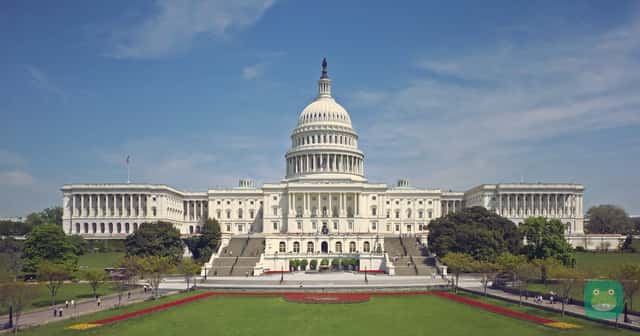
Backers of the Senate's bipartisan permitting bill are now counting votes for its first floor test. When senators return on Monday, Nov. 9, they will vote on whether to start debate. The vote is set for about 5:30 p.m. Eastern time, according to the Senate Press Gallery's floor log for Oct. 29. It needs 60 votes. Backers want far more than that.
Politico reported on Thursday, Oct. 29 that supporters are aiming for 70 votes to send a message to the House. Inside EPA reported the same day that backers expect most Senate Democrats to vote no. "We are pushing for 15 to 20 Democrats on the Senate side supporting this legislation," one proponent told the outlet.
The bill is the Bipartisan American Affordability and Jobs Act of 2026, or BAAJA (S. 5653). It runs 417 pages. It would rewrite parts of several core environmental laws. It would also change how high-voltage power lines are planned, approved and paid for. Tribal groups and many environmental groups oppose large parts of it. Oil and gas groups and renewable energy groups both back it.
What the Senate will vote on#
The Senate held a short pro forma session on Oct. 29 and did no business. Two more are set for Nov. 2 and Nov. 5. The midterm elections fall on Tuesday, Nov. 3. The vote on Nov. 9 is therefore the first test of the bill after Election Day.
The vote is procedural. It is on cloture on the motion to proceed to H.R. 2347, the Survivor Justice Tax Prevention Act. The Senate schedule calls that House bill "the legislative vehicle for the permitting reform bill." In practice, the Senate would swap in the permitting text. If 60 senators agree, debate and amendments can begin. A final vote would come later.
Majority Leader John Thune$ controls the floor schedule. The four authors told Roll Call they expect to offer a manager's amendment with changes based on feedback before the vote. That text has not been made public.
Who wrote it#
Four committee leaders wrote the bill and introduced it on Sept. 30. Two are Republicans: Sen. Shelley Moore Capito$ of West Virginia, who chairs the Environment and Public Works Committee, and Sen. Mike Lee$ of Utah, who chairs the Energy and Natural Resources Committee. Two are Democrats: Sen. Sheldon Whitehouse$ of Rhode Island and Sen. Martin Heinrich$ of New Mexico. They are the top Democrats on those two panels.
The four had worked on the deal since early 2025. They introduced it just before the Senate left to campaign. Roll Call reported that there was no time to bring it to the floor before the break.
What the bill would change#
The Bipartisan Policy Center, which supports the bill, has published a section-by-section guide. The main changes fall into five groups.
Environmental reviews. The National Environmental Policy Act (NEPA) requires agencies to study the effects of major federal actions before deciding. The bill would narrow which projects need a review. It would limit the alternatives an agency must study. It would also set firm deadlines for permits after a review ends.
Lawsuits. Today, people generally have six years to sue over a federal approval. The bill would cut that to 150 days for NEPA claims. Only people who raised an issue during public comment and can show direct harm could sue. Cases would go straight to a federal appeals court. If a court found a flawed review, it could only send it back to the agency to fix within 180 days. The permit would stay in effect, and work could continue. The bill would also write into law the "substantial deference" standard from the Supreme Court's 2025 ruling in Seven County Infrastructure Coalition v. Eagle County.
Historic sites and tribes. Section 106 of the National Historic Preservation Act (NHPA) makes agencies weigh a project's effects on historic places. That includes places sacred to tribes. The bill would narrow what counts as a covered project and as harm. It would set deadlines for each step of consultation. It would also let the agency decide when consultation is complete. In return, it would authorize $200 million a year for the Historic Preservation Fund from 2027 through 2036.
Power lines. The bill would expand the Federal Energy Regulatory Commission's (FERC) power to approve interstate lines of 230 kilovolts or more when a state rejects a line or does not act within a year. A Congressional Research Service analysis from Oct. 14 notes that the bill would drop today's rule limiting that power to special federal corridors. The part of Texas served by the ERCOT grid would stay exempt. Costs would be shared in rough proportion to benefits such as reliability and lower power costs. The bill would also make large new data centers pay for the grid upgrades they need.
Permit certainty. The bill would bar agencies from revoking or changing a permit that is in effect on or after Sept. 16, 2026, except in five cases. These include fraud, a court order and urgent threats to life, property or national security. A developer that wins in court could recover 25 to 50 percent of costs already spent. A separate claim for a "pattern of disparate treatment" could pay 50 to 100 percent of expected building costs.
The case for the bill#
The sponsors say the current system takes too long and costs too much. "We once built projects like the Hoover Dam, the Golden Gate Bridge, and the Empire State Building in years, not decades," Lee said in the joint release. Capito said the changes "will transform our nation's ability to power our economy and fuel future growth, while continuing to protect the land, water, and wildlife we all cherish."
The Democratic authors stress power bills and the grid. "If we can pass this bill, we will flood the grid with clean, affordable energy and make data centers start paying their fair share," Whitehouse said. Heinrich said the bill would help the country "get to 'yes' or 'no' on energy projects faster." He said it does so "while protecting important environmental safeguards and protecting the ability of Tribes to formally consult."
Business groups on both sides of the energy divide have signed on. Roll Call reported that the American Petroleum Institute led a letter urging passage in the post-election session. The letter said the bill would "restore confidence in the nation's ability to build critical infrastructure." The American Clean Power Association and the Solar Energy Industries Association signed a separate support letter.
The permit-certainty section draws support from both parties for different reasons. The Bipartisan Policy Center points out that both parties' presidents have stopped projects. The Biden administration revoked the Keystone XL pipeline permit in 2021. The Trump administration suspended work on five offshore wind projects in 2025, one of them about 87 percent built. "Capital will come off the sidelines because you know your permits are going to be valid no matter what the political lens might happen to be at a given time," Capito's staff director, Adam Tomlinson, told an industry conference, according to Roll Call.
Supporters also argue that limits on lawsuits help all project types. The Bipartisan Policy Center notes that developers win most NEPA lawsuits. It argues that agencies write longer reviews to survive court challenges, which adds delay.
Right-leaning think tanks have also backed the bill. Travis Fisher and Michael Abi-Nader of the libertarian Cato Institute called it "an excellent set of bipartisan reforms." They wrote that lawsuits, more than paperwork, are "the real problem with NEPA." They also praised limits on a single state's power to block an interstate pipeline or power line. The center-right R Street Institute said the bill "is worthy of passage" despite flaws.
Both groups had objections, though. Cato said the bill's support for FERC's 2024 grid planning rule, Order No. 1920, would spread the costs of state energy mandates to other ratepayers. Cato and R Street both warned that the data center rules could make data centers pay more than their share of grid costs. R Street wrote that the provision "comes across less as good policy and more as lawmakers trying to extract their pound of flesh from today's political punching bag."
The case against the bill#
Opponents fall into several groups.
Tribal nations. Many tribal groups want the historic preservation section removed. Nine tribal organizations sent a joint letter to Senate leaders on Oct. 9, according to the Native American Rights Fund, one of the signers. The National Association of Tribal Historic Preservation Officers says the bill "does not 'streamline' Section 106." It says if a tribe misses a 30-day window, the agency may proceed and does not have to revisit earlier findings. It also says a project could continue even after a court finds the agency broke the law.
On Oct. 19, the National Congress of American Indians urged senators to cancel the Nov. 9 vote unless the language changes. "If significant changes aren't made," NCAI President Mark Macarro said, "this bill should be killed," according to Bloomberg Law. Bloomberg Law reported that the NHPA changes were sought by Lee. Sen. Lisa Murkowski of Alaska chairs the Senate Committee on Indian Affairs. She is not one of the four authors.$
Environmental groups. The Natural Resources Defense Council called the power-line provisions "a once-in-a-generation opportunity." It said they could cut the time to build a major line to five or six years, from 10 or more. But it called other parts "deeply flawed." It warned that the permit-certainty language could favor oil, gas, mining and data center projects. It said those clauses could also lead to large payouts from taxpayers. NRDC said on Oct. 26 that it had not yet taken a position.
Earthjustice Action was more direct. Its president, Abigail Dillen, said in an Oct. 1 statement that the bill "asks too high a price for progress that is in no way guaranteed." She said that by limiting court remedies, the bill "would restrict access to the courts at the very moment when courts are the most important—and sometimes the only—check on government corruption and abuse."
Some Democrats in the House. Rep. Jared Huffman of California is the top Democrat on the House Natural Resources Committee. He has said the administration's concessions on renewable energy are not enough. "A serious permitting deal must start with an end to the war on clean energy, and this cheap window dressing doesn't even come close to cutting it," he posted on X, as quoted by Roll Call. Roll Call said Huffman has urged Democrats to revisit permitting in the next Congress, which begins in January. Roll Call also reported that some Democrats doubt the administration would enforce the law fairly. It cited recent federal filings seeking to reopen permits for four offshore wind projects in the Northeast.$
Some utilities and state-authority advocates. Not all critics are on the left. Oklahoma Gas & Electric has lobbied for "substantial revisions" to the power-line sections, according to a document obtained by the Energy and Policy Institute. The institute is a utility watchdog group, and its report favors the power-line changes. OG&E argues the bill reaches into "matters that have traditionally been reserved to the states." It objects to the wider federal siting power and to a new process for FERC probes of local utility planning. The institute reported that American Electric Power and Berkshire Hathaway Energy back the bill. It said the Edison Electric Institute, the utility trade group, is still "reviewing" the power-line sections.
Roll Call also reported resistance among House Republicans. Lee's energy policy director, Jake McCurdy, said House GOP aides had asked him to sort each section into "Republican" and "Democrat" parts.
How to weigh the claims#
Both sides make strong claims that are hard to test before the bill is law.
The sponsors' comparison to the Hoover Dam and the Golden Gate Bridge leaves out context. Those projects were built in the 1930s. NEPA did not exist until 1970. The comparison shows that building was faster then. It does not show which of today's rules cause the delay, or what a faster process would give up.
Opponents' warnings also rest on predictions. Earthjustice's phrase "the most anti-environmental administration in modern history" is a judgment about the current administration, not a finding about the bill's text. NRDC's concern about large payouts is a forecast about how courts and companies would use new claims. No such claim yet exists to measure.
Some points are not in dispute. The bill would shorten the time to sue. It would limit what courts can do about flawed reviews. It would widen federal power over interstate power lines. And it would set new deadlines for tribal consultation. Supporters and opponents mostly disagree about whether those changes are worth it, not about what the text says.
The groups also do not split along party lines. NRDC praises the grid sections that one utility opposes, while Cato faults part of the grid planning language that NRDC supports. Oil and gas groups and solar groups both support the bill. Tribal groups oppose a section pushed by a Republican author, while a Democratic author, Heinrich, says the bill protects tribal consultation.
Funding records#
567 Politics checked its campaign finance records for the four authors. For Capito, Lee, Whitehouse and Heinrich, the Federal Election Commission identity has been verified, but no funding snapshot has been published yet. This article makes no claim about donors to any of them. Missing data does not mean zero donations.
The vote counts and the House#
The key numbers are 60 and 70. Sixty votes would let debate begin. Seventy would show the broad support backers want to bring to the House. The manager's amendment will also matter. Tribal groups have asked for the historic preservation section to be dropped. Environmental groups want changes to the court limits and the permit-certainty clauses.
The House has its own path. It passed the SPEED Act (H.R. 4776), which shares some NEPA changes with the Senate bill. Any final law would need both chambers to agree before the current Congress ends on Jan. 3, 2027.
Energy and climate policy are tracked in our United States issue guide. Our methodology page explains how we source claims about legislation.
Differing perspectives
Should the Senate pass the Bipartisan American Affordability and Jobs Act as written?
Each position is summarized as its supporters make it, with equal weight and in alphabetical order. A summary is not an endorsement; the evidence for each is weighed in the story above.
Keep the transmission, change the rest
Who holds it: Natural Resources Defense Council
NRDC says the transmission and grid provisions "would produce substantial and durable benefits," including cost rules for data centers. It also says the bill would "narrow environmental review," limit courts' ability to stop projects under unlawful permits and weaken the Clean Water Act. NRDC lists five changes it is seeking and says it will take a position before a floor vote.
In their words: NRDC assessment, Oct. 26, 2026 ↗
Pass the bipartisan compromise
Who holds it: Sens. Mike Lee, Shelley Moore Capito, Martin Heinrich and Sheldon Whitehouse, the bill's authors
Lee said the bipartisan agreement would "fix this broken process and get America back to building." Heinrich said it will "help us get to 'yes' or 'no' on energy projects faster, while protecting important environmental safeguards." Whitehouse said the bill is a compromise that "will result in a brighter, cleaner, more affordable future" and will make data centers pay their share of grid upgrades.
In their words: Senate Energy and Natural Resources Committee, Sept. 30, 2026 ↗
Remove the tribal consultation cuts
Who holds it: Native American Rights Fund and eight other Tribal organizations
NARF says the bill "attempts to strip Tribes of the limited opportunities they currently have to engage as sovereign governments in project permitting." In an Oct. 9 joint letter, nine Tribal organizations urged Congress to remove provisions that would weaken Tribal consultation and protections for sacred places. A large coalition of Tribal organizations has opposed the entire historic preservation title.
In their words: Native American Rights Fund, Oct. 20, 2026 ↗
Cite this article
567politics News Desk. “Senate permitting bill heads to Nov. 9 test vote as backers seek 70 votes and tribes press for changes.” 567politics. Published 2026-10-30. Updated 2026-11-02. https://www.567politics.com/news/senate-permitting-bill-baaja-cloture-vote-november-2026
Wikipedia citation
{{cite news |title=Senate permitting bill heads to Nov. 9 test vote as backers seek 70 votes and tribes press for changes |url=https://www.567politics.com/news/senate-permitting-bill-baaja-cloture-vote-november-2026 |work=567politics |author=567politics News Desk |date=2026-10-30 |language=en}}CSL-JSON for reference managers
{
  "id": "https://www.567politics.com/news/senate-permitting-bill-baaja-cloture-vote-november-2026",
  "type": "article-newspaper",
  "title": "Senate permitting bill heads to Nov. 9 test vote as backers seek 70 votes and tribes press for changes",
  "URL": "https://www.567politics.com/news/senate-permitting-bill-baaja-cloture-vote-november-2026",
  "container-title": "567politics",
  "language": "en",
  "author": [
    {
      "literal": "567politics News Desk"
    }
  ],
  "issued": {
    "date-parts": [
      [
        2026,
        10,
        30
      ]
    ]
  }
}Citations identify this article and its publication date. Assess the reporting and its linked sources before using it as evidence.
Read this article as Markdown or JSON. Cite the original page and retain its sources, dates and qualifications.
Embed this article summary
Paste this HTML into your page. The summary stays linked to the full story and updates with it. No account required.
<iframe src="https://www.567politics.com/embed/news/senate-permitting-bill-baaja-cloture-vote-november-2026?theme=auto" title="Senate permitting bill heads to Nov. 9 test vote as backers seek 70 votes and tribes press for changes by 567politics" width="100%" height="440" style="border:0;max-width:100%" loading="lazy"></iframe>
<p style="font-size:14px">Senate permitting bill heads to Nov. 9 test vote as backers seek 70 votes and tribes press for changes by <a href="https://www.567politics.com/news/senate-permitting-bill-baaja-cloture-vote-november-2026" rel="nofollow">567politics</a></p>
<script async src="https://www.567politics.com/embed.js"></script>
READ BEYOND 567POLITICS
Alternate sources & perspectives
Independent coverage and primary evidence to help you compare arguments. A link is not an endorsement; perspective labels describe the linked material.
- primary evidence
Thursday, October 29, 2026 (Senate floor log) ↗
U.S. Senate Press Gallery
Floor schedule: pro forma sessions, return Nov. 9 at 3 p.m., and a cloture vote at about 5:30 p.m. on the motion to proceed to H.R. 2347, the vehicle for the permitting bill.
- primary evidence
Lee, Capito, Heinrich, and Whitehouse Introduce Bipartisan American Affordability and Jobs Act of 2026 ↗
Senate Committee on Energy and Natural Resources
The four sponsors' Sept. 30 statements on why they back the bill, with a link to the bill text.
- independent analysis
The Bipartisan American Affordability and Jobs Act of 2026 and FERC's Backstop Siting Authority (IN12746) ↗
Congressional Research Service (via EveryCRSReport)
Nonpartisan comparison of current law and Section 2101 on federal siting of interstate power lines, including the ERCOT exemption and cost allocation.
- independent analysis
Explaining the Senate Permitting Bill, the Bipartisan American Affordability and Jobs Act ↗
Bipartisan Policy Center
Section-by-section guide to NEPA, NHPA, Clean Water Act, ESA, transmission and permit-certainty changes. BPC supports the bill.
- independent analysis
Permitting bill writers seek industry aid ahead of Senate vote ↗
Roll Call
Reporting on the 60-vote threshold, the planned manager's amendment, industry support letters, Huffman's objection and House Republican resistance.
- independent analysis
Permitting backers want Senate to rack up vote count to send message to the House ↗
Politico
Oct. 29 report that backers are aiming for 70 Senate votes to pressure the House.
- independent analysis
Tribes Urge Senators to Nix Permitting Bill Vote Over Concerns ↗
Bloomberg Law
Oct. 19 report on the National Congress of American Indians' call to pull the vote unless the historic preservation language changes.
- other perspective
Permitting Reform, BAAJA, & Tribal Historic Preservation ↗
National Association of Tribal Historic Preservation Officers
Tribal preservation officers' case against Title III, with the consultation deadlines and judicial review limits they object to.
- left argument
NRDC Assessment of BAAJA, the 2026 Permitting and Transmission Bill ↗
Natural Resources Defense Council
Praises the transmission provisions but calls the permit-certainty, judicial remedy, Clean Water Act and ESA changes deeply flawed; no final position as of Oct. 26.
- left argument
Earthjustice Action Statement on Senate Permitting Bill ↗
Earthjustice Action
Oct. 1 statement opposing the bill in its current form over court limits, gas build-out and tribal and water protections.
- right argument
America's Private Sector Is Ready to Build—Will Washington Pave the Way with Permitting Reform? ↗
Cato Institute
Libertarian case for the bill's NEPA litigation limits, Clean Water Act Section 401 changes and permit certainty, with objections to Order 1920 and the data center rules.
- right argument
BAAJA Blast Part 1: What Does Permitting Reform Mean for Energy and Natural Resources? ↗
R Street Institute
Center-right think tank says the bill is worthy of passage, backs reconductoring and local transmission oversight, and criticizes the data center pricing rules.
Reviewed 2026-10-30. Sources opened and reviewed Oct. 30, 2026. The Politico report of Oct. 29 could not be loaded in full (bot protection), so the article cites it only for its headline claim that backers seek 70 votes; Inside EPA's Oct. 29 report was read only through its public excerpt. The sponsors' own Senate office pages returned errors; the joint release on the Energy and Natural Resources Committee site was used instead. The manager's amendment the sponsors plan to offer was not public. No statement from Majority Leader Thune or House Natural Resources Chair Westerman on the Nov. 9 vote was found. 567 Politics has no published FEC funding snapshot for any of the four authors. The discover_politics_sources tool returned only generic Senate pages, so sources were selected by hand.