Judge strikes Trump limits on gender-affirming care from Ryan White HIV grants, citing 'animus'
A Boston judge vacated HHS rules barring Ryan White HIV clinics from using grant money for transgender care and enjoined them for most U.S. HIV providers.

A federal judge in Boston has struck down Trump administration rules that barred clinics paid through the Ryan White HIV/AIDS Program from providing gender-affirming care to transgender patients, or even from using the names and pronouns those patients use. The government's lawyers had argued that the rules simply reflected a choice not to pay for certain care. The judge found they were driven by "animus, loathing, and discrimination."
In a 165-page decision filed November 19, U.S. District Judge William G. Young vacated the funding conditions and permanently barred the Department of Health and Human Services and its Health Resources and Services Administration (HRSA) from enforcing them, or "materially similar policies," against the clinicians and medical associations that sued. Because those associations' members treat most people with HIV in the country, Lambda Legal, which represented the plaintiffs, says the order protects "virtually every HIV care provider in the United States."
No public response from HHS appeared in the reports reviewed by 567 Politics as of Monday. The government can appeal to the U.S. Court of Appeals for the First Circuit.
What the conditions required#
The Ryan White program, created by Congress in 1990, pays for medical care and support services for low-income and uninsured people living with HIV. According to HRSA records quoted in the ruling, it serves "more than 600,000 people[,] over half of the people diagnosed with HIV in the United States."
The challenged rules began on March 11, 2026, when HRSA issued new general terms and conditions for its grants, according to the case timeline kept by Lambda Legal. The group describes them as requiring grantees to comply with restrictions targeting "gender ideology," including limits on gender-affirming medical care. On June 8, HHS and HRSA added language to Ryan White funding notices that barred program money from being used for gender-affirming medical care.
The terms trace back to Executive Order 14168, which President Donald Trump signed on January 20, 2025. It declares it "the policy of the United States to recognize two sexes, male and female." It also directs that "Federal funds shall not be used to promote gender ideology." It tells each agency to "assess grant conditions and grantee preferences and ensure grant funds do not promote gender ideology."
Young found that, taken together, the conditions kept providers from using Ryan White money for any form of gender-affirming care. In the court's words, that covered "prescribing gender-affirming hormonal therapy or simply being empathetic with patients and using their preferred name and pronouns."
Who sued, and what the judge decided#
The plaintiffs are the American Academy of HIV Medicine, the HIV Medicine Association, the International Association of Providers of AIDS Care, and two clinicians, Dr. Jennifer K. Brody and nurse practitioner Christopher B. Fox. They sued on June 10. The defendants are HRSA, its administrator Thomas J. Engels, HHS and Health Secretary Robert F. Kennedy Jr.. Young combined the request for a preliminary injunction with a trial on the merits and heard the case without a jury on September 23.
The judgment declares that the conditions:
- violate the Administrative Procedure Act because they are "arbitrary and capricious, not in accordance with law, and contrary to constitutional right";
- violate the Affordable Care Act's non-discrimination mandate;
- violate the equal protection guarantee in the Fifth Amendment's Due Process Clause; and
- violate the Free Speech Clause of the First Amendment.
The government won one point. Young dismissed a free-standing claim under the Affordable Care Act's "non-interference" mandate for lack of jurisdiction.
The remedy has two layers. The vacatur, Young wrote, is "not party-restricted" and applies "in every context," so that "no federal funding programs will be subject to" the HHS terms, the HHS grants policy statement "or any regulatory expression of the Challenged Conditions." The injunction is narrower. It covers the two clinicians and the associations' members who receive Ryan White funds. Young noted that this is not the kind of nationwide injunction the Supreme Court limited in its 2025 Trump v. CASA decision, but that it covers the providers of "the majority of patients living with HIV in the United States." He added that it "appears impossible" for the agencies to write similar Ryan White rules "without impacting these plaintiffs."
The government's case#
The opinion summarizes the government's main arguments, and they are worth setting out in its terms.
First, the government said the suit came too early. Its lawyers argued that any injury "depends on whether and how potential grant recipients respond to conditions that have not yet been imposed on any award they hold." They added that providers "cannot identify future grant awards that do not yet exist." Young rejected this, finding the terms already attach to current Ryan White funding.
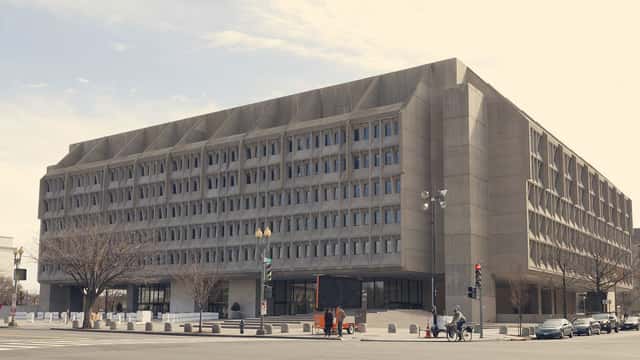
Second, the government argued that the Ryan White statute does not explicitly say program funds can pay for gender-affirming care, so the agencies "are within their power to limit" that funding. It also argued that how to spend grant money is a matter committed to agency discretion that courts cannot review.
Third, and most central, it relied on the Supreme Court's 1991 decision in Rust v. Sullivan, which held that the government may "selectively fund a program to encourage certain activities it believes to be in the public interest." Under that reasoning, the government said, the conditions "merely reflect Congress's choice not to subsidize certain activities" and are not "regulations that impose burdens on health care providers and their clients." It added that providers remain free to offer gender-affirming care with money from outside the Ryan White program.
On equal protection, the government argued that the Supreme Court's 2025 ruling in United States v. Skrmetti, which upheld Tennessee's ban on gender-affirming treatment for minors, forecloses the plaintiffs' claim. Young wrote that "at first glance" the government was correct, but concluded after review that Skrmetti "does not apply to the facts presented here." He described Skrmetti as addressing a narrow question about a state ban on care for minors, and distinguished it from conditions he found were motivated by "invidious discriminatory" intent. He also noted that a D.C. Circuit panel in the transgender military case, Talbott v. United States, has found that policies motivated by animus fail even the most lenient level of review. A petition for Supreme Court review in that case is pending; 567 Politics has covered the government's latest moves in it.
On the government's preferred scope, Young recorded its request that any relief "be narrowly tailored to apply only to the grants of specific named provider Plaintiffs." He disagreed, extending the injunction to the associations' members.
What the record showed about outcomes#
Much of the ruling turns on the agencies' own records. HRSA material quoted in the opinion says viral suppression among Ryan White clients rose from 87.1% in 2010 to 90.6% in 2023, and that 91.4% of clients receiving HIV medical care were virally suppressed in 2024. People whose virus is suppressed "cannot sexually transmit HIV," the HRSA record says.
The same record includes HRSA social media posts reporting that viral suppression among transgender Ryan White clients rose from 61.5% in 2010 to 84.5% in 2020. The posts described gender-affirming care as "improv[ing] health outcomes." As the chart shows, transgender clients started far behind the program as a whole and closed much of the gap.
Source: Findings of Fact, AAHIVM v. HRSA, No. 1:26-cv-12638-WGY (D. Mass. Nov. 19, 2026), pp. 138–139
Show the numbers
| Year | All clients | Transgender clients |
|---|---|---|
| 2010 | 87.1% | 61.5% |
| 2020 | – | 84.5% |
| 2023 | 90.6% | – |
| 2024 | 91.4% | – |
The court's findings also put the stakes in proportion. Citing trial evidence, Young wrote that transgender people account for about 0.6% of the U.S. population but 2% of HIV cases in 2022, and that an estimated 2.1% of people served by Ryan White are transgender. The findings cite estimates of 19.9% HIV prevalence among transgender women. These figures come from expert declarations and trial exhibits as summarized by the court; they were not independently recalculated by 567 Politics.
Young found "no evidence in the Administrative Record" that the agencies asked how the conditions would affect patients. That gap underpinned his ruling that the conditions were arbitrary and capricious, a standard that requires agencies to consider important aspects of a problem and explain a change in policy.
The judge's language, and the reactions#
The ruling opens with two quotations set side by side: the executive order's definition of "gender ideology" and a remark by Richard Fierro, the Army veteran who helped subdue the gunman in the 2022 Club Q nightclub shooting in Colorado Springs. "These diametrically opposing viewpoints," Young wrote, "represent sincere and deeply felt views concerning vitally important personal matters. None of them are 'the law.'" He added that the court's ruling was not intended to "express any view concerning the propriety of individual gender expression."
The conclusion is sharper. "The Challenged Conditions here represent a dark departure from these truths," Young wrote. "They are based in animus, loathing, and discrimination. They do not stand for justice — in fact, they defy it." The Guardian, carrying Reuters reporting, noted that Young was appointed by President Ronald Reagan.
The plaintiffs welcomed the decision. "Today's ruling is a sweeping victory for the doctors, nurses, and patients who rely on the Ryan White Program across the country," Jose Abrigo, HIV Project Director at Lambda Legal, said in a statement. Bruce Packett, executive director of the American Academy of HIV Medicine, said "nearly half" of its members rely on Ryan White funding and that clinicians "no longer have to choose between federal compliance and their duty of care to their patients."
HHS did not immediately respond to Reuters' request for comment, according to the Guardian. Metro Weekly also covered the ruling and the program's reach. No appeal had been reported in the coverage reviewed by 567 Politics.
- Trump signs Executive Order 14168 on "gender ideology"
- HRSA issues new grant terms and conditions
- HHS and HRSA add restrictions to Ryan White funding notices
- HIV medical groups and two clinicians sue in Boston
- Court combines the injunction request with a trial on the merits
- Bench trial before Judge William G. Young
- Young vacates the conditions and enters a permanent injunction
Source: Lambda Legal case timeline, Executive Order 14168, Court opinion
How it fits the wider fight#
The ruling is one of several court fights over federal policy on gender identity. HHS has separately finalized a rule excluding gender dysphoria from Section 504 disability protections. Federal employees are challenging the Office of Personnel Management's 2027 ban on coverage for hormone and surgical treatment. At the state level, a Montana judge last week blocked a law defining sex by biology.
The Ryan White decision differs in one respect. It does not turn on whether gender-affirming care is good medicine, a question on which the administration and the medical associations disagree. It turns on what Congress wrote into the Ryan White statute, what the agencies considered before changing course, and whether the conditions targeted a viewpoint and a group. Those are the questions an appeals court would review if the government appeals.
Several things remain unsettled. The government has not said whether it will appeal or seek a stay. The vacatur's reach beyond the Ryan White program, to the general HHS terms and grants policy statement, could prompt a separate fight. And Young noted that a related case over gender-affirming care in the Children's Health Insurance Program, Illinois v. Department of Health and Human Services, is pending before him.
Differing perspectives
Should the federal government be able to bar Ryan White HIV grant money from paying for gender-affirming care or recognizing patients' gender identity?
Each position is summarized as its supporters make it, with equal weight and in alphabetical order. A summary is not an endorsement; the evidence for each is weighed in the story above.
No: the limits are unlawful and harm patients
Who holds it: The American Academy of HIV Medicine, the HIV Medicine Association, the International Association of Providers of AIDS Care, and their lawyers at Lambda Legal
The plaintiffs argue that the conditions conflict with the Ryan White statute, which Congress built to follow a patient's medical need, and that HHS and HRSA abandoned longstanding policy without a reasoned explanation. They say the conditions force providers to adopt the government's views on transgender identity and discriminate against transgender patients. The HIV Medicine Association says gender-affirming, patient-centered care is strongly associated with staying in care and viral suppression, which also prevents transmission. The American Academy of HIV Medicine says nearly half its members rely on Ryan White money and almost half of those provide gender-affirming care, which it calls a core medical service under the program's own framework.
In their words: Lambda Legal press release with statements from AAHIVM, HIVMA and IAPAC (Nov. 19, 2026) ↗
Yes: federal grants should not promote 'gender ideology'
Who holds it: President Donald Trump and his administration, through Executive Order 14168
The administration's policy is that the United States recognizes two sexes, male and female, defined by biology. Executive Order 14168 directs that federal funds shall not be used to promote gender ideology and tells every agency to review its grant conditions to make sure grant money does not do so. On this view, attaching those limits to Ryan White awards is the executive branch carrying out a lawful presidential directive about how taxpayer money is spent.
In their words: The White House, Executive Order 14168 (Jan. 20, 2025) ↗
Yes: it is a choice not to subsidize, not a ban
Who holds it: Justice Department lawyers for HHS, HRSA and Secretary Robert F. Kennedy Jr.
The government's lawyers argued that, under Rust v. Sullivan, Congress and the agencies may fund some activities and not others, so the conditions merely reflect a choice not to subsidize certain care rather than burdens on providers. They said the Ryan White statute never explicitly funds gender-affirming care, that grant terms are committed to agency discretion, that providers can still offer the care with other money, and that the claims were premature because they concern future awards. They also argued that the Supreme Court's Skrmetti decision rules out heightened scrutiny, and asked that any relief be limited to the named providers.
In their words: Court opinion in AAHIVM v. HRSA, quoting the government's briefs ↗
Cite this article
567 Politics staff. “Judge strikes Trump limits on gender-affirming care from Ryan White HIV grants, citing 'animus'.” 567politics. Published 2026-11-23. https://www.567politics.com/news/ryan-white-hiv-grant-conditions-gender-affirming-care-vacated-young-november-2026
Wikipedia citation
{{cite news |title=Judge strikes Trump limits on gender-affirming care from Ryan White HIV grants, citing 'animus' |url=https://www.567politics.com/news/ryan-white-hiv-grant-conditions-gender-affirming-care-vacated-young-november-2026 |work=567politics |author=567 Politics staff |date=2026-11-23 |language=en}}CSL-JSON for reference managers
{
  "id": "https://www.567politics.com/news/ryan-white-hiv-grant-conditions-gender-affirming-care-vacated-young-november-2026",
  "type": "article-newspaper",
  "title": "Judge strikes Trump limits on gender-affirming care from Ryan White HIV grants, citing 'animus'",
  "URL": "https://www.567politics.com/news/ryan-white-hiv-grant-conditions-gender-affirming-care-vacated-young-november-2026",
  "container-title": "567politics",
  "language": "en",
  "author": [
    {
      "literal": "567 Politics staff"
    }
  ],
  "issued": {
    "date-parts": [
      [
        2026,
        11,
        23
      ]
    ]
  }
}Citations identify this article and its publication date. Assess the reporting and its linked sources before using it as evidence.
Read this article as Markdown or JSON. Cite the original page and retain its sources, dates and qualifications.
Embed this article summary
Paste this HTML into your page. The summary stays linked to the full story and updates with it. No account required.
<iframe src="https://www.567politics.com/embed/news/ryan-white-hiv-grant-conditions-gender-affirming-care-vacated-young-november-2026?theme=auto" title="Judge strikes Trump limits on gender-affirming care from Ryan White HIV grants, citing 'animus' by 567politics" width="100%" height="440" style="border:0;max-width:100%" loading="lazy"></iframe>
<p style="font-size:14px">Judge strikes Trump limits on gender-affirming care from Ryan White HIV grants, citing 'animus' by <a href="https://www.567politics.com/news/ryan-white-hiv-grant-conditions-gender-affirming-care-vacated-young-november-2026" rel="nofollow">567politics</a></p>
<script async src="https://www.567politics.com/embed.js"></script>
READ BEYOND 567POLITICS
Alternate sources & perspectives
Independent coverage and primary evidence to help you compare arguments. A link is not an endorsement; perspective labels describe the linked material.
- primary evidence
Findings of Fact, Rulings of Law, and Order for Judgment, AAHIVM v. HRSA, No. 1:26-cv-12638-WGY (D. Mass. Nov. 19, 2026) ↗
U.S. District Court for the District of Massachusetts (via CourtListener)
Judge William G. Young's full opinion, including the government's arguments, the HRSA viral suppression figures, the vacatur and the injunction.
- primary evidence
American Academy of HIV Medicine v. Health Resources and Services Administration (docket) ↗
CourtListener
Public docket for the case, for later filings including any notice of appeal or stay motion.
- primary evidence
Defending Women From Gender Ideology Extremism and Restoring Biological Truth to the Federal Government (Executive Order 14168) ↗
The White House
The administration's own text setting the policy behind the grant conditions, including the directive on federal funds and grant conditions.
- other perspective
American Academy of HIV Medicine v. HRSA (case page and timeline) ↗
Lambda Legal
Plaintiffs' counsel's case timeline with dates of the grant terms, funding notices, complaint, consolidation, trial and ruling, and links to filings.
- other perspective
Federal Court Rules Trump Administration Restrictions on Ryan White Funding for HIV Care for Transgender People Are Unlawful ↗
Lambda Legal
Plaintiffs' statements from Lambda Legal, AAHIVM, HIVMA and IAPAC; advocacy, not neutral reporting.
- independent analysis
Judge bans Trump's restrictions on HIV funds for transgender patients ↗
The Guardian (Reuters reporting)
Wire account of the ruling, noting Young's appointment by Reagan and that HHS did not immediately respond to a request for comment.
- independent analysis
Judge Strikes Down Trump's Ryan White Limits on Trans HIV Care ↗
Metro Weekly
LGBTQ-focused outlet's report, including the program's reach among the roughly 1.2 million people diagnosed with HIV.
- independent analysis
Boston Judge Strikes Down Trump's Ryan White HIV Funding Limits ↗
The Boston Report
Local report on the Boston ruling.
Reviewed 2026-11-23. Every link below was hand-picked from pages 567 Politics opened on Nov. 23, 2026; the court's 165-page opinion was read in full from the public CourtListener and Lambda Legal copies. The government's positions are taken from the opinion's account of its briefs, because the government's own filings were not available free on the public docket. No HHS statement on the ruling and no notice of appeal were found in the coverage reviewed.