Quebec's Ban on Turbans and Other Religious Symbols Survives the Supreme Court. Most Quebecers Back It
The law bars turbans, hijabs and kippahs in a growing list of public jobs. Polls show majority support in Quebec and opposition elsewhere in Canada.
Quebec does not ban turbans in general. It bans them, along with hijabs, kippahs, crucifixes and other religious symbols, for a growing list of public employees while they are at work. A Sikh in Quebec can wear a turban on the street, in a shop or in a private office. A Sikh cannot wear one as a new public school teacher, police officer, prosecutor or judge.
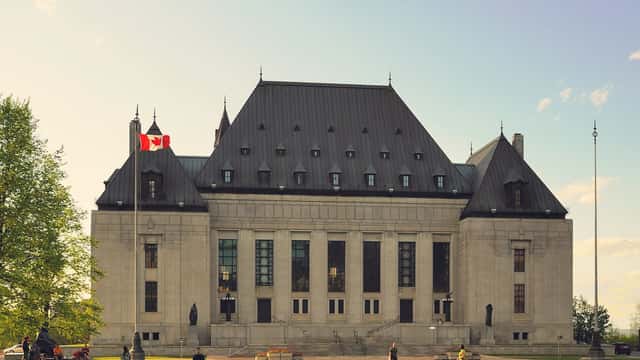
On November 27, the Supreme Court of Canada upheld almost all of that law. Polls have shown majority support for the ban inside Quebec since before it passed. The size of that majority depends on the question, the symbol and who is asked. In the rest of Canada, most people oppose it.
What the law says#
The ban began with Bill 21, the Act Respecting the Laicity of the State. It passed in June 2019 under Premier François Legault. It covers public employees the province considers to be in positions of authority. That list includes judges, police officers, prison guards, prosecutors, and public school teachers and principals.
People already in those jobs were allowed to keep their symbols as long as they stayed in the same position. A teacher who changes school boards, or who seeks promotion to principal, loses that protection.
Two later laws widened the ban.
Bill 94, passed in 2025, extended it from teachers to all staff and volunteers in public schools. It also required students to keep their faces uncovered.
Bill 9, passed in April 2026, extended it to workers at subsidized daycares, colleges, universities and private schools. It closed prayer rooms in colleges and universities. It also restricted group prayer in streets and parks, with fines of up to $375 for individuals. The National Assembly passed it 77 to 27.
All three laws invoke the notwithstanding clause. That is the part of Canada's constitution that lets a legislature shield a law from most Charter of Rights challenges for five years at a time. Quebec used it in advance, before any court had ruled.
- A Parti Québécois government proposes a Charter of Values; it dies with the 2014 election
- Bill 21 bans symbols for judges, police, prosecutors and teachers
- Quebec Superior Court upholds most of the law
- Quebec Court of Appeal upholds the law in full
- Bill 94 extends the ban to all public school staff
- 2026 (April)Bill 9 extends it to daycares, colleges and private schools
- 2026 (November)The Supreme Court of Canada upholds Bill 21
Source: Supreme Court of Canada, CBC News, JURIST
Where turbans come in#
The public debate in Quebec has centered on the Muslim headscarf. Most of the people known to have lost or been denied jobs are Muslim women. The turban is caught by the same wording.
For observant Sikhs the turban, or dastaar, is not optional. The World Sikh Organization of Canada told the National Assembly in 2019 that a ban on it amounts to a ban on Sikhs in the covered jobs.
The best-known case is Amrit Kaur. She finished her teacher training as Bill 21 passed and moved to British Columbia so she could teach wearing hers. She and the organization were among the parties that took the law to the Supreme Court.
Turbans have been a flashpoint in Quebec before. In 2013 the Quebec Soccer Federation barred players from wearing turbans on the field. It reversed itself within weeks after the sport's world body said they were allowed.
The same year the government of Premier Pauline Marois proposed a Charter of Values that would have banned religious symbols for all public employees. It died when her party lost the 2014 election. Bill 21 is a narrower version of that idea, and it has since grown back toward the original.
What the polls show#
Support in Quebec has been a majority in every major poll, but not a fixed one.
| Poll | What was asked | Quebec support |
|---|---|---|
| CROP, Nov. 2018 | Ban for judges / police / teachers | 72% / 71% / 65% |
| Angus Reid, 2019 | Support for Bill 21 overall | 64% |
| Leger, Sept. 2021 | Ban for public school teachers | 64% |
| Leger, Jan. 2022 | Ban for public school teachers | 55% |
| IRPP, 2024 | Neutrality should mean banning symbols | 51% |
These polls asked different questions, so they are not a clean trend line. Four patterns hold across them.
Support is higher for some jobs than others. More Quebecers back the ban for judges and police than for teachers.
It splits by language and age. The January 2022 Leger poll followed the removal of a hijab-wearing teacher from a classroom in Chelsea, Quebec. It found French speakers far more supportive than English speakers, and older Quebecers far more supportive than the young.
Source: Global News
Show the numbers
| Group | Support |
|---|---|
| Aged 65 to 74 | 74% |
| French speakers | 59% |
| All Quebecers | 55% |
| Aged 18 to 24 | 28% |
| English speakers | 26% |
It depends on the symbol. A 2018 Angus Reid survey found 79% of respondents in Quebec and across Canada thought a crucifix was acceptable for a public employee. Only 17% were comfortable with the niqab. Pollster Shachi Kurl said the debate was really about Muslim symbols. Few polls ask about the turban by name.
Quebec differs from the rest of Canada. In 2019 Angus Reid found most Quebecers behind Bill 21 and most other Canadians against a similar law at home. That gap matches other 567politics reporting on how Canadian attitudes toward newcomers have shifted, where Quebec also stands apart.
Source: Angus Reid Institute, as reported by The Indo-Canadian Voice
Show the numbers
| Response | Share |
|---|---|
| Quebec: support Bill 21 | 64% |
| Rest of Canada: would oppose | 52% |
| Rest of Canada: would support | 37% |
The newer measures also poll well in Quebec. A SOM survey for La Presse in October 2025 found majorities for banning religious symbols in subsidized daycares and for banning public prayer. That was true even though the government proposing them was deeply unpopular. A Leger poll a month earlier found 43% of Quebecers said organized prayer in public should never be permitted, against 26% of Canadians overall.
Not everyone reads the numbers as a mandate. Charles Breton of the Institute for Research on Public Policy has argued they show a divided population. His 2024 study found Quebecers split into three roughly equal groups on whether using the notwithstanding clause was right.
The case supporters make#
Supporters start from laïcité. That is the idea that the state must be neutral toward religion and must look neutral too. A judge, an officer or a teacher acts for the state, they argue. So that person's religion should not be visible on the job.
They point to Quebec's own history. Until the 1960s the Catholic Church ran much of the province's schooling and health care. The Quiet Revolution was in large part a decision to push religion out of public institutions. On this view the law finishes that work. It applies to every faith alike, the crucifix included.
They also make a democratic argument. An elected legislature passed the law. Majorities have backed it in polls. Parties that support it have won three elections in a row. In Ottawa, the Bloc Québécois defends it as Quebec's choice to make. Quebec's lawyers told the Supreme Court that the constitution lets a province make that choice.
And they note the limit on the rule. It governs working hours in certain jobs, not private life.
The case opponents make#
Opponents say the law is neutral on paper and unequal in effect. A Christian can tuck a cross under a shirt. A Sikh cannot take off a turban for the workday. An observant Muslim woman or Jewish man faces the same problem. The result, they argue, is that minority faiths are shut out of public careers while the majority is barely touched.
They read neutrality differently. In their view the state must not favor a religion. That duty falls on institutions, not on what one employee wears. They say no evidence shows that a teacher in a turban teaches less fairly.
They also object to how the law was shielded. Using the notwithstanding clause in advance meant courts could not weigh whether the ban is a justified limit on religious freedom.
The World Sikh Organization says the effects reach past the covered jobs. It reports Sikhs facing pressure to remove turbans in workplaces the law does not name, and it says families will leave. Unions and daycare operators warn that the newer bans will worsen staff shortages.
What the Supreme Court decided#
- The overrideSix of seven judges held Quebec validly used the notwithstanding clause
- The banThe symbols ban for public employees stands, including in English school boards
- The exceptionThe uncovered-face rule cannot apply to elected members of the National Assembly
- DeclarationsFour judges said courts may still declare a shielded law inconsistent with the Charter
- This caseThe court made no such declaration about Bill 21
The challenge took seven years. Quebec's Superior Court upheld most of the law in 2021 but exempted English school boards. The Court of Appeal upheld the law in 2024 and removed that exemption. The Supreme Court heard four days of argument in March 2026.
The majority followed a 1988 precedent that sets no limits on the notwithstanding clause beyond its wording. One provision fell because it touched democratic rights, which the clause cannot override.
The ruling did not decide whether the ban is good policy. It did not decide whether the ban would survive without the clause. It decided that the legislature had the power to pass it.
Reaction split along familiar lines. Premier Paul St-Pierre Plamondon called it a "good day for secularism" but objected to the part letting courts comment on shielded laws. Prime Minister Mark Carney said his government would not use the clause.
The World Sikh Organization said it was deeply disappointed. Alberta's premier welcomed the ruling as a win for provincial rights.
What comes next#
The legal fight over Bill 21 is over. The political one is moving to new ground.
The Parti Québécois won a minority government on October 5 and campaigned on going further. Its education minister has said he plans to ban schoolchildren from wearing religious symbols. That would apply the rule to pupils for the first time, including Sikh boys who cover their hair.
The World Sikh Organization has asked Ottawa to step in if that happens. As a minority, the government will need votes from another party to pass it. Our chart of Canada's parties shows where the federal players sit.
Three things will shape what follows. The notwithstanding clause expires every five years, so a future legislature must renew each of these laws. The ruling invites challengers to seek a declaration that a law like Bill 9 breaches the Charter, even if it cannot be struck down. And public opinion has been tested less often on daycare workers and children than on judges and police.
For now the position is settled. Quebec may keep turbans, hijabs and kippahs out of a widening set of public jobs. Most Quebecers who answer pollsters approve. Most Canadians elsewhere do not.
Differing perspectives
Should Quebec bar public employees from wearing turbans, hijabs and other religious symbols at work?
Each position is summarized as its supporters make it, with equal weight and in alphabetical order. A summary is not an endorsement; the evidence for each is weighed in the story above.
Keep the ban and extend it
Who holds it: Premier Paul St-Pierre Plamondon and the Parti Québécois government
The Quebec government argues that a secular state must look neutral, so people who act for it should not display their religion on the job. It says the law applies to every faith, reflects Quebec's history of removing religion from public institutions, and was passed by an elected legislature with broad public backing. The premier called the ruling a good day for secularism and says the province, not the courts, should decide how far the rule goes.
In their words: Global News, November 27, 2026 ↗
Let each province decide
Who holds it: Alberta Premier Danielle Smith and other defenders of provincial powers
Defenders of provincial autonomy take no position on turbans or headscarves themselves. They argue that the constitution gives legislatures the notwithstanding clause so that elected members, not judges, have the last word on contested social policy. On this view Quebec was entitled to choose its own model of secularism, voters can remove a government that goes too far, and the ruling rightly protects every province's power to make such choices.
In their words: Yahoo News Canada, November 27, 2026 ↗
Repeal the ban as discriminatory
Who holds it: World Sikh Organization of Canada, with Muslim and civil liberties groups
The World Sikh Organization argues that the turban is an article of faith that cannot be removed for a shift, so the law in practice bars observant Sikhs, Muslim women and others from teaching, policing and law. It says the ban treats minorities as second-class citizens, that pressure to remove turbans has spread to jobs the law does not cover, and that families will leave Quebec. It wants the law repealed and Ottawa to act.
In their words: The Indo-Canadian Voice, WSO statement, November 27, 2026 ↗
Cite this article
Patrick Karsh. “Quebec's Ban on Turbans and Other Religious Symbols Survives the Supreme Court. Most Quebecers Back It.” 567politics. Published 2026-11-28. https://www.567politics.com/news/quebec-turban-religious-symbols-ban-bill-21-supreme-court-public-support-polls-november-2026
Wikipedia citation
{{cite news |title=Quebec's Ban on Turbans and Other Religious Symbols Survives the Supreme Court. Most Quebecers Back It |url=https://www.567politics.com/news/quebec-turban-religious-symbols-ban-bill-21-supreme-court-public-support-polls-november-2026 |work=567politics |author=Patrick Karsh |date=2026-11-28 |language=en}}CSL-JSON for reference managers
{
  "id": "https://www.567politics.com/news/quebec-turban-religious-symbols-ban-bill-21-supreme-court-public-support-polls-november-2026",
  "type": "article-newspaper",
  "title": "Quebec's Ban on Turbans and Other Religious Symbols Survives the Supreme Court. Most Quebecers Back It",
  "URL": "https://www.567politics.com/news/quebec-turban-religious-symbols-ban-bill-21-supreme-court-public-support-polls-november-2026",
  "container-title": "567politics",
  "language": "en",
  "author": [
    {
      "literal": "Patrick Karsh"
    }
  ],
  "issued": {
    "date-parts": [
      [
        2026,
        11,
        28
      ]
    ]
  }
}Citations identify this article and its publication date. Assess the reporting and its linked sources before using it as evidence.
Read this article as Markdown or JSON. Cite the original page and retain its sources, dates and qualifications.
Embed this article summary
Paste this HTML into your page. The summary stays linked to the full story and updates with it. No account required.
<iframe src="https://www.567politics.com/embed/news/quebec-turban-religious-symbols-ban-bill-21-supreme-court-public-support-polls-november-2026?theme=auto" title="Quebec's Ban on Turbans and Other Religious Symbols Survives the Supreme Court. Most Quebecers Back It by 567politics" width="100%" height="440" style="border:0;max-width:100%" loading="lazy"></iframe>
<p style="font-size:14px">Quebec's Ban on Turbans and Other Religious Symbols Survives the Supreme Court. Most Quebecers Back It by <a href="https://www.567politics.com/news/quebec-turban-religious-symbols-ban-bill-21-supreme-court-public-support-polls-november-2026" rel="nofollow">567politics</a></p>
<script async src="https://www.567politics.com/embed.js"></script>