Oxfam-CEOBS report finds contamination indicators across 99% of Gaza; Israel's embassy disputes methodology
Oxfam's report cites sewage bacteria in 19% of tested Gaza wells; Israel's London embassy says its satellite-based assumptions fall short.
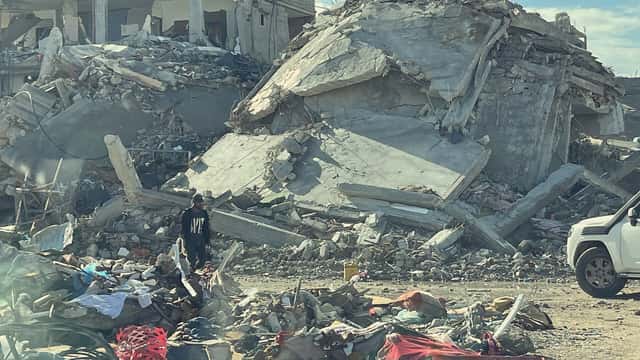
Oxfam and the UK-based Conflict and Environment Observatory (CEOBS) published a report on Monday, Nov. 23, saying Israel's military campaign in Gaza has left air, soil and water contaminated across almost the entire territory. The report says its spatial analysis found indicators of at least one potential contamination source across more than 99% of Gaza, and that Israeli ground operations affected about 78% of the land area.
The report, titled "Environmental War Crimes: How Israel's military assault has turned Gaza into a toxic wasteland, threatening human survival," relies on satellite images and open-source data on strikes. It also uses research from other wars and water tests from Gaza's Ministry of Health. The authors say Israeli restrictions on testing equipment and specialists have prevented a full field assessment.
Israel's embassy in London rejected the findings. A spokesperson told the Guardian the report's reliance on satellite imagery and "unverified assumptions" "falls short of professional standards," and said it ignored the tunnels that Hamas says it dug under Gaza.
What the report says#
The lead author is Lama Abdul Samad, a water and sanitation specialist at Oxfam. Martin Butcher and Gabriel Naumann co-wrote it, and CEOBS did the satellite mapping, according to the report itself. Palestinian bodies, including the Palestinian Water Authority and Gaza's coastal water utility, reviewed parts of it or gave data. The report says their thanks "does not imply that they endorse the report's findings."
According to Oxfam's press release, the contaminants of concern include heavy metals, explosive residues, asbestos from destroyed buildings, dioxins and biological contaminants such as sewage. The report says these can move through air, soil and water. It says the highest risk is in Gaza City, Khan Younis, Rafah, Jabalia and along the Salah al-Din Road.
The report describes its findings as indicators of potential contamination, not measured pollution levels in most places. "Restrictions on the entry of testing equipment and technical expertise continue to prevent a full assessment of the scale and extent of contamination," Oxfam said. The group says the evidence already available is still sufficient to conclude that contamination is "widespread, severe and consequential."
Oxfam International's executive director, Amitabh Behar, used legal language in presenting the report. "Israel's ongoing genocide in Gaza includes military assaults on its environment, which are environmental war crimes threatening life now and for generations to come," he said in the release. "This would breach Israel's legal obligations under international humanitarian and human rights law." No court has ruled on those allegations. Israel rejects the genocide accusation, which is being heard at the International Court of Justice.
Groundwater: sewage bacteria in one in five wells#
The most direct field data in the report comes from Ministry of Health tests of 79 groundwater wells in July 2026. The report says fecal coliforms, bacteria that indicate contamination by sewage, were found in 19% of the wells tested, compared with 2% of groundwater wells reported as contaminated in 2021. Samples were collected at the source before treatment, the report notes, so a chlorination system at a site does not show up in the results.
Source: Oxfam and CEOBS, Environmental War Crimes, November 2026
Show the numbers
| Year | Wells with fecal coliforms (%) |
|---|---|
| 2021 (reported) | 2% |
| July 2026 (79 wells) | 19% |
The tests also found high salt and mineral levels. Total dissolved solids exceeded 1,000 milligrams per liter in 77.2% of wells, and electrical conductivity exceeded 2,500 microsiemens per centimeter in 78.5%, the report says. It notes that Gaza's aquifer was already heavily mineralized before the war: a 2022 study of 115 municipal wells found mean readings of the same order of magnitude.
By area, North Gaza had the highest share of wells with fecal coliforms, at 25%, followed by Gaza City and Deir al-Balah at 20% each. Khan Younis had the lowest, at 8.3%. The report says those results match the areas its spatial analysis flagged as most at risk of contaminated drinking water: North Gaza, Gaza City and Deir al-Balah.
Source: Oxfam and CEOBS, Environmental War Crimes, Table 6
Show the numbers
| Area | Wells with fecal coliforms (%) |
|---|---|
| North Gaza | 25% |
| Gaza City | 20% |
| Deir al-Balah | 20% |
| Khan Younis | 8.3% |
Water supply and sewage#
The report says about 85% of Gaza's water infrastructure has been damaged or destroyed. Water available to the population fell to 16% of pre-war quantities in June 2024 and recovered to only 39% by April 2026 after emergency repairs and humanitarian work, it says. Remaining storage would supply Gaza's population with 18 liters per person for a single day.
Wastewater is a central concern. Citing an April assessment by the Coastal Municipalities Water Utility, Oxfam says only 19% of sewage pumping stations still work and only 30% of the wastewater network has some operational capacity. As a result, it estimates that about 40,000 cubic meters of raw sewage flow into the Mediterranean Sea each day, with another 15,000 cubic meters a day lost through cesspits and leaks. The BBC reported that all six of Gaza's wastewater treatment plants are out of operation.
Recent winter storms have made this worse, the BBC reported, with rainwater mixing with wastewater and flowing through streets and tent camps. 567 Politics has reported on the storm flooding of displacement camps and on the dispute over the Board of Peace flood response.
Rubble, dust and air#
The UN Environment Programme estimates that the war has generated more than 61 million tonnes of debris in Gaza, about 29 tonnes for every person, the report says. It compares that with about 7.65 million tonnes in Mosul, Iraq, after the 2017 fighting there and about 20.3 million tonnes in Aleppo and Homs in Syria combined. The BBC, citing UNEP, reported that about 15% of Gaza's debris may carry a high risk of contamination from hazardous materials.
Source: Oxfam and CEOBS, Environmental War Crimes, November 2026
Show the numbers
| Place | Debris (million tonnes) |
|---|---|
| Gaza | 61 |
| Aleppo and Homs (combined) | 20.3 |
| Mosul | 7.65 |
The report says demolitions and bombardment release silica-rich concrete dust, asbestos and other materials, which are then stirred back into the air by wind, traffic and clearance work. It identifies Gaza City, Jabalia and North Gaza Governorate as facing the highest risk of air contamination. Workers who clear debris, repair water systems or rebuild face a particularly high risk of exposure to asbestos and crystalline silica, it says.
Oxfam also cites a United Nations figure from February 2026 that more than 200,000 tonnes of explosives had been dropped on Gaza in almost two years. The BBC said that figure came from a UN special rapporteur, who described it as "the equivalent of the total energy of approximately 13 Hiroshima-type nuclear bombs."
Food, farmland and the sea#
The report says only 3% of Gaza's cropland is both accessible and undamaged. Since the October 2025 olive harvest, that area has shrunk from 601 hectares to 448 hectares, it says. It blames Israeli military access limits, including the "Yellow Line." As of June 2026, access-restricted areas covered 65% of the Gaza Strip, the report says.
It warns that clay-rich soils around Beit Hanoun, Wadi Gaza and northeast of Khan Younis are more likely to retain pollutants, posing a risk to food crops once farming resumes. Before the war, Gaza's fisheries produced about 4,660 tonnes of fish a year, plus 750 tonnes from aquaculture, according to the report.
A fisherman, Abu al-Abed Sultan, told the BBC that sewage and rubble now end up in the sea. "When we lower our nets, we catch rubble and garbage," he said. "This harms the marine environment; the fish are affected and so are the fishermen."
Source: Oxfam and CEOBS, Environmental War Crimes, November 2026
Show the numbers
| Point in time | Hectares |
|---|---|
| October 2025 olive harvest | 601 |
| Latest (Nov. 2026 report) | 448 |
Health effects described by doctors and the authors#
Abdul Samad told the BBC that "there are going to be chronic health impacts that are long term because a lot of these contaminants are persistent in the environment." She expects more lung disease, cancers, organ damage, birth defects and stillbirths in the future.
A Palestinian dermatologist, Dr. Alaa Abu Hajar, told the BBC he had seen a five-fold increase in chronic skin diseases since the start of the war, which he attributed to pollution and overcrowded conditions in tents and camps. "There are rodents, rubbish and sewage that's spread through the streets," he said. "Unfortunately, the age group most affected is children."
title: Gaza environmental damage: key dates cited in the report
---
Oct. 7, 2023 | Hamas attack on Israel; Israel's military campaign in Gaza begins
June 2024 | Water available to Gaza's population falls to 16% of pre-war quantities, per the report
Oct. 2025 | Last olive harvest cited in the report; accessible cropland shrinks afterward
Feb. 2026 | UN special rapporteur says more than 200,000 tonnes of explosives dropped on Gaza
April 2026 | Water supply reaches 39% of pre-war levels; utility finds 19% of sewage pumping stations working
July 2026 | Ministry of Health tests 79 groundwater wells; 19% show fecal coliforms
Nov. 23, 2026 | Oxfam and CEOBS publish the report; Israeli embassy in London rejects its methodology
Israel's response#
The Israeli embassy in the United Kingdom questioned the report's methods. A spokesperson told the Guardian that its reliance on satellite imagery and what the embassy called unverified assumptions "falls short of professional standards."
"Hamas itself claimed to have excavated more than 500 km of tunnels beneath Gaza, exceeding the total route length of the London Underground," the spokesperson said. "A report on Gaza's soil and groundwater that fails to examine excavation on that scale is fundamentally incomplete. That omission undermines the credibility of its conclusions."
The BBC quoted the embassy as saying the report's "methodology lacks the academic rigour needed to withstand serious scrutiny." The BBC said it had also asked the Israeli military for comment. 567 Politics did not find a separate statement from the Israel Defense Forces or COGAT, the defense ministry body that coordinates civilian matters in Gaza, on the report as of Tuesday morning.
Israel maintains that its military campaign in Gaza is self-defense against Hamas after the group's Oct. 7, 2023, attack, and that it takes steps to limit civilian harm, the BBC reported. Israel has also rejected the genocide accusations at the International Court of Justice, and has conditioned large-scale reconstruction of Gaza on Hamas and other armed groups fully disarming. Prime Minister Benjamin Netanyahu is wanted by the International Criminal Court on war crimes charges, which Israel rejects, the Guardian noted.
Climate cost of the war#
The report cites a 2026 study on the war's carbon cost. It says direct emissions from the fighting passed 1.3 million tonnes of carbon dioxide equivalent by January 2025. Counting military infrastructure and rebuilding, the total rises to 33.2 million tonnes. About 31.4 million tonnes of that, or roughly 95%, comes from reconstruction. Oxfam says that is roughly equal to almost six years of Palestinian national emissions at the 2023 level.
Source: Oxfam and CEOBS, Environmental War Crimes, November 2026
Show the numbers
| Item | Emissions (million tonnes CO2e) |
|---|---|
| Gaza war cycle incl. reconstruction | 33.2 |
| of which reconstruction | 31.4 |
| Palestinian territory, 2022 | 6.48 |
| Palestinian territory, 2023 | 5.57 |
What Oxfam is asking for#
The report calls for a full, independent, field-based post-conflict environmental assessment before reconstruction goes ahead, saying recovery talks are advancing without one. "Rebuilding Gaza without simultaneously understanding and addressing the extent of environmental contamination risks creating long-term public health consequences for generations to come," Behar said.
Oxfam calls on Israel to allow unrestricted access for aid, environmental assessment and equipment, and asks other countries to halt arms transfers to Israel where, in its view, they are used in serious violations of international law. It wants funding for a Palestinian-led assessment and clean-up. It also says rebuilding should be "reparations-oriented." The report says it "does not establish every element of the crime of genocide." But it says it adds to the evidence on that question. Israel disputes the genocide charge.
UNEP said security concerns had also prevented its own experts from traveling to Gaza previously, according to the BBC.
What is not known#
The authors say most of their contamination findings are indicators drawn from damage mapping and incident data rather than soil, air or water samples, apart from the July well tests. They say a field assessment would be needed to measure actual contamination levels and identify clean-up options. The Israeli embassy's objection concerns the same gap, arguing that the analysis did not account for Hamas's tunnel network.
Gaza's death toll, cited by Oxfam as more than 74,000 and by the BBC as at least 74,746, comes from the Hamas-run health ministry, whose figures the UN considers reliable, according to the BBC. Earlier 567 Politics coverage includes the dispute over tent shelter entering Gaza and a strike near a Jabalia water well.
Differing perspectives
How should the Oxfam-CEOBS findings on contamination in Gaza be weighed?
Each position is summarized as its supporters make it, with equal weight and in alphabetical order. A summary is not an endorsement; the evidence for each is weighed in the story above.
Assess contamination on the ground before rebuilding
Who holds it: Report authors at Oxfam with spatial analysis by CEOBS
The report says a full, independent, field-based post-conflict environmental assessment is urgently needed so that recovery and reconstruction are safe, lawful and responsible. It argues that without sustained access for environmental experts and technical specialists, field surveys cannot be done, so contamination cannot be fully characterized, monitored or reduced while civilians remain exposed.
In their words: Oxfam and CEOBS report ↗
Contamination amounts to environmental war crimes
Who holds it: Oxfam International and its executive director, Amitabh Behar
Oxfam says indicators of contamination cover more than 99% of Gaza and that Israel's assault has made air, soil and water dangerous for decades. Behar calls the damage environmental war crimes that breach Israel's legal obligations. Oxfam asks Israel to allow unrestricted access for aid and environmental assessment, and asks states to halt arms transfers where they are used in serious violations.
In their words: Oxfam International ↗
Self-defense, with rebuilding tied to Hamas disarming
Who holds it: Israeli government, as reported by the BBC
Israel maintains that its military campaign in Gaza is self-defense against Hamas after the Oct. 7, 2023, attack and that it takes steps to mitigate civilian harm. It rejects the genocide accusations at the International Court of Justice, and it has conditioned large-scale reconstruction of Gaza on the full disarmament of Hamas and other armed groups.
In their words: BBC News ↗
The report's methodology is flawed
Who holds it: Israeli embassy in the United Kingdom
An embassy spokesperson says the report relies on satellite imagery and unverified assumptions and falls short of professional standards. The spokesperson argues that Hamas claims to have dug more than 500 km of tunnels under Gaza, and that a study of soil and groundwater that does not examine excavation on that scale is incomplete, undermining the credibility of its conclusions.
In their words: The Guardian ↗
Cite this article
567 Politics staff. “Oxfam-CEOBS report finds contamination indicators across 99% of Gaza; Israel's embassy disputes methodology.” 567politics. Published 2026-11-24. https://www.567politics.com/news/palestine-gaza-oxfam-ceobs-contamination-report-99-percent-wells-israel-embassy-methodology-november-2026
Wikipedia citation
{{cite news |title=Oxfam-CEOBS report finds contamination indicators across 99% of Gaza; Israel's embassy disputes methodology |url=https://www.567politics.com/news/palestine-gaza-oxfam-ceobs-contamination-report-99-percent-wells-israel-embassy-methodology-november-2026 |work=567politics |author=567 Politics staff |date=2026-11-24 |language=en}}CSL-JSON for reference managers
{
  "id": "https://www.567politics.com/news/palestine-gaza-oxfam-ceobs-contamination-report-99-percent-wells-israel-embassy-methodology-november-2026",
  "type": "article-newspaper",
  "title": "Oxfam-CEOBS report finds contamination indicators across 99% of Gaza; Israel's embassy disputes methodology",
  "URL": "https://www.567politics.com/news/palestine-gaza-oxfam-ceobs-contamination-report-99-percent-wells-israel-embassy-methodology-november-2026",
  "container-title": "567politics",
  "language": "en",
  "author": [
    {
      "literal": "567 Politics staff"
    }
  ],
  "issued": {
    "date-parts": [
      [
        2026,
        11,
        24
      ]
    ]
  }
}Citations identify this article and its publication date. Assess the reporting and its linked sources before using it as evidence.
Read this article as Markdown or JSON. Cite the original page and retain its sources, dates and qualifications.
Embed this article summary
Paste this HTML into your page. The summary stays linked to the full story and updates with it. No account required.
<iframe src="https://www.567politics.com/embed/news/palestine-gaza-oxfam-ceobs-contamination-report-99-percent-wells-israel-embassy-methodology-november-2026?theme=auto" title="Oxfam-CEOBS report finds contamination indicators across 99% of Gaza; Israel's embassy disputes methodology by 567politics" width="100%" height="440" style="border:0;max-width:100%" loading="lazy"></iframe>
<p style="font-size:14px">Oxfam-CEOBS report finds contamination indicators across 99% of Gaza; Israel's embassy disputes methodology by <a href="https://www.567politics.com/news/palestine-gaza-oxfam-ceobs-contamination-report-99-percent-wells-israel-embassy-methodology-november-2026" rel="nofollow">567politics</a></p>
<script async src="https://www.567politics.com/embed.js"></script>
READ BEYOND 567POLITICS
Alternate sources & perspectives
Independent coverage and primary evidence to help you compare arguments. A link is not an endorsement; perspective labels describe the linked material.
- primary evidence
Environmental War Crimes: How Israel's military assault has turned Gaza into a toxic wasteland (full report) ↗
Oxfam and CEOBS
Full report: Table 6 well tests (79 wells, July 2026), debris comparisons, cropland and emissions figures used in the charts.
- other perspective
More than 99 per cent of Gaza shows indicators of environmental contamination ↗
Oxfam International
Oxfam's release with Amitabh Behar's and Lama Abdul Samad's statements, sewage figures and policy demands.
- other perspective
Environmental War Crimes (research summary) ↗
Oxfam International
Summary of methodology and the call for a field-based post-conflict environmental assessment.
- independent analysis
Israel's destruction of Gaza has created a 'toxic wasteland', experts find ↗
The Guardian
Full text of the Israeli embassy's response on methodology and Hamas tunnels.
- independent analysis
Israeli attacks have turned Gaza into 'toxic wasteland', Oxfam says ↗
BBC News
Israel's position on self-defense and reconstruction, the embassy's 'academic rigour' quote, and interviews with a Gaza doctor and fisherman.
Reviewed 2026-11-24. Compiled 2026-11-24 from pages opened and read in full; discover_politics_sources was not useful, so sources were chosen by hand. The report itself (CEOBS-hosted PDF) was read for the well-test table, debris, cropland and emissions figures. Israel's response comes from its UK embassy as quoted by the Guardian and BBC; no separate IDF or COGAT statement on the report was found. Times of Israel and Al Arabiya coverage could not be opened (blocked), so they are not listed.