NYC schools lost 23,000 students. Closure hearings and a midyear budget call come next
Preliminary data put K-12 enrollment at 766,900. Hearings on closing two Harlem schools start Dec. 1, and the chancellor says a decision on midyear budget cuts is coming soon.
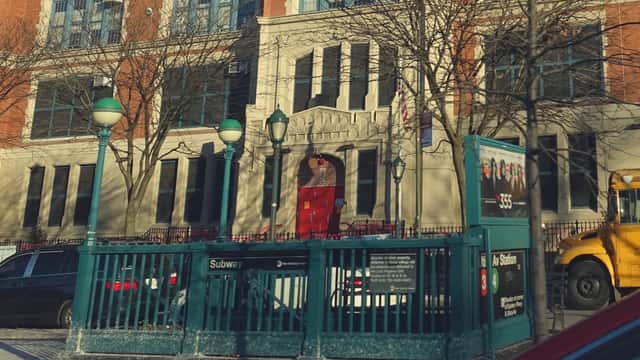
New York City's public schools lost about 23,000 students this year, and the city now has to decide what to do with the buildings and budgets left behind. Preliminary figures put K-12 enrollment at 766,900 as of Oct. 31, according to Chalkbeat's report on the city data.
Three decisions are close. Public hearings on closing two small Harlem schools are set for Dec. 1 and Dec. 2, and the Panel for Educational Policy is scheduled to vote on Dec. 16, according to the Education Department's proposal page.
The third decision is about money. Schools Chancellor Kamar Samuels has said a decision on midyear budget cuts will come soon, Chalkbeat reported on Nov. 19.
That choice falls to the administration of Mayor Zohran Mamdani, whose first budget deal kept school budgets whole, according to Chalkbeat.
What the new numbers show#
The Education Department released the preliminary count on Monday, Nov. 16, Chalkbeat reported. The decline was nearly 3% from the year before.
It was the largest one-year drop since the COVID-19 pandemic, according to Chalkbeat's school-level analysis.
Counting city-funded preschool programs, the system enrolled 863,100 children, down about 2.6%, the Nov. 16 report said.
The losses were spread widely. Nearly 1,100 of roughly 1,600 schools had fewer students than a year earlier, Chalkbeat found.
Thirty-one of the city's 32 geographic districts lost students. District 23 gained nine, the same analysis found.
The number of very small schools grew again. This year 240 schools have 200 or fewer students, up from 219 last year, according to Chalkbeat. An earlier Chalkbeat report put the 2016 count at 165.
Source: Chalkbeat, Nov. 19, 2026, Chalkbeat, Oct. 22, 2026
Show the numbers
| School year | Schools |
|---|---|
| 2016 | 165 |
| 2025-26 | 219 |
| 2026-27 | 240 |
How firm the figures are#
Readers should treat the totals as early numbers. Officials said the school-by-school figures are preliminary, and the city usually releases final enrollment the following summer, Chalkbeat reported.
The totals in this story are as reported by Chalkbeat. 567politics could not open the city's own school-level spreadsheet, so we have not checked the figures against the source file.
The long-run trend is documented by a second office. City Comptroller Mark Levine's office found that K-12 enrollment fell 19%, or about 187,000 students, between the 2013-14 and 2025-26 school years, in a report dated Oct. 29.
The comptroller's report counted a loss of 21,793 students in 2025-26 alone. It cited a School Construction Authority projection of roughly 128,000 fewer students by 2034-35, the report said.
Sources describe the ten-year loss differently. Chalkbeat's Nov. 16 story put it at about 200,000 students, while its Oct. 22 story said roughly 170,000. The reports do not explain the gap.
Where the losses are steepest#
The sharpest declines came in neighborhoods with many English learners. District 32 in Bushwick and District 24 in Corona and Elmhurst had the largest shares of English learners and the steepest K-12 losses, Chalkbeat found.
Schools built for newly arrived students were hit hard. ATLAS, a Queens high school formerly called Newcomers, has fewer than 600 students, down 26% in a year, the analysis said. It peaked at 1,428 in 2023-24.
Manhattan Comprehensive Night and Day School fell from 687 students to 548. The Internationals Network of schools was down about 6%, Chalkbeat reported.
Source: Chalkbeat, Nov. 19, 2026
Show the numbers
| School or group | Decline |
|---|---|
| ATLAS (Queens) | 26% |
| Manhattan Comprehensive Night and Day | 20% |
| Internationals Network | 6% |
| Citywide K-12 | 3% |
The network's executive director, Lara Evangelista, tied the shortfall to a lack of new arrivals, she told Chalkbeat. The outlet linked the slowdown to the federal immigration crackdown that began in 2025.
Other forces are older. The comptroller's office found that charter enrollment grew by 11,287 students between 2020-21 and 2025-26, and that 13,079 children were homeschooled in 2025-26, about 1% of city students, its report said.
Not every part of the system shrank. District 75, which serves students with complex disabilities, grew, according to Chalkbeat.
The city is also adding its youngest students. The new 2-K program enrolled 2,000 two-year-olds this year, with 10,000 more seats expected next year, Chalkbeat reported.
The proposals on the table#
Chalkbeat counted five closure or merger proposals so far this school year, with more expected, in its Nov. 19 report.
The city's own pages list three closures and three mergers, by our count. The difference may reflect how paired schools are tallied or when each plan was posted. We could not resolve it.
Two closures are in Harlem. The School of Earth Exploration and Discovery Harlem, known as SEED Harlem, has 40 students, including six sixth graders, Chalkbeat reported on Nov. 2.
SEED Harlem cost $93,000 per student last year, nearly four times the city average, the same report said. Its enrollment is down 68% since 2022-23.
The Urban Assembly School for Global Commerce has 112 students, down nearly one-third since 2021-22, Chalkbeat reported. The school opened 13 years ago, after former Mayor Michael Bloomberg's push for small themed high schools.
Source: Chalkbeat, Nov. 2, 2026, Chalkbeat, Sept. 22, 2026
Show the numbers
| School | Students |
|---|---|
| Urban Assembly School for Global Commerce | 112 |
| Murry Bergtraum High School (not proposed) | 90 |
| SEED Harlem | 40 |
A third closure is in Brooklyn. The city proposes to close Life Academy High School for Business and Technology after this school year, with a panel vote on Jan. 20, according to the department's January page.
That page also lists a merger of the Academy of Health Careers with Pathways in Technology Early College High School in Brooklyn. A hearing is listed for Dec. 14.
Two more mergers are in the Bronx's District 12. One would fold Frederick Douglass Academy V Middle School into P.S. 057. The other would move grades 6-8 from P.S. 214 into Emolior Academy, according to the Jan. 27 proposal page.
The December agenda also includes a plan to move the Center School, a Manhattan middle school, about 1.5 miles north into a shared building, Chalkbeat reported. That is a relocation, not a closure.
- City releases preliminary Oct. 31 enrollment
- Hearing on closing SEED Harlem
- Hearing on closing Urban Assembly School for Global Commerce
- Hearing on moving the Center School
- Hearings on a Brooklyn merger and a Bronx merger
- Panel vote on the Manhattan proposals
- Hearing on the P.S. 214 and Emolior Academy merger
- Panel vote on Life Academy closure and Brooklyn merger
- Panel vote on two Bronx mergers
Source: NYC Education Department, Dec. 16 proposals, Jan. 20 proposals, Jan. 27 proposals
What hold harmless is and what it costs#
"Hold harmless" is the city's practice of not cutting a school's budget when it enrolls fewer students than expected. Before the pandemic, the city took money back midyear when enrollment fell short of projections, Chalkbeat reported in June.
Former Mayor Eric Adams proposed phasing the policy out in 2022 and faced significant political opposition, according to Chalkbeat. The city later kept budgets steady.
On June 7, Samuels told principals that initial 2026-27 budgets would be protected. His email did not say what would happen midyear, Chalkbeat reported.
That open question now has numbers attached. More than 800 schools enrolled fewer students than the city projected for this year, Chalkbeat found.
The cost figures do not line up neatly. For 2026-27, the city set aside nearly $290 million for 723 schools, and 55 of them received more than $1 million each, Chalkbeat reported on June 22.
For 2025-26, a February Chalkbeat report put the cost at more than $388 million. It listed $127 million in initial protection and $262 million in midyear relief.
The June 7 report said the policy cost more than $250 million that same year. The gap may reflect which pieces are counted, but the sources do not say so directly.
The running total also varies. The Citizens Budget Commission, a fiscal watchdog, counted $1.6 billion over six years, per Chalkbeat. The June 22 report put it at nearly $1.9 billion since 2020.
Source: Chalkbeat, Feb. 13, 2026, Chalkbeat, June 7, 2026, Chalkbeat, June 22, 2026
Show the numbers
| Year and source | Cost |
|---|---|
| 2025-26, February report | $388M |
| 2026-27 initial budgets, June 22 report | $290M |
| 2025-26, June 7 report | $250M |
Individual schools show what is at stake. I.S. 339 in the Bronx was due nearly $2.5 million in protection this year, about a third of its $7.8 million budget, Chalkbeat reported. Its enrollment fell from 315 in 2020 to 150.
The fiscal case for consolidation#
Budget watchdogs argue the city is paying for seats no one fills. The Citizens Budget Commission has urged the city to tie school funding more closely to enrollment and estimated savings of more than $400 million a year, according to a Center Square report carried by AOL.
The commission counted 380 school buildings operating below 60% of capacity, that report said. We could not find the commission's own document, and the article carries no date.
The commission does not favor an abrupt cut. Its research chief, Ana Champeny, recommended phasing the money out over several years, Chalkbeat reported.
The Manhattan Institute, a think tank, goes further. A May brief by fellow Danyela Souza Egorov called for merging or closing schools with fewer than 150 students and weak results, according to the institute's release.
The brief estimated savings of at least $108 million a year from those closures. It put savings from ending hold harmless at $250 million to $400 million a year, the release said.
It said schools under 150 students spend an average of $41,442 per pupil, against a citywide average of $23,908, according to the same release.
Chalkbeat's reporting offers examples. Murry Bergtraum High School in Manhattan has about 90 students and received more than $46,000 per student, while a school in the same building received about $19,000, it reported in September.
Source: Chalkbeat, Nov. 2, 2026, Chalkbeat, Sept. 22, 2026, Manhattan Institute
Show the numbers
| School or group | Per student |
|---|---|
| SEED Harlem | $93,000 |
| Murry Bergtraum High School | $46,000 |
| Schools under 150 students, average | $41,442 |
| Citywide average | $23,908 |
Size affects what a school can offer. Murry Bergtraum offered 23 courses last year, while the schools sharing its building offered 42 to 52, Chalkbeat found.
Administrative ranks grew as enrollment fell. The number of principals rose 11% since 2010, to 1,610, and assistant principals rose 31%, to 3,518, Chalkbeat reported.
The case for local process and protecting high-need schools#
The Mamdani administration has not announced a citywide plan for small schools, Chalkbeat reported in September. An Education Department spokesperson said each school community is unique and that the work has to be led locally, the outlet reported.
Samuels has acknowledged the tradeoff. He has said underenrolled schools are less likely to offer advanced classes, Chalkbeat reported.
He told a parent advisory group this month that community conversations had begun and were going fairly well, according to Chalkbeat.
In June he launched working groups in five districts, Chalkbeat reported.
- City begins holding school budgets harmless during the pandemic
- Adams proposes a phase-out and meets opposition
- Samuels protects initial 2026-27 school budgets
- Samuels launches working groups in five districts
- Global Commerce closure proposal is reported
- Preliminary data show a drop of about 23,000 students
Source: Chalkbeat, Oct. 30, 2026, Chalkbeat, June 22, 2026, Chalkbeat, June 7, 2026, Chalkbeat, Oct. 22, 2026
The department has backed away before. An earlier plan to move the Center School fell apart last school year after backlash, Chalkbeat reported.
People inside shrinking schools make a different argument about the money. NeQuan McLean, who leads the parent council in Brooklyn's District 16, said most schools there spend it on essential programs, Chalkbeat reported. He asked that it not be pulled without community engagement.
Kiri Soares, a Brooklyn principal, told Chalkbeat the funding lets her school keep more adults per student. She said any phase-out should be gradual, the June 22 report said.
Staff at small schools also question the yardsticks. A teacher and union chapter leader at Murry Bergtraum argued that graduation and attendance rates are not a fair measure of a small school's quality, Chalkbeat reported. Nine in 10 students there live in poverty.
The schools facing closure serve high-need students too. At Global Commerce, a third of students had a learning disability and a third were homeless during the school year, Chalkbeat reported.
The teachers union's current position on midyear cuts is not established in the sources we opened. We found no 2026 statement from the United Federation of Teachers on the question.
The integration-design argument#
A fourth view accepts mergers but sets conditions. A report by the comptroller's office and the group New York Appleseed argued that mergers can be cost-effective only if they are designed to promote integration, according to the report.
The page shows no exact date, and its text refers to 2024 as the current year. It warned that mergers can deepen inequality if they ignore distrust and differences in school culture.
It recommended involving families early, giving staff time to plan together, and tracking results after a merger, the report said.
It also noted that every school received $225,000 in base funding regardless of size in 2023-24, according to the same report. Underenrolled schools struggle to cover costs with it, the authors wrote.
The report's model was a 2020 Brooklyn merger. Arts and Letters was running at about 130% of capacity while P.S. 305 had 98 students, it said.
Source: NYC Comptroller and New York Appleseed
Show the numbers
| School | Share of capacity |
|---|---|
| Arts and Letters | 130% |
| P.S. 305 | 13% |
Mergers also intersect with the state class-size law. Nearly 500 schools lack the space to meet all class-size caps, Chalkbeat reported on Nov. 13.
A separate merger shows what supporters hope for. After the HERO high school merged with a smaller school in 2021, it grew from about 500 to more than 700 students, Chalkbeat reported.
What is not known#
The largest unknown is the midyear budget. The city has not said whether it will take money back from schools that missed projections, or how much.
Final enrollment is also unknown. This year's figures could shift before the summer release.
No one has said how many more closures or mergers are coming. We found no savings estimates for the current proposals in the sources we reviewed.
How panel members will vote on Dec. 16 is not known. We also could not confirm the full list of proposals on each agenda, because the city's pages loaded only in part.
The wider budget picture matters here. 567politics has separately covered the charter proposal on the city's rainy-day fund, which bears on how the city saves for lean years.
On campaign money, 567politics ran its funding check for Mamdani on Nov. 28, 2026. It returned no verified campaign-finance snapshot.
City candidates report to the New York City Campaign Finance Board, not to federal regulators. Missing data is not zero, and this story draws no conclusion about donors.
The next dates#
The SEED Harlem hearing is Dec. 1 and the Global Commerce hearing is Dec. 2, both at 6 p.m., according to the department's page.
The panel votes on the Manhattan proposals on Dec. 16. Votes on the Brooklyn closure and merger follow on Jan. 20, and the Bronx mergers on Jan. 27.
If approved, both Harlem schools would close at the end of this school year, Chalkbeat reported. The mergers would take effect in 2027-28, the city's pages say.
Differing perspectives
Should New York City close or merge shrinking schools and stop funding lost enrollment?
Each position is summarized as its supporters make it, with equal weight and in alphabetical order. A summary is not an endorsement; the evidence for each is weighed in the story above.
Close or merge the smallest schools and end hold harmless
Who holds it: Manhattan Institute fellow Danyela Souza Egorov; the Citizens Budget Commission makes a related case for tying funding to enrollment
Supporters of consolidation argue the city spends more each year on fewer students. They point to schools under 150 students that spend about $41,000 per pupil, against a citywide average near $24,000. They say merging or closing small schools with weak results would save at least $108 million a year, and that ending hold harmless would save $250 million to $400 million. They argue budgets should adjust with enrollment, which they say would narrow per-pupil spending gaps between schools.
In their words: Manhattan Institute ↗
Decide school by school with local input
Who holds it: Chancellor Kamar Samuels and the Education Department under Mayor Zohran Mamdani
City education officials say too many schools are too small and that underenrolled schools are less likely to offer advanced classes and enrichment. They argue each school community is different, so closures and mergers should be proposed case by case after conversations with families and staff. They point to working groups in five districts and say stability and predictability matter for school budgets while enrollment shifts. They say community talks are under way and going fairly well.
In their words: Chalkbeat New York, quoting Chancellor Kamar Samuels ↗
Keep funding steady for shrinking high-need schools
Who holds it: Parent council leaders such as NeQuan McLean of Brooklyn's District 16, and some principals
Parent leaders and some principals argue the protected money pays for essential programs and more adults per student in schools serving many high-need children. They say schools have built staffing around it, so pulling it quickly would cut services for the students who remain. They say most schools in their districts rely on it, and that any change should come gradually and only after real engagement with the affected communities, not through a sudden budget adjustment.
In their words: Chalkbeat New York, quoting District 16 council president NeQuan McLean ↗
Merge schools only with integration and equity plans
Who holds it: The New York City Comptroller's office and New York Appleseed, in a joint report
The report's authors argue mergers can be a cost-effective way to use buildings well and meet class-size limits, but only when designed to reduce racial and economic isolation. They point to overcrowded schools near underused ones, often in historically Black neighborhoods. They say mergers that ignore power imbalances, distrust or school culture can deepen inequality. They call for early family involvement, joint staff planning time, a citywide working group and tracking of results after each merger.
In their words: Office of the New York City Comptroller and New York Appleseed ↗
Cite this article
567politics AI Desk. “NYC schools lost 23,000 students. Closure hearings and a midyear budget call come next.” 567politics. Published 2026-11-28. https://www.567politics.com/news/nyc-schools-enrollment-drop-23000-small-schools-closures-hold-harmless-hearings-december-2026
Wikipedia citation
{{cite news |title=NYC schools lost 23,000 students. Closure hearings and a midyear budget call come next |url=https://www.567politics.com/news/nyc-schools-enrollment-drop-23000-small-schools-closures-hold-harmless-hearings-december-2026 |work=567politics |author=567politics AI Desk |date=2026-11-28 |language=en}}CSL-JSON for reference managers
{
  "id": "https://www.567politics.com/news/nyc-schools-enrollment-drop-23000-small-schools-closures-hold-harmless-hearings-december-2026",
  "type": "article-newspaper",
  "title": "NYC schools lost 23,000 students. Closure hearings and a midyear budget call come next",
  "URL": "https://www.567politics.com/news/nyc-schools-enrollment-drop-23000-small-schools-closures-hold-harmless-hearings-december-2026",
  "container-title": "567politics",
  "language": "en",
  "author": [
    {
      "literal": "567politics AI Desk"
    }
  ],
  "issued": {
    "date-parts": [
      [
        2026,
        11,
        28
      ]
    ]
  }
}Citations identify this article and its publication date. Assess the reporting and its linked sources before using it as evidence.
Read this article as Markdown or JSON. Cite the original page and retain its sources, dates and qualifications.
Embed this article summary
Paste this HTML into your page. The summary stays linked to the full story and updates with it. No account required.
<iframe src="https://www.567politics.com/embed/news/nyc-schools-enrollment-drop-23000-small-schools-closures-hold-harmless-hearings-december-2026?theme=auto" title="NYC schools lost 23,000 students. Closure hearings and a midyear budget call come next by 567politics" width="100%" height="440" style="border:0;max-width:100%" loading="lazy"></iframe>
<p style="font-size:14px">NYC schools lost 23,000 students. Closure hearings and a midyear budget call come next by <a href="https://www.567politics.com/news/nyc-schools-enrollment-drop-23000-small-schools-closures-hold-harmless-hearings-december-2026" rel="nofollow">567politics</a></p>
<script async src="https://www.567politics.com/embed.js"></script>