Appeals court again refuses to set aside 20,000 California ballots as a judge orders DOJ to share its list
A 2-1 Ninth Circuit panel ruled the Justice Department had not shown its demand was clearly required by law; Judge Boasberg ordered more disclosure.
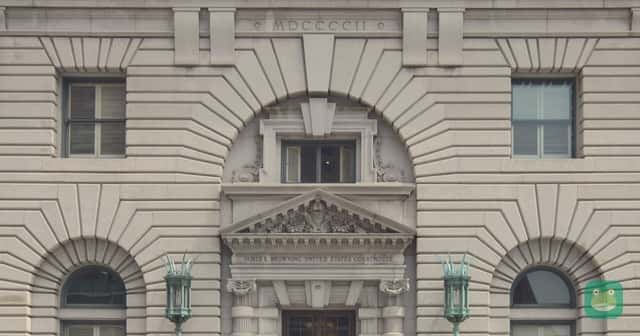
A federal appeals court on Friday, Oct. 30, again refused to order California to set aside the mail ballots of about 20,000 voters. The Trump administration calls those voters "likely" noncitizens. The 2-1 order came four days before Election Day, with ballots already being counted. In Washington, D.C., Chief U.S. District Judge James Boasberg also ruled twice this week. He ordered the Justice Department to say which other states got similar demands. On Friday he ordered it to give its California list to an immigrant-rights group, under a confidentiality limit.
The rulings narrow, but do not end, a federal-state fight over who decides whether a contested ballot counts. The administration says federal law makes it a crime for noncitizens to vote. It says California is refusing to help stop that. California, Los Angeles County and voting-rights groups say the federal list is unreliable. They say state law already governs voter challenges, and that the demand would put eligible voters and the count at risk. The Justice Department may now ask the Supreme Court to step in.
What the Ninth Circuit decided#
The panel's published order in United States v. California, No. 26-7231 was issued per curiam. That means no single judge is named as its author. Judges Mark J. Bennett, a Trump appointee, and Gabriel P. Sanchez, a Biden appointee, formed the majority. Judge Patrick J. Bumatay, also a Trump appointee, dissented.
The order lays out the timeline. Over the summer, U.S. Citizenship and Immigration Services and Homeland Security Investigations obtained California's voter roll. They built a list of people they saw as "high-confidence" noncitizens. On Oct. 12 the federal government gave the list to the state and Los Angeles County. It asked them to hold the ballots of everyone on it until citizenship could be checked. The state and county declined. The United States sued on Oct. 15. It argued that the Supremacy Clause, plus the federal ban on noncitizen voting in 18 U.S.C. § 611, overrides California's handling of those ballots.
On Oct. 26 the same panel dismissed a first appeal because the trial court had not yet ruled. U.S. District Judge David O. Carter denied a temporary restraining order on Oct. 28. The department filed a new emergency motion on Oct. 29 and asked for a ruling by Oct. 30. The panel met that deadline.
This time all three judges agreed the court could hear the appeal. Carter had held a two-hour hearing, and the election was days away, so his denial worked like a denial of a preliminary injunction. On the merits, the majority wrote that the government "has not made the required showing that such extraordinary relief, during an ongoing election, is clearly required by law." Because the government sought an order forcing officials to act, its burden was "doubly demanding," the court said.
The majority gave four reasons:
- Elections Clause. The Constitution lets state legislatures set the "Times, Places and Manner" of congressional elections unless Congress steps in. The majority found that Congress has not displaced California's rules for challenging a voter. So the state's scheme "remains the only method" to do so. If the United States wants new rules for mail ballots, the judges wrote, "it should take that suggestion to Congress, not the courts."
- The 90-day "quiet period." The National Voter Registration Act bars systematic voter-removal programs within 90 days of a federal election. The majority said holding a batch of 20,000 ballots would likely lead to cancellations under California law. That looks systematic, not individual.
- Reliability of the list. The panel saw no clear error in Carter's findings. He found the government offered "no error rates" or checks against a reliable benchmark. He also found it unknown how LexisNexis, used to enhance the data, linked names to Social Security numbers.
- Harm and timing. The court credited a sworn statement from the county's technology chief. It said there is "no feasible way to identify and segregate the ballots of specific individuals without potentially catastrophic effects on the entire system." It also cited the Supreme Court's Purcell principle. That principle warns federal courts against changing election rules close to an election.
The majority accepted that there is "a public interest in maintaining the integrity of elections." But it said the trial court reasonably found the risk of noncitizen voting here "at best, uncertain."
The dissent: a "modest remedy"#
Bumatay's dissent sets out the federal government's case in detail. He wrote that if California mixes suspect ballots with valid ones, "the potentially illegal votes will be counted toward the election of our representatives—threatening to dilute the vote of eligible citizens." Holding the ballots aside, he argued, "would not cancel any vote but would allow time to verify the eligibility of suspected noncitizens."
He argued that Section 611 is itself an Elections Clause law that can override state practice. He noted that federal courts have long blocked state election practices that break federal law. He also faulted California for relying on voters' sworn statements of citizenship. According to his dissent, the county said at oral argument that nearly 40% of a sample from the federal list was born in the United States. The federal government said that when it ran the same sample through its own systems, none were. Those rival claims have not been independently resolved. The majority relied on the trial court's findings about credibility.
The administration's position#
The Justice Department has framed the case as law enforcement. Announcing the lawsuit on Oct. 15, Attorney General Todd Blanche said that "State-facilitated voter fraud is unacceptable." Homeland Security Secretary Markwayne Mullin said the department had compared California's public voter files with federal immigration data. He called the result a "preliminary analysis" still under review. First Assistant U.S. Attorney Bill Essayli said California officials "refused" to hold ballots. He said the department was in court "to demand that the votes of American citizens not be diluted by noncitizens."
On Oct. 19, the department announced charges against 28 lawful permanent residents in California. The charges include false claims of citizenship on voter forms and false statements on naturalization forms. Acting Deputy Attorney General Trent McCotter said all 28 appear on the list of more than 20,000 names. These are accusations, and the department's release notes that all defendants are presumed innocent.
Supporters of the administration's approach cite the charges as proof that some people on the list did register illegally. Critics, including California officials quoted by the Los Angeles Times, say 28 cases out of 20,000 names suggest a much smaller problem than alleged. Both readings go a step past the evidence. The charges show that some listed people allegedly registered unlawfully. They do not show how many of the other names are noncitizens, in either direction.
In an Oct. 14 statement quoted by the Times and reposted on the Election Law Blog, the department said its request "should not be controversial, as the criminal statute is clear: only American citizens may vote in federal elections." By Friday evening, the department had not said publicly whether it would go to the Supreme Court. CBS News reported that it did not immediately respond to a request for comment.
California's position#
California Attorney General Rob Bonta said the state's wins "make clear that the Trump administration has zero authority to interfere in California's elections." He called the fraud claims "baseless," according to the Times. Gov. Gavin Newsom called the federal efforts "attacks on our democracy."
California requires people who register to swear they are citizens, under penalty of perjury. The state also has a process to challenge a single voter's eligibility. California has more than 23 million registered voters. So the full federal list equals about 0.09% of the rolls, by the Times' math.
Hundreds of thousands of ballots have already been processed. Election officials say processed votes are anonymous and cannot be traced back to a voter, CBS News reported. For the administration, that is why relief is urgent. For the state, it is why a late change would disrupt the count. Earlier 567 Politics reporting covers the grand jury subpoenas sent to Los Angeles County election workers and Carter's Oct. 28 order, including his hearing set for Nov. 13.
Boasberg's two hearings in Washington#
Two other lawsuits in federal court in Washington, D.C., are testing the administration's wider effort.
On Thursday, Oct. 29, Boasberg heard a suit filed by Senate Minority Leader Chuck Schumer, House Minority Leader Hakeem Jeffries, the Nevada Democratic Party and national Democratic campaign committees. They argue that the administration's letters to states are an unlawful attempt to take over state election procedure. According to Roll Call, Boasberg ordered the government to name the states beyond California and Washington that have received such demands since July. He set a Saturday briefing deadline. He said he would rule by Monday, Nov. 2, unless the government made the case moot. "You at any point can moot this, moot it all by saying we don't intend to do this before the election, but if you don't, I'll issue an opinion by Monday," he said.$$
Plaintiffs' lawyer Uzoma Nkem Nkwonta argued that "the government cannot use threats of prosecution to coerce officials to do something the government could not do on its own." Government lawyer Christian Dibblee said the letters do not enforce themselves. "There is nothing about the actual transmission of the letter that forces the recipient to do anything. It just notifies them of potential violations of federal law," he said.
On Friday, Boasberg heard a second case, Trujillo v. DHS. It was brought by the Coalition for Humane Immigrant Rights (CHIRLA) and a California voter, with the UCLA Voting Rights Project as counsel. According to Bloomberg Law, he ordered the government to give the list to the plaintiffs by Friday evening. They may check whether members or clients appear on it but may not share it beyond their legal team. The plaintiffs' legal director, Chad Dunn, said the list "absolutely has a suppressive effect." Justice Department lawyer Ty Trejo would not commit to sending no more lists. He said the government reserved the right to update them, and that "if they have a passport, are naturalized, they are not on the list." CBS News noted that Xavier Becerra, a Democratic candidate in the California governor's race, advises the UCLA Voting Rights Project.
Washington state and the wider map#
The dispute reaches beyond California. Washington Secretary of State Steve Hobbs, a Democrat, published an Oct. 28 reply to a Justice Department letter dated Oct. 26. The letter asked him to tell officials not to count ballots from a list of voters. Hobbs wrote that a first check showed the list "includes United States citizens." He said it lacked voter ID numbers and addresses and had duplicate entries. Refusing to process ballots "without individualized proof of ineligibility" would be "irresponsible and illegal," he wrote. He invited the department to send such proof.
The department is also suing over Alaska's Senate certification. And unions for California election workers, including SEIU, AFSCME and the AFL-CIO, sued on Thursday, the Times reported. They want a court to bar the department from threatening to prosecute workers who count ballots on the federal list.
Competing arguments, weighed#
The case for the federal approach. Supporters, including Bumatay, say noncitizen voting is plainly illegal and that one ineligible ballot offsets an eligible one. They say a state that relies on sworn statements has weak checks at the front end. In their view, holding ballots while citizenship is checked is narrow and reversible. And they argue that a hearing after the election cannot help once ballots are mixed for good.
The case for California's position. The state, the county and groups that joined the case, such as the League of United Latin American Citizens and the NAACP, say the Constitution leaves election mechanics to states unless Congress acts. They say the federal list has not been tested, and that redesigning ballot processing days before an election risks blocking citizens' votes. Election-law scholar Rick Hasen of UCLA, quoted by the Times on Oct. 14, said he was "not aware of anything like this ever happening this close to an election." David Becker of the nonpartisan Center for Election Innovation & Research pointed to Nevada. There, a federal estimate of nearly 16,000 noncitizen voters was cut to 185, and all of them were later found to be citizens.
Where the evidence stands. The public record does not show how many people on the California list are noncitizens. The government gave the court "no error rates." Carter found its process for building the list not credible on the record before him. The 28 criminal cases are unproven allegations. President Donald Trump said this week, without citing evidence, that there are "hundreds of thousands" of bad ballots in California, according to the Times. That claim goes beyond the evidence. So would a claim that the list holds no noncitizens at all.
Funding note#
Schumer and Jeffries appear here as plaintiffs in election litigation, not in a policy decision tied to donors. 567 Politics refreshed their 2026-cycle FEC snapshots on Oct. 30 (Schumer, S8NY00082; Jeffries, H2NY10092). We found no sourced donor connection to these lawsuits.
Pending deadlines: Supreme Court, Boasberg and a grand jury#
- Supreme Court. Any appeal would go first to Justice Elena Kagan, who oversees emergency requests from the Ninth Circuit. She would set a briefing schedule that Hasen wrote could run past Election Day. A related question about the 90-day rule is already before the justices in Republican National Committee v. Mi Familia Vota, a case the Ninth Circuit cited.
- Boasberg's rulings. A decision in the Democratic leaders' suit is due by Monday, Nov. 2, unless the government says it will send no more letters before the election.
- District court. Carter's hearing on the list is set for Nov. 13. Counties must certify results by Dec. 3, according to earlier reporting.
- Grand jury. At least three Los Angeles County election officials have been asked to appear before a federal grand jury on Nov. 4, CBS News reported. Whether charges will follow is unknown.
Our methodology explains how we handle contested claims. Turnout context is in our report on early voting running ahead of 2022.
Differing perspectives
Should California set aside ballots from about 20,000 voters the Justice Department flags as likely noncitizens?
Each position is summarized as its supporters make it, with equal weight and in alphabetical order. A summary is not an endorsement; the evidence for each is weighed in the story above.
Reject last-minute changes to election rules
Who holds it: California Attorney General Rob Bonta and Gov. Gavin Newsom
Bonta told the Ninth Circuit on Oct. 30 that the Purcell principle protects against last-minute election changes and that the Constitution gives states and Congress, not the executive branch, authority over the time, place and manner of elections. He said: "California law makes it illegal for noncitizens to vote in federal elections... That is why it is exceptionally rare." He said the administration's fraud claims risk disenfranchising eligible voters.
In their words: California Attorney General's office, Oct. 30, 2026 ↗
Segregate the ballots while eligibility is investigated
Who holds it: U.S. Department of Justice
Fox News reports that the Justice Department asked the Supreme Court on Nov. 2 for a limited injunction to keep the ballots separate while eligibility is investigated, without canceling any votes. The department wrote: "Once illegally cast ballots are counted and commingled with lawful votes, the resulting harm is impossible to remedy." It says the ballots were cast by people it believes are likely not U.S. citizens.
In their words: Fox News, Nov. 2, 2026 ↗
Cite this article
567politics News Desk. “Appeals court again refuses to set aside 20,000 California ballots as a judge orders DOJ to share its list.” 567politics. Published 2026-10-30. Updated 2026-11-02. https://www.567politics.com/news/ninth-circuit-california-ballots-boasberg-noncitizen-letters-october-2026
Wikipedia citation
{{cite news |title=Appeals court again refuses to set aside 20,000 California ballots as a judge orders DOJ to share its list |url=https://www.567politics.com/news/ninth-circuit-california-ballots-boasberg-noncitizen-letters-october-2026 |work=567politics |author=567politics News Desk |date=2026-10-30 |language=en}}CSL-JSON for reference managers
{
  "id": "https://www.567politics.com/news/ninth-circuit-california-ballots-boasberg-noncitizen-letters-october-2026",
  "type": "article-newspaper",
  "title": "Appeals court again refuses to set aside 20,000 California ballots as a judge orders DOJ to share its list",
  "URL": "https://www.567politics.com/news/ninth-circuit-california-ballots-boasberg-noncitizen-letters-october-2026",
  "container-title": "567politics",
  "language": "en",
  "author": [
    {
      "literal": "567politics News Desk"
    }
  ],
  "issued": {
    "date-parts": [
      [
        2026,
        10,
        30
      ]
    ]
  }
}Citations identify this article and its publication date. Assess the reporting and its linked sources before using it as evidence.
Read this article as Markdown or JSON. Cite the original page and retain its sources, dates and qualifications.
Embed this article summary
Paste this HTML into your page. The summary stays linked to the full story and updates with it. No account required.
<iframe src="https://www.567politics.com/embed/news/ninth-circuit-california-ballots-boasberg-noncitizen-letters-october-2026?theme=auto" title="Appeals court again refuses to set aside 20,000 California ballots as a judge orders DOJ to share its list by 567politics" width="100%" height="440" style="border:0;max-width:100%" loading="lazy"></iframe>
<p style="font-size:14px">Appeals court again refuses to set aside 20,000 California ballots as a judge orders DOJ to share its list by <a href="https://www.567politics.com/news/ninth-circuit-california-ballots-boasberg-noncitizen-letters-october-2026" rel="nofollow">567politics</a></p>
<script async src="https://www.567politics.com/embed.js"></script>
READ BEYOND 567POLITICS
Alternate sources & perspectives
Independent coverage and primary evidence to help you compare arguments. A link is not an endorsement; perspective labels describe the linked material.
- primary evidence
United States v. California, No. 26-7231, order denying injunction pending appeal (Oct. 30, 2026) ↗
U.S. Court of Appeals for the Ninth Circuit (via CourtListener)
The 2-1 per curiam order and Judge Bumatay's dissent, including the Elections Clause, NVRA and Purcell reasoning.
- primary evidence
Justice Department Sues State of California Over Voter List ↗
U.S. Department of Justice
The administration's case for the lawsuit, with statements from Attorney General Todd Blanche, Secretary Markwayne Mullin and Bill Essayli.
- primary evidence
Justice Department Charges 28 Foreign Nationals in California for Election Crimes ↗
U.S. Department of Justice
The charges the department ties to its list; the defendants are presumed innocent.
- primary evidence
Washington Secretary of State Steve Hobbs response to DOJ letter about voter rolls ↗
Washington Secretary of State
Hobbs's Oct. 28 reply saying the federal list includes U.S. citizens and lacks identifying data.
- independent analysis
9th Circuit again denies Trump administration request to block 20,000 California ballots ↗
Los Angeles Times
News report on the Oct. 30 ruling with reaction from Bonta, Newsom and the election-worker unions' suit.
- independent analysis
Appeals court rejects DOJ request to have California set aside disputed ballots ↗
CBS News
Covers the ruling, the Trujillo hearing before Judge Boasberg and the Nov. 4 grand jury requests.
- independent analysis
Judge orders Justice Department to disclose noncitizen voter letters ↗
Roll Call
The Oct. 29 Boasberg hearing in the suit brought by Schumer, Jeffries and Democratic committees, with both sides' arguments.
- independent analysis
DOJ Ordered to Provide List of 20,000 Alleged Noncitizen Voters ↗
Bloomberg Law
The Oct. 30 order to share the list with plaintiffs under a confidentiality limit.
- independent analysis
Breaking: 9th Circuit, on 2-1 Vote, Again Rejects DOJ Request for an Injunction Pending Appeal in California Ballot Case. Next Stop SCOTUS? ↗
Election Law Blog (Rick Hasen)
Legal analysis of the order and the likely Supreme Court timeline.
- left argument
Appeals court again rejects DOJ’s bid to block some California ballots, setting up Supreme Court showdown ↗
Democracy Docket
Coverage of the ruling from a voting-rights outlet founded by Democratic election lawyer Marc Elias.
- right argument
California's 20,000-Ballot Fight: Judges Press DOJ Over Suspected Noncitizen Voters ↗
The Daily Signal
Conservative outlet's report featuring Essayli's argument that 'attestation is not verification' and a Cato fellow's doubts about the legal path.
Reviewed 2026-10-30. Primary evidence first: the Ninth Circuit's Oct. 30 order (with Judge Bumatay's dissent), the Justice Department's own releases, and Washington's Secretary of State letter. News reports from the Los Angeles Times, CBS News, Roll Call and Bloomberg Law cover the rulings and the two Boasberg hearings. Democracy Docket (founded by Democratic election lawyer Marc Elias) and the Daily Signal (published by the conservative Heritage Foundation) are listed as left and right arguments. AP pages timed out and the San Francisco Chronicle was paywalled during research, so neither is listed. The Justice Department had not publicly said by Friday evening whether it would seek Supreme Court review.