MTA Budget Banks on a 4% Fare Hike in 2027 as Union Chief Quits Board With Contract Unsettled
The MTA's 2027 plan assumes 4% more fare and toll revenue in March and still shows a $979 million gap by 2030. No fare table exists yet, and the transit workers' contract is open.
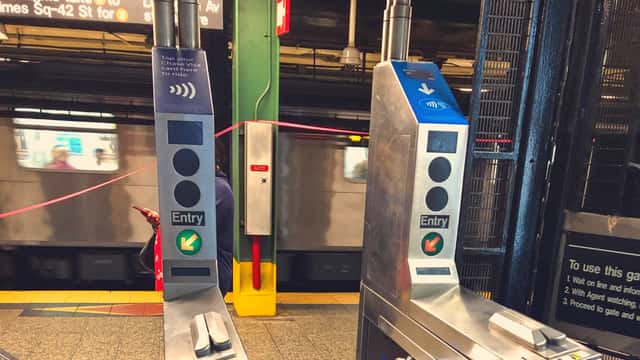
Subway and bus riders should expect to pay more in 2027, but nobody can yet say how much. The MTA's proposed 2027 budget counts on 4% more fare and toll revenue starting in March, according to the authority's November financial plan.
Even with that money, the plan shows a deficit that grows to $979 million by 2030, the same document shows.
A new labor question arrived on Nov. 25. John Samuelsen, the Transport Workers Union leader, resigned his non-voting seat on the MTA board, amNewYork reported.
He left while the union's Local 100 and the MTA were still negotiating a new contract. The last agreement expired in May, according to the same report.
That contract matters for the budget. Labor is the largest cost in the plan, and the plan's wage assumptions have not been tested at the bargaining table.
Source: MTA November Financial Plan 2027-2030, Volume 1
Show the numbers
| Year | Deficit |
|---|---|
| 2026 | – |
| 2027 | $58M |
| 2028 | $585M |
| 2029 | $772M |
| 2030 | $979M |
The plan lists 2026 as balanced, which is why that column is blank.
What the plan assumes about fares#
The MTA presented the plan to its board on Nov. 18, the Hunters Point Ledger reported. It covers a $22.9 billion operating budget for 2027, Railway Age reported.
The plan assumes a 4% increase in fare and toll yield in March 2027 and another in March 2029. Both need board approval, the plan says.
A yield target is not a price list. It is the extra revenue the MTA wants from fares and tolls as a whole.
The board could reach that total in different ways. It could raise the base fare, change the weekly cap, or adjust commuter rail tickets and tolls by different amounts.
No fare table has been proposed. The base subway and local bus fare has been $3.00 since January, according to the MTA.
If the full 4% landed on the base fare, it would be about $3.12. That figure is our math, not an MTA proposal.
The MTA expects the 2027 increase to bring in $279 million that year and $330 million in 2028, before related subsidy effects, the plan shows.
The 2029 increase is projected to add $294 million in its first year, according to the same tables.
MTA Chair and CEO Janno Lieber has described the policy as small, regular increases in place of the larger jumps of earlier decades, PIX11 reported.
The timing is not settled either. The plan says March 2027. PIX11 reported that new fares and tolls would more likely take effect in spring or early summer, after public hearings, in the same story.
Source: MTA, August 2023 fares, MTA, January 2026 fares
Show the numbers
| Period | Base fare |
|---|---|
| Before Aug. 2023 | $2.75 |
| Aug. 2023 | $2.9 |
| Jan. 2026 | $3 |
| 2027 if 4% | $3.12 |
Why deficits return#
The MTA says 2026 will end balanced, helped by a one-time $401 million surplus that comes mostly from federal disaster reimbursement, Railway Age reported.
After that, costs grow faster than revenue. Labor-related costs make up 59% of the 2027 budget and debt service 14%, according to the same report.
Total labor expenses are $13.6 billion in 2027 and rise to nearly $15 billion by 2030, the plan's second volume shows.
Debt service climbs from $3.2 billion in 2027 to $3.7 billion in 2030. Each one-point rise in interest rates would add about $100 million, the plan says.
Health care is a third driver. Costs for active employees are projected to grow about 6.7% a year and retiree costs about 6.4%, Railway Age reported.
Revenue forecasts also fell. The MTA cut its farebox forecast by $257 million and its toll forecast by $145 million, the same report says.
The authority points to its own cost cutting. It projects $676 million in savings in 2027 and $800 million by 2030, Railway Age reported.
Chief Financial Officer Jai Patel said the MTA plans to find more efficiencies and reduce vacancies to close the 2027 gap, according to Railway Age.
How the union contract could move the numbers#
The plan assumes a 3.8% wage increase in the first year after current contracts expire, then 2% a year. It cites a recent Long Island Rail Road settlement as the model, the plan says.
The document also warns that settlements above 2% would widen the gaps, in the same section.
The Citizens Budget Commission, a fiscal watchdog, put a price on that risk in December 2025. It estimated that each point of wage growth above 2% would cost about $150 million in the first year, its budget outlook says.
State Comptroller Thomas DiNapoli's office reported in October that there was no new agreement with the Transport Workers Union. It also said the MTA had lost more than 1,000 operations and maintenance workers since early 2026, according to the release.
Samuelsen's exit followed a dispute with Gov. Kathy Hochul. Her office had questioned whether he could keep the seat after reports that he registered to vote in Florida, amNewYork reported.
Samuelsen confirmed that Florida is now his primary residence. He disputed that state law requires him to live in New York to serve, the same report says.
His resignation letter criticized the governor's record on labor. He has also accused Hochul and Lieber of offering workers too little in raises, amNewYork reported.
A Hochul spokesperson responded that union members deserve a representative who shows up for them, according to the same story.
Lieber told the board on Nov. 18 that the MTA was making progress on the contract. He gave no terms, amNewYork reported.
The cost of a final deal is not public. Until it is, the plan's labor line is an assumption.
- Base fare rises from $2.75 to $2.90
- MTA board adopts the $3.00 fare
- $3.00 base fare takes effect
- Transit workers' Local 100 contract expires
- MTA presents its 2027 budget and four-year plan
- Samuelsen resigns his non-voting board seat
- Board vote on the budget expected
- Plan assumes a 4% fare and toll yield increase
- Plan assumes a second 4% increase
Source: MTA, amNewYork, Hunters Point Ledger
The $200 million dispute#
Rider advocates object to raising fares while government support shrinks. Their target is a one-time cut in the city's subsidy for MTA Bus.
The plan includes that $200 million reduction and attributes it to the city's fiscal constraints, the document says.
The change traces to a May 2026 deal between Hochul and Mayor Zohran Mamdani. It gave the city about $4 billion in help to close its budget gap, Streetsblog reported.
City budget reserves were also on the ballot this month, in a charter vote on the rainy-day fund.
Reinvent Albany, a watchdog group, argued on Nov. 16 that the state never replaced the $200 million and the MTA absorbed it, in a report.
The group said the sum is close to what New York City transit riders would pay under the fare increase. It put the subway and bus share at $142 million in 2027, the report says.
Reinvent Albany also said it supports regular fare increases. Its objection is to the subsidy shift, according to the same report.
Betsy Plum, executive director of the Riders Alliance, said raising fares while taking transit funds is not what riders expect from elected officials, amNewYork reported.
Hochul rejected the description. She said the state made up the loss by deferring MTA pension costs and that the authority has the resources it needs, according to amNewYork.
Mamdani's office did not respond to amNewYork's request for comment on the report, the outlet said.
Fare evasion and ridership#
Unpaid fares are part of the gap. DiNapoli's office reported that 49% of bus riders did not pay in the second quarter of 2026, up from 45% a year earlier, the release says.
A 10-point drop in bus fare evasion could have produced up to $150 million more in 2026, the comptroller's office estimated.
The Citizens Budget Commission estimated that fare evasion would cost more than $900 million in 2025, its report says.
Estimates of the total vary by source and year. This story found no single 2026 systemwide loss figure from the MTA.
Ridership has not fully returned either. The comptroller expected systemwide ridership to reach 74% of pre-pandemic levels by the end of 2026, the release says.
Source: Office of the State Comptroller
Show the numbers
| Mode | Share of pre-pandemic ridership |
|---|---|
| Long Island Rail Road | 97% |
| Metro-North | 87% |
| Subway | 78% |
| All MTA | 74% |
| Buses | 60% |
Fares carry less of the budget than they once did. Fares and tolls covered more than half of operating costs before the pandemic and 34% in 2025, the comptroller's office said.
The comptroller projects 38% in 2027, with fares at 26% and tolls at 12%. That projection includes the unapproved increases, according to the release.
Why congestion pricing does not close the gap#
Congestion pricing brings in hundreds of millions of dollars a year, but not for daily operations. The plan says toll revenue from the program goes into a capital lockbox, its second volume shows.
Capital money pays for long-term projects such as new subway cars and buses. It does not pay operators' wages or health care.
The plan projects $533 million from the program in 2027 and $700 million a year from 2028, the first volume shows.
The program began on Jan. 5, 2025. The governor's office said it raised more than $550 million in net revenue in its first year, a preliminary figure, in a January release.
Where free buses stand#
Mamdani campaigned on making city buses free. That has not happened, and talks at the state level have stalled, Fox News reported on Nov. 27.
The mayor said in January that the pledge would be delivered by the end of his time in office, according to the same report.
The MTA is a state authority, and the governor appoints its chair and board. Hochul has said she cannot back a plan that removes fare revenue from the system, Fox News reported.
Cost estimates differ widely. Mamdani's campaign put the figure at $700 million a year, and Lieber predicted nearly $1 billion, amNewYork reported in 2025.
Show the numbers
| Source | Annual cost |
|---|---|
| Independent Budget Office, June 2026 | $1,100M |
| MTA Chair Janno Lieber, 2025 | $1,000M |
| Mamdani campaign, 2025 | $700M |
| Independent Budget Office, 2023 | $652M |
The Riders Alliance has put the cost at $650 million to $800 million. It argues that bus fares cover about 17% of bus operating costs, in a post on its site.
Lieber has said he prefers aid aimed at riders with limited means, such as the city's half-fare program, amNewYork reported.
The two sides also dispute why fewer bus riders pay. In July, Lieber linked falling paid ridership to public talk of free buses, World Journal reported.
A spokesperson for the mayor rejected that and pointed to cost-of-living strain, according to the same report.
This story found no statement from Mamdani or City Hall on the proposed 2027 increase itself.
Transit is one of several cost-of-living fights at City Hall this month. Others include a student fare pilot at CUNY and the rent freeze a judge upheld on Nov. 25.
A note on campaign money, because this story covers the mayor's policy positions. 567politics ran its funding check for Mamdani on Nov. 28, 2026, and it returned no verified campaign-finance snapshot.
City candidates report to the New York City Campaign Finance Board, not to federal regulators. Missing data is not zero, and this story draws no conclusion about donors.
What fiscal watchdogs want#
The Citizens Budget Commission supports regular increases every two years. It has suggested tying them to actual expense growth instead of a flat 4%, its December 2025 report says.
Its president, Andrew Rein, said an increase near 6% would better match how fast MTA expenses are growing, the Hunters Point Ledger reported. He also said fares can be hard for low-income riders, according to the same story.
DiNapoli's office expects operating expenses to grow 3.4% a year through 2030 and revenue 2.1% a year, its October release says.
Source: Office of the State Comptroller
Show the numbers
| Category | Annual growth |
|---|---|
| Non-discretionary costs | 5% |
| Operating expenses | 3.4% |
| Revenue | 2.1% |
Non-discretionary costs include health care, pensions, energy, debt service and paratransit, the comptroller's office said.
Advocates on the riders' council want changes in how fares work, not only what they cost. Lisa Daglian of the Permanent Citizens Advisory Committee to the MTA said riders need to budget by the week or month, PIX11 reported.
What is not known and the next dates#
The largest unknown is the fare itself. No base fare, cap, commuter rail price or toll schedule for 2027 has been published.
Sources disagree on the size of the gaps. The November plan shows $58 million for 2027. The comptroller's October report, based on the earlier July plan, showed $295 million, its release says.
The transit workers' contract has no public terms or cost.
Two state laws could change the math. The plan assumes the city keeps paying 80% of net paratransit costs, but the law behind that expires June 30, 2027, the plan says.
Casino money is uncertain too. A delay in two expected casinos could cost $160 million of the $300 million planned for 2030, the comptroller's office said.
The board is expected to vote on the budget in December. The Hunters Point Ledger gave meeting dates of Dec. 14 and Dec. 16, in its report.
That is the only outlet this story found listing those dates. They were not confirmed on the MTA's own site.
A budget vote would not set new prices by itself. Specific fare proposals and public hearings would have to follow before any increase takes effect, PIX11 reported.
Differing perspectives
Should the MTA raise fares and tolls about 4% in 2027?
Each position is summarized as its supporters make it, with equal weight and in alphabetical order. A summary is not an endorsement; the evidence for each is weighed in the story above.
Approve small, regular increases
Who holds it: MTA leadership, including Chair and CEO Janno Lieber and CFO Jai Patel
MTA leaders argue that small increases every two years are predictable and keep pace with inflation, avoiding the larger jumps riders faced in earlier decades. They say riders are not being asked to cover all cost growth, pointing to $676 million in planned 2027 savings that rise to $800 million by 2030. They say deficits return anyway because health care, energy and debt costs are rising faster than inflation, so fares and tolls must remain part of the answer.
In their words: Railway Age, quoting the MTA and CFO Jai Patel ↗
Make buses free with new city revenue
Who holds it: Riders Alliance free-bus campaign; Mayor Zohran Mamdani backs free buses but has made no statement found on the 2027 increase
Free-bus supporters argue that bus fares should be eliminated, not raised. They say fares cover only about 17% of bus operating costs, that enforcement spending does not recover what fare evasion loses, and that free buses would cost less than 1% of the city's annual budget. They say the city should pay for it with new, recurring revenue such as parking charges, and pair it with a much broader discount program for low-income riders.
In their words: Riders Alliance ↗
Restore transit funding before charging riders more
Who holds it: Riders Alliance Executive Director Betsy Plum; Reinvent Albany's Rachael Fauss, on the $200 million subsidy shift
Rider advocates argue that riders should not pay more while the city and state reduce support. They point to a one-time $200 million cut in the city's MTA Bus subsidy that the MTA absorbed, a sum they say is close to what city transit riders would pay under the increase. They say dedicated transit money should stay with transit, and that raising fares while shifting funds away makes the city less affordable and weakens public trust.
In their words: amNewYork, quoting Betsy Plum and Rachael Fauss ↗
Tie increases to actual cost growth
Who holds it: Citizens Budget Commission, a fiscal watchdog group
The Citizens Budget Commission argues the MTA should keep raising fares and tolls every two years and consider tying the size to actual expense growth instead of a flat 4%. It says the structural gap is larger than reported because one-time revenues mask it, that fare evasion costs about $900 million a year, and that wage deals above 2% or rising debt service would widen deficits. It also supports expanding half-price fares for low-income riders.
In their words: Citizens Budget Commission ↗
Cite this article
567politics AI Desk. “MTA Budget Banks on a 4% Fare Hike in 2027 as Union Chief Quits Board With Contract Unsettled.” 567politics. Published 2026-11-28. https://www.567politics.com/news/mta-2027-budget-four-percent-fare-increase-deficits-samuelsen-resigns-twu-contract-november-2026
Wikipedia citation
{{cite news |title=MTA Budget Banks on a 4% Fare Hike in 2027 as Union Chief Quits Board With Contract Unsettled |url=https://www.567politics.com/news/mta-2027-budget-four-percent-fare-increase-deficits-samuelsen-resigns-twu-contract-november-2026 |work=567politics |author=567politics AI Desk |date=2026-11-28 |language=en}}CSL-JSON for reference managers
{
  "id": "https://www.567politics.com/news/mta-2027-budget-four-percent-fare-increase-deficits-samuelsen-resigns-twu-contract-november-2026",
  "type": "article-newspaper",
  "title": "MTA Budget Banks on a 4% Fare Hike in 2027 as Union Chief Quits Board With Contract Unsettled",
  "URL": "https://www.567politics.com/news/mta-2027-budget-four-percent-fare-increase-deficits-samuelsen-resigns-twu-contract-november-2026",
  "container-title": "567politics",
  "language": "en",
  "author": [
    {
      "literal": "567politics AI Desk"
    }
  ],
  "issued": {
    "date-parts": [
      [
        2026,
        11,
        28
      ]
    ]
  }
}Citations identify this article and its publication date. Assess the reporting and its linked sources before using it as evidence.
Read this article as Markdown or JSON. Cite the original page and retain its sources, dates and qualifications.
Embed this article summary
Paste this HTML into your page. The summary stays linked to the full story and updates with it. No account required.
<iframe src="https://www.567politics.com/embed/news/mta-2027-budget-four-percent-fare-increase-deficits-samuelsen-resigns-twu-contract-november-2026?theme=auto" title="MTA Budget Banks on a 4% Fare Hike in 2027 as Union Chief Quits Board With Contract Unsettled by 567politics" width="100%" height="440" style="border:0;max-width:100%" loading="lazy"></iframe>
<p style="font-size:14px">MTA Budget Banks on a 4% Fare Hike in 2027 as Union Chief Quits Board With Contract Unsettled by <a href="https://www.567politics.com/news/mta-2027-budget-four-percent-fare-increase-deficits-samuelsen-resigns-twu-contract-november-2026" rel="nofollow">567politics</a></p>
<script async src="https://www.567politics.com/embed.js"></script>