Merz asks Japan to join a rules-based trade alliance as Tokyo raises concerns about EU industrial rules
Germany and Japan issued technology and economic-security declarations on Oct. 28, and Seoul upgraded ties a day later. The trade alliance is still a proposal.
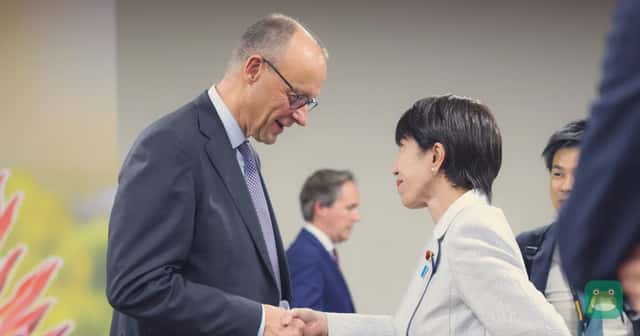
German Chancellor Friedrich Merz used a summit in Tokyo on October 28 to ask Japan to join what he called a global alliance of "like-minded partners" to defend rules-based trade. He met Prime Minister Sanae Takaichi. The two governments issued three documents: a joint statement and two joint declarations, one on advanced technology and one on economic security. That is according to the Japanese prime minister's office. A day later in Seoul, Merz and South Korean President Lee Jae Myung upgraded their countries' ties to an "Enhanced Strategic Partnership," Yonhap reported.
The trip tests a strategy as much as a relationship. Germany's export model has been squeezed by U.S. tariffs and by competition from China, and Merz is trying to build a coalition of middle-sized economies that can act together on trade and supply chains. The visit also exposed a tension inside that strategy: both Japan and South Korea raised concerns about the European Union's own planned industrial-protection rules.
The Tokyo stop followed an October 27 visit to Singapore, where Germany and Singapore agreed on a work plan for closer strategic ties.
What Germany and Japan agreed#
The Japanese government's summary of the meeting, issued as a provisional translation, says the leaders met for about 30 minutes starting at 6:10 p.m. on October 28, held a joint press announcement, met business delegations and then had dinner. Takaichi described the two countries as "Premium Partners," and Merz said they share so much that "calling each other neighbors would not be an overstatement."
The summary lists several areas of agreement:
- Security and defense: the leaders agreed to explore "opportunities and frameworks conducive to deepening force interoperability" and to promote defense-industry cooperation, in line with Japan's "Free and Open Indo-Pacific" approach and Germany's Indo-Pacific policy guidelines.
- Technology: they welcomed a joint declaration on advanced technology, naming fusion and hydrogen, and launched a high-level Japan-Germany dialog on AI.
- Economic security: they agreed to work on supply-chain resilience, "diversifying critical minerals supply sources and developing alternative sources," and protecting critical technologies.
- Economic coercion: they expressed "serious concern over the increasing use of economic coercion, such as arbitrary export restrictions concerning critical minerals," and rejected "non-market policies and practices that give rise to excess capacity."
- Trade fairs: Merz invited Japan to be partner country at Hannover Messe 2028, and Takaichi accepted.
Euronews reported that the two governments also plan closer work on chips, batteries, electric cars, industrial AI, robots, drugs and wind power. It said they also welcomed a declaration of intent on critical raw materials. Neither statement named China or the United States. Euronews read the coercion language as indirect criticism of both; that is the outlet's interpretation, not wording in the documents.
Reuters reported that Merz said the two countries were exploring the possibility of developing a joint fighter jet. No document reviewed for this report sets out such a project, so it should be read as an exploratory remark rather than an agreement.
Japan's complaint about an EU rule#
One line in the Japanese summary points to friction. Takaichi "conveyed Japan's strong concerns regarding the EU's Industrial Accelerator Act (IAA), and called for an appropriate response on the part of the EU," the summary says. The leaders then "confirmed the importance of ensuring that the interests of Japan and Germany, as trusted partners, are reciprocally taken into consideration in industrial support measures for strategic sectors."
The same concern surfaced in Seoul. Lee said he had asked for Germany's help in securing treatment for South Korea equal to that given European countries under the act, Yonhap reported. Writing from Seoul for the German daily taz, correspondent Fabian Kretschmer described the dilemma. EU measures aimed mainly at China could also hit Korean car and defense firms. One example is a stronger preference for "made in Europe" content in public contracts.
The German industry federation BDI made a similar point. "Europe must protect itself effectively against competitive distortions from China. At the same time, long-standing and reliable trading partners such as South Korea must not be disadvantaged," BDI director general Tanja Gönner said, as quoted by taz (our translation).
The episode illustrates a practical limit on Merz's pitch. Trade policy is an EU competence, as tagesschau noted, so the chancellor can promote agreements and alliances but cannot negotiate them on Germany's behalf.
The "alliance for rules-based trade"#
Merz set out the proposal at an economic forum in Tokyo. The alliance would defend and develop rules-based trade "including the WTO," he said, according to tagesschau. The broadcaster reported his statement that 70% of world trade still runs under World Trade Organization rules. "Should the rules of the global trading system be violated by others, or should economic coercion be employed, we could coordinate our actions within the alliance and present a united front," he said, as quoted by Reuters.
He borrowed an image from Canadian Prime Minister Mark Carney, who has called for middle powers to work together. "If we move forward together, the question will no longer be whether we are 'on the menu' or 'sitting at the table,'" Merz said, according to Reuters. "Because in that case, the restaurant itself belongs to us."
Merz did not name the countries he had in mind. Tagesschau described his comments on unlawful tariffs and coercion as an allusion to the United States and China. In Singapore a day earlier, he had called for an EU deal with the 12 members of the CPTPP, the Trans-Pacific trade pact. Over the long term, he wants one with the ASEAN bloc too. He called the effort "a deliberate counterpoint" to current limits on global trade. He also said that "a new nationalism would lead us down the wrong path," tagesschau reported (our translation).
The context includes U.S. trade policy under President Donald Trump, whose administration Reuters described as seeking to build a tariff wall around the U.S. economy, and Germany's trade balance with Asia. Reuters cited a report that Germany's trade deficit with the Asia-Pacific region is on course for a record of nearly €146 billion in 2026. Falling exports to China are outweighing growth elsewhere. That figure comes from a report Reuters did not name, and it is a projection for the full year.
How Beijing and Taipei responded#
China's foreign ministry said it hoped Germany and the EU would be "objective and rational" and that it was committed to maintaining stable trade and supply chains, Reuters reported. After Merz's Singapore speech, ministry spokesman Guo Jiakun said China was determined to work with all parties to keep global industrial and supply chains stable, according to tagesschau.
The joint statement also addressed the Taiwan Strait. It voiced opposition to unilateral attempts to change the status quo by force or coercion anywhere in the world and stressed peace and stability across the strait, the Taipei Times reported. Taiwan's foreign ministry thanked both leaders on October 29. Beijing regards Taiwan as part of its territory.
The Seoul leg#
In Seoul on October 29, Merz and Lee agreed to raise ties to an Enhanced Strategic Partnership. According to Yonhap, their joint statement commits the two countries to regular military exchanges and training. It also calls for continued security talks between defense ministries and for work toward an agreement on protecting classified military information. They also agreed to cooperate on automotive, battery, industrial AI and robotics projects. Merz said the security of South Korea and Europe is linked, citing North Korean soldiers fighting Ukrainian forces and Russia's supply of weapons to Pyongyang, Yonhap reported.
How German political camps framed the trip#
Before Merz left, politicians from different parties described what they wanted the trip to achieve, as reported by n-tv with AFP on October 26. Their framings differ in emphasis more than direction.
The Greens: an "alliance of counterweights"#
Katharina Dröge, co-leader of the Green parliamentary group, urged Merz to build an "alliance of counter-power" against Russia, China and the United States. At a time when "the Trump administration" is breaking "the international order," Russia is waging "a brutal war of aggression against Ukraine," and China is seeking dominance through economic and military influence, Europe needs "reliable partners," she said (our translation). Japan, South Korea and Singapore are central partners for that vision, she argued, and she asked Merz to coordinate closely with other European governments.
The strongest form of this argument is that Germany's dependence on any single great power has become a liability, and that democracies of similar size can pool their leverage. Skeptics see a weak point. The United States remains the main security guarantor for Japan and South Korea. That limits how far those partners can treat Washington as a rival.
The CDU's security wing: deterrence in the Indo-Pacific#
Roderich Kiesewetter, a CDU foreign and security policy lawmaker from Merz's own party, put the emphasis on security. Merz should say publicly that Germany stands "for the freedom of the sea lanes and against the increasing aggression and threat to the region by China," he said (our translation). Indo-Pacific countries see the United States as their security guarantor, but under Trump its reliability is in question, so partnerships with Europe matter more, he argued.
The strongest form of this argument is that trade cooperation without security commitments is fragile, and that Germany's economic interests in Asia depend on stable sea lanes. A common objection is that Germany has limited military capacity in the Pacific. Sharper language toward China also carries risk for German firms that still depend on its market.
Who was not heard#
No statement on the trip from the AfD, Die Linke or the SPD was found in the reporting reviewed for this article. Japanese opposition reactions were also not found. That gap means this report cannot describe the full range of domestic views in either country. Our Germany guide and Japan guide describe the parties and their positions more broadly.
Analysis: what the trip does and does not establish#
Established by official documents: Germany and Japan issued three cooperation texts; they agreed to explore defense interoperability and launched an AI dialog; Japan raised the Industrial Accelerator Act; and Germany and South Korea upgraded their partnership.
Proposals, not agreements: the trade alliance, an EU-CPTPP deal and a joint fighter jet are proposals or explorations. None has members, terms or timelines in the public record reviewed here.
A reasoning check. Some coverage treats the coercion language as aimed at China alone, while other readings see the alliance as a response to U.S. tariffs. The documents name neither country, so either reading is an inference. It is also possible for both to be true, since Merz described pressure from "major powers" in general terms. Readers should be cautious about claims that the trip produced a new bloc; on the record so far, it produced statements of intent.
What to watch: whether Japan or South Korea formally endorses the alliance; how the EU handles partner concerns about the Industrial Accelerator Act; and whether the critical-minerals declaration leads to named projects. For Takaichi's broader record, see her 567politics profile; for Merz's, see the Friedrich Merz profile.
About this report#
This AI-assisted report was prepared on October 30, 2026. It draws on the Japanese prime minister's office summary of the October 28 summit and on reporting by Reuters, Euronews, tagesschau, Yonhap, taz, the Taipei Times and n-tv/AFP. German-language quotations are our translations. The full texts of the joint statement and declarations were not reviewed beyond the official summary and quoted passages. No representative polling on the trip was found, so this report does not describe public opinion. U.S. Federal Election Commission data does not apply to the German, Japanese and Korean leaders discussed; no financial-interest claim is made about them. Our approach is described in the 567politics methodology.
Photo note#
File image of Takaichi and Merz at the G20 summit in South Africa in November 2025, not a photograph of the Tokyo meeting. Photo: Cabinet Public Affairs Office of Japan, original file, CC BY 4.0. Cropped for publication.

Differing perspectives
Should the EU's planned "made in Europe" car rules give equal treatment to partners such as Japan and South Korea?
Each position is summarized as its supporters make it, with equal weight and in alphabetical order. A summary is not an endorsement; the evidence for each is weighed in the story above.
Aimed at one special country, not Korea
Who holds it: Stefan Rouenhoff, parliamentary state secretary, German economy ministry
Rouenhoff told the Korea JoongAng Daily on Oct. 30: "The reason why we, Germany and France, acted as we acted is not [because of] Korea, but the challenges we face with regard to one special country." He called the Franco-German deal "very narrow" and said it covers only public funding, procurement and cars. He said Hyundai and Kia plants in Europe would be treated as local production, and that the act "hasn't been finalized yet."
In their words: Korea JoongAng Daily, Oct. 30, 2026 ↗
Reciprocal consideration for trusted partners
Who holds it: Japanese government, in a readout of the Oct. 28 Takaichi–Merz meeting
Japan's prime minister's office says Prime Minister Takaichi "conveyed Japan's strong concerns regarding the EU's Industrial Accelerator Act (IAA), and called for an appropriate response on the part of the EU." The leaders then confirmed the importance of ensuring that the interests of Japan and Germany, "as trusted partners, are reciprocally taken into consideration in industrial support measures for strategic sectors." The readout is a provisional translation.
In their words: Prime Minister's Office of Japan, Oct. 28, 2026 ↗
Cite this article
567politics News Desk. “Merz asks Japan to join a rules-based trade alliance as Tokyo raises concerns about EU industrial rules.” 567politics. Published 2026-10-30. Updated 2026-11-02. https://www.567politics.com/news/merz-takaichi-japan-germany-trade-alliance-october-2026
Wikipedia citation
{{cite news |title=Merz asks Japan to join a rules-based trade alliance as Tokyo raises concerns about EU industrial rules |url=https://www.567politics.com/news/merz-takaichi-japan-germany-trade-alliance-october-2026 |work=567politics |author=567politics News Desk |date=2026-10-30 |language=en}}CSL-JSON for reference managers
{
  "id": "https://www.567politics.com/news/merz-takaichi-japan-germany-trade-alliance-october-2026",
  "type": "article-newspaper",
  "title": "Merz asks Japan to join a rules-based trade alliance as Tokyo raises concerns about EU industrial rules",
  "URL": "https://www.567politics.com/news/merz-takaichi-japan-germany-trade-alliance-october-2026",
  "container-title": "567politics",
  "language": "en",
  "author": [
    {
      "literal": "567politics News Desk"
    }
  ],
  "issued": {
    "date-parts": [
      [
        2026,
        10,
        30
      ]
    ]
  }
}Citations identify this article and its publication date. Assess the reporting and its linked sources before using it as evidence.
Read this article as Markdown or JSON. Cite the original page and retain its sources, dates and qualifications.
Embed this article summary
Paste this HTML into your page. The summary stays linked to the full story and updates with it. No account required.
<iframe src="https://www.567politics.com/embed/news/merz-takaichi-japan-germany-trade-alliance-october-2026?theme=auto" title="Merz asks Japan to join a rules-based trade alliance as Tokyo raises concerns about EU industrial rules by 567politics" width="100%" height="440" style="border:0;max-width:100%" loading="lazy"></iframe>
<p style="font-size:14px">Merz asks Japan to join a rules-based trade alliance as Tokyo raises concerns about EU industrial rules by <a href="https://www.567politics.com/news/merz-takaichi-japan-germany-trade-alliance-october-2026" rel="nofollow">567politics</a></p>
<script async src="https://www.567politics.com/embed.js"></script>
READ BEYOND 567POLITICS
Alternate sources & perspectives
Independent coverage and primary evidence to help you compare arguments. A link is not an endorsement; perspective labels describe the linked material.
- primary evidence
Japan-Germany Summit Meeting and Working Dinner (Summary) ↗
Prime Minister's Office of Japan
Official provisional-translation summary of the Oct. 28 summit, including the agreements and Takaichi's concerns about the EU Industrial Accelerator Act.
- independent analysis
Merz invites Japan to back trade alliance as China asks Germany to be 'rational' ↗
Reuters (via Euronext)
Wire report on Merz's Tokyo speech, the fighter-jet remark, China's response and the projected Asia-Pacific trade deficit.
- independent analysis
Germany and Japan strengthen economic ties as global tensions rise ↗
Euronews
Summarizes the sectors covered and reads the coercion language as indirect criticism of China and the United States.
- independent analysis
Merz fordert auf Asienreise neue Allianz für regelbasierten Handel ↗
tagesschau (ARD)
German public broadcaster's report on the proposed alliance, the WTO figure and China's foreign ministry comments. In German.
- independent analysis
Kanzler Merz setzt auf Handel mit Asien - offenbar als Reaktion auf Trump ↗
tagesschau (ARD)
Background on the Asia trade strategy, including the point that trade policy is an EU competence. In German.
- other perspective
Merz auf Asienreise: Drahtseilakt in Seoul ↗
taz
Correspondent report from Seoul on how EU 'made in Europe' rules could hit Korean firms; quotes BDI's Tanja Gönner. taz is a left-leaning daily; this is reporting, not an op-ed. In German.
- independent analysis
(LEAD) S. Korea, Germany heighten ties, boost defense cooperation ↗
Yonhap News Agency
Korean wire report on the Oct. 29 Enhanced Strategic Partnership and Lee's request on the Industrial Accelerator Act.
- other perspective
Ministry thanks Japan and Germany for support ↗
Taipei Times
Taiwan's foreign ministry response to the joint statement's Taiwan Strait language.
- other perspective
Grüne fordern von Merz „Allianz der Gegenmacht“ zu USA, China und Russland ↗
n-tv (with AFP)
News ticker carrying the Greens' Katharina Dröge (counter-power alliance) and the CDU's Roderich Kiesewetter (Indo-Pacific security) positions before the trip. A news report, not an argument piece. In German.
Reviewed 2026-10-30. The discovery search returned only irrelevant results (manga, soil engineering, stock quotes), so these sources were found and verified by hand. No standalone left or right opinion pieces on the trip were found; German party positions (Greens and CDU) come via n-tv/AFP news reporting. No statements from the AfD, Die Linke, the SPD or Japanese opposition parties were found. Full texts of the joint statement and declarations were not reviewed beyond the official summary.