Lower House passes bill requiring permission for land buys near defense sites
Japan's Lower House approved an amendment that would require prior state permission to buy land or buildings within about 1 kilometer of designated defense sites and on uninhabited border islands. The bill now goes to the House of Councillors and is not yet in force.
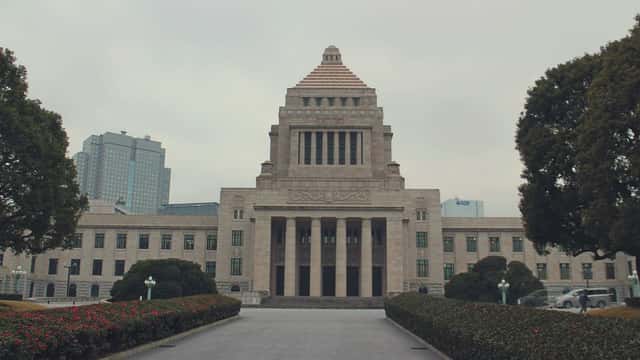
The House of Representatives on Tuesday, Nov. 24, passed an amendment to the law that reviews and regulates the use of land around important facilities and on remote islands. The bill would require prior government approval, regardless of nationality, for acquiring land and buildings within about 1 kilometer of designated defense sites and on uninhabited border islands.
Jiji Press and the Sankei Shimbun both reported that the bill passed by a majority and was sent to the House of Councillors. Both outlets said it is expected to be enacted during the current Diet session. A Yahoo! News analysis published the same day put the end of that session on Dec. 12. That date comes from the analyst's write-up, not from the two news reports of the vote.
The Lower House vote is a first-chamber decision. It does not, by itself, put the permission system into force. The text still has to clear the House of Councillors, and officials still have to designate the sites and publish the criteria that a committee already asked them to clarify.
According to Jiji, all parties except the Japanese Communist Party and Inochi no To voted in favor. Sankei listed the Liberal Democratic Party, Nippon Ishin no Kai, the Democratic Reform group and Komeito (which form the joint parliamentary group "Centrist"), the Democratic Party for the People, Sanseito and Team Mirai among the supporters. It said the JCP and others opposed. The pages opened did not include an on-record statement from the JCP explaining its "no" vote.
- The current law mainly requires prior notice for larger land deals in special monitoring zones
- The amendment would create "regulated zones" of about 1 kilometer around specially designated defense sites
- Uninhabited border islands would also be regulated zones
- Buying land or buildings there would need prior state permission, regardless of nationality
- Purchases by foreign governments, foreign military personnel and some people under foreign-government contracts would, in principle, be refused
Source: Jiji, Nov. 24, Sankei Shimbun, Nov. 24
What the bill would do#
Sankei reported that the amendment designates defense-related facilities that are vulnerable to drone attacks as "specially designated important facilities." It sets the surrounding area of about 1 kilometer, and uninhabited border islands, as "regulated zones." Transfers of ownership of land and buildings there would require prior state permission.
Jiji noted that the permission rule applies regardless of nationality. Acquisitions by foreign governments, foreign military personnel, and people obliged to cooperate with a foreign government under contract would in principle be refused, according to Jiji.
Sankei reported that unauthorized transactions would be punishable by up to three years in prison or a fine of up to ¥3 million. If control of a property changes after acquisition, for example through a corporate takeover, and raises security concerns, the state could order the property transferred. If the owner does not comply, the state could apply to a court for an auction. The bill also allows on-site inspections by Cabinet Office staff and by police officers who meet certain requirements.
Under the current law, Sankei explained, acquisitions of land or buildings of 200 square meters or more in "special monitoring zones" around key facilities require only prior notification. The amendment would move the most sensitive sites from a notification system to a permission system.
- Deals made without permission could bring up to three years in prison or a ¥3 million fine
- If control later changes and raises a security concern, the state could order a transfer
- If the owner refuses, the state could ask a court to auction the property
- Cabinet Office staff, and some police officers, could carry out on-site inspections
- A Lower House committee has already asked the government to clarify the permission criteria
Source: Sankei Shimbun, Nov. 24
Concerns raised in committee#
During deliberations in the Lower House Cabinet Committee, members said the criteria for granting permission were unclear, according to Sankei. On Nov. 20 the committee adopted a supplementary resolution. It asks the government to clarify the criteria and to publish the number of refusals and the reasons for them.
Two related bills, allowing the state to centrally track information on the beneficial owners of companies, also passed the Lower House on Tuesday, Sankei reported. Those bills are part of the same day's package, not a substitute for the land-use amendment.
The Cabinet Office's own outline of the bill was found in search results but was not opened for this article. The description above therefore follows Jiji and Sankei's accounts of the text and of the committee debate, not a direct reading of the ministry pamphlet.
How the vote fits the rest of the Diet#
The bill passed with support from both the ruling camp and several opposition parties. That is unusual in a session also marked by a fight over cutting 31 proportional-representation seats and by opposition plans for a censure motion against Education Minister Yoshihiro Seki. A national-security land bill can gather a wider majority than a political-reform bill. Tuesday's roll call appears to have done so, based on the party lists in Jiji and Sankei.
The measure also sits beside Japan's argument over the next five-year defense budget and recent maritime diplomacy with Quad partners. Those are related policy files. They are not the same vote.
Because the bill still has to pass the House of Councillors, it is not yet law. Jiji and Sankei expect enactment in this session. That is a forecast, not a result. Upper House arithmetic is tighter for the government than Lower House arithmetic, as the weekend poll and Diet roundup has already noted in other contexts. A broad Lower House majority does not, by itself, guarantee a quiet Upper House passage. It does make enactment more likely than if the ruling camp had been isolated.
- The Lower House Cabinet Committee adopts a supplementary resolution on clearer permission criteria
- The Lower House passes the amendment and two related beneficial-owner bills
- The land-use bill is sent to the House of Councillors
- Jiji and Sankei say they expect enactment during the current session
Source: Jiji, Nov. 24, Sankei Shimbun, Nov. 24
What remains unclear#
The most important open question is the one the committee already flagged. If permission is to be refused "in principle" for some foreign buyers, officials will still have to say how they will treat ordinary private buyers, including Japanese firms with foreign shareholders and foreign residents who are not acting for a government. The supplementary resolution asks for those criteria to be spelled out and for refusals to be counted in public. Until that happens, the legal shift from notice to permission is clearer than the practical test that applicants will face.
- Officials still have to publish clearer criteria for granting or refusing permission
- The reports opened on Tuesday did not give a start date for the permission regime
- Sites and regulated zones still have to be designated
- The JCP and Inochi no To did not, in those pages, explain their no votes
- The bill still has to pass the House of Councillors
Source: Sankei Shimbun, Nov. 24, Jiji, Nov. 24
A second open question is timing. Even if the Upper House passes the bill this session, the government will have to designate the new "specially designated" sites and the regulated zones. The reports opened on Tuesday did not give a start date for the permission regime.
- The House of Councillors still has to vote
- The government still has to designate sites and regulated zones
- Permission criteria still have to be published, as the committee asked
- A start date for the new regime was not in the reports opened on Tuesday
- A Lower House majority is not the same as a finished legal regime
Source: Jiji, Nov. 24, Sankei Shimbun, Nov. 24
A third is opposition. The JCP's reasons were not in the pages opened. Inochi no To's reasons were not either. This article does not invent them. If those parties issue statements, they can be added.
- The Lower House majority included the ruling camp and several opposition parties
- That is not yet a law, because the Upper House still has to vote
- The JCP and Inochi no To voted no, without an explanation in the pages opened
- The older notice rules would still apply outside the new regulated zones
- Later designations and published criteria will show how far the system reaches
Source: Jiji, Nov. 24, Sankei Shimbun, Nov. 24
For now, the verified news is the Lower House vote, the move from notification to permission at the most sensitive sites, the nationality-neutral rule with a stated presumption against some foreign-government buyers, the penalties and inspection powers described by Sankei, and the committee's request for clearer criteria. The bill is one chamber through. It is not yet in force.
- The Lower House approved a shift from notice to permission at the most sensitive sites
- The rule is written as nationality-neutral, with a presumption against some foreign-government buyers
- Sankei described penalties, inspections and a possible court auction
- A committee has already asked for clearer published criteria
- The bill is one chamber through and is not yet in force
Source: Jiji, Nov. 24, Sankei Shimbun, Nov. 24
Readers should also keep a simple distinction in mind. A law can be both a national-security tool and a constraint on property rights. Supporters will stress the first. Critics will stress the second. Tuesday's majority was broad, but breadth is not the same as a settled public argument. The Upper House, and later the government's designations, will show how far the new permission system actually reaches.
The existing law was already a response to earlier alarms about land near bases and radar sites. The amendment would tighten the strictest tier of that system, not repeal the older notice rules everywhere. That matters for property owners who live near ordinary public facilities rather than the new "specially designated" defense sites. Their deals may still fall under the older notice regime, if they fall under any special rule at all. The new permission system is written, in the news accounts, as a narrower and tougher overlay.
Cross-border investment is the obvious flash point, and the bill's authors appear to have tried to avoid a rule that names one country. The permission requirement is written as nationality-neutral. The refusal presumption is written in terms of foreign governments, foreign militaries and people bound by contract to help a foreign government. In practice, officials will still have to apply those categories to real buyers. That is why the committee asked for published criteria and published refusal counts. Without those, critics will say the law is a blank check. Supporters will say the government needs flexibility.
Penalties also need to be stated with care. A maximum of three years in prison, or a fine of up to ¥3 million, is a ceiling. It is not a typical sentence, and it is not a prediction. The auction power is also a last-step tool, at least as Sankei described it. It would follow a transfer order that had not been obeyed. Courts, not ministries acting alone, would have to approve that step.
The two beneficial-owner bills passed the same day because hidden corporate control is part of the same problem. If a company can be bought after the land is bought, a one-time permission at the first sale may not be enough. The amendment tries to reach that later change of control. The related bills try to give the state a clearer view of who stands behind a company. The reports do not say when those bills would take effect either.
Taken together, Tuesday's votes shift the Lower House toward tighter rules on land around sensitive sites. They are not yet a finished legal regime. The Upper House still has to vote, and the government still has to write the criteria and draw the maps.
If the Upper House amends the bill, the Lower House may have to vote again. If it passes the text as is, later designations and the first published refusal statistics will tell the public more than Tuesday's majority alone.
Differing perspectives
Should Japan require prior state permission to buy land near designated defense sites?
Each position is summarized as its supporters make it, with equal weight and in alphabetical order. A summary is not an endorsement; the evidence for each is weighed in the story above.
Require prior permission at sensitive sites
Who holds it: Economic Security Minister Kimi Onoda and the government
Onoda told the Lower House that a permission system at the point of purchase is needed to respond to new forms of warfare that use drones. The bill would create regulated zones of about 1 kilometer around especially sensitive defense sites and on uninhabited border islands. Permission would apply regardless of nationality, with a presumption against purchases by foreign governments, foreign military personnel, and people obliged to cooperate with a foreign government under contract. Onoda also said residence status, including permanent residence, would not be a factor in the review, that U.S. service members could fall under an exception, and that the government would consider publishing the number of approvals and refusals.
In their words: Jiji Press ↗
Withdraw the amendment
Who holds it: The Japanese Communist Party
The party's newspaper says the amendment should be withdrawn after thorough debate. It says the bill restricts property rights and would cover all residents and businesses in the new zones, even if they have no link to harming a base. It points to government surveys of 586 designated sites under the current law that, in the party's account, found no confirmed acts that impaired those sites' functions, and says there is no basis for tighter rules. It also objects to using wartime examples from other countries to widen limits on rights in peacetime, and to the minister's statement that the state would not compensate owners if property values fall.
In their words: Shimbun Akahata, the Japanese Communist Party newspaper ↗
Cite this article
567 Politics staff. “Lower House passes bill requiring permission for land buys near defense sites.” 567politics. Published 2026-11-24. https://www.567politics.com/news/japan-lower-house-land-purchase-permission-defense-sites-november-2026
Wikipedia citation
{{cite news |title=Lower House passes bill requiring permission for land buys near defense sites |url=https://www.567politics.com/news/japan-lower-house-land-purchase-permission-defense-sites-november-2026 |work=567politics |author=567 Politics staff |date=2026-11-24 |language=en}}CSL-JSON for reference managers
{
  "id": "https://www.567politics.com/news/japan-lower-house-land-purchase-permission-defense-sites-november-2026",
  "type": "article-newspaper",
  "title": "Lower House passes bill requiring permission for land buys near defense sites",
  "URL": "https://www.567politics.com/news/japan-lower-house-land-purchase-permission-defense-sites-november-2026",
  "container-title": "567politics",
  "language": "en",
  "author": [
    {
      "literal": "567 Politics staff"
    }
  ],
  "issued": {
    "date-parts": [
      [
        2026,
        11,
        24
      ]
    ]
  }
}Citations identify this article and its publication date. Assess the reporting and its linked sources before using it as evidence.
Read this article as Markdown or JSON. Cite the original page and retain its sources, dates and qualifications.
Embed this article summary
Paste this HTML into your page. The summary stays linked to the full story and updates with it. No account required.
<iframe src="https://www.567politics.com/embed/news/japan-lower-house-land-purchase-permission-defense-sites-november-2026?theme=auto" title="Lower House passes bill requiring permission for land buys near defense sites by 567politics" width="100%" height="440" style="border:0;max-width:100%" loading="lazy"></iframe>
<p style="font-size:14px">Lower House passes bill requiring permission for land buys near defense sites by <a href="https://www.567politics.com/news/japan-lower-house-land-purchase-permission-defense-sites-november-2026" rel="nofollow">567politics</a></p>
<script async src="https://www.567politics.com/embed.js"></script>
READ BEYOND 567POLITICS
Alternate sources & perspectives
Independent coverage and primary evidence to help you compare arguments. A link is not an endorsement; perspective labels describe the linked material.
- primary evidence
Lower House passes the land-use amendment ↗
Jiji Press
Nov. 24 report of the majority vote, the parties that opposed, and the permission rule, including the presumption against certain foreign-government buyers.
- primary evidence
Sankei account of penalties, inspections and a committee resolution ↗
Sankei Shimbun
Nov. 24 report of the vote, supporters, penalties, transfer and auction powers, inspections, and the Nov. 20 committee request for clearer criteria.
- right argument
Onoda says a permission system is needed for new forms of warfare ↗
Jiji Press
Nov. 10 report of Economic Security Minister Kimi Onoda's Lower House remarks as the bill entered deliberation.
- left argument
Communist Party editorial calls for the bill to be withdrawn ↗
Shimbun Akahata
Nov. 24 party editorial on the day of the Lower House vote, arguing there is no basis for tighter rules and objecting to the absence of compensation.
- left argument
Hatano questions the legislative basis in committee ↗
Shimbun Akahata
Nov. 14 report of Kimie Hatano's Nov. 13 Cabinet Committee questions and Onoda's replies, including that no domestic case of a nearby drone-attack base had been identified.
Reviewed 2026-11-24. Hand-picked from pages opened for the Lower House land-use vote on Nov. 24, 2026, plus the minister's Nov. 10 remarks when the bill entered deliberation and the Communist Party's same-day editorial. The Cabinet Office bill summary PDF was found in search but was not opened.