Otzma Yehudit brings mosque loudspeaker bill to a Knesset vote after police seize speakers in Negev towns
The bill would require a permit for the call to prayer and allow fines of up to 50,000 shekels. Arab lawmakers call it an attack on their faith.
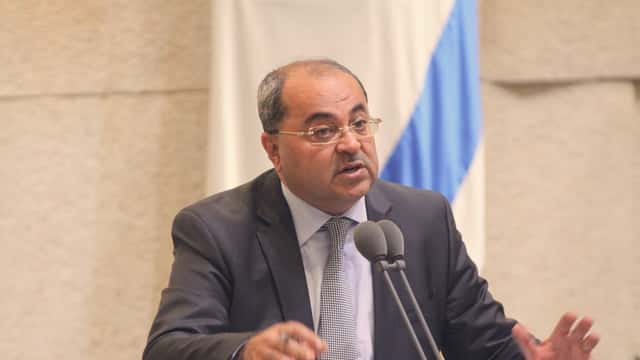
Israel's far-right Otzma Yehudit (Jewish Power) party plans to bring a bill restricting mosque loudspeakers to a preliminary vote in the Knesset on Wednesday, Nov. 25. The bill would require a government permit to broadcast the Islamic call to prayer and would let police seize equipment.
The push comes days after police removed sound systems from two mosques in Bedouin towns in southern Israel. Arab lawmakers and Bedouin leaders called the seizures an attack on their faith. The party's leader, National Security Minister Itamar Ben-Gvir, said the bill would bring "one law for everyone."
What the bill would do#
The bill was drafted by Otzma Yehudit lawmakers Limor Son Har-Melech and Chanamel Dorfman, according to JFeed. Under the draft:
- Any mosque operating a public address system would need a special permit from the environmental protection minister.
- Police could stop any broadcast that breaks the law and seize the equipment.
- Operating a loudspeaker without a permit would carry a fine of 50,000 shekels. Breaching the terms of a permit would carry a fine of 10,000 shekels.
The party says the bill continues the noise enforcement policy that Ben-Gvir has led as minister in charge of the police. Its aim, the party says, is to give officers new legal tools.
"The days when citizens are forced to suffer unbearable noise with no one enforcing the law are over," Ben-Gvir said. "During the last term I led a policy of determined enforcement against noise nuisances, and now we are taking another step forward with legislation that will give the police significant tools." He added: "One law for everyone, without fear and without discounts. I congratulate MKs Limor Son Har-Melech and Chanamel Dorfman on advancing this important law."
Son Har-Melech said that "for years, hundreds of thousands of citizens in Israel have suffered from unbearable noise nuisances coming from the loudspeaker systems in mosques, and the time has come to put an end to this lawlessness." She said the law would give police "significant enforcement tools, including confiscation of equipment and heavy fines," and that "the citizens of Israel are entitled to quiet and security in their homes." She also thanked Ben-Gvir "for his determined work on this issue."
Police seizures in Hura and Tel Sheva#
On Sunday, Nov. 22, police disconnected the speakers at a mosque in the Bedouin town of Hura in the Negev and removed its sound equipment, Al Jazeera reported. Days earlier, police had seized the sound system at al-Dawa Mosque in nearby Tel Sheva, known in Arabic as Tel al-Saba.
Police said they had received repeated noise complaints about both mosques. In Tel Sheva, they said they had issued fines and warned those responsible for the sound system before seizing it. In Hura, they said officers measured the volume and found it exceeded the legal limit. Ben-Gvir defended the removals, saying the noise levels had been too high.
Hura and Tel Sheva are recognized Bedouin towns in the Negev desert, near Beersheba. Many other Bedouin communities in the area are villages that the state does not recognize, which are represented by a separate regional council.
Residents disputed the police account. Ibrahim al-Asam, a Tel Sheva resident and activist, wrote on social media that the speaker at al-Dawa Mosque was not loud. He said officers damaged the mosque during the raid and took the recorder connected to its security cameras.
- Authorities take loudspeakers from a mosque in Bir al-Hammam in the Negev
- Loudspeakers removed from a mosque in Majd al-Krum in the Galilee
- Zvika Fogel's muezzin bill passes a preliminary reading, 50 to 36
- Israel holds a general election
- The 26th Knesset is sworn in; earlier bills must start again
- Police seize the sound system at al-Dawa Mosque in Tel Sheva
- Police remove speakers from a mosque in Hura
- New Otzma Yehudit bill scheduled for a preliminary vote
Source: Al Jazeera, JFeed
"The mosque is far away and doesn't bother anyone," said Atiya al-Asam, who heads the regional council representing Bedouin villages in the Negev that Israel does not recognize. He called the seizure "an assault on people's faith, on Islam and Muslims." He said police acted without a court order and called for the speakers to be returned.
Earlier this year, authorities took loudspeakers from a mosque in the Negev village of Bir al-Hammam in April and from another in Majd al-Krum in the Galilee in June, according to Al Jazeera. They also summoned several muezzins, who give the call to prayer, for questioning and warned mosques that they could face fines.
'Ignite a religious war'#
Ahmad Tibi, a leader of the Ta'al party, told Al Jazeera that the seizures were the latest example of an attempt by Ben-Gvir to "ignite a religious war." Tibi said Ben-Gvir was "exploiting the atmosphere of war" by ordering the removals.
Ta'al is a member of the Joint List, an alliance of Arab-led parties.
Tibi also accused caretaker Prime Minister Benjamin Netanyahu of leading a campaign of incitement against Palestinian citizens of Israel. Since the election, Netanyahu has argued against any government that relies on the backing of Arab-led parties, accusing them of supporting "terrorism." Critics, including opposition leaders, have linked such statements to recent attacks targeting a mosque and an Arab city in Israel, Al Jazeera reported.
Netanyahu warned against relying on Arab parties in his first speech to the new Knesset, while opposition leader Gadi Eisenkot has courted the Islamist Ra'am party.
Monitoring groups' counts#
Arab citizens make up about a fifth of Israel's population, and most of them are Muslim. The call to prayer is broadcast five times a day from mosques in Arab towns and in mixed cities such as Lod, Acre and Jaffa.
The Palestinian monitoring group Mo'ta recorded at least 38 cases in 2026 in which Israeli authorities invoked noise regulations against mosques, imams or muezzins in Arab and mixed Arab-Jewish communities inside Israel. Similar measures have been reported in the occupied West Bank. In December 2025, the Israeli military ordered mosques in Ras Tira, near Qalqilya, to lower the volume of the call to prayer, saying the sound disturbed nearby Israeli settlements.
Source: Al Jazeera, citing Mo'ta and the Palestinian Ministry of Endowments
Show the numbers
| Measure | Count |
|---|---|
| Noise-rule cases against mosques or muezzins in Israel (Mo'ta) | 38 |
| Attacks on West Bank mosques (Mo'ta) | 50 |
| Of which arson (Mo'ta) | 13 |
Mo'ta also reported attacks on 50 mosques in the West Bank this year, including 13 cases of arson. Al Jazeera said Israeli attacks on West Bank mosques have surged, with worshippers tear-gassed in some incidents.
In Hebron, the Palestinian Ministry of Endowments and Religious Affairs said Israeli authorities had prevented the call to prayer at the Ibrahimi Mosque, known to Jews as the Cave of the Patriarchs, 1,009 times since the start of 2026. Israeli authorities have not published comparable figures, and 567 Politics could not independently verify the counts.
The earlier bill and the new Knesset#
This is not the first attempt. On July 1, 2026, the previous Knesset voted 50 to 36 in a preliminary reading for a similar bill sponsored by Zvika Fogel of Otzma Yehudit. The ultra-Orthodox Shas party and the secular-right Yisrael Beytenu backed Fogel's bill in that vote, while United Torah Judaism was absent, JFeed reported. The bill did not become law before the October election.
Source: JFeed
Show the numbers
| Vote | Lawmakers |
|---|---|
| For | 50 |
| Against | 36 |
The 26th Knesset was sworn in on Nov. 10, so the new bill has to start the legislative process from the beginning. A private member's bill passes a preliminary reading with a simple majority of lawmakers voting, so turnout in the chamber matters as much as party positions. A preliminary reading is only the first step. If it passes, the bill goes to a committee and must then pass three more readings to become law.
The balance of power in the chamber has changed since July. The election left Netanyahu's bloc short of a majority, and the bloc led by Eisenkot has relied on Arab parties' votes in key procedural fights, such as its 63-50 win over the Knesset's Arrangements Committee. Yisrael Beytenu, which backed Fogel's bill in July, is now part of Eisenkot's bloc, and Shas and United Torah Judaism have been courted by both camps. None of those parties had publicly said by Tuesday evening how it would vote on the new bill.
Ben-Gvir's role is also in flux. He remains national security minister, in charge of the police, in Netanyahu's caretaker government until a new government is sworn in. Otzma Yehudit recommended Netanyahu for prime minister after the election, and its future in government depends on the outcome of coalition talks.
What the dispute is about#
The two sides describe the issue in very different terms. Supporters frame it as a matter of noise and law enforcement that applies equally to everyone. Son Har-Melech said "the citizens of Israel are entitled to quiet and security in their homes." According to Kikar HaShabbat, an ultra-Orthodox news site, the vote is expected to stir further debate over noise nuisances and the balance between religious freedom and the right to quiet.
Opponents frame it as an attack on a religious practice that singles out Muslims. Bedouin leaders said the seizures were carried out without court orders and that the mosques were far from Jewish communities. Tibi said Ben-Gvir's aim was to inflame tensions during wartime.
Israel's existing noise rules already apply to mosques, and police used them in Hura and Tel Sheva. The new bill would create a specific permit regime for mosque loudspeakers, enforced by the police and backed by much larger fines.
The positions of Israel's parties can be compared on the 567politics spectrum chart for Israel. Those placements are dated editorial estimates.
Quotations from Hebrew- and Arabic-language sources are 567 Politics translations.
Differing perspectives
Should Israel require a government permit for mosque loudspeakers, enforced by police seizures and fines?
Each position is summarized as its supporters make it, with equal weight and in alphabetical order. A summary is not an endorsement; the evidence for each is weighed in the story above.
No: it targets Muslim worship
Who holds it: Ahmad Tibi of Ta'al; Bedouin leaders including Atiya al-Asam of the council of unrecognized villages
Opponents say the seizures and the bill single out Muslim prayer and amount to an assault on people's faith. They say the mosques in question are far from homes that could be disturbed, that police acted without court orders, and that the minister is exploiting the atmosphere of war to inflame tensions. They want the confiscated speakers returned and the bill dropped.
In their words: Al Jazeera ↗
Yes: enforce the same noise rules for all
Who holds it: Otzma Yehudit, including Itamar Ben-Gvir, Limor Son Har-Melech and Chanamel Dorfman
Supporters say hundreds of thousands of Israelis have suffered for years from unbearable noise from mosque loudspeakers, and that no one has enforced the law. A permit system, police powers to halt broadcasts and seize equipment, and heavy fines would give officers real tools. They say citizens are entitled to quiet and security in their homes, with one law for everyone.
In their words: JFeed ↗
Cite this article
567 Politics staff. “Otzma Yehudit brings mosque loudspeaker bill to a Knesset vote after police seize speakers in Negev towns.” 567politics. Published 2026-11-24. https://www.567politics.com/news/israel-otzma-yehudit-muezzin-bill-preliminary-vote-hura-tel-sheva-mosque-loudspeakers-tibi-november-2026
Wikipedia citation
{{cite news |title=Otzma Yehudit brings mosque loudspeaker bill to a Knesset vote after police seize speakers in Negev towns |url=https://www.567politics.com/news/israel-otzma-yehudit-muezzin-bill-preliminary-vote-hura-tel-sheva-mosque-loudspeakers-tibi-november-2026 |work=567politics |author=567 Politics staff |date=2026-11-24 |language=en}}CSL-JSON for reference managers
{
  "id": "https://www.567politics.com/news/israel-otzma-yehudit-muezzin-bill-preliminary-vote-hura-tel-sheva-mosque-loudspeakers-tibi-november-2026",
  "type": "article-newspaper",
  "title": "Otzma Yehudit brings mosque loudspeaker bill to a Knesset vote after police seize speakers in Negev towns",
  "URL": "https://www.567politics.com/news/israel-otzma-yehudit-muezzin-bill-preliminary-vote-hura-tel-sheva-mosque-loudspeakers-tibi-november-2026",
  "container-title": "567politics",
  "language": "en",
  "author": [
    {
      "literal": "567 Politics staff"
    }
  ],
  "issued": {
    "date-parts": [
      [
        2026,
        11,
        24
      ]
    ]
  }
}Citations identify this article and its publication date. Assess the reporting and its linked sources before using it as evidence.
Read this article as Markdown or JSON. Cite the original page and retain its sources, dates and qualifications.
Embed this article summary
Paste this HTML into your page. The summary stays linked to the full story and updates with it. No account required.
<iframe src="https://www.567politics.com/embed/news/israel-otzma-yehudit-muezzin-bill-preliminary-vote-hura-tel-sheva-mosque-loudspeakers-tibi-november-2026?theme=auto" title="Otzma Yehudit brings mosque loudspeaker bill to a Knesset vote after police seize speakers in Negev towns by 567politics" width="100%" height="440" style="border:0;max-width:100%" loading="lazy"></iframe>
<p style="font-size:14px">Otzma Yehudit brings mosque loudspeaker bill to a Knesset vote after police seize speakers in Negev towns by <a href="https://www.567politics.com/news/israel-otzma-yehudit-muezzin-bill-preliminary-vote-hura-tel-sheva-mosque-loudspeakers-tibi-november-2026" rel="nofollow">567politics</a></p>
<script async src="https://www.567politics.com/embed.js"></script>
READ BEYOND 567POLITICS
Alternate sources & perspectives
Independent coverage and primary evidence to help you compare arguments. A link is not an endorsement; perspective labels describe the linked material.
- right argument
Knesset to Vote on Muezzin Bill With NIS 50,000 Fines ↗
JFeed
Bill terms and full statements from Ben-Gvir and Son Har-Melech; history of the July 1 preliminary vote.
- primary evidence
חוק המואזין להצבעה: עוצמה יהודית מקדמת חקיקה נגד מפגעי רעש ↗
Kikar HaShabbat
Hebrew-language text of Otzma Yehudit's announcement and the sponsors' statements.
- left argument
Israel's Ben-Gvir accused of seeking 'religious war' over mosque raids ↗
Al Jazeera
Police seizures in Hura and Tel Sheva, the police account, and reactions from Ahmad Tibi and Bedouin leaders; Mo'ta counts.
- other perspective
Muezzin crackdown: Ben Gvir's party pushes bill to silence mosque loudspeakers, Knesset vote Wednesday ↗
The Yeshiva World
Orthodox Jewish outlet's report on the bill and the Hura seizure.
Reviewed 2026-11-24. Hand-picked; automated discovery returns generic pages. The bill text had not been located on the Knesset website; its terms come from the sponsors' party statement as reported by Israeli outlets. The Times of Israel page was blocked by a captcha and is not listed. Each listed page was opened and read.