Israel's partial count leaves both blocs short of a Knesset majority
With 84.5% of ballot boxes counted, Netanyahu's bloc has 54 seats and Eisenkot's 49. About 600,000 absentee ballots are still to come.
Israel's October 27 election has not produced a Knesset majority for either main bloc, according to partial official results released through Wednesday, October 28. With 84.5% of ballot boxes counted as of 12:34 p.m. Israel time, Central Elections Committee figures give Prime Minister Benjamin Netanyahu's bloc 54 of 120 seats, the Times of Israel reported. The bloc led by Gadi Eisenkot of the Yashar party had 49. The two Arab-led parties, the Joint List and Ra'am, had 17 between them. A majority is 61.
These numbers will change. Roughly 600,000 "double envelope" ballots, mostly from soldiers, are counted separately and may not be fully tallied until Friday, the Times of Israel reported, citing committee estimates. It noted that one Knesset seat is worth roughly 40,000 votes. Al Jazeera reports that official results are due to be formally published on November 4.
Source: the Times of Israel reported
Show the numbers
| Grouping | Seats |
|---|---|
| Netanyahu-led bloc | 54 |
| Eisenkot-led bloc | 49 |
| Joint List and Ra’am combined | 17 |
At a glance#
| Measure | Figure (partial, 84.5% of boxes, 12:34 p.m. Oct. 28) |
|---|---|
| Netanyahu-led bloc | 54 seats |
| Eisenkot-led bloc | 49 seats |
| Joint List and Ra'am combined | 17 seats |
| Seats needed for a majority | 61 of 120 |
| Turnout (Central Elections Committee) | 77.7%, up from 70.6% in 2022 |
The seat split moved during the morning. At 10:58 a.m., with 76.8% counted, the Arab-led parties had 19 seats and Eisenkot's bloc 47. Netanyahu's bloc held at 54 in both updates. Likud remained the largest single party, with 27 seats in mid-morning figures reported by Israel National News. Lists below the 3.25% threshold included the Reservists party at about 2.7%.
Turnout of 77.7% was the highest since 1999, Al Jazeera reported, citing the committee.
Two ways of counting a majority#
The leaders' statements turn on a question of arithmetic and of principle: which parties count toward a governing majority.
Netanyahu and his allies. Netanyahu told supporters that Likud is the largest party and that "the right bloc has a majority, and it is a decisive majority," as quoted by Al Jazeera. He called for a "national right-wing government." His framing counts support among Jewish, Zionist parties. He has said that relying on Arab parties would be a "disgrace," Al Jazeera reported. He also accused television channels of discouraging his voters by projecting stronger opposition results.
Eisenkot, the Democrats and the Arab-led parties. Eisenkot told supporters that "the old era is over," Al Jazeera reported. Democrats leader Yair Golan argued on X that the anti-Netanyahu parties plus the Arab-led parties form a majority: "65 is more than 55," the Times of Israel reported. Golan also challenged Netanyahu's own count. He argued that Netanyahu's bloc includes 16 members from Haredi parties, which he called non-Zionist. Joint List chairman Yousef Jabareen said any alternative government "will have to talk to us." Ra'am leader Mansour Abbas said he hoped the opposition and his party could reach 61 together.
Eisenkot, like Netanyahu, has previously ruled out a coalition with Arab parties, Al Jazeera reported. The Times of Israel described a scenario in which Arab-led parties back a government from outside without formally joining it.
Analysis: a disputed premise, not a math error#
Both camps are adding the numbers correctly. They disagree over whether seats won by Arab-led parties should count toward a mandate to govern. That is a political and value judgment, not a logical fallacy. In a Knesset confidence vote, each member's vote counts the same. Whether a coalition that relies on Arab-led parties is politically sustainable is a separate question that voters and parties answer differently.
Two cautions apply to early claims. Netanyahu's statement that the right "has a majority" is not supported by the partial count of all 120 seats. It holds only under his narrower definition. Golan's 65-seat figure, meanwhile, counts Arab-led parties that have not committed to joining a coalition. The double-envelope count could shift several seats in either direction. The Times of Israel notes these ballots have historically leaned away from Arab and Haredi parties, though this year's large reservist vote makes that harder to predict.
How a government gets formed#
After the final count, President Isaac Herzog consults party leaders and asks the candidate he judges most likely to succeed to form a government. That nominee has up to 42 days, Al Jazeera reported. If no coalition forms, Netanyahu's current cabinet stays on as a caretaker government, and a new election is possible.
Markets reacted to the uncertainty. The TA-125 index fell 1.7% and the shekel weakened 1% against the dollar on Wednesday, the Times of Israel reported.
This AI-assisted report was prepared on October 28, 2026, from partial results as relayed by the outlets linked above. The Central Elections Committee's own website could not be reached for this report, so figures are attributed to news organizations citing the committee. Seat counts should be checked against the final certified results. Our sourcing approach is described in the 567politics methodology.
Photo and reporting note#
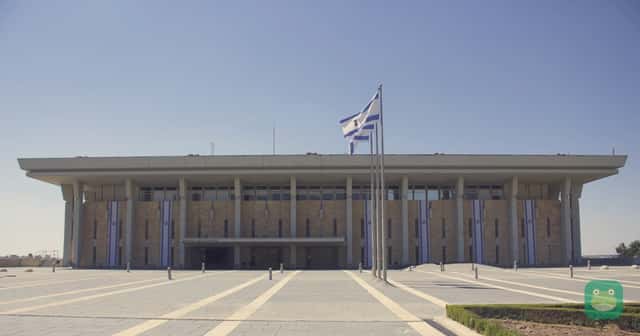
File image for institutional context, not a photograph of the events reported here. Photo: Clema12, original file, CC BY-SA 4.0. Cropped for publication. The adapted photo remains available under the same license.

Differing perspectives
Should Arab-led parties' seats count toward a governing majority in Israel's new Knesset?
Each position is summarized as its supporters make it, with equal weight and in alphabetical order. A summary is not an endorsement; the evidence for each is weighed in the story above.
A government of change in partnership with Israel's Arab citizens
Who holds it: Yair Golan, leader of The Democrats
Writing on X on Oct. 28, with about 60% of ballots counted, Golan said "Netanyahu has lost" and "65 is more than 55." He rejected what he called "Netanyahu's racist distinction between Jewish votes and Arab votes," saying a ballot cast in Tira is worth exactly the same as one cast in Givat Shmuel. He noted that Netanyahu's bloc includes 16 lawmakers from non-Zionist ultra-Orthodox parties. The seat figures he cited came from partial counts.
In their words: Ynet (full text of Yair Golan's post on X, Oct. 28, 2026) ↗
A national right-wing government
Who holds it: Prime Minister Benjamin Netanyahu and the Likud-led bloc
Speaking to supporters on election night, Netanyahu said Likud is the largest party and "nobody can compete with us." He said "the right bloc has a majority, and it is a decisive majority," and called for a "national right-wing government." Al Jazeera, reporting on the vote, noted that Netanyahu has said working with Arab leaders would be a "disgrace and a shame." He also accused Israeli television channels of trying to discourage his supporters by projecting stronger results for opposition parties.
In their words: Al Jazeera (reporting Netanyahu's election-night remarks, Oct. 28, 2026) ↗
Cite this article
567politics News Desk. “Israel's partial count leaves both blocs short of a Knesset majority.” 567politics. Published 2026-10-28. Updated 2026-11-06. https://www.567politics.com/news/israel-election-partial-results-no-majority-october-2026
Wikipedia citation
{{cite news |title=Israel's partial count leaves both blocs short of a Knesset majority |url=https://www.567politics.com/news/israel-election-partial-results-no-majority-october-2026 |work=567politics |author=567politics News Desk |date=2026-10-28 |language=en}}CSL-JSON for reference managers
{
  "id": "https://www.567politics.com/news/israel-election-partial-results-no-majority-october-2026",
  "type": "article-newspaper",
  "title": "Israel's partial count leaves both blocs short of a Knesset majority",
  "URL": "https://www.567politics.com/news/israel-election-partial-results-no-majority-october-2026",
  "container-title": "567politics",
  "language": "en",
  "author": [
    {
      "literal": "567politics News Desk"
    }
  ],
  "issued": {
    "date-parts": [
      [
        2026,
        10,
        28
      ]
    ]
  }
}Citations identify this article and its publication date. Assess the reporting and its linked sources before using it as evidence.
Read this article as Markdown or JSON. Cite the original page and retain its sources, dates and qualifications.
Embed this article summary
Paste this HTML into your page. The summary stays linked to the full story and updates with it. No account required.
<iframe src="https://www.567politics.com/embed/news/israel-election-partial-results-no-majority-october-2026?theme=auto" title="Israel's partial count leaves both blocs short of a Knesset majority by 567politics" width="100%" height="440" style="border:0;max-width:100%" loading="lazy"></iframe>
<p style="font-size:14px">Israel's partial count leaves both blocs short of a Knesset majority by <a href="https://www.567politics.com/news/israel-election-partial-results-no-majority-october-2026" rel="nofollow">567politics</a></p>
<script async src="https://www.567politics.com/embed.js"></script>
READ BEYOND 567POLITICS
Alternate sources & perspectives
Independent coverage and primary evidence to help you compare arguments. A link is not an endorsement; perspective labels describe the linked material.
- primary evidence
Times of Israel liveblog, October 28, 2026 ↗
The Times of Israel
Relays Central Elections Committee partial results at 72.4%, 76.8% and 84.5% counted, threshold figures, the double-envelope ballot estimate, and statements by Yair Golan and Yousef Jabareen arguing for a majority that includes Arab-led parties.
- independent analysis
Five key takeaways from Israel's parliamentary elections ↗
Al Jazeera
Turnout figure, the coalition-formation timeline, and Netanyahu's claim that the right bloc has a 'decisive majority'; uses some contested characterizations of the Gaza war that 567politics did not adopt.
- right argument
77.6% counted: Eisenkot and Bennett gain seats, Joint List, Liberman lose ↗
Israel National News
Party-by-party seat projections from a right-leaning Israeli outlet whose coverage reflects the nationalist camp's framing.
- left argument
Netanyahu bloc holds 54 seats as 77% of votes counted ↗
Haaretz
Live results coverage from a left-leaning Israeli daily highlighting the Arab-led parties' gains; may be paywalled.
Reviewed 2026-10-28. The source-discovery tool returned only general Israel pages (encyclopedias and outlet home pages) for this story, so these sources were found by direct search and each page was opened and checked on October 28, 2026. The Central Elections Committee website could not be reached; results are relayed by outlets citing it. Leaders' arguments are drawn from news reports of their statements.