India's top court weighs a plea to stop lawmakers resigning their way out of anti-defection cases
A petition asks the Supreme Court to keep disqualification cases alive after resignations, set a three-month deadline and test hung-assembly majorities only on the floor.
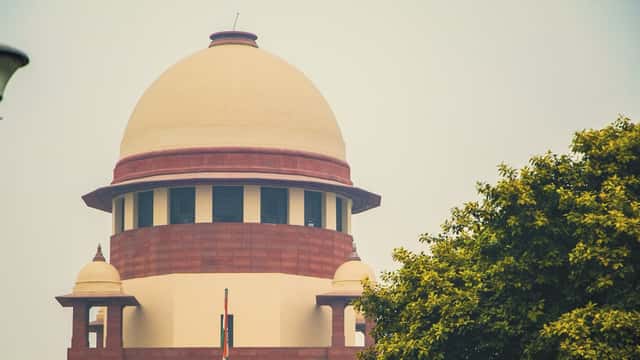
India's Supreme Court on Monday, Nov. 23, asked the central government, the Election Commission of India and the Law Commission to respond to a public interest petition that seeks to close what it calls a loophole in the anti-defection law: lawmakers who switch sides and then resign before a Speaker can rule on whether they should be disqualified.
A bench of Chief Justice Surya Kant and Justices Joymalya Bagchi and V. Mohana issued notice on the petition filed by A. Sethu, according to Bar & Bench, The Hindu and The New Indian Express. Notices also went to the Ministry of Law and Justice and the Ministry of Parliamentary Affairs. The court has not ruled on any of the petition's requests. Issuing notice means the respondents must now file replies.
What the petition asks for#
The petition, filed through advocates R. Satish Kumar and Jatin and argued by Senior Advocate A. Sirajudeen, makes seven main requests, according to the three reports:
- A declaration that a resignation tendered when Tenth Schedule disqualification proceedings are "pending or reasonably imminent" does not by itself end those proceedings or make them infructuous.
- Reasoned orders from the Speaker or Chairman, "based on objective material," on both whether the resignation is voluntary and genuine and on the disqualification petition itself.
- A bar on a member who resigns in those circumstances being appointed a minister or to a remunerative political post until the disqualification question is resolved in that member's favor or the member is re-elected.
- Steps toward a statutory deadline for deciding disqualification petitions, "ordinarily not exceeding three months," with narrow, reasoned exceptions.
- A time-bound review of the Speaker-led system, including whether an independent, permanent tribunal should decide disqualification disputes.
- Public disclosure, until Parliament legislates otherwise, of resignation letters, notices, replies, hearing dates and orders in disqualification cases.
- A declaration that in a hung legislative assembly, a claim to form a government must be tested on the floor of the House after members take their oath under Article 188, not through letters of support or parades of legislators before the Governor.
The petition's central complaint is about timing. "By the time a petition is decided, or a Court is approached, the term of the House may have run, the by-election may have been held, and the Government may have fallen or survived," it says, as quoted by Bar & Bench and The New Indian Express.
How the anti-defection law works now#
The Tenth Schedule was added to India's Constitution by the Constitution (Fifty-second Amendment) Act, 1985. It disqualifies a legislator who voluntarily gives up membership of the party on whose ticket they were elected, or who votes against the party's whip without permission. The Speaker of the Lok Sabha or of a state assembly, or the Chairman of an upper house, decides the question. In Kihoto Hollohan v. Zachillhu (1992), a Constitution Bench upheld that design and held that the presiding officer acts as a tribunal whose decisions courts can review.
Two features of the current system matter for Monday's petition. First, nothing in the Constitution sets a deadline for the Speaker. Second, the penalty that follows a disqualification is limited. As the Supreme Court explained in 2019, the 91st Constitutional Amendment added Articles 75(1B), 164(1B) and 361B, which bar a member "disqualified by the Speaker on account of defection" from serving as a minister or holding a remunerative political post until the end of the term or re-election. A disqualified member can still contest the resulting by-election.
The petition's request on ministerial posts would extend a version of that bar to members who resign before any disqualification order is made.
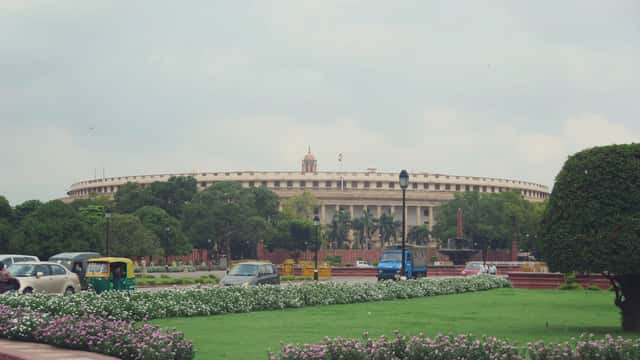
The Karnataka case: resignation does not erase defection#
The closest precedent is the Karnataka crisis of 2019. According to the Supreme Court's Nov. 13, 2019 judgment in Shrimanth Balasaheb Patil v. Speaker, Karnataka Legislative Assembly, 15 of the 17 rebel legislators had submitted resignation letters while disqualification petitions were pending. The 17 stayed away from the trust vote on July 23, 2019, and the Congress–Janata Dal (Secular) government of H.D. Kumaraswamy lost its majority. The Speaker then rejected the resignations as not voluntary or genuine, disqualified all 17 and barred them until the end of the assembly's term.
The court upheld the disqualifications but struck down the bar on contesting. Its conclusions are close to the first request in Monday's petition: "Factum and taint of disqualification does not vaporise by tendering a resignation letter to the Speaker. A pending or impending disqualification action does not become infructuous by submission of the resignation letter, when act(s) of disqualification have arisen prior to the member's resignation letter."
The same judgment said a Speaker "is not empowered to disqualify any member till the end of the term" and warned of "a growing trend of the Speaker acting against the constitutional duty of being neutral."
The petition, as described in the reports, asks the court to turn that reasoning into general directions that would apply in every House, along with the ministerial bar, the deadline and the disclosure rules.

Manipur and the three-month benchmark#
The petition's three-month figure also has a source in the court's own case law. In Keisham Meghachandra Singh v. Speaker, Manipur Legislative Assembly, decided Jan. 21, 2020, the court dealt with a Congress MLA who, after the inconclusive March 2017 Manipur election, met the Governor with BJP members to support a BJP-led government and was sworn in as a minister on March 15, 2017. Thirteen disqualification petitions were filed against him between April and July 2017. None had been decided by the time the case reached the Supreme Court.
The bench, led by Justice R.F. Nariman, held that "absent exceptional circumstances for which there is good reason, a period of three months from the date on which the petition is filed is the outer limit" for a Speaker to decide. It went further: "Parliament may seriously consider amending the Constitution to substitute the Speaker of the Lok Sabha and Legislative Assemblies as arbiter of disputes concerning disqualification which arise under the Tenth Schedule with a permanent Tribunal headed by a retired Supreme Court Judge or a retired Chief Justice of a High Court, or some other outside independent mechanism."
Parliament has not made that change. Monday's petition asks the court to direct a time-bound review of exactly that question.
The Manipur facts also explain the petition's last request. The MLA in that case joined a claim to form a government before the new assembly had met. The petition asks the court to declare that majority support in a hung assembly be tested only on the floor, after oaths are taken.
Telangana: a two-year fight over 10 MLAs#
The most recent example involves 10 legislators elected in Telangana's 2023 assembly election on the ticket of the Bharat Rashtra Samithi (BRS), which accused them of moving to the ruling Indian National Congress.
On July 31, 2025, a bench led by then Chief Justice B.R. Gavai, in Padi Kaushik Reddy v. State of Telangana, directed the Telangana Speaker to decide the petitions within three months. The judgment noted that the Speaker had not issued notice for more than seven months. It said that failing to issue a direction would let the Speaker "repeat the widely criticized situation of 'operation successful, patient died'." It added that "it is for the Parliament to take a call" on whether the Speaker-led mechanism works.

Speaker Gaddam Prasad Kumar ultimately dismissed all 10 petitions. The last two, against Danam Nagender and Kadiyam Srihari, were dismissed on March 11, 2026, The Hindu reported. He found no "conclusive documentary or legally sustainable evidence" that the MLAs had voluntarily given up BRS membership. The BRS said the decision amounted to "murdering democracy."
On Sept. 18, 2026, the Telangana High Court set aside the Speaker's order in Nagender's case. It declared him disqualified from April 23, 2024, because he had contested the Secunderabad Lok Sabha seat on a Congress ticket while sitting as a BRS MLA, The Hindu reported. On Sept. 24, the same three-judge bench that heard Monday's petition dismissed Nagender's appeal, LiveLaw reported. The disqualification took effect almost two and a half years after the conduct that caused it.
- A Congress MLA in Manipur is sworn in as a minister in a BJP-led government
- 17 Karnataka rebels skip the trust vote and the Kumaraswamy government falls
- Supreme Court rules that resignation does not erase a prior act of defection
- Supreme Court sets three months as the outer limit and urges an independent tribunal
- BRS MLA Danam Nagender contests a Lok Sabha seat for Congress
- Supreme Court gives the Telangana Speaker three months to decide 10 cases
- Speaker dismisses the last petitions; all 10 MLAs are cleared
- Telangana High Court disqualifies Nagender from April 23, 2024
- Supreme Court dismisses Nagender's appeal
- Supreme Court issues notice on the petition by A. Sethu
Source: Supreme Court of India judgments, The Hindu, LiveLaw, Bar & Bench
The case for leaving it to the Speaker and Parliament#
Not every lawyer before the court accepts that judges can set deadlines for a Speaker. In the Telangana case, Senior Advocate Mukul Rohatgi, appearing for the respondents, argued that under the Constitution Bench rulings in Kihoto Hollohan, Rajendra Singh Rana and Subhash Desai, "a court cannot issue timelines to the Speaker for deciding the matter within a particular period," the 2025 judgment records. He argued that the 2020 Manipur ruling was "wrongly decided," and that courts may review a Speaker's decision only after it is made. Senior Advocate Abhishek Manu Singhvi argued along similar lines.
The court rejected those arguments in that case. But the court itself has repeatedly said that structural change, such as replacing the Speaker with a tribunal, is for Parliament, which has not acted since the 2020 recommendation. Several of the petition's requests, including a statutory deadline and a new tribunal, ask for steps toward legislation rather than a court order alone.
Who has a stake#
Defection disputes have helped decide governments under different ruling parties. In Manipur in 2017, a Congress MLA's support helped a BJP-led government. In Karnataka in 2019, rebels from the Congress and the JD(S) brought down the coalition government those parties led. In Telangana, the disputed MLAs were accused of moving from the opposition BRS to the governing Congress. None of the three reports says the petition names a party or a particular state.
India's opposition and ruling parties are already fighting in the same court over the Election Commission's revision of voter rolls. 567 Politics has covered Rahul Gandhi's demand for answers on oath from election officials and the opposition campaign against the Chief Election Commissioner. The Election Commission is now also a respondent in the anti-defection case. New parties such as the one launched in Andhra Pradesh by V. Vijayasai Reddy also depend on defections from sitting legislators.
Where India's main parties sit on 567 Politics' editorial spectrum:
The next step is the government's reply#
None of the reports gave a return date for the replies. The central government's response will be the first sign of whether it backs any part of the petition, such as a statutory deadline, or argues that these are matters for Parliament alone. The court can grant some requests, none, or refer the questions to a larger bench, since the main precedents were set by five-judge Constitution Benches.
Differing perspectives
Should India's courts set binding rules to stop lawmakers from using resignations and delays to avoid anti-defection penalties?
Each position is summarized as its supporters make it, with equal weight and in alphabetical order. A summary is not an endorsement; the evidence for each is weighed in the story above.
Courts should close the resignation loophole now
Who holds it: Petitioner A. Sethu, represented by Senior Advocate A. Sirajudeen
The petition argues that a resignation process that can be used to postpone and then avoid the consequences of defection, combined with no enforced deadline for deciding disqualification petitions, impairs the integrity of the electoral mandate. By the time a case is decided, it says, the House's term may have run, the by-election may have been held and the government may have fallen or survived. It asks the court to keep cases alive after resignation, bar resigned defectors from ministerial posts, set a three-month norm and require floor tests in hung assemblies.
In their words: Bar & Bench (quoting the petition in A. Sethu v. Union of India) ↗
Courts should not set timelines for the Speaker
Who holds it: Senior Advocates Mukul Rohatgi and Abhishek Manu Singhvi, arguing for respondents in the Telangana case
Rohatgi argued that under the Constitution Bench rulings in Kihoto Hollohan, Rajendra Singh Rana and Subhash Desai, a court cannot issue timelines to the Speaker for deciding disqualification cases. He said judicial review is available only after the Speaker decides, that the High Court lacked supervisory power over the Speaker as a tribunal, and that the 2020 Manipur ruling was wrongly decided. Singhvi added that, apart from one exception, no judgment of the court, including three Constitution Bench rulings, had directed a Speaker to decide within a specified period.
In their words: Supreme Court of India, Padi Kaushik Reddy judgment recording counsel's submissions (July 31, 2025) ↗
Parliament should replace the Speaker with an independent tribunal
Who holds it: Supreme Court benches in the 2020 Manipur and 2025 Telangana rulings
In 2020 the court said it was time for Parliament to rethink whether a Speaker who still belongs to a party should decide disqualification petitions. It suggested a constitutional amendment creating a permanent tribunal headed by a retired Supreme Court judge or High Court chief justice, or another outside independent mechanism, so cases are decided swiftly and impartially. In 2025 a different bench said it had no advisory power but that Parliament must examine whether the current mechanism is enough to combat defections.
In their words: Supreme Court of India, Keisham Meghachandra Singh judgment (Jan. 21, 2020) ↗
Cite this article
567 Politics staff. “India's top court weighs a plea to stop lawmakers resigning their way out of anti-defection cases.” 567politics. Published 2026-11-24. https://www.567politics.com/news/india-supreme-court-anti-defection-strategic-resignations-pil-notice-centre-eci-november-2026
Wikipedia citation
{{cite news |title=India's top court weighs a plea to stop lawmakers resigning their way out of anti-defection cases |url=https://www.567politics.com/news/india-supreme-court-anti-defection-strategic-resignations-pil-notice-centre-eci-november-2026 |work=567politics |author=567 Politics staff |date=2026-11-24 |language=en}}CSL-JSON for reference managers
{
  "id": "https://www.567politics.com/news/india-supreme-court-anti-defection-strategic-resignations-pil-notice-centre-eci-november-2026",
  "type": "article-newspaper",
  "title": "India's top court weighs a plea to stop lawmakers resigning their way out of anti-defection cases",
  "URL": "https://www.567politics.com/news/india-supreme-court-anti-defection-strategic-resignations-pil-notice-centre-eci-november-2026",
  "container-title": "567politics",
  "language": "en",
  "author": [
    {
      "literal": "567 Politics staff"
    }
  ],
  "issued": {
    "date-parts": [
      [
        2026,
        11,
        24
      ]
    ]
  }
}Citations identify this article and its publication date. Assess the reporting and its linked sources before using it as evidence.
Read this article as Markdown or JSON. Cite the original page and retain its sources, dates and qualifications.
Embed this article summary
Paste this HTML into your page. The summary stays linked to the full story and updates with it. No account required.
<iframe src="https://www.567politics.com/embed/news/india-supreme-court-anti-defection-strategic-resignations-pil-notice-centre-eci-november-2026?theme=auto" title="India's top court weighs a plea to stop lawmakers resigning their way out of anti-defection cases by 567politics" width="100%" height="440" style="border:0;max-width:100%" loading="lazy"></iframe>
<p style="font-size:14px">India's top court weighs a plea to stop lawmakers resigning their way out of anti-defection cases by <a href="https://www.567politics.com/news/india-supreme-court-anti-defection-strategic-resignations-pil-notice-centre-eci-november-2026" rel="nofollow">567politics</a></p>
<script async src="https://www.567politics.com/embed.js"></script>
READ BEYOND 567POLITICS
Alternate sources & perspectives
Independent coverage and primary evidence to help you compare arguments. A link is not an endorsement; perspective labels describe the linked material.
- primary evidence
Plea in Supreme Court to prevent turncoat MPs, MLAs from resigning to evade anti-defection law ↗
Bar & Bench
Most detailed account of the petition's requests, with direct quotes.
- independent analysis
Supreme Court seeks response of Centre, ECI on PIL for reforms in anti-defection law ↗
The Hindu
Quotes the petition's numbered prayers, including the Article 188 floor-test request.
- independent analysis
SC seeks Centre, ECI response on PIL to curb resignations by legislators to evade anti-defection law ↗
The New Indian Express
Independent confirmation of the bench, respondents and requests.
- primary evidence
Shrimanth Balasaheb Patil v. Speaker, Karnataka Legislative Assembly (judgment, Nov. 13, 2019) ↗
Supreme Court of India
Holds that resignation does not erase a prior act of defection; Karnataka 2019 facts.
- primary evidence
Keisham Meghachandra Singh v. Speaker, Manipur Legislative Assembly (judgment, Jan. 21, 2020) ↗
Supreme Court of India
Three-month outer limit and the call for an independent tribunal.
- primary evidence
Padi Kaushik Reddy v. State of Telangana, 2025 INSC 912 (judgment, July 31, 2025) ↗
Supreme Court of India
Three-month direction to the Telangana Speaker; records Rohatgi and Singhvi arguments against court-set timelines.
- other perspective
Telangana Assembly Speaker dismisses disqualification petitions against Nagender and Kadiyam Srihari; all 10 MLAs cleared ↗
The Hindu
Speaker's reasoning and BRS reaction, March 11, 2026.
- independent analysis
Telangana HC sets aside Speaker's order, declares Khairatabad MLA Danam Nagender disqualified ↗
The Hindu
High Court ruling of Sept. 18, 2026.
- independent analysis
Supreme Court Dismisses Danam Nagender's Plea Challenging Telangana HC Judgment Disqualifying Him As MLA For Defection ↗
LiveLaw
Sept. 24, 2026 dismissal by the same bench that heard the new petition.
Reviewed 2026-11-23. Hand-picked; discover_politics_sources has returned unrelated results in this batch. Only sources opened and read are listed. The petition text itself was not available; its requests are taken from Bar & Bench, The Hindu and The New Indian Express, which agree on them. No return date for replies was reported. Supreme Court judgments were read in full from the court's official PDF server.