Hong Kong Election Committee vote draws 5,640 ballots, a 98.79% turnout
Official records show 341 valid ex-officio registrations, not the 362 seats in the rules. Beijing praised the vote; critics called it a small-circle race.
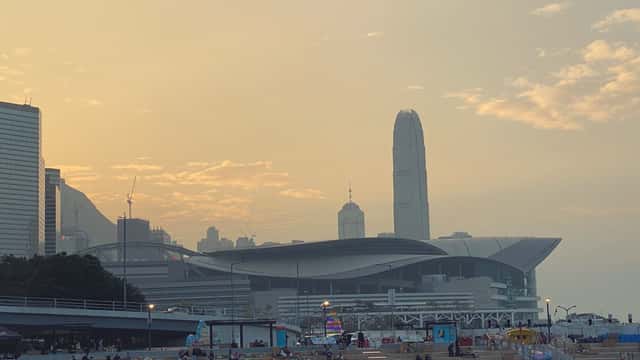
Hong Kong held Election Committee subsector elections on Sunday, Nov. 22. The vote fills part of the 1,500-member body that will elect the city's next chief executive. The Electoral Affairs Commission said 5,640 voters cast ballots, a turnout of 98.79%. Counting, done electronically, finished at 10:15 p.m.
The commission's chair, Justice David Lok, said the polling and counting had proceeded in an orderly way and that the arrangements had reflected the principles of openness, honesty, and fairness. The commission said it was satisfied with the overall arrangements. It will submit a review report to the chief executive. The official counting statement and a provisional turnout notice give the same headline figures.
Hong Kong Free Press later reported that 5,640 of 5,709 eligible electors voted. That share matches the official 98.79% turnout. The same report said Hong Kong as a whole has about 4.1 million registered voters. The Election Committee race is therefore confined to a very small share of the city's electorate.
Source: HKSAR election brief, CERC, Oct. 30, Xinhua, Nov. 23
Show the numbers
| Path | Seats |
|---|---|
| Validly registered ex-officio members | 341 |
| Nominated by designated bodies | 156 |
| Returned uncontested | 259 |
| Filled in the Nov. 22 contest | 723 |
What the Election Committee does#
The committee has 1,500 members, drawn from five sectors and 40 subsectors, according to the government's election brief. Under Annexes I and II to the Basic Law, as summarized by the brief and by Xinhua, the committee nominates chief executive candidates and elects the chief executive. It also nominates Legislative Council candidates and elects 40 of the 90 lawmakers. Hong Kong Free Press notes that the next Legislative Council election in that cycle is due in 2029.
- Holders of specified offices may register as ex-officio members; 341 registrations were confirmed as valid
- Designated bodies nominate members; 156 nominations were confirmed as valid
- Eligible electors vote in subsector contests; 259 candidates were uncontested and 723 seats were filled on Nov. 22
- The new committee's term runs from Feb. 1, 2027, to Jan. 31, 2032
Source: HKSAR election brief, CERC, Oct. 30
The new committee's term runs from Feb. 1, 2027, to Jan. 31, 2032, the official brief and Xinhua both say. The final register of the committee will be published on Feb. 1, 2027, the Electoral Affairs Commission said.
Members are returned in three ways. Some hold specified offices and register as ex-officio members. Some are nominated by designated bodies. The rest are elected by eligible corporate or individual voters in the subsectors.
Why one count says 341 and another says 362#
Two figures have circulated for ex-officio members. Xinhua said 341 people were confirmed as validly registered ex-officio members. Hong Kong Free Press said 362 seats were filled by ex-officio members.
Both numbers appear in official Hong Kong sources, but they measure different things. The election brief sets out the statutory allocation of ex-officio seats. Those seats total 362. They include 90 Legislative Council members, 190 National People's Congress deputies and Chinese People's Political Consultative Conference members, and smaller blocs in professions such as education, engineering, law, and social welfare.
- The committee has 1,500 members from five sectors and 40 subsectors
- It nominates chief executive candidates and elects the chief executive
- It also nominates Legislative Council candidates and elects 40 of 90 lawmakers
- The new term runs from Feb. 1, 2027, to Jan. 31, 2032
- The final register is due on Feb. 1, 2027, the Electoral Affairs Commission said
Source: HKSAR election brief, Electoral Affairs Commission, Nov. 22
Registration, though, is a separate step. A person who holds a specified office must submit a registration form. The Candidate Eligibility Review Committee then decides whether the registration is valid. On Oct. 30, that committee announced that it had determined 341 ex-officio registrations as valid. The same statement said 1,115 candidate nominations for the subsector elections were valid, and that 156 nominations by designated bodies were valid.
Xinhua's 341 figure matches the official count of valid registrations. Hong Kong Free Press's 362 figure matches the number of ex-officio seats written into the electoral rules. The gap is 21 seats. The official record opened for this story does not name the offices that were not validly registered. It does show that 362 is the legal allocation, and 341 is the number confirmed as valid on Oct. 30.
The other official totals add up as follows. There are 156 members nominated by designated bodies. A further 259 candidates were returned uncontested, Xinhua reported. On Sunday, 856 candidates contested the remaining 723 seats, and all of those seats were filled. Adding 341, 156, 259, and 723 produces 1,479. That is 21 short of the committee's 1,500-member size, which is the same gap as the unfilled ex-officio registrations.
The Oct. 30 statement also explained the nomination math. Returning officers received 40 nomination forms from designated bodies, covering 161 nominees, for 156 seats. The review committee confirmed 156 nominations as valid, in the order indicated by the bodies, and did not determine the eligibility of the five extra nominees.
The review committee is chaired by Chief Secretary Chan Kwok-ki. Its official members include the secretaries for security, home and youth affairs, and constitutional and mainland affairs. Three non-official members also sit on it. Under Annex I to the Basic Law, the committee reviews whether candidates, including ex-officio members, meet the legal requirements, including upholding the Basic Law and bearing allegiance to the Hong Kong Special Administrative Region of the People's Republic of China.
Source: HKSAR election brief, CERC, Oct. 30
Show the numbers
| Count | Number |
|---|---|
| Ex-officio seats in the rules | 362 |
| Validly registered ex-officio members | 341 |
| Gap | 21 |
Official reaction in Hong Kong and Beijing#
Chief Executive John Lee said on Sunday evening that the elections had fully demonstrated a healthy competition among patriots who are committed, competent, and constructive, Xinhua reported. He said the vote highlighted the positivity of democratic development under the principle of "patriots administering Hong Kong." He said he expected all Election Committee members to fulfill their duties diligently and to contribute to the steady implementation of "one country, two systems."
On Monday, a spokesperson for the State Council's Hong Kong and Macao Affairs Office also praised the vote, according to Xinhua. The spokesperson said it was the second such election since what the office calls the improvement of Hong Kong's electoral system, and that it had further shown the strengths of the new system. The office said the candidates came from diverse backgrounds and that this year's elections were more competitive than the previous ones. It said the new system ensured broad representation, political inclusiveness, balanced participation, and fair competition. It said the principle of "patriots administering Hong Kong" had been fully implemented, and that a culture of rational, fair, and orderly elections had taken shape. It called on new members to remain true to a commitment to loving the country and Hong Kong, and to improve the city's governance.
Those are official statements from the Hong Kong government and from Beijing's Hong Kong affairs office. They describe the vote as a successful, competitive exercise under the post-2021 rules.
Source: Electoral Affairs Commission, Nov. 22, Hong Kong Free Press, Nov. 23
Show the numbers
| Group | Number of people |
|---|---|
| Ballots cast on Nov. 22 | 5,640 |
| Eligible Election Committee electors (HKFP) | 5,709 |
| Registered voters in Hong Kong overall, HKFP, in millions (about) | 4.1 |
A small electorate, and some unexpected losses#
Hong Kong Free Press described the race as a "small-circle" vote. That is the paper's term, not an official one. The underlying numbers are not in dispute. About 5,709 people were eligible to vote. About 4.1 million people are registered to vote in Hong Kong as a whole, the paper said.
- The electoral rules set aside 362 ex-officio seats
- Registration is a separate step reviewed by the Candidate Eligibility Review Committee
- On Oct. 30 that committee confirmed 341 registrations as valid
- Xinhua reported 341 validly registered members; Hong Kong Free Press used the 362-seat allocation
Source: HKSAR election brief, CERC, Oct. 30, Xinhua, Nov. 23
The same report said Sunday's race was the second for the Election Committee since Beijing overhauled Hong Kong's electoral system in 2021. In March 2021, the paper said, Beijing passed legislation to ensure that only "patriots" govern Hong Kong. The move reduced democratic representation in the legislature, tightened control of elections, and introduced a pro-Beijing vetting panel to select candidates, Hong Kong Free Press reported. Authorities say the overhaul ensures the city's stability and prosperity, the paper added, but the changes also prompted international condemnation, as much of the traditional opposition remains in prison, in self-exile, or has left politics.
- John Lee and Beijing's Hong Kong affairs office called the vote a healthy competition among patriots
- Hong Kong Free Press called it a small-circle race, with about 5,709 eligible electors
- The paper said the 2021 overhaul reduced democratic representation and introduced a vetting panel
- Authorities say those changes protect stability and prosperity, the paper added
- Both accounts are on the record and are reported together here
Hong Kong Free Press also reported some unexpected losses. Law Society of Hong Kong president Roden Tong failed to secure a seat in the 15-member legal subsector, the paper said. Patrick Yeung, chief executive of the Hong Kong General Chamber of Commerce, also fell short in the 17-seat commercial (first) subsector. Among those elected, the paper said, were Pacific Century Group chair Richard Li, the younger son of Li Ka-shing, and Sino Group chair Daryl Ng. Those results are reported here as Hong Kong Free Press reported them. This newsroom did not independently open the official results tables for every subsector.
How this fits the wider political calendar#
The new committee will be in place when Hong Kong next chooses a chief executive. It will also help choose lawmakers later in the decade. The official view, from both the Hong Kong government and Beijing, is that the 2021 rules have produced a more orderly and representative system under the "patriots" principle. The critical view, as set out by Hong Kong Free Press, is that the electorate is tiny, that candidates are screened, and that much of the old opposition is absent.
Those two accounts can be reported together because they are both on the record. They do not cancel each other. The official turnout, the official seat totals, and the official split between 362 statutory ex-officio seats and 341 valid registrations are facts in government documents. The political meaning of the vote is disputed.
The election also lands in a period of active diplomacy involving Beijing, including tariff measures Canada announced after a Xi-Carney meeting in Shenzhen and China's response to a new U.S. export rule on advanced chips. Taiwan, for its part, has already named its APEC envoy after a dispute over an invitation to the Shenzhen meetings. Those stories are not about the Hong Kong vote. They are part of the same week's official calendar in the region. So is the Communist Party's start of delegate elections for its 21st Congress.
The Electoral Affairs Commission said the final register will appear on Feb. 1, 2027, when the new term begins. Until then, the confirmed picture is this. A small, high-turnout electorate filled 723 contested seats. Another 259 seats were uncontested. Designated bodies nominated 156 members. And 341 of the 362 ex-officio seats in the rules were validly registered, which is why Xinhua and Hong Kong Free Press appeared to disagree.
Differing perspectives
Do the 2021 Election Committee rules produce a legitimate representative vote?
Each position is summarized as its supporters make it, with equal weight and in alphabetical order. A summary is not an endorsement; the evidence for each is weighed in the story above.
A healthy competition among patriots
Who holds it: Chief Executive John Lee and Beijing's Hong Kong and Macao Affairs Office, as carried by Xinhua
Lee and Beijing's Hong Kong affairs office praised the Nov. 22 vote as a healthy competition among patriots, according to Xinhua. Officials point to a high official turnout of 5,640 ballots, or 98.79%, and to the committee's role in nominating and electing the chief executive and 40 of 90 lawmakers. In this view, the 2021 rules protect stability and prosperity by ensuring that only patriots take part. The authorities present the new committee, whose term runs from Feb. 1, 2027, to Jan. 31, 2032, as a lawful and orderly step in Hong Kong's electoral system.
In their words: Xinhua, Nov. 23 ↗
A small-circle vote after the 2021 overhaul
Who holds it: Critics of the 2021 overhaul, as reported by Hong Kong Free Press
Hong Kong Free Press described the race as a small-circle vote. The paper reported about 5,709 eligible electors, set against about 4.1 million registered voters citywide. It said Sunday's contest was only the second for the Election Committee since Beijing overhauled Hong Kong's electoral system in 2021, reduced democratic representation, and introduced a vetting panel. In this view, a very high turnout among a tightly limited electorate does not make the committee broadly representative, and the 2021 changes narrowed who can sit on the body that chooses the chief executive and many lawmakers.
In their words: Hong Kong Free Press, Nov. 23 ↗
Cite this article
567 Politics staff. “Hong Kong Election Committee vote draws 5,640 ballots, a 98.79% turnout.” 567politics. Published 2026-11-23. https://www.567politics.com/news/hong-kong-election-committee-subsector-elections-november-2026
Wikipedia citation
{{cite news |title=Hong Kong Election Committee vote draws 5,640 ballots, a 98.79% turnout |url=https://www.567politics.com/news/hong-kong-election-committee-subsector-elections-november-2026 |work=567politics |author=567 Politics staff |date=2026-11-23 |language=en}}CSL-JSON for reference managers
{
  "id": "https://www.567politics.com/news/hong-kong-election-committee-subsector-elections-november-2026",
  "type": "article-newspaper",
  "title": "Hong Kong Election Committee vote draws 5,640 ballots, a 98.79% turnout",
  "URL": "https://www.567politics.com/news/hong-kong-election-committee-subsector-elections-november-2026",
  "container-title": "567politics",
  "language": "en",
  "author": [
    {
      "literal": "567 Politics staff"
    }
  ],
  "issued": {
    "date-parts": [
      [
        2026,
        11,
        23
      ]
    ]
  }
}Citations identify this article and its publication date. Assess the reporting and its linked sources before using it as evidence.
Read this article as Markdown or JSON. Cite the original page and retain its sources, dates and qualifications.
Embed this article summary
Paste this HTML into your page. The summary stays linked to the full story and updates with it. No account required.
<iframe src="https://www.567politics.com/embed/news/hong-kong-election-committee-subsector-elections-november-2026?theme=auto" title="Hong Kong Election Committee vote draws 5,640 ballots, a 98.79% turnout by 567politics" width="100%" height="440" style="border:0;max-width:100%" loading="lazy"></iframe>
<p style="font-size:14px">Hong Kong Election Committee vote draws 5,640 ballots, a 98.79% turnout by <a href="https://www.567politics.com/news/hong-kong-election-committee-subsector-elections-november-2026" rel="nofollow">567politics</a></p>
<script async src="https://www.567politics.com/embed.js"></script>
READ BEYOND 567POLITICS
Alternate sources & perspectives
Independent coverage and primary evidence to help you compare arguments. A link is not an endorsement; perspective labels describe the linked material.
- primary evidence
Electoral Affairs Commission counting arrangements ↗
Hong Kong SAR government
Official Nov. 22 statement on the count, including the 5,640-ballot result used in official turnout figures.
- primary evidence
Official turnout announcement ↗
Hong Kong SAR government
Official turnout of 98.79%.
- primary evidence
2026 Election Committee subsector elections brief ↗
Hong Kong Electoral Affairs Commission
Official description of the 1,500-member committee, the 362 ex-officio allocation, and the committee's powers and term.
- primary evidence
Candidate Eligibility Review Committee, Oct. 30 ↗
Hong Kong SAR government
Confirmation that 341 ex-officio registrations were valid, which is the figure Xinhua later reported.
- other perspective
Xinhua results report ↗
Xinhua
English results story that uses the 341 validly registered ex-officio figure.
- other perspective
Xinhua report of official praise for the vote ↗
Xinhua
English report of John Lee and the Hong Kong and Macao Affairs Office describing a healthy competition among patriots.
- independent analysis
Hong Kong Free Press report on the Election Committee race ↗
Hong Kong Free Press
Critical account of a small-circle electorate, the 2021 overhaul, the 362-seat allocation figure, and some unexpected losses.
Reviewed 2026-11-23. Hand-picked from pages opened for this story on Nov. 23, 2026. Official Hong Kong sources resolve the 341 vs 362 ex-officio counts: 362 is the statutory allocation and 341 is the number of valid registrations confirmed on Oct. 30.