Merz says blocking Ukraine from NATO in 2008 was a mistake, breaking with Merkel's call
At NATO lawmakers' Berlin session, Zelensky asked to join and Rutte said allies are split, days after three Russian missiles crashed in Poland.
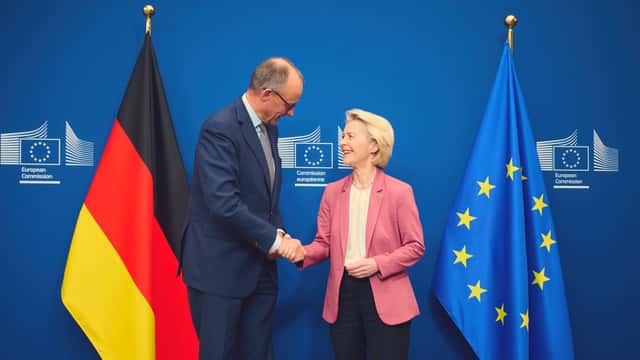
Chancellor Friedrich Merz said on Monday, November 23, that Germany's refusal to let Ukraine into NATO in 2008 was a mistake. He spoke after a meeting with NATO Secretary General Mark Rutte in Berlin, as the alliance's parliamentary assembly closed its annual session in the German capital. Merz also demanded that Russia stop its "dangerous provocations" after three Russian cruise missiles crashed in Poland on Friday.
The remarks put Germany's chancellor publicly at odds with the decision taken by his predecessor and party colleague Angela Merkel. They came as Ukraine's president pressed lawmakers from 32 allied countries to admit his country. Rutte answered that there is currently no unanimity among members on that question.
Merz breaks with the 2008 decision#
At the 2008 NATO summit in Bucharest, Germany and France opposed a US proposal to give Ukraine a membership action plan. Asked whether he shared French President Emmanuel Macron's view that it is time to discuss Ukraine's membership again, Merz said it had been, in hindsight, "a mistake not to follow the American proposal in 2008 at the NATO summit in Bucharest to admit Ukraine into NATO," ZDF reported.
"If it had become a member of NATO, this war could probably have been prevented," he said, according to tagesschau.
Merz called Macron's position "logical." It matches the security guarantees Ukraine needs after the war, he said. He wants those guarantees to be "Article 5-like." NATO's Article 5 treats an armed attack on one member as an attack on all. Such guarantees would come "very close" to membership, Merz said. "Honestly, I cannot imagine Ukraine's future without such security guarantees, which it urgently needs. And they are security guarantees not only for Ukraine, but for all of us."
Merkel has defended her stance. In late 2024 she said on the podcast "Politik mit Anne Will" that, "even after thorough review," her refusal was "in any case right, and there were good reasons." She noted that a large part of Ukraine's population opposed NATO membership at the time, ZDF recalled.
Zelensky asks to join; Rutte says members are split#
Ukrainian President Volodymyr Zelensky addressed the assembly by video from Kyiv. "Dear friends, winter is at the door. Air defense is our top priority," he said, according to DW. He asked for more Patriot systems and interceptors. "The missiles your countries have that can intercept Russian ballistic missiles should not gather dust in warehouses," he said.
Zelensky argued that membership would be a better answer than guarantees that only resemble Article 5. "Wouldn't it be more effective to simply admit Ukraine into NATO?" he asked. "It would be cheaper to implement and more reliable when it comes to actually guaranteeing security."
Rutte turned that down for now. Ukraine has a membership perspective, he said, but members are not unanimous. "Who can become a member of NATO is decided by NATO alone. There is complete clarity on that within the alliance," he said.
Whether membership could be part of talks with Russia is a separate question, Rutte added. He said the United States is making "enormous efforts" to start such talks in coordination with Ukraine and Europe. "But for us to see where all this leads, Putin also has to play along."
The assembly itself does not decide on membership. It is a forum of national lawmakers. On Monday it adopted resolutions on defense cooperation with Ukraine, defense spending, Arctic security and resilience, according to a NATO Parliamentary Assembly statement. Members elected US Representative Brendan Boyle as their new president. "My commitment to Ukraine is unwavering," Boyle said.$
Three missiles in Poland#
The session took place days after the most serious airspace breach of the autumn. On Friday, November 20, during a large Russian air attack on western Ukraine, three objects crossed into Poland and crashed in the southeast of the country. No one was hurt.
On Sunday the district prosecutor's office in Lublin confirmed that all three were Russian Kh-101 cruise missiles, Notes from Poland reported. Prosecutors said preliminary findings showed the missiles were made in the fourth quarter of 2026 at a plant in Dubna, near Moscow. They landed near Nowy Lipowiec, Rudnik and Mołodycz.
The missiles were in Polish airspace for about three minutes, Polish operational commander Ireneusz Nowak said. Two Swedish Gripen jets on a NATO air-policing mission tried to intercept them but could not confirm what the objects were in time, largely because of "extremely difficult weather conditions," he said.
Russia has not commented. It is not confirmed whether the missiles were aimed into Poland or strayed during the attack on Ukraine.
Poland's foreign ministry will summon Russian Ambassador Georgy Mikhno, spokesperson Maciej Wewiór said on Monday, according to Ukrainska Pravda, citing Onet. "The aim is not to summon merely for the sake of summoning," he said, adding that military and intelligence procedures must be completed first. NATO's North Atlantic Council held an extraordinary meeting on Monday, where Poland planned to present proposals for protecting its eastern border.
- About 20 Russian drones cross into Poland; Warsaw triggers NATO's Article 4
- A Kh-101 cruise missile enters Polish airspace and explodes in eastern Poland
- A Russian helicopter briefly crosses from Kaliningrad
- Three Kh-101 missiles crash in southeastern Poland
- Lublin prosecutors confirm all three were Russian missiles
- NATO's North Atlantic Council meets in extraordinary session
Source: Notes from Poland
Berlin's warnings to Moscow#
Merz said Russia must stop its "dangerous provocations" immediately. If necessary, NATO would defend every foot of its territory, he said, promising Poland full solidarity. Rutte said the incident "clearly" came from Russia.
Foreign Minister Johann Wadephul used similar language. "We will resolutely defend every centimeter of our NATO territory," he said, addressing Vladimir Putin directly: "Make no mistake: we are a defensive alliance, but we are ready to defend ourselves, our countries and our alliance."
Merz also responded to reports that Russia plans to place a nuclear weapon in space. "It shows what escalation Russia is obviously prepared for," he said. He added that Russian plans to put nuclear arms in space were not new, but were no less disturbing for that.
The heads of the French, Polish and German delegations issued a joint statement in the Weimar Triangle format. They called the recent airspace violations in Poland and Romania, along with sabotage, intimidation and espionage, "reckless and unacceptable escalating behavior." The statement, published by Germany's Bundesrat, describes Russia as "the most significant, most immediate and longest-lasting threat" to Euro-Atlantic security. It also cites drone incidents at Leipzig/Halle airport.
Pressure to spend more#
Rutte used his appearance to push allies on money. NATO members have committed to raise defense spending to 5% of GDP by 2035. All allies must pursue that goal seriously, Rutte said, "and ideally you reach it even before 2035," according to DW. Arms production must also grow, he said, because "currently demand still far exceeds supply."
"We face great dangers, coming from Russia and the fact that Russia works so closely with Iran, China, and North Korea," Rutte told the assembly. "We are all targeted, we are all affected."
The outgoing assembly president, Portuguese lawmaker Marcos Perestrello, struck a similar note. "Allies are stepping up. Defense budgets are rising, production capacity is growing, and assistance to Ukraine continues," he said. "We need to sustain the momentum." A resolution by French deputy Natalia Pouzyreff called on European allies and Canada "to assume a greater share of responsibility for deterrence and collective defense."
The assembly also gave its Women for Peace and Security Award to Moldovan President Maia Sandu. "Russia is testing the limits of our security, day after day, across Europe," she said.
Poland's defense minister, Władysław Kosiniak-Kamysz, said on Saturday that Poland would "in the near future" receive "strong support from our NATO allies to strengthen the protection of our eastern border." He did not detail what that support would be.
Germany's military buildup#
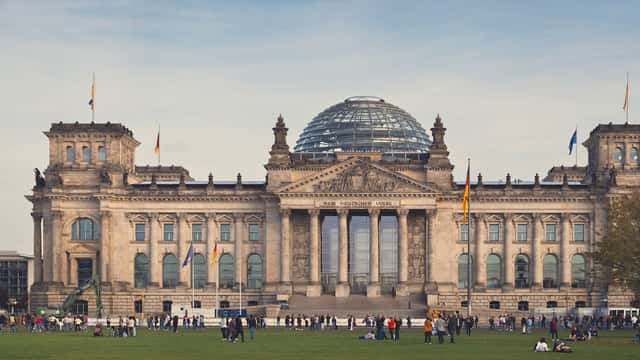
The Berlin session, the first held in the city in 26 years, also showcased Germany's rearmament. General Carsten Breuer, the chief of defense, told delegates that "our defense budget has tripled since 2021." The goal is to reach NATO's 5% of GDP target "well before 2035," he said, according to DW. Next year's defense budget will rise to more than €139 billion.
Breuer said the Bundeswehr plans to grow to 460,000 soldiers by the mid-2030s, of whom 200,000 would be reservists. "This is like a tightrope walk, since we have to find the right balance between growth and readiness," he said. Breuer was elected chairman of NATO's Military Committee and will move to Brussels in mid-2027.
Germany's troop numbers have been a domestic issue too. This site has reported on the Bundeswehr's October strength figures and on Merz's talks with Hungary's Péter Magyar, who split with him over tying the EU budget to Ukraine aid.
The debate at home#
Merz leads the Christian Democratic Union, which governs with the Social Democrats. The Alternative for Germany, the largest opposition party, spent Monday on a different fight: it threatened a constitutional complaint against the federal budget, FAZ reported.
Russia rejects Ukrainian membership in NATO outright, and several allies remain skeptical, tagesschau noted. The United States opposed membership in recent years, it added. Merz's comments do not change NATO policy, which says Ukraine's path to membership is open but sets no timetable. They do signal that Berlin, once one of the main brakes on Ukraine's NATO hopes, now frames binding guarantees as essential.
More detail on Friedrich Merz's record and positions is on his profile page.
Differing perspectives
How should NATO guarantee Ukraine's security after the war: membership or Article 5-like guarantees?
Each position is summarized as its supporters make it, with equal weight and in alphabetical order. A summary is not an endorsement; the evidence for each is weighed in the story above.
Admit Ukraine to NATO
Who holds it: Ukrainian President Volodymyr Zelensky and the Ukrainian government
Zelensky argues that admitting Ukraine to NATO would be cheaper to implement and more reliable than guarantees that only resemble Article 5. He says Ukraine brings combat experience the alliance can learn from, and that support for Ukraine is an investment in Europe's own security. He presents membership as the surest way to stop Russia from attacking again once a ceasefire is reached.
In their words: Zelensky's video address to the NATO Parliamentary Assembly, as reported by DW, Nov. 23, 2026 ↗
Give binding Article 5-like guarantees
Who holds it: Chancellor Friedrich Merz and the German government
Merz argues that Ukraine needs security guarantees that resemble NATO's mutual-defense clause and come very close to membership. He says such guarantees would protect all of Europe, not only Ukraine, and calls Macron's push to reopen the membership question logical. In hindsight, he says, not admitting Ukraine in 2008 was a mistake that might otherwise have prevented the war.
In their words: Merz remarks at a press conference with Mark Rutte, as reported by ZDF, Nov. 23, 2026 ↗
Keep membership open but not now
Who holds it: NATO Secretary General Mark Rutte, speaking for an alliance without consensus
Rutte says Ukraine has a membership perspective but there is currently no unanimity among allies, and that only NATO decides who joins. He argues the priority is to sustain support for Ukraine, raise defense spending toward 5% of GDP and expand arms production. Whether membership becomes part of talks with Russia is a separate matter that depends on US-led diplomacy and on Putin taking part.
In their words: Rutte remarks in Berlin, as reported by tagesschau, Nov. 23, 2026 ↗
The 2008 caution was justified
Who holds it: Former Chancellor Angela Merkel
Merkel says that even after thorough review, her refusal in 2008 to open Ukraine's path to NATO through a membership action plan was right and rested on good reasons. She points out that a large part of Ukraine's population opposed joining NATO at the time. In her view, the decision should be judged by the conditions of that moment rather than in hindsight.
In their words: Politik mit Anne Will podcast, episode with Angela Merkel (YouTube) ↗
Cite this article
567 Politics staff. “Merz says blocking Ukraine from NATO in 2008 was a mistake, breaking with Merkel's call.” 567politics. Published 2026-11-24. https://www.567politics.com/news/germany-merz-2008-ukraine-nato-mistake-rutte-no-unanimity-poland-kh-101-missiles-nato-pa-berlin-november-2026
Wikipedia citation
{{cite news |title=Merz says blocking Ukraine from NATO in 2008 was a mistake, breaking with Merkel's call |url=https://www.567politics.com/news/germany-merz-2008-ukraine-nato-mistake-rutte-no-unanimity-poland-kh-101-missiles-nato-pa-berlin-november-2026 |work=567politics |author=567 Politics staff |date=2026-11-24 |language=en}}CSL-JSON for reference managers
{
  "id": "https://www.567politics.com/news/germany-merz-2008-ukraine-nato-mistake-rutte-no-unanimity-poland-kh-101-missiles-nato-pa-berlin-november-2026",
  "type": "article-newspaper",
  "title": "Merz says blocking Ukraine from NATO in 2008 was a mistake, breaking with Merkel's call",
  "URL": "https://www.567politics.com/news/germany-merz-2008-ukraine-nato-mistake-rutte-no-unanimity-poland-kh-101-missiles-nato-pa-berlin-november-2026",
  "container-title": "567politics",
  "language": "en",
  "author": [
    {
      "literal": "567 Politics staff"
    }
  ],
  "issued": {
    "date-parts": [
      [
        2026,
        11,
        24
      ]
    ]
  }
}Citations identify this article and its publication date. Assess the reporting and its linked sources before using it as evidence.
Read this article as Markdown or JSON. Cite the original page and retain its sources, dates and qualifications.
Embed this article summary
Paste this HTML into your page. The summary stays linked to the full story and updates with it. No account required.
<iframe src="https://www.567politics.com/embed/news/germany-merz-2008-ukraine-nato-mistake-rutte-no-unanimity-poland-kh-101-missiles-nato-pa-berlin-november-2026?theme=auto" title="Merz says blocking Ukraine from NATO in 2008 was a mistake, breaking with Merkel's call by 567politics" width="100%" height="440" style="border:0;max-width:100%" loading="lazy"></iframe>
<p style="font-size:14px">Merz says blocking Ukraine from NATO in 2008 was a mistake, breaking with Merkel's call by <a href="https://www.567politics.com/news/germany-merz-2008-ukraine-nato-mistake-rutte-no-unanimity-poland-kh-101-missiles-nato-pa-berlin-november-2026" rel="nofollow">567politics</a></p>
<script async src="https://www.567politics.com/embed.js"></script>
READ BEYOND 567POLITICS
Alternate sources & perspectives
Independent coverage and primary evidence to help you compare arguments. A link is not an endorsement; perspective labels describe the linked material.
- independent analysis
NATO-Tagung: Warnungen an Russland - werden uns verteidigen ↗
tagesschau (ARD)
Main report on Merz, Rutte and Wadephul's remarks, Zelensky's address and the missile incident.
- independent analysis
Kanzler Merz: Keine Nato-Aufnahme der Ukraine 2008 war Fehler ↗
ZDF
Merz's full remarks on 2008, Article 5-like guarantees and Macron, with Merkel's 2024 defense of her decision.
- independent analysis
NATO-Treffen: Beitritt der Ukraine bleibt umstritten ↗
DW
Zelensky's case for membership, Rutte's no-unanimity answer, and General Breuer's figures on German defense spending and troop goals.
- primary evidence
Assembly calls for enhanced support for Ukraine, stronger NATO defence ↗
NATO Parliamentary Assembly
Official account of the session's resolutions, speeches and the election of Brendan Boyle as president.
- primary evidence
Delegationsspitzen des Weimarer Dreiecks veröffentlichen Erklärung ↗
Bundesrat
Full text of the French, Polish and German delegations' joint statement on Russia, airspace violations and Ukraine.
- independent analysis
Poland confirms three objects that struck its territory were all Russian missiles ↗
Notes from Poland
Lublin prosecutors' findings on the Kh-101 missiles, the failed interception and earlier incidents.
- independent analysis
Merz: Nicht-Aufnahme der Ukraine in Nato 2008 war Fehler ↗
Keystone-SDA via swissinfo.ch
Wire report quoting Merz and Merkel's 2024 podcast remarks side by side, with Macron's call to reopen the membership question.
- other perspective
Was bereuen Sie? Mit Angela Merkel ↗
Politik mit Anne Will
Merkel's own defense of the 2008 Bucharest decision, the main contrasting view to Merz's remarks.
Reviewed 2026-11-23. All sources opened in full on Nov. 23, 2026, except the Merkel podcast video, whose title and channel were verified but which was not watched; her quote is taken from ZDF and Keystone-SDA. Russia had not commented on the missiles by publication, so no Russian government source is listed. No representative German poll on Ukraine's NATO membership from this week was found. Sources were selected by hand.