One in six German toddlers lacks a wanted Kita place despite falling births, new federal data show
A BiB and DJI portal finds the gap is widest for poorer and non-German-speaking families and reaches 31 percent in Bremen, as states and the federal government fight over Kita money.
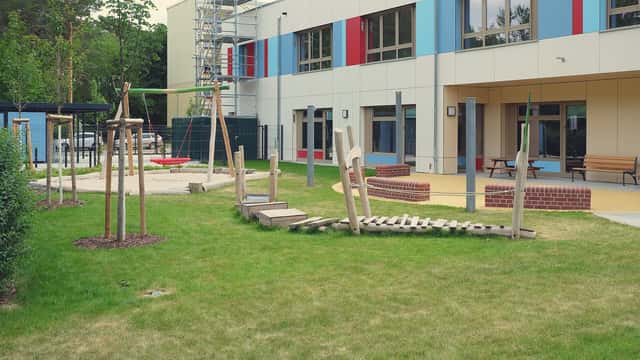
Germany has fewer small children than it did four years ago, but many families still cannot get a Kita place. A new data portal from two federal research institutes, published on Tuesday, Nov. 24, found that in 2025 one in six children aged one or two did not attend a Kita even though their parents wanted a place. The gap was widest for the families that researchers say would gain the most from early education: families who mostly speak a language other than German at home, families at risk of poverty and parents without a university degree.
The press release from the Federal Institute for Population Research (BiB) and the German Youth Institute (DJI) says the number of births in Germany fell by almost one fifth between 2021 and 2025. Even so, the demand from parents for care for one- and two-year-olds is still not met. The institutes call the difference between demand and actual use the "Kita gap."
Quotations from German-language sources are 567 Politics translations.
The findings land in the middle of a dispute between the federal government and the states over who should pay for better Kitas. Four days earlier, the states used the Bundesrat to send the federal Kita law to the mediation committee, as 567 Politics reported.
What the new portal measures#
The data come from the DJI's annual childcare study, known as KiBS. The 2025 round surveyed more than 33,000 parents of children from birth to the end of primary school. The survey is designed to be representative at the level of each state. The Federal Ministry of Education, Family, Seniors, Women and Youth funds it.
The institutes count a need as unmet when parents say they want a Kita place but their child attends neither a Kita nor a childminder. By that measure, 72 percent of parents of one- and two-year-olds said they wanted a place in 2025, and 16 percent of children in that age group did not attend one despite that wish.
The institutes plan to update the portal every year with each new KiBS round. They say it gives policymakers a representative basis for spotting trends and needs at the state level early.
Which families miss out#
The gap is not spread evenly. In families that mostly speak a language other than German at home, 34 percent of one- and two-year-olds whose parents wanted a place did not have one. The figure was 30 percent for families at risk of poverty and 23 percent for families where neither parent has a university degree. In the group without any of these disadvantages, the figure was 15 percent.
Source: BiB and DJI, Kita-Gap-Portal, KiBS 2025
Show the numbers
| Group | Unmet need |
|---|---|
| Mostly non-German language at home | 34% |
| At risk of poverty | 30% |
| No parent with a university degree | 23% |
| Not disadvantaged in these ways | 15% |
"Families with a non-German family language want a Kita place almost as often as other families. Even so, they come away empty-handed more than twice as often," said Anna Daelen, a researcher in the BiB's education group. Just under 70 percent of these families want a place, but only 35 percent of their children attend a Kita, according to the institutes.
The difference persists among older children. Almost all children aged three to six attend a Kita. Yet children from homes where German is not mostly spoken are 12 percentage points less likely to use a place than children from homes where it is, the release says.
The release defines a family as at risk of poverty using the standard measure. That is a household with less than 60 percent of the median income, adjusted for household size. In February 2026, 16.1 percent of people in Germany were at risk of poverty, tagesschau.de reported, citing the Federal Statistical Office.
A divide between east and west#
Where a family lives also matters. Parents' demand, the number of places and the fall in births all differ from region to region, the institutes say.
In the eastern states, only 6 percent of families did not get a place for a one- or two-year-old despite a need, tagesschau.de reported. In the western states the average was 18 percent. The highest figure was in Bremen, at 31 percent. Lower Saxony stood at 17 percent, a dpa report published by Hamburger Abendblatt said.
Source: BiB and DJI; tagesschau.de; dpa via Hamburger Abendblatt
Show the numbers
| Region | Unmet need |
|---|---|
| Eastern states | 6% |
| Germany | 16% |
| Lower Saxony | 17% |
| Western states | 18% |
| Bremen | 31% |
The same dpa report gave a national figure of 19 percent for children aged one to under three. That differs from the 16 percent in the BiB release for one- and two-year-olds. The report did not explain the difference. This article uses the figure in the institutes' own release.
In Bremen, the gap was largest for families that mostly do not speak German at home, at 55 percent, followed by families at risk of poverty at 54 percent and families without a university degree at 41 percent, dpa reported. In Lower Saxony, families at risk of poverty were most affected, at 35 percent.
Other estimates use other methods. A study by the German Economic Institute (IW) found that 13.6 percent of children under three in Germany have no childcare place, tagesschau.de noted. The IW uses a different method from the KiBS survey.
Why families give up#
The portal also asks parents why they do not use a place despite wanting one. The reasons range from a lack of places near home to costs and application processes that parents find too complicated. Some parents also said the care on offer would not support their child well enough.
Of the families who applied for a place, 43 percent described the search as difficult. Among families with a non-German family language, the share was 56 percent.
Source: BiB and DJI, Kita-Gap-Portal, KiBS 2025
Show the numbers
| Group | Found search difficult |
|---|---|
| All applicant families | 43% |
| Mostly non-German language at home | 56% |
"The decline in births does not remove these barriers to access by itself," said C. Katharina Spieß, the director of the BiB. "When places become free, they should be offered specifically to disadvantaged families who have so far been left out more often, for example through central and simple registration and active outreach."
Mirjam Weis, who leads the KiBS project at the DJI, said the future of childcare will have to be judged region by region, with solutions to fit each area. Susanne Kuger, the DJI's research director, said that where pressure eases, the room should be used to improve staffing ratios. That would strengthen the quality and reliability of care and give more children from disadvantaged families access to early education, she said.
Bremen points to free places#
Bremen's education authority offered a different reading of the local figure. The office of Mark Rackles, Bremen's senator for children and education and a member of the Social Democrats (SPD), said the city-state currently has enough Kita places and many free ones, dpa reported.
The office said early education is still not used equally by all families. That creates disadvantages before school starts. Since summer 2025, the Senate has run a program called "All children into the Kitas" to reach more families and lower barriers. The office added that some families still prefer to care for their children at home.
The office did not say how many places are free. The portal measures whether parents who want a place have one. It does not count vacant places.
The fight over federal money#
The new figures arrive as the federal government and the states argue over the federal Kita law. The law is meant to set national quality standards for Kitas. It would make a language and development check binding for every child by age four, with extra support where needed. Kitas in areas with high social needs would get more staff.
Katja Mast, a Social Democratic member of the Bundestag and a state secretary in the labor ministry, welcomed the Bundestag's vote for the law. She said the federal government will give the states about 9.25 billion euros for it from 2027 to 2034. "Equal chances do not come from treating everyone the same," Mast said. "Children who need more support must also get more support."
The law comes from Education and Family Minister Karin Prien of the Christian Democrats (CDU). On Nov. 20, the Bundesrat called the mediation committee on the law, tagesschau.de reported. The states say they support its content. But they accuse the federal government of shifting the costs onto them and the municipalities, because federal support for the task would be cut step by step until 2035. Binding checks from 2029 would also need more staff.
Under the law, federal money for Kita quality would fall from about 2 billion euros a year now to 993 million euros a year from 2030. The Left has called for a much larger federal share.
- 2021 | Births begin a decline of almost one fifth through 2025
- Summer 2025 | Bremen launches its "All children into the Kitas" program
- 2025 | KiBS survey of more than 33,000 parents finds 16% unmet need for 1- and 2-year-olds
- Nov. 20, 2026 | Bundesrat sends the federal Kita law to the mediation committee
- Nov. 24, 2026 | BiB and DJI publish the Kita-Gap-Portal
Mediation and the next survey#
The mediation committee of the Bundestag and Bundesrat must now seek a compromise on the Kita law. The committee has members from both chambers. Any changes it proposes would need new votes. Until then, the federal plan to cut its share of Kita quality money remains in dispute, and so does the timetable for the binding checks of four-year-olds. The institutes say they will update the portal each year with new survey data, which will show whether the gap narrows as births fall. The portal breaks the figures down by state, by family group and by the reasons parents give. The full state-by-state figures are available on the BiB's Kita-Gap-Portal.
For where Germany's parties stand on social and economic issues, see the political spectrum for Germany.
Differing perspectives
How should Germany close the gap between parents' demand for Kita places and actual use as births fall?
Each position is summarized as its supporters make it, with equal weight and in alphabetical order. A summary is not an endorsement; the evidence for each is weighed in the story above.
Keep the federal money that pays for quality
Who holds it: The German states in the Bundesrat
The states say they support the content of the federal Kita law. But they argue that the federal government is shifting the costs onto states and municipalities by cutting its financial support step by step until 2035. They note that binding checks of children from 2029 will need more staff. On Nov. 20 they sent the law to the mediation committee to seek a compromise.
In their words: tagesschau.de ↗
National standards and targeted federal support
Who holds it: The federal coalition, including SPD lawmaker Katja Mast
Supporters of the federal Kita law argue that a child's background should not decide its future. They say equal chances do not come from treating everyone the same, so children who need more help should get more. The law would make a language and development check binding by age four, give extra staff to Kitas in areas with high social needs, and provide about 9.25 billion euros from 2027 to 2034.
In their words: Katja Mast, member of the Bundestag ↗
Offer freed places to disadvantaged families first
Who holds it: Researchers at the Federal Institute for Population Research (BiB) and the German Youth Institute (DJI)
The institutes argue that falling births will not remove the barriers families face on their own. They say places that become free should be offered first to families who are left out more often, such as those who mostly speak another language at home or are at risk of poverty. They call for central, simple registration and active outreach, and for using any easing to improve staffing ratios.
In their words: Federal Institute for Population Research (BiB) ↗
Places exist; the task is reaching families
Who holds it: The office of Bremen's education senator, Mark Rackles (SPD)
Bremen's education authority says the city-state currently has enough Kita places and many free ones. It argues that early education is still not used equally by all families, which creates disadvantages before school. Since summer 2025 its program, All children into the Kitas, has tried to reach more families and lower barriers. The office adds that some families still prefer to care for their children at home.
In their words: Hamburger Abendblatt (dpa) ↗
Cite this article
567 Politics staff. “One in six German toddlers lacks a wanted Kita place despite falling births, new federal data show.” 567politics. Published 2026-11-24. https://www.567politics.com/news/germany-kita-gap-portal-bib-dji-unmet-need-disadvantaged-families-bremen-31-percent-november-2026
Wikipedia citation
{{cite news |title=One in six German toddlers lacks a wanted Kita place despite falling births, new federal data show |url=https://www.567politics.com/news/germany-kita-gap-portal-bib-dji-unmet-need-disadvantaged-families-bremen-31-percent-november-2026 |work=567politics |author=567 Politics staff |date=2026-11-24 |language=en}}CSL-JSON for reference managers
{
  "id": "https://www.567politics.com/news/germany-kita-gap-portal-bib-dji-unmet-need-disadvantaged-families-bremen-31-percent-november-2026",
  "type": "article-newspaper",
  "title": "One in six German toddlers lacks a wanted Kita place despite falling births, new federal data show",
  "URL": "https://www.567politics.com/news/germany-kita-gap-portal-bib-dji-unmet-need-disadvantaged-families-bremen-31-percent-november-2026",
  "container-title": "567politics",
  "language": "en",
  "author": [
    {
      "literal": "567 Politics staff"
    }
  ],
  "issued": {
    "date-parts": [
      [
        2026,
        11,
        24
      ]
    ]
  }
}Citations identify this article and its publication date. Assess the reporting and its linked sources before using it as evidence.
Read this article as Markdown or JSON. Cite the original page and retain its sources, dates and qualifications.
Embed this article summary
Paste this HTML into your page. The summary stays linked to the full story and updates with it. No account required.
<iframe src="https://www.567politics.com/embed/news/germany-kita-gap-portal-bib-dji-unmet-need-disadvantaged-families-bremen-31-percent-november-2026?theme=auto" title="One in six German toddlers lacks a wanted Kita place despite falling births, new federal data show by 567politics" width="100%" height="440" style="border:0;max-width:100%" loading="lazy"></iframe>
<p style="font-size:14px">One in six German toddlers lacks a wanted Kita place despite falling births, new federal data show by <a href="https://www.567politics.com/news/germany-kita-gap-portal-bib-dji-unmet-need-disadvantaged-families-bremen-31-percent-november-2026" rel="nofollow">567politics</a></p>
<script async src="https://www.567politics.com/embed.js"></script>
READ BEYOND 567POLITICS
Alternate sources & perspectives
Independent coverage and primary evidence to help you compare arguments. A link is not an endorsement; perspective labels describe the linked material.
- primary evidence
Trotz Geburtenrückgang − viele Kinder aus benachteiligten Familien bekommen nach wie vor keinen Kita-Platz ↗
Federal Institute for Population Research (BiB)
Joint BiB/DJI release with the national and group-level Kita-gap figures from KiBS 2025.
- independent analysis
Kita-Gap-Portal: Trotz weniger Geburten fehlen Kitaplätze ↗
tagesschau.de
Public broadcaster report with the east-west split and the IW and poverty-risk context.
- other perspective
Großer Mangel an Kita-Plätzen in Bremen und Niedersachsen ↗
Hamburger Abendblatt (dpa)
Regional figures for Bremen and Lower Saxony and the Bremen education authority's response.
- independent analysis
Kita-Lücke: Bremen bundesweit Schlusslicht ↗
DieNiedersachsen (dpa)
Same dpa report as published by a Lower Saxony news site.
- left argument
Bundestag beschließt Startchancen- und Qualitätsentwicklungsgesetz ↗
Katja Mast (SPD)
SPD lawmaker's case for the federal Kita law and its 9.25 billion euros in funding.
- other perspective
Bundesrat stoppt Startchancengesetz vorerst ↗
tagesschau.de
The states' objection to federal cost-shifting and their call for mediation on Nov. 20.
Reviewed 2026-11-24. Hand-picked after discover_politics_sources returned unrelated results. Each source was opened and read; the BiB release is the primary source for the national figures, and regional figures come from tagesschau.de and dpa.