Hubig's draft would write gender-specific motives into Germany's murder law, and the CDU says it will check it
The justice minister wants killings of partners who leave to be judged as murder more reliably; a legal critic says the wording alone will change little.

Germany's justice ministry has finished a draft law that would name "gender-specific" motives in the country's murder statute, so that men who kill a partner for leaving them are more reliably convicted of murder rather than manslaughter. Justice Minister Stefanie Hubig of the Social Democrats confirmed on Sunday, Nov. 22, that the text is ready. Her coalition partner, the Christian Democrats, said it would examine the plan critically, and a legal commentator argued it would change little in court.
"Der Gesetzentwurf zur Anpassung des Mordparagrafen ist fertig," Hubig told the ARD capital studio, tagesschau reported. "Mein Ziel ist es, dass wir hier schnell Einigkeit in der Bundesregierung erzielen und den Gesetzentwurf bald dem Bundestag vorlegen können." The draft was first reported by Bild am Sonntag.
What the draft would change#
Under Germany's criminal code, any intentional killing is manslaughter under Section 212, with a minimum of five years in prison. It becomes murder under Section 211 only if one of a fixed list of features is present. Murder carries a mandatory life sentence. The list currently reads: "aus Mordlust, zur Befriedigung des Geschlechtstriebs, aus Habgier oder sonst aus niedrigen Beweggründen, heimtückisch oder grausam oder mit gemeingefährlichen Mitteln oder um eine andere Straftat zu ermöglichen oder zu verdecken."
Hubig's draft would add "geschlechtsspezifische oder sonstige menschenverachtende Beweggründe" (gender-specific or other motives showing contempt for human beings) to that list, according to the report. The stated aim is to allow a "rechtssichere und adäquate Berücksichtigung insbesondere von Tötungsmotiven ..., denen ein patriarchales Herrschafts- und Besitzdenken zugrunde liegt," Deutsche Welle reported, quoting the draft. That means motives rooted in a man's sense of control over, or ownership of, a woman.
According to the Frankfurter Allgemeine Zeitung, the new wording would be added as an example of the existing "low motives" feature. The phrase "sonstige menschenverachtende" already appears in Section 46, the code's rules on sentencing. That section lists racist, xenophobic, antisemitic and gender-specific motives, and motives directed against sexual orientation, as factors a court must weigh.
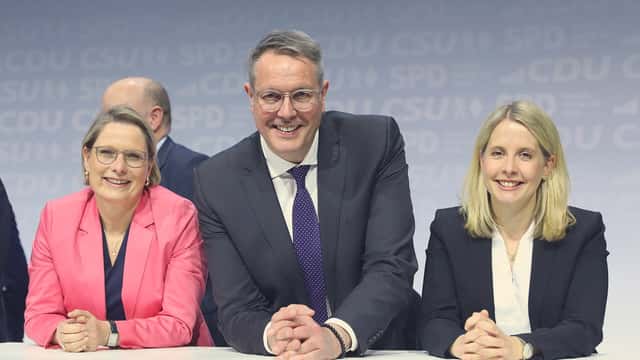
The Berlin daily taz reported that the change is meant only to clarify the law, not to widen what counts as murder. Racist, antisemitic and anti-Muslim motives, which courts already treat as low motives, would fall under the "other" category, taz reported. Taz reporter Christian Rath noted that Hubig chose the broader words "geschlechtsspezifische Beweggründe" rather than naming "patriarchales Besitzdenken" in the statute. He wrote that putting the word femicide itself into the code would likely fail because the social-science term has no uniform definition.
The draft would also rewrite the opening of Section 211. The text has said "Mörder ist ..." (a murderer is ...) since 1941, describing a type of offender rather than an act. That phrasing is long criticized as a holdover from Nazi-era legal theory. It would become "wer einen Menschen ... tötet" (whoever kills a person), taz reported. The FAZ said Hubig and the Christian Democrats agree on that change, which has no practical effect on verdicts.
Why the ministry says it is needed#
The FAZ wrote that some lawyers see the case law on such killings as inconsistent, and that the governing coalition of the CDU, CSU and SPD pledged in its 2025 coalition agreement to make the murder statute more precise. Courts can already convict such killings as murder, most often under the "low motives" feature. But whether a motive is low is decided case by case, tagesschau explained. When feelings of hopelessness or despair are found to have driven the killing, courts tend to reject low motives. When a man killed out of possessiveness or a wish to punish, femicides are often already judged as murder. Tagesschau added that a finding of diminished responsibility, for example because the defendant was very drunk or mentally ill, can reduce a sentence. It does not turn a murder from low motives into manslaughter.
"Fast jeden Tag tötet in Deutschland ein Mann seine Partnerin oder Ex-Partnerin - oder versucht es," Hubig told Bild am Sonntag, as quoted by tagesschau. "Wer eine Frau tötet, weil sie sich von ihm trennen will, der muss als Mörder bestraft werden." She said there are still cases "in denen wird eine Trennungstötung nicht als Mord gewertet," DW reported. Courts then point to a defendant having seen no way out, being deeply sad, or not wanting to lose his partner to someone else, she said.
The federal police office, the BKA, counts partner violence each year from police data. Its 2024 report on domestic violence recorded 171,069 victims of partner violence, up 1.9% on 2023 and 14.7% on 2020. Women were about four in five of them. Men made up 77.7% of the suspects, the BKA said.
Source: BKA, Bundeslagebild Häusliche Gewalt 2024
Show the numbers
| Year | Women | Men |
|---|---|---|
| 2020 | 119,764 | 29,327 |
| 2021 | 115,954 | 28,683 |
| 2022 | 126,349 | 31,469 |
| 2023 | 132,966 | 34,899 |
| 2024 | 135,713 | 35,356 |
The same report counted 286 people killed in domestic violence in 2024. Of them, 156 died in the context of partner violence: 132 women and 24 men. Another 130 died in violence within families, 59 of them women and 71 men. The BKA said the 286 deaths were 7.7% fewer than the 310 recorded in 2020. In a summary of the report, the BKA said its figures probably show only part of the reality, since many acts are never reported out of fear, shame or dependence.
A separate BKA report on crimes directed at women because of their gender counted 308 women killed in 2024, tagesschau reported. The two reports use different definitions, and neither has a legal category called femicide.
Source: BKA, Bundeslagebild Häusliche Gewalt 2024
Show the numbers
| Context | Women | Men |
|---|---|---|
| Partner or ex-partner | 132 | 24 |
| Other family members | 59 | 71 |
No separate "femicide" offense#
Hubig rejected a stand-alone crime of femicide, which some women's rights groups have demanded. She said it would have "keine Vorteile gegenüber dem, was wir vorhaben - und weitaus größere Nachteile," DW reported. The ministry has said such an offense would have created legal uncertainty, the FAZ reported. The paper added that a crime covering only killings of women would be hard to fit into the code, since men are also killed by partners. Treating them less favorably than female victims would breach the Basic Law, the FAZ wrote.
How the coalition partner responded#
The Christian Democrats were reserved. Martin Plum, the legal officer of the CDU/CSU parliamentary group, told the FAZ he welcomed "dass die Ministerin nach langem Zögern und Zaudern ihrem Auftrag aus dem Koalitionsvertrag endlich nachkommen will." He added: "Wir werden kritisch prüfen, ob dadurch ein ebenso hohes Schutzniveau erreicht wird."
The CDU and its Bavarian sister party, the CSU, took a different route in the last parliament. In summer 2024 they proposed a new murder feature of exploiting physical superiority, arguing it would also protect children, frail people and people with disabilities, the FAZ reported. The then-governing coalition of Social Democrats, Greens and Free Democrats rejected it. Taz reported that the current coalition agreement names children, frail people and people with disabilities as groups to protect in the murder statute too, a part of the mandate Hubig's draft does not appear to take up.
- CDU/CSU, then in opposition, propose a murder feature of exploiting physical superiority; the governing coalition rejects it
- Hubig announces plans to clarify the murder statute for femicides
- Hubig confirms her draft adding gender-specific motives to Section 211 is finished
- International Day for the Elimination of Violence against Women; a moment of silence is planned in the Bundestag
Source: FAZ, tagesschau, Deutsche Welle
Critics say it will change little#
Writing in the legal news site LTO, Shayan Mirmoayedi argued the reform "wird aber reine Symbolpolitik bleiben." In his commentary, he wrote that cases courts already see as gender-motivated are convicted as murder today. The hard cases, he argued, are those in which judges find despair after a breakup drove the killing. Under Federal Court of Justice case law, such a motive is not "low" because it is not entirely incomprehensible, and the new words would not change that reading, he wrote.
He pointed to a split between two panels of that court. One has treated the fact that the woman ended the relationship as a sign against low motives (decision of April 17, 2024, 1 StR 92/24). Another has disagreed (decision of Dec. 6, 2022, 5 StR 479/22). If defense lawyers present the case skillfully and prosecutors cannot prove such motives, many cases would still end in manslaughter convictions after the reform, he wrote. A real change would require lawmakers to rethink the whole system of homicide offenses or raise the minimum sentence for manslaughter, he argued.
Taz columnist Carolina Schwarz called the plan "ein wichtiger Schritt, doch er reicht nicht aus, um Frauen zu schützen." She wrote that potential offenders are not deterred by higher sentences, so prevention has to come from elsewhere. She cited other measures by Hubig, including a reform letting family courts deny contact rights to violent parents.
The draft still needs cabinet and parliamentary approval#
The draft is still being agreed within the government. It is due to go out for comment to the states and interest groups before the end of the year, DW reported. The cabinet must then approve it before the Bundestag and the Bundesrat take it up.
Bundestag President Julia Klöckner plans a moment of silence for victims of femicide at the start of the Nov. 25 sitting, the International Day for the Elimination of Violence against Women, Bild am Sonntag reported, according to DW.
The draft is one of several Hubig bills on violence against women. As 567 Politics reported, she has also proposed making verbal sexual harassment a criminal offense. Where the governing parties sit on the German party spectrum is a dated editorial estimate.
Germany's federal helpline for women facing violence, run by the Federal Office for Family and Civil Society Tasks, is free and open around the clock at 116 016. Its staff also give advice by chat and email.
Differing perspectives
Should Germany add gender-specific motives to its murder statute?
Each position is summarized as its supporters make it, with equal weight and in alphabetical order. A summary is not an endorsement; the evidence for each is weighed in the story above.
A step, but prevention matters more
Who holds it: Carolina Schwarz, taz columnist
Schwarz calls the plan an important step that could end the legal downplaying of femicides, but says it is not enough to protect women, because potential offenders are not deterred by higher sentences. She argues prevention has to come from elsewhere, and welcomes other measures such as letting family courts deny contact rights to violent parents.
In their words: taz ↗
Check it protects as much as the Union's plan
Who holds it: Martin Plum, legal officer of the CDU/CSU parliamentary group
Plum welcomes the minister finally acting on the coalition agreement after long hesitation, but says the Union will examine critically whether her approach gives the same level of protection. In 2024 the Union proposed a new murder feature of exploiting physical superiority, which it said would also protect children, frail people and people with disabilities.
In their words: Frankfurter Allgemeine Zeitung ↗
Name gender-specific motives as murder
Who holds it: Justice Minister Stefanie Hubig (SPD) and her ministry
Hubig says almost every day a man in Germany kills or tries to kill his partner or ex-partner, and that anyone who kills a woman because she wants to leave him must be punished as a murderer. She says courts still sometimes treat such killings as manslaughter, and that a clear statement in the law will make sure motives rooted in a patriarchal sense of control and ownership are properly weighed.
In their words: tagesschau ↗
Symbolic unless the law itself changes
Who holds it: Shayan Mirmoayedi, writing in LTO
Mirmoayedi argues the new wording will remain symbolic. Courts already convict killings they see as gender-motivated as murder; the hard cases are those where judges find despair after a breakup drove the act, and the new words do not change that reading. Lawmakers would have to rethink homicide offenses or raise the minimum sentence for manslaughter to change outcomes.
In their words: Legal Tribune Online ↗
Cite this article
567 Politics staff. “Hubig's draft would write gender-specific motives into Germany's murder law, and the CDU says it will check it.” 567politics. Published 2026-11-23. https://www.567politics.com/news/germany-hubig-femicide-murder-statute-section-211-gender-specific-motives-plum-november-2026
Wikipedia citation
{{cite news |title=Hubig's draft would write gender-specific motives into Germany's murder law, and the CDU says it will check it |url=https://www.567politics.com/news/germany-hubig-femicide-murder-statute-section-211-gender-specific-motives-plum-november-2026 |work=567politics |author=567 Politics staff |date=2026-11-23 |language=en}}CSL-JSON for reference managers
{
  "id": "https://www.567politics.com/news/germany-hubig-femicide-murder-statute-section-211-gender-specific-motives-plum-november-2026",
  "type": "article-newspaper",
  "title": "Hubig's draft would write gender-specific motives into Germany's murder law, and the CDU says it will check it",
  "URL": "https://www.567politics.com/news/germany-hubig-femicide-murder-statute-section-211-gender-specific-motives-plum-november-2026",
  "container-title": "567politics",
  "language": "en",
  "author": [
    {
      "literal": "567 Politics staff"
    }
  ],
  "issued": {
    "date-parts": [
      [
        2026,
        11,
        23
      ]
    ]
  }
}Citations identify this article and its publication date. Assess the reporting and its linked sources before using it as evidence.
Read this article as Markdown or JSON. Cite the original page and retain its sources, dates and qualifications.
Embed this article summary
Paste this HTML into your page. The summary stays linked to the full story and updates with it. No account required.
<iframe src="https://www.567politics.com/embed/news/germany-hubig-femicide-murder-statute-section-211-gender-specific-motives-plum-november-2026?theme=auto" title="Hubig's draft would write gender-specific motives into Germany's murder law, and the CDU says it will check it by 567politics" width="100%" height="440" style="border:0;max-width:100%" loading="lazy"></iframe>
<p style="font-size:14px">Hubig's draft would write gender-specific motives into Germany's murder law, and the CDU says it will check it by <a href="https://www.567politics.com/news/germany-hubig-femicide-murder-statute-section-211-gender-specific-motives-plum-november-2026" rel="nofollow">567politics</a></p>
<script async src="https://www.567politics.com/embed.js"></script>
READ BEYOND 567POLITICS
Alternate sources & perspectives
Independent coverage and primary evidence to help you compare arguments. A link is not an endorsement; perspective labels describe the linked material.
- independent analysis
Femizide sollen eindeutig als Mord gelten ↗
tagesschau
Hubig's confirmation to ARD that the draft is finished, and an explainer on murder and manslaughter.
- independent analysis
Deutschland plant schärferes Vorgehen gegen Femizide ↗
Deutsche Welle
Draft wording, Hubig's rejection of a separate offense and the legislative timetable.
- right argument
Hubig will keinen Straftatbestand für "Femizid" schaffen ↗
Frankfurter Allgemeine Zeitung
CDU legal officer Martin Plum's response and the Union's 2024 alternative.
- independent analysis
Tötung von Frauen: Kein Mitleid mehr mit den Tätern ↗
taz (Christian Rath)
How the new wording would sit in Section 211 and the plan to drop the 1941 'Mörder ist' phrasing.
- left argument
Verschärfung des Mordparagrafen: Hubig macht Tempo ↗
taz (Carolina Schwarz)
A commentary calling the plan a step but arguing prevention matters more.
- other perspective
Hubigs Femizid-Reform wird nichts ändern ↗
Legal Tribune Online
Shayan Mirmoayedi's argument that case law on despair would keep such killings as manslaughter.
- primary evidence
§ 211 StGB Mord ↗
Federal Ministry of Justice (gesetze-im-internet.de)
The current murder statute and its list of features.
- primary evidence
§ 46 StGB Grundsätze der Strafzumessung ↗
Federal Ministry of Justice (gesetze-im-internet.de)
Sentencing rules that already name gender-specific and other contemptuous motives.
- primary evidence
Bundeslagebild Häusliche Gewalt 2024 ↗
Bundeskriminalamt
Police-recorded partner and family violence, 2020-2024, including deaths by sex.
- primary evidence
Häusliche Gewalt: Opferzahlen auf neuem Höchststand ↗
Bundeskriminalamt
The BKA's summary of the 2024 report and its caveat on unreported violence.
Reviewed 2026-11-23. Compiled 2026-11-23 from pages opened and read in full; discover_politics_sources returned only unrelated results (email help pages, sports box scores), so every source was chosen by hand. The draft bill itself has not been published; its wording is taken from Bild am Sonntag's report as quoted by tagesschau, Deutsche Welle, the FAZ and taz. No statement from the Greens, the Left or the AfD on the draft was found. BKA figures are police-recorded cases only.