Socialists ask France's top court to strike the law that presumes police shootings are lawful
The referral freezes the law adopted Nov. 20. The left says it shifts the burden of proof onto victims; the government and police unions say inquiries stay intact.
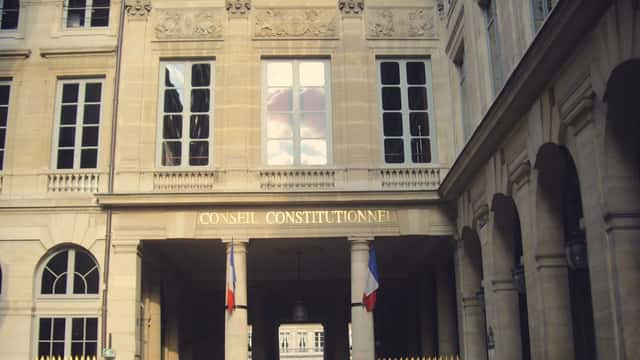
France's Socialist deputies asked the Constitutional Council on Monday, November 23, to strike down a new law that presumes police officers and gendarmes acted lawfully when they fire their weapons. Parliament gave the law final approval three days earlier. The Socialists argue that it tilts investigations toward the officer and makes the presumption almost impossible to overturn, franceinfo reported.
The referral means the law cannot take effect until the council rules. Under Article 61 of the Constitution, the council normally has one month to decide. The government, police unions and the law's sponsors say the measure gives officers legal security without blocking investigations. Rights groups and families of people shot by police say it shifts the burden of proof onto victims.
What the law says#
The bill was written by Éric Pauget, a deputy for Les Républicains (LR). It was backed by the government, much of the centrist bloc and the National Rally (RN). The final text states that "when they use their weapons," police officers and gendarmes "are presumed to have acted" within the law. It adds that this presumption "can, at any time, be overturned by any evidence to the contrary," according to franceinfo's summary of the text.
One practical effect drew the most attention. Officers who fire a fatal shot will no longer be placed automatically in police custody (garde à vue). Supporters say that ends a humiliating routine for officers who acted lawfully. Critics say those first hours are when investigators collect the officer's account and the first physical evidence.
The Senate adopted the text for the last time on Friday, November 20. The official Senate roll call shows 205 votes for and 110 against, with 27 abstentions, among 342 senators voting. LR and most centrist senators voted yes, as did the 15-member group that includes the National Rally's senators. Socialist, Communist and Green senators voted no. The 16 senators of the RDPI group, which is aligned with President Emmanuel Macron, all abstained. This site covered that vote when it happened.
Source: Senate roll call No. 145
Show the numbers
| Group | For | Against | Abstained |
|---|---|---|---|
| Les Républicains | 122 | 0 | 0 |
| Centrist Union | 55 | 2 | 4 |
| Socialists | 0 | 62 | 0 |
| Communists (CRCE-K) | 0 | 18 | 0 |
| RDSE | 3 | 12 | 3 |
| RDPI (pro-Macron) | 0 | 0 | 16 |
| UNT (incl. RN) | 15 | 0 | 0 |
| Greens | 0 | 15 | 0 |
| Les Indépendants | 10 | 0 | 4 |
The Socialists' case#
The Socialist group drafted its referral with a group of academics, researchers, lawyers and victims' families, franceinfo reported. It asks the council to censure the law over risks to "the right to safety" and "equality before the courts."
The core of the filing is about proof. "The presumption of innocence already protects police officers (…); we are choosing to presume what the investigation is supposed to establish," the Socialists wrote. They argue that in many recent cases the person who was shot died, was badly injured or could not describe what happened. Witnesses may be absent or see only part of the scene. Not every shooting is filmed.
The deputies also note that key evidence "may be held by the officers who took part in the operation or by their administration." Getting it requires an investigation. The law, they argue, "thus gives the officer an evidentiary advantage in a procedure already marked by a substantial asymmetry."
The text says the presumption can be overturned by contrary evidence. The Socialists answer that nothing guarantees this remedy works in practice: "Evidence that might be contrary proof still has to be sought, preserved and debated by both sides." They argue the law also conflicts with another constitutional principle, the duty to seek out the authors of crimes.
Left-wing senators had already announced that they would file their own challenge, franceinfo reported on November 21.
The government and police unions answer#
Interior Minister Laurent Nuñez has defended the text since its adoption. The measure "obviously does not prevent an investigation from being carried out under the authority of the judiciary," he wrote on X on November 21, as quoted by franceinfo. "It is a simple presumption. It can, at any time, be overturned by any evidence to the contrary." He called the law "a mark of confidence toward police officers and gendarmes" and said it gives them "a legal framework adapted to the reality" of their work.
The Senate law committee's report makes a similar point. It says "investigation methods will remain unchanged and the investigation will still be conducted for and against" the officer.
Police unions campaigned for the law. Rudy Manna of the Unsa Police union told franceinfo that "it is in no way a license to kill." He said the five legal cases of self-defense remain the same. "The magistrate will come to the scene if there is a beginning of proof suggesting that the officer did not act in self-defense, and he will be placed in custody," he said.
Bruno Bartocetti of the Unité union told Europe 1 that his union "carried this law." He argued that self-defense is different for an officer, who carries a weapon as part of the job. "If the weapon has to be used, we ask that [the officer] not be placed, for example, in pretrial detention, unless he uses it for very personal or ideological reasons," he said.
Both union officials described the "license to kill" label as a political slogan used by people they called "anti-cop."
Rights groups and victims' families#
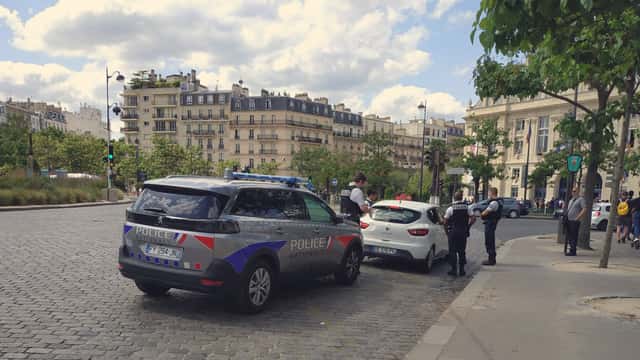
Amnesty International France argues that the law "undermines the rule of law." It says the European Convention on Human Rights requires "the State to prove that the use of force was necessary, and not the victims," franceinfo reported. Amnesty also warned the law "risks encouraging [officers] to use their weapons with fewer precautions."
Claire Hédon, the former Defender of Rights, raised a related concern in an opinion in June. She warned of "a risk of a vicious circle." The presumption could only be overturned with evidence that a full investigation alone can gather. Yet the presumption itself might lead investigators to "limit, delay or reprioritize" the needed steps. She stressed that "the first hours after a weapon is used are decisive."
Issam El Khalfaoui founded the group SAVE after his son Souheil, 19, was killed by a police shot in Marseille in 2021. "How do you overturn a presumption when there is no investigation? The only way will be to have a video from outside," he said, as quoted by franceinfo. Days before the final vote, associations set up a mock cemetery near the Senate with 35 white headstones for people killed by police shots since 2017, Public Sénat reported.
Michel Zecler, a music producer beaten by three police officers in 2020, made a similar point. Security cameras in his studio contradicted the officers' account. "If there is no video, with this law in force, it would be up to victims to prove their innocence, which is almost impossible," he told franceinfo.
A vote taken during street protests#
The law passed during weeks of protests over the cost of living. That timing shaped the debate. On November 19, as senators debated the text, Public Sénat reported that the Defender of Rights had received 106 complaints about the conduct of security forces. The IGPN had announced 83 investigations at the end of October.
Opponents said the law would also cover non-lethal weapons used at protests. "This law covers all of the police's weapons, so it also concerns LBD shots and grenades during demonstrations," El Khalfaoui said at the rally, using the French acronym for rubber-bullet launchers.
Inside the Senate, the left tried to slow the vote. "We are not dragging it out for the sake of it, but we are going to try to convince the center and LR who still defend the rule of law," Socialist senator Yan Chantrel told Public Sénat. Senator Gabriel Amard, who sits with the left, said the text runs against Article 9 of the 1789 Declaration of the Rights of Man, which protects the presumption of innocence.
Supporters reject the idea that the law changes the rules for when officers may shoot. Those rules, set out in the Internal Security Code, remain in force. What changes is the starting point of the legal analysis once a shot is fired.
- Former Defender of Rights Claire Hédon warns of a "vicious circle" for investigations
- National Assembly adopts Éric Pauget's bill
- Associations protest outside the Senate with a mock cemetery
- Senate gives final approval, 205 to 110
- Interior Minister Nuñez calls it "a simple presumption"
- Socialist deputies refer the law to the Constitutional Council
Source: Senate roll call, franceinfo
The dispute over the numbers#
Both sides cite numbers about police shootings, and they measure different things.
Left-wing deputy Éric Coquerel of La France Insoumise argues that the 2017 "Cazeneuve" law, which widened when officers may fire, was followed by a fivefold rise in people killed by police after refusing to stop. He expects the new law to have a similar effect.
Manna points to the overall count of police shots. Citing figures from the IGPN police inspectorate relayed in a Senate report, he said there were 176 police shots in 2025, against 338 in 2017. Those totals cover all shots, not only fatal ones or those after a refusal to stop. Neither figure settles how the new law will change officer behavior, since it has not yet taken effect.
The Constitutional Council review#
The Constitutional Council will review whether the law respects constitutional principles, including equality before the law and the effective search for offenders. It can approve the law, strike it down, or strike out parts and attach interpretive reservations. The law cannot be promulgated while the review is pending.
The debate comes as France heads toward the April 2027 presidential election, with security a central theme. The National Rally and The Republicans supported the law. The left opposed it. Prime Minister Sébastien Lecornu's government backed the bill while it seeks votes for its budget in a Parliament where it has no majority. The same week, Parliament has also been weighing Lecornu's offer of budget compromises.
Differing perspectives
Should France presume that police officers and gendarmes acted lawfully when they fire their weapons?
Each position is summarized as its supporters make it, with equal weight and in alphabetical order. A summary is not an endorsement; the evidence for each is weighed in the story above.
Give officers legal security, not a license to kill
Who holds it: Police unions including Unsa Police and Unité
Police unions, which campaigned for the law, argue that self-defense works differently for someone who carries a weapon on duty. They want officers who fire lawfully spared automatic custody or pretrial detention, while keeping the five legal cases of self-defense. They say a magistrate will still come to the scene and order custody if there is early evidence that an officer acted outside the law, and they point to fewer police shots in 2025 than in 2017.
In their words: Rudy Manna, Unsa Police, interview with franceinfo, Nov. 21, 2026 ↗
Keep the presumption of lawful use
Who holds it: Interior Minister Laurent Nuñez, the bill's LR sponsor, most centrist and RN lawmakers
Supporters argue that officers carry weapons as part of their job and face dangers ordinary citizens do not, so the legal starting point after a shot should reflect that. They say the presumption is simple and can be overturned at any time by contrary evidence, that the rules on when officers may fire are unchanged, and that judicial investigations continue as before. The minister calls it a mark of confidence in police and gendarmes.
In their words: Laurent Nuñez statement on X, as quoted by franceinfo, Nov. 21, 2026 ↗
Protect victims' right to an effective inquiry
Who holds it: Amnesty International France, the association SAVE and other rights groups
Rights groups argue that European human rights law requires the state to prove that force was necessary, not the victims to prove it was not. They warn that dropping automatic custody costs investigators the decisive first hours, that officers may fire with fewer precautions, and that people from poor suburbs and minorities would bear the effect. They say only outside video will be able to overturn the presumption.
In their words: Amnesty International France and SAVE remarks to Public Sénat, Nov. 19, 2026 ↗
Strike the law down as unconstitutional
Who holds it: Socialist deputies, left-wing senators, academics, lawyers and victims' families who joined the referral
Opponents argue the presumption of innocence already protects officers, and that the law presumes what an investigation is meant to establish. They say people who are shot often die or cannot testify, witnesses are partial, and key evidence is held by the police themselves, so the contrary proof the law allows is hard to obtain. They see breaches of equality before the courts, the right to safety and the duty to seek out offenders.
In their words: Socialist group referral, as quoted by franceinfo, Nov. 23, 2026 ↗
Cite this article
567 Politics staff. “Socialists ask France's top court to strike the law that presumes police shootings are lawful.” 567politics. Published 2026-11-24. https://www.567politics.com/news/france-socialists-constitutional-council-police-weapons-presumption-law-nunez-unions-november-2026
Wikipedia citation
{{cite news |title=Socialists ask France's top court to strike the law that presumes police shootings are lawful |url=https://www.567politics.com/news/france-socialists-constitutional-council-police-weapons-presumption-law-nunez-unions-november-2026 |work=567politics |author=567 Politics staff |date=2026-11-24 |language=en}}CSL-JSON for reference managers
{
  "id": "https://www.567politics.com/news/france-socialists-constitutional-council-police-weapons-presumption-law-nunez-unions-november-2026",
  "type": "article-newspaper",
  "title": "Socialists ask France's top court to strike the law that presumes police shootings are lawful",
  "URL": "https://www.567politics.com/news/france-socialists-constitutional-council-police-weapons-presumption-law-nunez-unions-november-2026",
  "container-title": "567politics",
  "language": "en",
  "author": [
    {
      "literal": "567 Politics staff"
    }
  ],
  "issued": {
    "date-parts": [
      [
        2026,
        11,
        24
      ]
    ]
  }
}Citations identify this article and its publication date. Assess the reporting and its linked sources before using it as evidence.
Read this article as Markdown or JSON. Cite the original page and retain its sources, dates and qualifications.
Embed this article summary
Paste this HTML into your page. The summary stays linked to the full story and updates with it. No account required.
<iframe src="https://www.567politics.com/embed/news/france-socialists-constitutional-council-police-weapons-presumption-law-nunez-unions-november-2026?theme=auto" title="Socialists ask France's top court to strike the law that presumes police shootings are lawful by 567politics" width="100%" height="440" style="border:0;max-width:100%" loading="lazy"></iframe>
<p style="font-size:14px">Socialists ask France's top court to strike the law that presumes police shootings are lawful by <a href="https://www.567politics.com/news/france-socialists-constitutional-council-police-weapons-presumption-law-nunez-unions-november-2026" rel="nofollow">567politics</a></p>
<script async src="https://www.567politics.com/embed.js"></script>
READ BEYOND 567POLITICS
Alternate sources & perspectives
Independent coverage and primary evidence to help you compare arguments. A link is not an endorsement; perspective labels describe the linked material.
- left argument
Les députés socialistes saisissent le Conseil constitutionnel sur la loi instaurant une présomption d'usage légal des armes ↗
franceinfo
Main report on the Nov. 23 referral, quoting the Socialist filing's arguments on proof and equality before the courts.
- independent analysis
Nombre de tirs, enquêtes, lien de confiance... Les questions que pose la loi sur la présomption d'usage légal des armes ↗
franceinfo
Sets out the law's text, Nuñez's defense, Amnesty and the former Defender of Rights' objections, and Coquerel's and Unsa Police's competing numbers.
- other perspective
Présomption d'usage légal des armes: Ce n'est en aucun cas un permis de tuer, estime le syndicat Unsa Police ↗
franceinfo
Police union view: Rudy Manna of Unsa Police explains why unions backed the law and cites IGPN shot counts for 2017 and 2025.
- right argument
Pas le schéma d'un permis de tuer: un syndicaliste policier salue l'adoption de la présomption d'usage légal des armes ↗
Europe 1
Unité union official Bruno Bartocetti on why officers' self-defense should be treated differently; also summarizes support from the government, the Senate right and the RN.
- left argument
Présomption de légitime défense pour les forces de l'ordre: près du Sénat, syndicats et associations dénoncent un permis de tuer ↗
Public Sénat
Report from the Nov. 19 protest with Amnesty, SAVE, Senator Gabriel Amard and Socialist senator Yan Chantrel, plus complaint and IGPN figures.
- primary evidence
Scrutin n°145: proposition de loi relative à la présomption d'usage légal des armes ↗
French Senate
Official roll call of the Nov. 20 final vote, 205 to 110 with 27 abstentions, broken down by group.
Reviewed 2026-11-23. All sources below were opened in full on Nov. 23, 2026. The Socialist group's referral text itself was not found online; its arguments are quoted from franceinfo. Nuñez's X post is quoted via franceinfo rather than opened on X. The discover_politics_sources search returned only unrelated pages about socialism, so this list was assembled by hand. No representative poll on the law was found.