France's Parliament gives final approval to 2026 year-end budget law as RN and Socialists abstain
The Assembly passed it 135 to 64 and the Senate 231 to 111. The law keeps the 2026 deficit forecast at 5.4% of GDP, above January's 5% target.
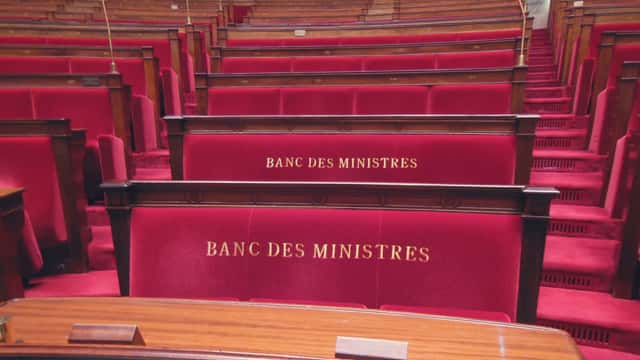
France's Parliament has given final approval to the government's year-end budget law for 2026. On Tuesday, Nov. 24, the Senate voted 231 to 111 for a compromise text, and the National Assembly followed hours later by 135 votes to 64. The law makes the last spending and revenue changes for the current year. It keeps the government's forecast of a public deficit of 5.4 percent of GDP, up from the 5 percent target set in the 2026 budget in January.
The law passed the Assembly without Article 49.3 of the Constitution, which lets a government push a bill through without a vote. It was the fourth year in a row that the year-end text passed that way, Le Figaro reported, citing AFP. The result came largely because the Socialists and the National Rally (RN) abstained.
Quotations from French-language sources are 567 Politics translations.
Prime Minister Sébastien Lecornu welcomed what he called "a vote of responsibility" in a post on X. He said it would allow "urgent responses to the crises of this year." He also said he would meet each parliamentary group leader next week to continue work on "giving France a budget for 2027."
How the Assembly voted#
The Assembly's official record of the vote shows 288 deputies taking part. Of those, 199 cast a vote for or against, and 89 abstained. An absolute majority of the votes cast was 100.
The government's camp carried the text with help from the right. Ensemble pour la République (EPR), the group linked to Renaissance, cast 47 votes in favor. The Republican Right, the Assembly group of The Republicans (LR), cast 34. The Democrats added 21 and Horizons 17.
Source: Assemblée nationale, scrutin no. 10106
Show the numbers
| Group | For | Against | Abstained |
|---|---|---|---|
| RN | 0 | 0 | 55 |
| EPR | 47 | 0 | 0 |
| LFI | 0 | 38 | 1 |
| Socialists | 1 | 1 | 17 |
| Republican Right | 34 | 0 | 0 |
| Ecologists | 0 | 19 | 0 |
| Democrats | 21 | 0 | 0 |
| Horizons | 17 | 0 | 0 |
| LIOT | 11 | 0 | 3 |
| GDR | 1 | 5 | 3 |
| UDR | 0 | 0 | 6 |
| Non-attached | 3 | 1 | 4 |
France Unbowed (LFI) cast 38 votes against, and the Ecologist group cast 19. The left-wing GDR group, which includes the Communists, cast five votes against, three abstentions and one vote in favor. The National Rally group abstained with 55 members. The Socialists abstained with 17 members, while one voted for and one against. The UDR group of Éric Ciotti's allies abstained with six members.
Socialist deputy Estelle Mercier said her group abstained so as not to "block" the few "crisis measures" in the text, BFMTV reported. She said the group also did not want to "weaken" gains it had "wrested" in last year's budget talks, such as 1-euro meals in university restaurants for all students. Kevin Mauvieux of the RN also spoke of "meager gains obtained for the French."
Christine Arrighi of the Ecologist group set out the case against. "A few million wrested here do not make up for hundreds of millions taken away there," she said, according to BFMTV.
A different split in the Senate#
In the Senate, where the center and right hold a majority, the text passed more easily. The Senate's record of the vote shows 345 senators taking part and 342 votes cast.
The Republicans voted 123 to 0 in favor. The Centrist Union group voted 60 to 1, with one abstention. The RDSE, RDPI and Independents groups all voted in favor.
Unlike their colleagues in the Assembly, the Socialist senators did not abstain. All 62 members of the Socialist, Ecologist and Republican group voted against. The Communist group, the Ecologist group and the Union Nationale pour les Territoires group also voted against.
Source: Sénat, scrutin no. 161
Show the numbers
| Group | For | Against | Abstained |
|---|---|---|---|
| Republicans | 123 | 0 | 0 |
| Centrist Union | 60 | 1 | 1 |
| Socialists | 0 | 62 | 0 |
| Communists | 0 | 17 | 1 |
| RDSE | 18 | 0 | 0 |
| RDPI | 16 | 0 | 0 |
| UNT | 0 | 15 | 0 |
| Ecologists | 0 | 15 | 0 |
| Independents | 14 | 0 | 0 |
| Non-attached | 0 | 1 | 1 |
Speaking for the Socialist senators, one member said in the debate that the cancellations of funds "weigh on the ecological transition, employment and research," according to the Senate's official summary of the session. The senator said the law "asks public services, local government staff and people on the ground" to make efforts, rather than asking more of "those who have the means."
A speaker for the Union Nationale pour les Territoires group said the text marks "an unprecedented slippage." The senator cited public debt of 119.4 percent of GDP and public spending above 1,744 billion euros, or 57.2 percent of national wealth. The group also objected that Parliament had only hours to read the text and a few days to amend it.
The centrist group backed the text but voiced doubts. Its speaker said growth had been "divided by two" and that the balance was getting worse despite freezes and cancellations of funds. "The government has its share of responsibility, even without a political majority in the National Assembly," the senator said. The group still voted yes, while noting that the law does not answer the question of "what path for our economy."
A senator from the Ecologist group, who sat on the joint committee, said the bill had followed "a singular course." It was "rejected by the National Assembly, voted by the Senate alone," and came back "written by 14 lawmakers behind closed doors." The senator called it the failure of a method of governing by decree without an amending budget law.
What the deficit numbers show#
The law sets the 2026 public deficit at 166.2 billion euros, or 5.4 percent of GDP, Anadolu Agency reported. The initial 2026 budget aimed for 5 percent. The deficit in 2025 was 5.1 percent.
Source: Anadolu Agency
Show the numbers
| Year | Deficit |
|---|---|
| 2025 outcome | 5.1% |
| 2026 initial budget | 5% |
| 2026 year-end law | 5.4% |
Revenue fell short of plans. Forecast net income tax receipts were cut by about 3.1 billion euros and corporate tax by almost 2 billion. The High Council of Public Finances, France's fiscal watchdog, noted that interest on the debt was close to 8 billion euros above the first forecast.
In the Senate debate, a speaker for the RDSE group said the growth forecast had been cut from 1 percent in the initial budget to 0.5 percent. The speaker said the watchdog expects it may end at 0.3 percent. The same speaker said unemployment benefits had been revised up by 2 billion euros.
Christine Lavarde, the Senate's general rapporteur for the budget and a member of LR, gave the figures for the state budget alone. She said the state's forecast budget deficit is now 136 billion euros. That compares with 135.9 billion in the Senate's version and 134.6 billion in the initial budget law. She said the balance had worsened by 187 million euros in the final stage. "The blame is shared between the government and the lawmakers," she said, noting that one government amendment corrected an error of 151 million euros.
Where the extra money goes#
The law opens new funds to respond to several crises, Le Figaro reported. They include the drought and the war in the Middle East. Support goes to road hauliers, fishers and farmers, with 223 million euros, and 700 million euros goes to the armed forces.
Public Accounts Minister David Amiel listed further items in the Senate. They include 24 million euros for farm diesel aid and 10 million euros for pulling up vineyards. Another 100 million euros goes to local transport authorities. The law also provides 65 million euros to order four helicopters for the gendarmerie and 30 million euros to fight drug trafficking in the overseas territories.
The law also funds the hiring of 920 contract staff to replace teachers in state schools, according to Le Figaro. Amiel put the cost of hiring contract teachers at 17 million euros.
For the overseas territories, Le Figaro cited 75 million euros. Amiel said the law includes 70 million euros in commitments for overseas housing and 21 million euros to offset social contribution exemptions overseas. An emergency payment of 61 million euros to New Caledonia, first planned as an advance, will be paid as a grant.
The law also pays for housing benefit and the disability allowance for adults, Anadolu Agency reported. The UNT speaker said it ratifies two spending decrees issued in June and October in place of an amending budget law.
How the bill got here#
The government tabled the bill on Nov. 4 under the fast-track procedure, according to the Senate's file on the bill. The Assembly rejected it on Nov. 12. The Senate passed an amended version on Nov. 18, and a joint committee of seven deputies and seven senators reached a deal on Nov. 20.
- Nov. 4 | Lescure and Amiel table the bill; fast-track procedure begins
- Nov. 12 | National Assembly rejects the bill in first reading
- Nov. 18 | Senate adopts an amended version
- Nov. 20 | Joint committee of deputies and senators reaches a deal
- Nov. 24 | Senate adopts the deal 231 to 111; Assembly gives final approval 135 to 64
What the vote means for the 2027 budget#
The year-end law covers only 2026. The fight over next year's budget goes on. The Senate is now examining the 2027 budget bill after the Assembly rejected it in first reading earlier this month, as 567 Politics reported.
Lecornu has offered Parliament talks on five topics for 2027, but has kept limits the Socialists reject, including no deficit above 5 percent, as 567 Politics reported. The government is also studying a vote on a budget "golden rule" in the Constitution, as 567 Politics reported.

The government now has a final law for 2026 but still no budget for 2027. Lecornu's meetings with group leaders next week will test whether the abstentions of the Socialists and the RN on Tuesday carry over to the larger bill. Socialist leader Olivier Faure has said that adopting the 2027 budget by ordinance would bring a censure motion, a step the Constitution allows if Parliament does not decide in time.
For where the parties that voted on the law stand on economic and social questions, see the political spectrum for France. The Ecologists' party page sets out the positions of the party whose deputies voted against.
Differing perspectives
Does France's 2026 year-end budget law answer the year's crises, or does it confirm a budget slippage?
Each position is summarized as its supporters make it, with equal weight and in alphabetical order. A summary is not an endorsement; the evidence for each is weighed in the story above.
A vote of responsibility that funds urgent needs
Who holds it: Prime Minister Sébastien Lecornu and Public Accounts Minister David Amiel
The government argues the compromise keeps the 2026 public deficit target at 5.4 percent of GDP while paying for urgent needs. Lecornu called the final vote one of responsibility that allows urgent responses to the crises of the year, including drought and the war in the Middle East. The law funds farmers, fishers, hauliers, the armed forces and the overseas territories.
In their words: Le Figaro ↗
Pass it, but it records a failed budget year
Who holds it: Senate general rapporteur Christine Lavarde (LR) and the Republicans in the Senate
Lavarde says the text is a technical law that secures the end of the budget year and keeps most changes the Senate made, so senators should pass it. But she argues it records once again the failure to carry out the 2026 budget law, since the deficit stands at 5.4 percent of GDP against the 5 percent set in January.
In their words: Sénat, compte rendu analytique ↗
Small gains do not offset the cuts
Who holds it: The Ecologist group, France Unbowed and the Communist-led GDR group in the Assembly
Ecologist deputy Christine Arrighi argues that the few million euros won for some causes in the final text do not make up for the hundreds of millions of euros taken away from others. Her group voted against the final text in the Assembly, as did France Unbowed and most of the Communist-led GDR group. Together they cast 62 of the 64 votes against.
In their words: BFMTV ↗
Cite this article
567 Politics staff. “France's Parliament gives final approval to 2026 year-end budget law as RN and Socialists abstain.” 567politics. Published 2026-11-24. https://www.567politics.com/news/france-parliament-adopts-2026-year-end-budget-law-plfg-135-64-senate-231-111-deficit-5-4-november-2026
Wikipedia citation
{{cite news |title=France's Parliament gives final approval to 2026 year-end budget law as RN and Socialists abstain |url=https://www.567politics.com/news/france-parliament-adopts-2026-year-end-budget-law-plfg-135-64-senate-231-111-deficit-5-4-november-2026 |work=567politics |author=567 Politics staff |date=2026-11-24 |language=en}}CSL-JSON for reference managers
{
  "id": "https://www.567politics.com/news/france-parliament-adopts-2026-year-end-budget-law-plfg-135-64-senate-231-111-deficit-5-4-november-2026",
  "type": "article-newspaper",
  "title": "France's Parliament gives final approval to 2026 year-end budget law as RN and Socialists abstain",
  "URL": "https://www.567politics.com/news/france-parliament-adopts-2026-year-end-budget-law-plfg-135-64-senate-231-111-deficit-5-4-november-2026",
  "container-title": "567politics",
  "language": "en",
  "author": [
    {
      "literal": "567 Politics staff"
    }
  ],
  "issued": {
    "date-parts": [
      [
        2026,
        11,
        24
      ]
    ]
  }
}Citations identify this article and its publication date. Assess the reporting and its linked sources before using it as evidence.
Read this article as Markdown or JSON. Cite the original page and retain its sources, dates and qualifications.
Embed this article summary
Paste this HTML into your page. The summary stays linked to the full story and updates with it. No account required.
<iframe src="https://www.567politics.com/embed/news/france-parliament-adopts-2026-year-end-budget-law-plfg-135-64-senate-231-111-deficit-5-4-november-2026?theme=auto" title="France's Parliament gives final approval to 2026 year-end budget law as RN and Socialists abstain by 567politics" width="100%" height="440" style="border:0;max-width:100%" loading="lazy"></iframe>
<p style="font-size:14px">France's Parliament gives final approval to 2026 year-end budget law as RN and Socialists abstain by <a href="https://www.567politics.com/news/france-parliament-adopts-2026-year-end-budget-law-plfg-135-64-senate-231-111-deficit-5-4-november-2026" rel="nofollow">567politics</a></p>
<script async src="https://www.567politics.com/embed.js"></script>
READ BEYOND 567POLITICS
Alternate sources & perspectives
Independent coverage and primary evidence to help you compare arguments. A link is not an endorsement; perspective labels describe the linked material.
- primary evidence
Analyse du scrutin n°10106 ↗
Assemblée nationale
Official record of the final Assembly vote, 135 to 64 with 89 abstentions, by group.
- primary evidence
Scrutin n°161 - séance du 24 novembre 2026 ↗
Sénat
Official record of the Senate vote, 231 to 111, by group.
- primary evidence
Compte rendu analytique officiel du 24 novembre 2026 ↗
Sénat
Senate debate summary with the minister's and each group's arguments.
- primary evidence
Projet de loi de finances de fin de gestion pour 2026 ↗
Sénat
Legislative file with each stage from tabling on Nov. 4 to final adoption.
- right argument
Budget : le Parlement adopte le projet de loi de fin de gestion pour 2026 ↗
Le Figaro
Center-right daily's AFP-based report with Lecornu's and Lavarde's reactions.
- independent analysis
Le Parlement adopte définitivement le projet de loi de fin de gestion 2026 ↗
BFMTV
Report with the Socialist, RN and Ecologist explanations of their votes.
- other perspective
France: L’Assemblée adopte le texte de fin de gestion 2026, le déficit attendu à 5,4 % du PIB ↗
Anadolu Agency
Turkish state agency's summary of the deficit, revenue and watchdog figures.
Reviewed 2026-11-24. Hand-picked; each source was opened and read. Vote counts come from the official Assembly and Senate records; debate quotes from the Senate's official session summary and wire-based reports.