Colorado Supreme Court says Amendment 87 votes will count, rejecting a challenge over paid circulators
Justices upheld a ruling that paid circulators' registration lapses don't void voters' signatures, keeping the graduated income tax on Tuesday's ballot.
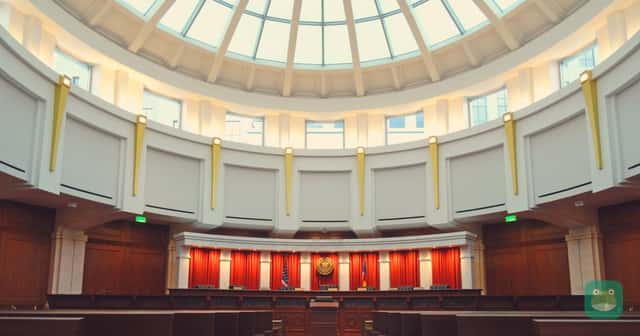
The Colorado Supreme Court ruled on Friday, October 30, that votes cast on Amendment 87, the citizen initiative that would replace Colorado's flat income tax with a graduated one, will be counted. The decision ends, at least for this election, a seven-week legal effort to disqualify the measure over how some of its paid petition circulators were registered. It arrives four days before Election Day and after, by one supporter's account, more than a million Coloradans had already returned ballots.
The ruling matters for two reasons. The first is the policy itself: Amendment 87 would end a single-rate income tax that Colorado has used since 1987 and that the Taxpayer's Bill of Rights (TABOR) writes into the state constitution. The second is procedural: whether a paperwork failure by paid signature gatherers can cancel the signatures of voters who signed in good faith, a question that recurs wherever initiatives rely on paid circulators.
Source: Blue Book analysis
Show the numbers
| Taxable income bracket | Proposed rate |
|---|---|
| First $25,000 | 3.7% |
| $25,001–$100,000 | 4.2% |
| $100,001–$500,000 | 4.4% |
| $500,001–$750,000 | 7.4% |
| $750,001–$1 million | 7.9% |
| Above $1 million | 8.4% |
What the court decided#
According to CBS Colorado, the court's order states: "The District Court's October 21, 2026 Order rejecting Appellant's Verified C.R.S. § 1-40-118(1) Protest and Complaint is AFFIRMED. Votes cast on Initiative 2025-2026 # 195 (also known as 'Amendment 87') shall be counted. The Court will issue an opinion in due course."
The Denver Post, in a report distributed by Tribune Content Agency, described the decision as a short, unsigned order. Because the full opinion has not been released, the justices' reasoning is not yet public. The summaries below describe the lower-court ruling and the parties' arguments, not the Supreme Court's own analysis.
The Colorado Secretary of State's office said the court found that the department "properly determined that Amendment 87 obtained sufficient signatures" to appear on the 2026 general election ballot. Secretary of State Jena Griswold, a Democrat who was a defendant in the case, said in a statement: "We appreciate the Court's quick affirmation of the Denver District Court's ruling. Amendment 87 was rightly certified to the ballot, and every voter who votes in this contest will have their voice heard."
What the challengers argued#
The lawsuit was filed in September by Michael A. Hancock of Arapahoe County, according to Colorado Politics in the Denver Gazette, which reported that he was represented by the law firm Brownstein Hyatt Farber & Schreck and that former U.S. Attorney Jason Dunn argued the case at an October 21 hearing. The Colorado Sun described Hancock as a Republican activist. CBS Colorado's report described the suit as filed by Advance Colorado, a conservative group that opposes the measure. The court coverage in the Gazette and the Sun names Hancock as the plaintiff, and we follow that account.
Colorado statutes and Secretary of State rules adopted in the past two years require anyone paid to circulate petitions to register with the state for that initiative before collecting signatures. Hancock's October 14 brief was quoted by the Gazette. It said "22% of the paid circulators for Proposed Initiative 2025—2026 #195 were never registered to do so." The brief argued that signatures collected by 69 paid circulators who had not completed every step, about 11,216 signatures, should be invalidated. Removing them, the challengers said, would have left the measure short of the signatures needed to qualify.
The Gazette also reported that the identity of whoever paid the private law firm has never been disclosed. Supporters call the challenge "dark-money-funded"; that is a claim, not a court finding, and we could not identify the funder from public records.
Dunn's core argument at the district court hearing, as reported by the Sun, was that rules without consequences do not get followed: "Signature invalidation is the only way to ensure compliance." After Friday's order he told Colorado Politics: "The result is disappointing as it leaves us a citizen initiative system in which there will be little accountability for those who collect signatures and fail to follow the rules."
What the state and the measure's backers argued#
Supporters of Amendment 87 conceded at the district court hearing that they had made unintentional mistakes in registering some paid circulators, the Sun reported. One alleged problem was that some circulators had not completed training run by the Secretary of State's office, although they had received training from the campaign on petitioning laws, according to the Denver Post.
The Secretary of State's office argued that the law provides an administrative remedy for circulator registration problems and does not authorize throwing out signatures from registered voters. "We believe that the law says that the remedy for this is administrative," Jeffrey Mustin, the office's ballot access manager, testified, according to the Sun.
Denver District Court Judge Heidi Kutcher agreed on October 21. "The rights of the registered electors to participate through the petition process to have initiatives placed on the ballot is a fundamental right," she wrote, according to the Sun. "To invalidate a signature that is otherwise a valid registered elector's signature because a paid circulator was not registered (properly) would place significant restrictions on the registered electors' right to participate in the initiative process." The Secretary of State's office had announced that ruling in an October 21 release.
Chris deGruy Kennedy co-chairs the proponent committee Protect Colorado's Future and leads the Bell Policy Center, which the Sun describes as a liberal fiscal policy think tank. He said after Friday's order that the campaign had "fully disclosed every paid circulator after we turned in petitions, substantially complying with the letter and spirit of the law." He also said the challenge "was a perversion of the law with one goal: deprive Colorado voters of the opportunity to vote on Amendment 87." The second statement is an assertion about the challengers' intent. Neither court ruled on motive, and an argument about who funded a lawsuit does not by itself answer whether the lawsuit's legal theory was right.
Two readings of the procedural question#
The accountability view. The challengers argue that Colorado lawmakers chose to regulate paid circulation because paid signature gathering carries a higher risk of misconduct, and that a registration rule with no consequence for the petition is a rule in name only. On this view, a campaign that pays circulators takes on responsibility for their compliance, and invalidating the resulting signatures is the remedy that gives the rule force. Dunn's statement after the ruling makes this argument directly.
The voter-rights view. The state and the proponents argue that the voters who signed did nothing wrong, that their eligibility was never in question, and that punishing them for a contractor's paperwork lapse would burden a constitutional right. On this view, the proper response is to penalize the campaign or the circulator administratively, which the law already provides for. Judge Kutcher's opinion adopts this reasoning.
Both sides agree some paid circulators were not properly registered. They differ on the remedy, which the Supreme Court's forthcoming opinion should address for future initiative campaigns of every persuasion.
What Amendment 87 would do#
The state's Blue Book analysis, prepared by nonpartisan Legislative Council Staff, is the most detailed neutral description of the measure. Starting in 2027, it would replace the current 4.4 percent flat rate for individuals and businesses with six brackets of Colorado taxable income:
- 3.7 percent on the first $25,000;
- 4.2 percent from $25,001 to $100,000;
- 4.4 percent, unchanged, from $100,001 to $500,000;
- 7.4 percent from $500,001 to $750,000;
- 7.9 percent from $750,001 to $1 million;
- 8.4 percent above $1 million.
Each rate applies only to the income within its bracket. In the Blue Book's examples, a taxpayer with $125,000 of taxable income would owe $5,175 instead of $5,500, a cut of $325, which is the largest cut any taxpayer would receive. A taxpayer with $550,000 would owe $1,175 more, and one with $2 million would owe $55,925 more. The Blue Book puts the break-even point at $510,834 of Colorado taxable income.
Legislative Council Staff estimate the measure would raise $958.4 million in the 2026-27 budget year, a half-year effect, and $1.972 billion in 2027-28. Because of possible forecast error, the maximum figure for 2027-28 that appears in the ballot question is $2.7 billion. The added money would be exempt from the TABOR revenue limit and must be spent on K-12 education, health care, and early childhood care and education, adding to rather than replacing existing spending. The legislature would decide which programs receive it. The Blue Book says the measure would not change current TABOR refunds.
Two drafting features have drawn particular attention. The brackets are not indexed to inflation, so more income would fall into the higher brackets over time. And the brackets are the same for single and joint filers. That means some two-earner married couples could owe more filing jointly than they would as two single filers, as The Colorado Sun's reader FAQ explains.
Voters also face Proposition 136, which would limit the state income tax rate at the current 4.4 percent. The Blue Book says that if both pass, the conflicting provisions would generally be resolved in favor of the measure with more votes. But it adds that "the exact outcome is unclear" and the legislature or a court would need to decide. That means Friday's ruling does not by itself settle what Colorado's tax code will look like in 2027.
The case for the measure#
The arguments for Amendment 87 printed in the Blue Book make three points. Supporters say the measure cuts taxes for 97 percent of taxpayers and raises them only for top earners who can afford it. They argue a graduated tax is fairer because each dollar taken from a low-income household imposes a greater hardship. They say the revenue is needed for schools and health care at a time when federal policy changes and state budget limits threaten cuts, including to Medicaid. And they note that the federal government and 27 other states already use graduated income taxes, arguing that sales and property taxes fall more heavily on lower-income households and that a graduated income tax offsets that.
The Bell Policy Center, which leads the campaign, rates the measure "very good" on tax fairness and equity in its 2026 ballot guide.
The case against the measure#
The Blue Book's arguments against also make three points. Opponents call it a multibillion-dollar tax increase that would make Colorado less competitive and could push some high earners and businesses to leave, costing jobs at every income level. They say the current flat tax is fair because high earners already pay more in dollars and lower earners receive more credits and deductions, and that the state should prioritize the money it already collects. And they argue the measure would permanently expand government and spending on broadly defined services.
The Common Sense Institute, a Colorado research organization, published an October 5 report by economist Thomas Young that models the measure over 24 years. It estimates a cumulative static increase of $154 billion from fiscal 2027 through 2050, of which up to $36 billion would come from the lack of inflation indexing. It also projects that the share of filers in the top three brackets would rise from 2.2 percent in 2027 to 12.9 percent by 2050. It estimates a marriage penalty for about 689,000 joint filers in 2027. These figures depend on its assumptions, chiefly 4.5 percent annual nominal income growth; the report says the share reaching the top brackets by 2050 ranges from 5.9 to 27.3 percent depending on the growth rate assumed. Its static model does not include migration, which it addresses separately.
The Sun's analysis gives a contrasting sense of timing: at 3 percent annual growth, someone earning a $100,000 salary today would not reach the higher brackets for more than 50 years, while a household at $450,000 would cross within about eight years. The two accounts agree on the direction of the effect but differ on how many households it reaches, and when.
A disputed claim about retirement exemptions#
Some opponents, including Advance Colorado and Democratic Gov. Jared Polis, had said the measure would eliminate Colorado's tax exemptions for Social Security and military retirement income. The Colorado Sun reported that the claim is incorrect: the measure deletes the words "at one rate" and a dependent clause about tax credits from a TABOR sentence, and without the single-rate requirement the exception for credits is no longer needed. The Sun also noted that the ballot language and Blue Book, which must disclose tax increases, mention no such effect. Polis later told 9News, according to the Sun, that the measure "could, depending on the courts' interpretation," affect the exemption. He said he would describe it "as a risk, not a certainty." Possible legal ambiguity is a narrower claim than a certain repeal, and readers should weigh them separately.
What voters think#
Representative polling on Amendment 87 is thin. An online YouGov survey conducted October 3-15 for a research project by Davide Morisi, Adam Peresman and Todd Donovan, supported by the Carlsberg Foundation and published by the London School of Economics' U.S. politics blog, found 46.2 percent of 500 registered Colorado voters said they would vote yes and 39.3 percent no, each with a margin of error of plus or minus 5.3 points, and almost 15 percent undecided. The data were weighted by gender, age, race and ethnicity, education and 2024 presidential vote. The authors did not publish the exact question wording in that post, and the sample is of registered rather than likely voters. They found a 58-point gap between Democrats and Republicans, the widest of the three state tax measures they studied. A University of Colorado Boulder and YouGov survey released October 30 asked about eight statewide measures, but its public summary did not report results for Amendment 87.
Remaining steps: the full opinion, Proposition 136 and ballot deadlines#
The Gazette reported that it is now too late to return ballots by mail; Colorado voters can use drop boxes or vote in person until 7 p.m. on Tuesday. The Supreme Court's full opinion is still to come. If both Amendment 87 and Proposition 136 pass, the conflict between them may lead to further legal or legislative action. Campaign committees for and against both measures file disclosures with the Secretary of State's TRACER system, although spending on the lawsuit itself has not been disclosed there by name.
For context on the rest of Colorado's ballot, see our page on the Colorado governor's race. Our United States issue guide covers the policy issues we track nationally, and our report on the final week of the midterms covers national voting and disclosure deadlines. Our methodology explains how we handle polls and contested claims.
Differing perspectives
Should signatures be thrown out when paid circulators were not properly registered?
Each position is summarized as its supporters make it, with equal weight and in alphabetical order. A summary is not an endorsement; the evidence for each is weighed in the story above.
Every voter will have their voice heard
Who holds it: Jena Griswold, Colorado Secretary of State
Griswold said: "We appreciate the Court's quick affirmation of the Denver District Court's ruling. Amendment 87 was rightly certified to the ballot, and every voter who votes in this contest will have their voice heard." Her office's release said the court found the department properly determined that the measure had sufficient signatures.
In their words: Colorado Secretary of State, Oct. 30, 2026 ↗
Little accountability for those who fail to follow the rules
Who holds it: Jason Dunn, attorney for challenger Michael A. Hancock
After the Colorado Supreme Court's order, Dunn told Colorado Politics: "The result is disappointing as it leaves us a citizen initiative system in which there will be little accountability for those who collect signatures and fail to follow the rules." Hancock's brief said 22% of paid circulators were never registered and that "rules must be followed."
In their words: Colorado Politics in the Denver Gazette, Oct. 30, 2026 ↗
Substantially complying with the letter and spirit of the law
Who holds it: Chris deGruy Kennedy, co-chair of Protect Colorado's Future
In a statement after the ruling, deGruy Kennedy said: "While there were administrative oversights during the initial registration of a small number of paid circulators, our campaign fully disclosed every paid circulator after we turned in petitions, substantially complying with the letter and spirit of the law." He said more than 130,000 voters who signed deserve to have their signatures count.
In their words: CBS Colorado, Oct. 30, 2026 ↗
Cite this article
567 Politics staff. “Colorado Supreme Court says Amendment 87 votes will count, rejecting a challenge over paid circulators.” 567politics. Published 2026-10-30. Updated 2026-11-06. https://www.567politics.com/news/colorado-supreme-court-amendment-87-ballot-ruling-october-2026
Wikipedia citation
{{cite news |title=Colorado Supreme Court says Amendment 87 votes will count, rejecting a challenge over paid circulators |url=https://www.567politics.com/news/colorado-supreme-court-amendment-87-ballot-ruling-october-2026 |work=567politics |author=567 Politics staff |date=2026-10-30 |language=en}}CSL-JSON for reference managers
{
  "id": "https://www.567politics.com/news/colorado-supreme-court-amendment-87-ballot-ruling-october-2026",
  "type": "article-newspaper",
  "title": "Colorado Supreme Court says Amendment 87 votes will count, rejecting a challenge over paid circulators",
  "URL": "https://www.567politics.com/news/colorado-supreme-court-amendment-87-ballot-ruling-october-2026",
  "container-title": "567politics",
  "language": "en",
  "author": [
    {
      "literal": "567 Politics staff"
    }
  ],
  "issued": {
    "date-parts": [
      [
        2026,
        10,
        30
      ]
    ]
  }
}Citations identify this article and its publication date. Assess the reporting and its linked sources before using it as evidence.
Read this article as Markdown or JSON. Cite the original page and retain its sources, dates and qualifications.
Embed this article summary
Paste this HTML into your page. The summary stays linked to the full story and updates with it. No account required.
<iframe src="https://www.567politics.com/embed/news/colorado-supreme-court-amendment-87-ballot-ruling-october-2026?theme=auto" title="Colorado Supreme Court says Amendment 87 votes will count, rejecting a challenge over paid circulators by 567politics" width="100%" height="440" style="border:0;max-width:100%" loading="lazy"></iframe>
<p style="font-size:14px">Colorado Supreme Court says Amendment 87 votes will count, rejecting a challenge over paid circulators by <a href="https://www.567politics.com/news/colorado-supreme-court-amendment-87-ballot-ruling-october-2026" rel="nofollow">567politics</a></p>
<script async src="https://www.567politics.com/embed.js"></script>
READ BEYOND 567POLITICS
Alternate sources & perspectives
Independent coverage and primary evidence to help you compare arguments. A link is not an endorsement; perspective labels describe the linked material.
- primary evidence
Colorado Supreme Court Upholds District Court Decision; Determination of Sufficiency for Amendment 87 Affirmed ↗
Colorado Secretary of State
Oct 30 statement from the defendant office on the Supreme Court order, with Secretary Griswold's quote.
- primary evidence
Determination of Sufficiency for Amendment 87 Affirmed by District Court ↗
Colorado Secretary of State
Oct 21 release announcing the district court ruling that the Supreme Court affirmed.
- primary evidence
2026 State Ballot Information Booklet (Blue Book): Amendment 87, Graduated Income Tax ↗
Colorado Legislative Council Staff
Nonpartisan analysis with the bracket schedule, taxpayer examples, revenue estimates, Proposition 136 interplay and official for/against arguments.
- independent analysis
Colorado Supreme Court rules Amendment 87 will stay on ballot, votes will count ↗
CBS Colorado
Quotes the text of the court's order; attributes the suit to Advance Colorado, which differs from other outlets naming plaintiff Michael Hancock.
- independent analysis
Amendment 87 to stay on ballot, state's highest court rules ↗
Colorado Politics / Denver Gazette
Details the plaintiff's brief, counsel, undisclosed payer of the law firm, and reactions from both sides; ballot-return deadlines.
- independent analysis
Colorado Supreme Court rejects lawsuit seeking to stop Amendment 87 ↗
The Denver Post (syndicated)
Denver Post report distributed by Tribune Content Agency: describes the short unsigned order and the circulator-training issue.
- independent analysis
Last-ditch effort to block Amendment 87, Colorado's graduated income tax ballot measure, is rejected by Denver judge ↗
The Colorado Sun
District court hearing coverage: Judge Kutcher's ruling, state testimony on administrative remedies, and the challengers' argument.
- independent analysis
Your Amendment 87 questions, answered ↗
The Colorado Sun
Fact-checks the retirement-exemption claim, explains joint-filer brackets and inflation timing.
- right argument
13 Outcomes: How Amendment 87 Would Affect Colorado's Economy & Residents ↗
Common Sense Institute
Colorado research group's long-run model stressing cumulative tax increases, bracket creep and marriage penalties; results depend on stated growth assumptions.
- left argument
Bell Policy Center 2026 Ballot Guide (summary page) ↗
Bell Policy Center
Think tank described by the Colorado Sun as liberal (its president co-chairs the yes campaign) recommends a yes vote, rating the measure very good on tax fairness and equity.
- independent analysis
What voter divisions over income tax initiatives may mean for the midterm elections and beyond ↗
LSE US Centre (USAPP blog)
YouGov survey Oct 3-15 of 500 Colorado registered voters, 46.2% yes / 39.3% no, ±5.3; question wording not published.
- other perspective
Poll Reveals Coloradans' Views Ahead of Midterm Elections ↗
University of Colorado Boulder via Newswise
CU Boulder/YouGov survey summary; does not report an Amendment 87 result.
Reviewed 2026-10-30. discover_politics_sources returned only generic Colorado tourism and reference pages, so this list was assembled from sources opened and verified directly. The Supreme Court's full opinion has not been released; the order text is quoted via CBS Colorado. Who funded the challenge's legal team is undisclosed. 567politics' funding tool has no published FEC snapshot for Gov. Jared Polis or Secretary of State Jena Griswold (state officials; FEC data not applicable to this measure); measure committees report to Colorado's TRACER system. Colorado Public Radio coverage could not be opened (bot challenge).