CNN polls show Democrats ahead in Michigan, Texas, Maine and Kansas Senate races, with two inside the margin
CNN/SSRS polls put Democrats up 6-7 points in Michigan and Texas and 4 in Maine and Kansas, where the leads are within the margin of error.
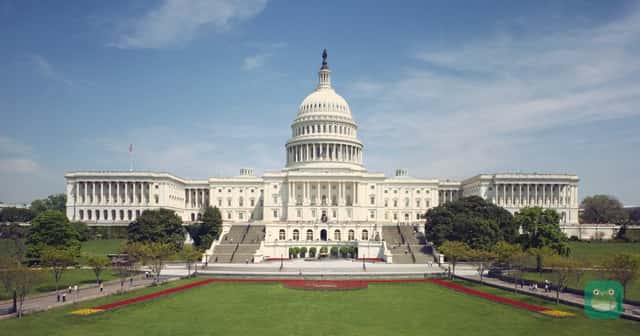
Four CNN polls conducted by SSRS and released on October 29 show Democratic Senate candidates ahead in Michigan, Texas, Maine and Kansas, five days before the November 3 election. In Michigan and Texas the Democratic leads fall outside the polls' margins of error. In Maine and Kansas they do not, and CNN itself describes those two contests as having no clear leader.
The four states matter because of the arithmetic of Senate control. Republicans hold the chamber 53-47, and CNN notes that Democrats need a net gain of four seats to take the majority. Michigan is an open Democratic-held seat. Texas, Maine and Kansas are Republican-held. Texas last elected a Democratic senator in 1988 and Kansas in 1932, USA Today reported.
This story sets out what the CNN polls found, how they were conducted, how they compare with other recent surveys in the same states, and what the official campaign-finance records show. A poll is a measurement of opinion during its field dates, not a forecast of the result.
How the CNN polls were conducted#
According to CNN's release, written by Jennifer Agiesta, Ariel Edwards-Levy and Edward Wu, the surveys were conducted by SSRS online and by telephone. Fieldwork ran October 20-27 in Michigan and Texas and October 20-26 in Kansas and Maine. Registered voters were sampled from state voter lists and from a probability-based panel. CNN reports likely-voter results by weighting all registered voters according to their predicted likelihood of voting, rather than screening some respondents out.
CNN is both the sponsor and the publisher. We were not able to review the exact wording of the October Senate vote-choice question for this story, so we do not quote it. Readers comparing these results with other polls should keep in mind that question wording, the order of candidate names and whether minor-party candidates are offered can all move results by a point or more.
The sample sizes and margins of sampling error for likely voters were:
- Michigan: 768 likely voters, ±4.7 percentage points.
- Texas: 923 likely voters, ±4.2 points.
- Maine: 783 likely voters, ±4.5 points.
- Kansas: 838 likely voters, ±4.5 points.
The margin of error applies to each candidate's share. The uncertainty on the gap between two candidates is larger, roughly double in the simplest case, which is why a four-point lead in a poll with a ±4.5-point margin is not a statistically clear lead.
The results#
Michigan. Democrat Abdul El-Sayed had 49% and Republican Mike Rogers$ 42% among likely voters in the Michigan Senate race. El-Sayed now wins 95% of Democrats, up from 90% in CNN's earlier poll. Rogers' unfavorable rating rose to 50% from 42% in early September. CNN found that 57% of Rogers' supporters describe their vote mainly as a vote against El-Sayed rather than for Rogers.
Texas. Democrat James Talarico had 49% and Republican Ken Paxton, the state attorney general, 43% in the Texas Senate race. Talarico won 63% of Latino likely voters and 64% of voters of color overall, CNN reported, including 22% of voters of color who said they backed Donald Trump in 2024. About a quarter of Republicans (24%) viewed Paxton unfavorably, while 2% of Democrats viewed Talarico negatively. CNN also found the Republican Party more popular than the Democratic Party in Texas, and no clear leader in the governor's race.
Maine. Democrat Troy Jackson had 49% and Republican Sen. Susan Collins$ 45% in the Maine Senate race. Collins won 21% of likely voters who disapprove of Trump, more than any of the other three Republicans tested (Rogers 16%, Marshall 12%, Paxton 10%). Her unfavorable rating was 54%. Jackson was viewed unfavorably by 46% and favorably by 39%. More voters reported seeing ads for Collins (42%) than for Jackson (27%). Seventy-nine percent of Jackson's supporters said they were extremely motivated to vote, compared with 62% of Collins' supporters; CNN noted that motivation among Collins voters was up nine points since September. Fifty-five percent of Jackson voters named party control of the Senate as their top concern.
Kansas. Democrat Adam Hamilton had 49% and Republican Sen. Roger Marshall 45% in the Kansas Senate race. Hamilton won about 12% of Republicans and Republican-leaning voters, though only about a third of likely voters viewed the Democratic Party positively. Fifty-nine percent of Hamilton's supporters said their vote was mainly about opposing Marshall. Half of Marshall's voters said party control was their top concern.
Source: CNN, Oct. 29, 2026
Show the numbers
| State | Democratic candidate | Republican candidate |
|---|---|---|
| Michigan: El-Sayed vs. Rogers | 49% | 42% |
| Texas: Talarico vs. Paxton | 49% | 43% |
| Maine: Jackson vs. Collins | 49% | 45% |
| Kansas: Hamilton vs. Marshall | 49% | 45% |
How firm the numbers are#
CNN's data include a measure of how settled voters are. In every state except Maine, at least one in eight likely voters said they could change their minds. In Texas and Kansas, at least six in ten of those persuadable voters are Republicans or lean Republican. That matters for interpretation: if those voters return to their party's candidate, the Republican could close part of the gap. In Maine, more than nine in ten likely voters said their minds were made up.
Trump's standing is a backdrop in all four states. Among likely voters, his disapproval rating was 66% in Michigan, 59% in Texas, 67% in Maine and 57% in Kansas, USA Today reported. Trump carried Texas by nearly 14 points and Kansas by 16 in 2024. Those figures show the climate in which the races are being fought. They do not by themselves show that views of Trump are causing any individual vote choice.
How CNN compares with other recent polls#
Other pollsters working in the same states over the past two weeks found Democratic leads too, though sizes vary. The summaries below give likely-voter results, with each poll's field dates and methods.
Michigan. A Glengariff Group poll for WDIV and The Detroit News of 600 likely voters, conducted by live telephone interviewers October 19-22 with 85% reached by cellphone (±4.0 points), found El-Sayed at 51.4% and Rogers at 45.1%, with 3.6% undecided. Its question asked: "If the election for US Senate were held today and Abdul El-Sayed was the Democratic candidate and Mike Rogers was the Republican candidate, who would you vote for to be US Senator for Michigan?" A Mitchell Research poll reported by WWMT of 636 likely voters, conducted October 26-27 (±3.9 points), had El-Sayed at 51% and Rogers at 44%. The WWMT report did not identify a sponsor. Mitchell's early-October poll had found a narrower 45.6% to 41.4% race. All three Michigan polls, then, show El-Sayed ahead by six to seven points.
Texas. An Emerson College poll for Nexstar Media of 1,000 likely voters, conducted October 17-19 by text-to-web, interactive voice response and online panel (±3.1 points), found a closer race: Talarico 48%, Paxton 46%, Libertarian candidate Brown 1% and 5% undecided. When undecided voters were pushed toward a choice, it was Talarico 49% and Paxton 48%. Emerson's result is the main disagreement among the four states. Its field period ended a week before CNN's, and it offered a Libertarian candidate by name. Either could explain part of the four-point difference in the margin; neither is proven to.
Maine. A Marist poll conducted October 22-25 by phone, text and online, with 1,449 registered voters (±4.1 points), asked: "In November's election for Senate, are you supporting:" Among likely voters, Jackson had 49% and Collins 47%, within that subgroup's margin of error of ±6.6 points. Among all registered voters, Jackson led by nine. Marist also found that 58% of likely voters expected Collins to be re-elected. Marist and CNN agree on Jackson's share and differ by two points on Collins'.
Kansas. An Emerson College poll of 800 likely voters, conducted October 26-28 by text, interactive voice response and online panel (±3.5 points), found Hamilton at 49%, Marshall at 45%, Libertarian candidate Graham 3% and 3% undecided. With leaners, Hamilton led 50% to 47%. Voters who said they had already cast ballots favored Hamilton 66% to 32%, while those yet to vote favored Marshall 48% to 45%. That split suggests the final margin will depend on who votes on Election Day. Emerson put Trump's approval in Kansas at 45%, with 51% disapproving.
For national context, see our report on the latest generic-ballot polls from Marist and Ipsos, which showed Democrats ahead by eight to nine points nationally.
The record of Senate polling#
Late polls have missed in both directions. After the 2020 election, an American Association for Public Opinion Research task force found that Senate and governor polls in the final two weeks overstated Democratic margins by 6.0 points on average, and that error was larger in states Trump carried. Only 66% of 157 Senate polls in that period identified the winner. The same report found that in 2018, the average signed error in Senate and governor polls was close to zero, at 0.1 points.
Pollsters have changed methods since 2020, including the voter-list sampling and probability panels CNN uses. Whether those changes have fixed the problem cannot be known until results are counted. The 2020 record is a reason for caution about four-point leads in Republican-leaning states. The 2018 record is a reason not to assume the error will run against Democrats.
What the polls offer Democrats#
The strongest point for Democrats is consistency. In Michigan, three different pollsters using different methods all found El-Sayed ahead by six to seven points. In Texas, CNN found Talarico winning a meaningful share of voters of color who backed Trump two years ago. In Kansas, Hamilton draws about one in eight Republicans and leads among those who have already voted, according to Emerson. In all four states, Trump's disapproval among likely voters is above 55%.
Every Democratic candidate in these polls is at 49% in CNN's numbers, close to the share needed to win outright in a two-way race. CNN's Maine data also show a motivation gap in Jackson's favor. Party officials have been cautious in public about what the numbers mean. Texas Democratic Party chair Kendall Scudder said on October 27 that "the only poll that matters is election day and polls don't vote," FOX 7 Austin reported.
What the polls offer Republicans#
The strongest point for Republicans is the voters who have not settled. In Texas and Kansas, most persuadable voters in CNN's polls are Republicans or lean Republican, and both states voted for Trump by double digits. In Maine, a majority of likely voters in Marist's survey expect Collins to win, and her supporters' motivation has risen since September. Emerson's Texas poll, with a Libertarian on the ballot, found the race within two points, and its Kansas poll found Marshall ahead among those who have not yet voted.
The 2020 polling record also favors caution in their direction, when late Senate polls overstated Democratic margins by an average of six points, with bigger errors in Trump states. Republican National Committee chair Joe Gruters said on October 27: "I think that we have a path to win. We just have to turn out our voters," according to FOX 7 Austin. He also called Trump "a turnout machine."
What the federal filings show#
Campaign money does not determine poll results, and the totals below should not be read as an explanation for any of the numbers above. They show the scale of each campaign's resources. We retrieved the figures from the Federal Election Commission on October 30, 2026, for the 2026 election cycle. They cover each candidate's principal campaign committee only. They exclude party committees and super PACs, which have spent heavily in several of these races, and they stop at each committee's latest filed report, so spending in the final weeks is not yet included. 567politics' own funding database did not have a published snapshot for these candidates when we checked, so these figures come directly from FEC records.
- Michigan: El-Sayed's committee reported $53.8 million in receipts, $51.1 million spent and $2.7 million cash on hand through October 14. Rogers' committee reported $23.0 million raised, $19.4 million spent and $3.9 million on hand through October 22.
- Texas: Talarico's committee reported $146.4 million raised, $136.4 million spent and $9.9 million on hand through October 14. Paxton's committee reported $22.3 million raised, $17.5 million spent and $4.8 million on hand over the same period.
- Maine: Collins for Senator reported $25.2 million raised, $23.8 million spent and $2.7 million on hand for the cycle through October 14. Troy Jackson for Maine reported $26.9 million raised, $25.3 million spent and $1.6 million on hand.
- Kansas: Kansans for Marshall reported $7.6 million raised, $7.0 million spent and $0.8 million on hand through October 14. Hamilton for Kansas reported $19.2 million raised, $16.3 million spent and $2.9 million on hand.
Coverage periods differ. Collins' and Marshall's committees report from January 2021, while several challengers' committees were formed in 2025 or 2026. In three of the four races the Democrat's campaign committee has raised more than the Republican's. CNN's Maine poll found more voters had seen Collins' ads than Jackson's, which shows that committee receipts are only part of what voters see. Outside groups can account for a large share of advertising.
What to watch#
- Whether persuadable Republican-leaning voters in Texas and Kansas return to Paxton and Marshall in the final days.
- Election Day turnout in Kansas, where Emerson found the already-voted and yet-to-vote groups favoring different candidates.
- Whether any final polls in Texas show a race closer to Emerson's two points or to CNN's six.
- Final pre-election and 24-hour FEC reports, which will add late spending not shown above.
Market-based odds for each race, and how we present them, are on the race pages linked above and on our methodology page.
Photo and reporting note#
Reporting is based on CNN's October 29 poll release; poll releases from Emerson College, Marist, Glengariff Group (via WDIV) and Mitchell Research (via WWMT); USA Today; FOX 7 Austin; the AAPOR 2020 task force report; and FEC committee records retrieved October 30, 2026. We could not review CNN's exact October question wording. Read about how we source and check stories.
Cite this article
567 Politics staff. “CNN polls show Democrats ahead in Michigan, Texas, Maine and Kansas Senate races, with two inside the margin.” 567politics. Published 2026-10-30. Updated 2026-11-02. https://www.567politics.com/news/cnn-ssrs-senate-polls-michigan-texas-maine-kansas-october-2026
Wikipedia citation
{{cite news |title=CNN polls show Democrats ahead in Michigan, Texas, Maine and Kansas Senate races, with two inside the margin |url=https://www.567politics.com/news/cnn-ssrs-senate-polls-michigan-texas-maine-kansas-october-2026 |work=567politics |author=567 Politics staff |date=2026-10-30 |language=en}}CSL-JSON for reference managers
{
  "id": "https://www.567politics.com/news/cnn-ssrs-senate-polls-michigan-texas-maine-kansas-october-2026",
  "type": "article-newspaper",
  "title": "CNN polls show Democrats ahead in Michigan, Texas, Maine and Kansas Senate races, with two inside the margin",
  "URL": "https://www.567politics.com/news/cnn-ssrs-senate-polls-michigan-texas-maine-kansas-october-2026",
  "container-title": "567politics",
  "language": "en",
  "author": [
    {
      "literal": "567 Politics staff"
    }
  ],
  "issued": {
    "date-parts": [
      [
        2026,
        10,
        30
      ]
    ]
  }
}Citations identify this article and its publication date. Assess the reporting and its linked sources before using it as evidence.
Read this article as Markdown or JSON. Cite the original page and retain its sources, dates and qualifications.
Embed this article summary
Paste this HTML into your page. The summary stays linked to the full story and updates with it. No account required.
<iframe src="https://www.567politics.com/embed/news/cnn-ssrs-senate-polls-michigan-texas-maine-kansas-october-2026?theme=auto" title="CNN polls show Democrats ahead in Michigan, Texas, Maine and Kansas Senate races, with two inside the margin by 567politics" width="100%" height="440" style="border:0;max-width:100%" loading="lazy"></iframe>
<p style="font-size:14px">CNN polls show Democrats ahead in Michigan, Texas, Maine and Kansas Senate races, with two inside the margin by <a href="https://www.567politics.com/news/cnn-ssrs-senate-polls-michigan-texas-maine-kansas-october-2026" rel="nofollow">567politics</a></p>
<script async src="https://www.567politics.com/embed.js"></script>
READ BEYOND 567POLITICS
Alternate sources & perspectives
Independent coverage and primary evidence to help you compare arguments. A link is not an endorsement; perspective labels describe the linked material.
- primary evidence
Democrats in striking distance: New CNN polls in four states highlight party's path to Senate majority ↗
CNN
Original release of the CNN/SSRS likely-voter polls (fielded Oct 20-27), with sample sizes, margins of error, method and subgroup findings used throughout the story.
- primary evidence
Texas 2026 Poll: Toss-Up U.S. Senate Race; Abbott Maintains Edge for Governor ↗
Emerson College Polling
Emerson/Nexstar survey of 1,000 Texas likely voters (Oct 17-19) showing Talarico 48%, Paxton 46%; the main disagreement with CNN's six-point Texas margin.
- primary evidence
October 2026 Kansas Poll: Hamilton Maintains Edge over Marshall in Toss-up Election ↗
Emerson College Polling
Emerson survey of 800 Kansas likely voters (Oct 26-28): Hamilton 49%, Marshall 45%, with a split between voters who have already cast ballots and those who have not.
- primary evidence
Marist Poll: The midterm elections in Maine, October 2026 ↗
Marist Poll
Marist survey (Oct 22-25) with question wording: Jackson 49%, Collins 47% among likely voters; 58% expect Collins to be re-elected.
- primary evidence
Democratic candidate El-Sayed leads Michigan U.S. Senate race, new poll finds ↗
WDIV ClickOnDetroit
Glengariff Group live-phone poll of 600 Michigan likely voters (Oct 19-22) with exact question wording, used as a methodological comparison to CNN.
- independent analysis
Mitchell Poll: Abdul El-Sayed maintains lead over Mike Rogers in Michigan US Senate race ↗
WWMT
Report on a Mitchell Research survey of 636 Michigan likely voters (Oct 26-27), showing El-Sayed 51%, Rogers 44%; sponsor not identified in the report.
- independent analysis
USA Today report on CNN polls in Texas, Michigan, Maine and Kansas (Oct 29, 2026) ↗
USA Today
Independent write-up of the CNN polls with Trump disapproval among likely voters in each state and historical context for Texas and Kansas.
- independent analysis
AAPOR Task Force on 2020 Pre-Election Polling ↗
American Association for Public Opinion Research
Professional review finding late 2020 Senate and governor polls overstated Democratic margins by 6.0 points on average, versus near-zero error in 2018; basis for the story's caution on close leads.
- other perspective
Election 2026: Top political party leaders speak on polls, voter surges ↗
FOX 7 Austin
Comments from RNC chair Joe Gruters (Republicans have 'a path to win') and Texas Democratic chair Kendall Scudder ('polls don't vote'), giving both parties' public framing of the polls.
- primary evidence
FEC: Abdul for U.S. Senate committee filings ↗
Federal Election Commission
Official committee filings for El-Sayed; the story's FEC figures for all eight candidates' principal committees were retrieved Oct 30, 2026 from the FEC and exclude outside spending.
- primary evidence
FEC: Collins for Senator committee filings ↗
Federal Election Commission
Official 2026-cycle receipts, disbursements and cash on hand for Sen. Susan Collins' principal campaign committee.
- primary evidence
FEC: Talarico campaign committee filings ↗
Federal Election Commission
Official filings for James Talarico's principal committee, the largest receipts total among the eight candidates in the story.
Reviewed 2026-10-30. discover_politics_sources returned only generic CNN homepage results, so this list was assembled from sources opened and verified directly. Primary poll releases from CNN, Emerson, Marist and Glengariff (via WDIV) are included; CNN's exact October question wording could not be located. We did not find and verify a substantive left-leaning or right-leaning opinion piece specifically arguing over these polls; party officials' public comments (FOX 7 Austin) stand in for partisan framing. FEC links for Rogers, Paxton, Jackson, Marshall and Hamilton appear in the article body. 567politics' funding tool had no published snapshot for these candidates and returned server errors on Oct 30.