Canada flagged 153,000 students as possible rule-breakers. It can afford to investigate 2,000 a year
Forged acceptance letters, invented colleges and students who never show up: how Canada's study-permit fraud works and what its auditor says Ottawa missed.
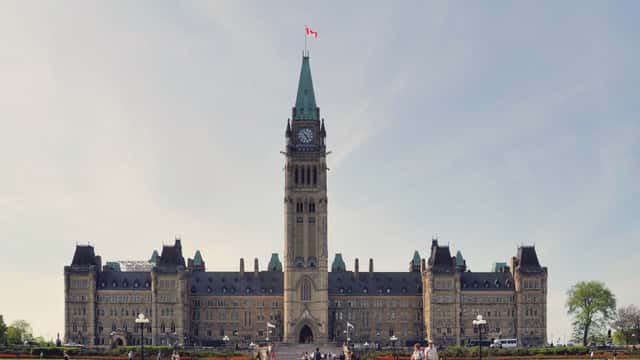
Canada has built a working check against forged college acceptance letters. It has not built a way to deal with what happens after a student arrives. That is the finding of the country's auditor general, and the numbers behind it are stark.
Between 2023 and 2024 the immigration department identified more than 153,000 international students who might not be following the conditions of their study permits. It had funding to investigate about 2,000 cases a year, according to the Auditor General's report, released March 23, 2026.
This article explains the three kinds of fraud involved, what the evidence shows about each, and where the political argument now stands.
One point of fairness first. Much of this fraud is done to students, not by them. In the case that started the reforms, an unlicensed consultant in India had submitted fake letters for students who later faced deportation. We have reported on how fraud cases feed hostility toward Indian immigrants. A person's nationality is not evidence of wrongdoing.
Three different things called "fake schools"#
The phrase covers three separate problems. They have different causes and different fixes.
| Type | What it is |
|---|---|
| Forged letter | A real school's letter, copied or altered |
| Invented school | A college that does not exist |
| No-show student | A real school, a real letter, no attendance |
Forged letters. An agent takes a genuine acceptance letter and changes the name, or builds a copy from scratch. The school never admitted the applicant.
Invented schools. Some letters name institutions that do not exist. They are "fabricated to con students and fool the authorities," University Affairs reported. The magazine said the immigration department identified nearly 1,550 permit applications built on fake acceptance letters in 2023 alone.
No-shows. Here the school is real and so is the letter. The student gets a permit, enters Canada and does not study. A study permit is a way into the country and, for some, into the job market.
The first two are document fraud. The third is a breach of permit conditions. Canada has made real progress on the first two and very little on the third.
Source: Auditor General of Canada, March 2026
Show the numbers
| Group | Students |
|---|---|
| Flagged as potentially non-compliant | 153,000 |
| Funded investigations, two years | 4,000 |
The gap the auditor found#
Our math on the auditor's figures: 2,000 investigations a year is 4,000 across the two years in which 153,000 students were flagged. That is 2.6% of the cases. At that pace, clearing the list would take more than 76 years.
The auditor concluded that the department "fell short on improving integrity," as Daily Hive reported. Her office said dealing with these cases promptly matters so that only genuine students arrive in Canada or stay.
A flag is not a finding. "Potentially non-compliant" covers students whose schools reported them as not enrolled, and also cases where a school did not report at all. Some flagged students changed schools lawfully. The audit does not say how many of the 153,000 broke the rules, and with so few investigations no one can.
The report also found a smaller, harder number. The department identified 800 study permits issued between 2018 and 2023 on the basis of fraudulent documents or misrepresented information, according to a summary of the audit. Those are confirmed cases, not suspicions.
What Ottawa fixed#
Since Dec. 1, 2023, every acceptance letter has to be confirmed by the school that issued it before a study permit is granted. The school logs in to a government portal and says yes or no.
The auditor called that a success. The system verified 97% of more than 841,000 letters between December 2023 and September 2025, and the rest were handled by hand. About 1.4% of letters were flagged as fraudulent, one summary of the report said. By our math that is close to 11,800 letters. Another summary put the share of genuine letters at 94%. The two figures measure different things, and readers should use the audit itself for the exact breakdown.
Officials had given an early count. Bronwyn May, who runs the international students branch at the department, told members of Parliament in late 2024 that officials had "intercepted more than 10,000 potentially fraudulent letters," according to a Globe and Mail report.
Source: University Affairs, Globe and Mail, via MP Jenny Kwan
Show the numbers
| Period | Suspect letters |
|---|---|
| 2023, before verification | 1,550 |
| First year of verification | 10,000 |
The jump has two possible readings. Fraud may have grown. Or the old system missed most of it, and the new one counts what was always there. The second reading is more likely, because the new check looks at every letter and the old one did not. The figures cannot settle which share is which.
Verification also changes who can cheat. An invented school cannot log in to a government portal. A forged letter fails the moment the real school is asked. The cheap forms of fraud have become hard.
What Ottawa missed#
The check happens once, at the application stage. After that the system depends on schools reporting whether students are enrolled, and on the department acting on those reports.
The auditor found weaknesses in both halves. The department did not effectively investigate students already in Canada, Daily Hive reported from the audit. Funding covered a small fraction of the flagged cases.
The reforms had side effects too. Study permit approval rates came in lower than the government intended, and the department does not know why, according to a summary by Moving2Canada. Smaller provinces were hit harder than large ones. Permit extensions for students already in the country outpaced new permits.
That last point matters for the fraud debate. Cutting new arrivals does little about people already inside the system. It also falls on honest applicants and on the colleges that depend on their fees.
- Students face deportation after a consultant in India submitted fake acceptance letters
- Schools must confirm every acceptance letter before a permit is granted
- Officials tell MPs that more than 10,000 suspect letters were intercepted
- End of the period reviewed by the auditor
- Auditor General reports that the department fell short on integrity
- Department says it is centralizing misrepresentation cases
Source: Auditor General of Canada
The case that started it#
The reforms trace to one episode. In 2023 a group of international students applied for permanent residence and were told they faced deportation. The acceptance letters filed with their original study permits were fake. An unlicensed immigration consultant in India had submitted them, the Globe and Mail reported.
The case exposed a blind spot. The letters had passed inspection when the students first applied, in some cases years earlier. The fraud surfaced only when a second application prompted a closer look. Many of the students said they had not known. That is why the fix that followed was aimed at the letter and not at the applicant: ask the school, every time, before a permit is issued.
What changed after the audit#
The department has responded. It confirmed that it is centralizing the work of pursuing misrepresentation involving acceptance letters, DF Immigration reported in October. Until now, follow-up could vary with the officer handling a file. The department also said it would publish new instructions for staff on misrepresentation.
That addresses consistency. It does not, on what has been published, address capacity. We found no announcement of new funding to investigate more than 2,000 cases a year. If one exists, it has not been reported in the sources we reviewed.
Who pays for the fraud#
Three groups carry the cost.
Defrauded students. A finding of misrepresentation can bring removal and a ban on returning for years, even when an agent forged the letter without the applicant's knowledge. Many families borrowed to pay fees that went to a criminal.
Real schools. Universities have set up their own checks. Université Laval built a verification process for suspicious applications and warns applicants that no third party may collect fees on its behalf, University Affairs reported.
Honest applicants. Lower approval rates and tighter caps apply to everyone. Fraud by some has made entry harder for all.
The public cost is trust. Our report on Canada's immigration backlash found that opposition to immigration doubled between 2022 and 2024 before easing. The student program was at the center of that argument.
How an applicant can check a school#
The same logic that protects the government protects a student.
- Look the school up on the government's list. Canada publishes a list of designated learning institutions. Only schools on it can host international students, and each has an identifying number that should match the one on the letter.
- Contact the admissions office directly. Use the address on the school's own website, not one supplied by an agent.
- Pay fees to the school, not to a third party. Schools such as Laval say no outside agent is authorized to collect on their behalf.
How this compares with the United States#
The pattern is familiar. In the U.S. skilled-worker program, the worst abuses were also found late, and the first fix was also a check at the application stage. Our guide to how companies game the H-1B system and our report on documented H-1B fraud cases cover that record.
The Canadian case differs in one way. The intermediary is often abroad and beyond the reach of Canadian police. Our report on smuggling and visa fraud from India describes how those networks work and how the numbers have since fallen.
What is still unknown#
- How many of the 153,000 broke the rules. The audit counts flags, not findings.
- How many invented schools there were. The published figures do not separate fictitious institutions from forged letters of real ones.
- How many students were deceived. No public count separates knowing fraud from victims of agents.
- Whether enforcement money is coming. The department has changed its structure. It has not announced more investigators.
Until those gaps close, the fairest summary is narrow. Canada now catches fake letters before they work. It still cannot say how many people used a real one to enter the country and then walked away from school.
Differing perspectives
How should Canada respond to fraud and non-compliance in its international student program?
Each position is summarized as its supporters make it, with equal weight and in alphabetical order. A summary is not an endorsement; the evidence for each is weighed in the story above.
Fund investigations of students already in Canada
Who holds it: Auditor General Karen Hogan and opposition critics of the Immigration Department
The auditor argues that checking letters at the border is only half the job. Her office found that the department flagged more than 153,000 students as possibly breaking their permit conditions but had money to look into about 2,000 cases a year. On this view the integrity of the program depends on following up after arrival, and a system that cannot investigate what it flags invites more abuse.
In their words: Office of the Auditor General of Canada ↗
Rely on verification at the front door
Who holds it: Immigration, Refugees and Citizenship Canada officials
Department officials argue that the biggest weakness has been closed. Since December 2023 every acceptance letter must be confirmed by the school that issued it before a permit is granted, and officials told members of Parliament that the checks stopped more than 10,000 suspect letters in the first year. They say the tool protects genuine students as well as the system, and that follow-up on misrepresentation is now being centralized.
In their words: Globe and Mail report quoting IRCC's Bronwyn May, reposted by MP Jenny Kwan ↗
Treat students as victims and target the organizers
Who holds it: Universities, colleges and advocates for international students
Schools and student advocates argue that most people caught with a forged letter paid an agent in good faith and did not know it was fake. They point to organized groups that invent institutions and collect fees in a school's name. On this view enforcement should fall on unlicensed consultants and criminal networks, schools should warn applicants directly, and deporting defrauded students punishes the wrong people.
In their words: University Affairs ↗
Cite this article
Patrick Karsh. “Canada flagged 153,000 students as possible rule-breakers. It can afford to investigate 2,000 a year.” 567politics. Published 2026-11-28. https://www.567politics.com/news/canada-fake-schools-acceptance-letters-study-permit-fraud-auditor-general-153000-november-2026
Wikipedia citation
{{cite news |title=Canada flagged 153,000 students as possible rule-breakers. It can afford to investigate 2,000 a year |url=https://www.567politics.com/news/canada-fake-schools-acceptance-letters-study-permit-fraud-auditor-general-153000-november-2026 |work=567politics |author=Patrick Karsh |date=2026-11-28 |language=en}}CSL-JSON for reference managers
{
  "id": "https://www.567politics.com/news/canada-fake-schools-acceptance-letters-study-permit-fraud-auditor-general-153000-november-2026",
  "type": "article-newspaper",
  "title": "Canada flagged 153,000 students as possible rule-breakers. It can afford to investigate 2,000 a year",
  "URL": "https://www.567politics.com/news/canada-fake-schools-acceptance-letters-study-permit-fraud-auditor-general-153000-november-2026",
  "container-title": "567politics",
  "language": "en",
  "author": [
    {
      "literal": "Patrick Karsh"
    }
  ],
  "issued": {
    "date-parts": [
      [
        2026,
        11,
        28
      ]
    ]
  }
}Citations identify this article and its publication date. Assess the reporting and its linked sources before using it as evidence.
Read this article as Markdown or JSON. Cite the original page and retain its sources, dates and qualifications.
Embed this article summary
Paste this HTML into your page. The summary stays linked to the full story and updates with it. No account required.
<iframe src="https://www.567politics.com/embed/news/canada-fake-schools-acceptance-letters-study-permit-fraud-auditor-general-153000-november-2026?theme=auto" title="Canada flagged 153,000 students as possible rule-breakers. It can afford to investigate 2,000 a year by 567politics" width="100%" height="440" style="border:0;max-width:100%" loading="lazy"></iframe>
<p style="font-size:14px">Canada flagged 153,000 students as possible rule-breakers. It can afford to investigate 2,000 a year by <a href="https://www.567politics.com/news/canada-fake-schools-acceptance-letters-study-permit-fraud-auditor-general-153000-november-2026" rel="nofollow">567politics</a></p>
<script async src="https://www.567politics.com/embed.js"></script>