Canada's rate hike lands in the middle of the fight over Carney's deficits
The Bank of Canada blamed energy prices; Conservatives blame borrowing. What the bank, the budget officer and the House vote show before the November 5 budget.
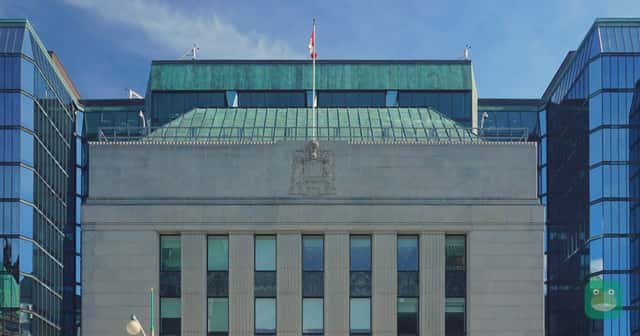
Canada's federal budget, due November 5, will be tabled a week after the Bank of Canada raised interest rates for the first time in more than three years. The two are now tied together in the House of Commons. On October 28 the central bank lifted its policy rate to 2.5%. The same day, the House voted 170 to 153 against a Conservative motion asking Prime Minister Mark Carney to appear before the finance committee to explain his deficits. By Question Period on October 30, Conservatives were arguing that federal borrowing is helping push rates up. Liberals answered that the pressure comes from energy prices and events outside Canada.
What follows sets out what the Bank of Canada actually said, what the independent Parliamentary Budget Officer (PBO) projects, how each party has framed the link, and what the evidence can and cannot settle before Finance Minister François-Philippe Champagne presents his numbers.
The rate decision#
The Bank raised its target for the overnight rate by 25 basis points to 2.5%, with the Bank Rate at 2.75% and the deposit rate at 2.45%, according to the official statement published by the Financial Post. It was the first increase since July 2023, Reuters reported.
The Bank's stated reason was energy. "Given persistently high oil prices, CPI inflation has been around three per cent since April and is expected to rise to about 3.5 per cent by the end of the year," the statement said. It linked high oil prices to the conflict in the Middle East, "now in its eighth month," with "no clear path to resolution." Excluding gasoline, inflation was 2.2% in September, and core measures "remain close to two per cent." The Bank's concern was the next step: "While businesses have mostly absorbed higher input costs so far, Bank surveys suggest cost pass-through will increase over the next year."
Governor Tiff Macklem told reporters the increase was "needed to reduce the risk that elevated energy prices could spill over and become generalized inflation," Reuters reported. He added: "There could be a need to increase the policy rate further, but given uncertainties, we will proceed carefully."
The Bank also raised its growth forecast. It now expects the economy to grow 1% in 2026 and 2% in each of 2027 and 2028. It said the 2027 rebound "is supported by business investment, exports and fiscal measures." The unemployment rate has been about 6.5% for several months, and the Bank said a broad set of indicators "continue to point to some excess supply in the economy." Its next decision is due December 9.
Not every forecaster agreed with the move. Andrew Grantham of CIBC Capital Markets told Reuters he did not expect core inflation to accelerate as much as the Bank fears, "particularly if global energy prices ease a little," and did not think the rate would need to go above 2.75%. Reuters also reported that economists who opposed a hike pointed to core inflation near 2% and a weak job market.
The PBO's fiscal outlook#
The Parliamentary Budget Officer, Annette Ryan, published her Economic and Fiscal Outlook on October 20. It does not include any measures that may appear in the November 5 budget. Its main projections:
- a federal deficit of $63.3 billion in 2026-27, peaking at $70.2 billion in 2027-28 and reaching $67.8 billion in 2030-31, as CBC News reported from the same outlook;
- cumulative deficits of $333.3 billion over five years, with federal borrowing rising by $732.9 billion over the same period;
- federal debt rising from 40.8% of GDP in 2026-27 to 42.6% in 2030-31;
- real GDP growth of 0.9% in 2026 and 1.5% in 2027, down from its June forecast.
The PBO said fiscal room had improved by $37.4 billion since June because of stronger revenues, but that new spending measures, estimated at $52.6 billion over five years, more than offset the gain. It projects that the government will meet one of the two fiscal anchors set in Budget 2025, balancing the operating budget with a $6.2 billion surplus in 2028-29. It will miss the other, a declining deficit-to-GDP ratio, which the PBO expects to rise in 2027-28 and 2029-30.
Two of Ryan's comments go to the heart of the current argument. "A balanced operating budget anchor should not be interpreted as a balanced fiscal position," she said. "By design, it excludes debt-financed capital spending, meaning borrowing and debt can continue to grow while the target is being achieved." She also said that because capital spending and loans to Crown corporations are recorded as assets, federal borrowing "will significantly exceed cumulative budgetary deficits," which "raises questions about whether the current fiscal framework provides a complete and transparent picture of Canada's fiscal sustainability."
A deficit is the amount borrowed in one year. The debt is the total stock of what has been borrowed. The PBO figures above include both, and the two should not be compared directly.
Source: Parliamentary Budget Office, Oct. 20, 2026
Show the numbers
| Year | June outlook | October outlook |
|---|---|---|
| 2026 | 1.1% | 0.9% |
| 2027 | 1.6% | 1.5% |
The vote on Carney's testimony#
On October 25 Conservative Leader Pierre Poilievre wrote to Carney asking him to testify before the Standing Committee on Finance. "The fastest-growing item in your budget is not health, military or seniors' benefits. It is debt interest," he wrote, according to the Ottawa Sun. Poilievre said debt interest would cost the average family of four nearly $6,000 this year. The letter, as reported, did not show how that figure was calculated, and we have not independently checked it. He accused Carney of breaking a campaign promise to "spend less."
The Conservatives then brought an opposition-day motion calling for Carney's appearance. The House defeated it on October 28 by 170 votes to 153, with eight members paired, according to the recorded division compiled by openparliament.ca. Conservative and Bloc Québécois members voted in favor. Liberal and New Democratic members and Green MP Elizabeth May voted against.
In Question Period that day, Conservative MP Pierre Paul-Hus said Carney was "dividing a monumental deficit across three different credit cards": one for current expenditures, one for spending he said was misleadingly presented as "investments," and a third "hidden within Crown corporations," according to the Hansard text posted by Translate Politics. He noted that Stephen Harper and Justin Trudeau had appeared before parliamentary committees. Champagne replied that the government is "always prepared to answer questions before the Standing Committee on Finance." He said "international institutions and the Bank of Canada recognize that there are external factors at play" and that Canada "has the second-fastest growth rate in the G7."
October 30: the argument over rates#
By Friday, Conservatives had made the rate increase part of the case. "In effect, the Governor of the Bank of Canada is hitting the brakes hard, while the Minister of Finance continues to accelerate faster and faster," said Conservative MP Philip Lawrence, according to The Hub's Question Period summary, which draws on the Hill Monitor transcript. Liberal MP Ryan Turnbull replied that "Conservatives this Halloween are handing out tricks and calling them treats." The Hub summarized the exchange this way: Conservatives tied the hike to Liberal borrowing, and Liberals answered that the pressure comes from energy prices.
The Conservative case#
The Conservative argument has three parts. The first is that deficits add to demand at a time when the central bank is trying to restrain inflation, so fiscal and monetary policy are pulling in opposite directions. Lawrence's brake-and-accelerator line makes that point. The second is cost. "Every dollar committed to paying bankers and bond holders to service the debt is a dollar that cannot also pay for a nurse, a hospital bed, support for a vulnerable Canadian or tax relief for a struggling family," Poilievre wrote. The third is transparency. Paul-Hus's "credit cards" charge argues that splitting operating and capital budgets, and borrowing through Crown corporations, makes the deficit look smaller than the government's real borrowing. Finance critic Michael Chong made a narrower point in a party statement on the day of the hike. He said "Mr. Carney cannot control global events driving up energy prices," but argued that the government "can introduce supply side reforms to the economy to increase growth and productivity."
The third point has partial independent support. The PBO itself says borrowing will "significantly exceed" reported deficits under the current accounting and questions whether the framework gives "a complete and transparent picture." The PBO does not use the word "hiding," and accrual accounting of capital assets is standard practice, not something this government invented. The point of agreement is narrower. Reported deficits understate how much new borrowing the government will do.
The government's case#
Liberals argue that the main inflation pressure comes from outside Canada and that their spending is aimed at investment and affordability. Champagne pointed to the Bank of Canada's recognition of "external factors." Government House Leader Steven MacKinnon challenged Conservatives to say what spending they consider inflationary: "Is it the Canada child benefit? Is it equalization? Is it our military spending that has increased and will continue to increase to reach 5% of GDP?" Wayne Long, the Secretary of State for the Canada Revenue Agency and Financial Institutions, said the government was "cutting taxes for 22 million Canadians" and that the groceries and essentials benefit offers $1,900 to families.
The government's case also rests on the logic of its two-budget framework. Borrowing for capital projects, it argues, builds assets that support future growth. The PBO accepts part of this premise and attaches a condition. Canada's longer-term outlook, Ryan said, "will depend heavily on whether recent capital budget investments can translate into stronger productivity, economic capacity and prosperity." Whether that happens cannot be known for years.
What the evidence supports#
On the cause of the hike. The Bank's own explanation centers on energy prices and the risk that businesses pass them on. It does not cite federal deficits as a reason for the increase. That supports the government's description of the immediate trigger. The Conservative claim that the finance minister is "accelerating" while the governor brakes is, as stated, an argument about direction rather than a finding the Bank has made. Treating the timing of the hike as proof that spending caused it would confuse sequence with cause.
On the role of fiscal policy. The Bank's statement also says fiscal measures support the stronger growth it expects in 2027. In his opening statement, Macklem said growth should pick up in 2027 as business investment strengthens, "supported by fiscal measures," and that "with the economy expected to recover, there is less downward pressure on prices to offset these cost pressures." So government spending enters the Bank's forecast as one source of demand. It is not named as the cause of the hike, but it is not irrelevant either. The Bank also said there is still some excess supply in the economy. That weighs against the view that federal spending is currently overheating it.
On cost. Both statements can be true at once: higher rates and larger debt raise the federal interest bill, and the Bank raised rates mainly because of energy. Poilievre's per-family figure is his own estimate. The November 5 budget should give the government's projection for public debt charges, which will allow a direct check.
On the debate itself. MacKinnon's challenge to name the inflationary spending is a fair request for specifics. It does not, by itself, answer the question of whether the overall deficit adds to demand. Conservatives, for their part, have not set out in the sources we reviewed which programs they would cut and by how much.
What other parties said#
The Bloc Québécois voted with the Conservatives to call Carney before the committee. In Question Period on October 30 its MPs focused on Parks Canada job cuts and the climate effects of gas-powered AI data centers, The Hub reported. The NDP voted against the motion but criticized the government from a different direction. On October 29 NDP MP Don Davies said the hike "means higher credit card bills, bigger mortgage payments and more expensive loans for working families" and asked why the government was "failing to bring down the cost of living," according to the Hansard text posted by Translate Politics. His question did not call for lower deficits. Ryan Turnbull, parliamentary secretary to the finance minister, replied that the Bank "and its monetary policy are independent," that inflation "is being driven by conflicts in the Middle East and the oil price shocks," and pointed to child care, dental care, the school food program and the groceries and essentials benefit.
What to watch#
- November 5: Champagne's budget. Key numbers to check against the PBO are the 2026-27 deficit, the operating-versus-capital split, borrowing through Crown corporations, projected public debt charges, and whether the government restates its fiscal anchors.
- December 9: the Bank of Canada's next rate decision. Macklem has said further increases are possible but that there is "no predetermined path."
- Finance committee: although the House rejected the motion, Champagne said ministers are prepared to answer questions there.
Earlier this week we covered Carney's Canada-EU summit in Montréal, which the Conservatives criticized in the same Question Periods. Background on Canada's parties and elections is in our Canada election guide, and our Canada issue watchlist tracks leaders' positions on fiscal and economic questions.
Notes on sources and limits#
This report relies on the Bank of Canada's rate statement and Reuters' account of Macklem's news conference, the PBO's October 20 release, recorded House votes, and Question Period exchanges as transcribed by third-party services that cite Hansard. The rate statement is quoted from the Financial Post's reproduction; Macklem's opening statement is quoted from the Bank of Canada's website. Opinion research on the deficit or the rate hike was not reviewed for this report, so we make no claims about what Canadians think of either. Federal political contributions are disclosed through Elections Canada. We did not identify a donor connection relevant to these fiscal positions and did not review those filings for this story. Our approach is described in our methodology.
Differing perspectives
How should the federal government approach deficits and borrowing in the Nov. 5 budget?
Each position is summarized as its supporters make it, with equal weight and in alphabetical order. A summary is not an endorsement; the evidence for each is weighed in the story above.
Continue investment and affordability measures
Who holds it: Government of Canada, including Finance Minister François-Philippe Champagne
Finance Minister François-Philippe Champagne says the government is ready to answer questions at the Standing Committee on Finance. He says international institutions and the Bank of Canada recognize that external factors are at play, and that Canada has the second-fastest growth rate in the G7. Secretary of State Wayne Long says the government is cutting taxes for 22 million Canadians and offering $1,900 to families through the groceries and essentials benefit.
In their words: House of Commons oral questions, Oct. 28, 2026, via Translate Politics ↗
Reduce deficits and debt interest
Who holds it: Conservative Party of Canada, led by Pierre Poilievre
Conservative leader Pierre Poilievre wrote to Prime Minister Mark Carney that debt interest is the fastest-growing item in the federal budget. He wrote that "every dollar committed to paying bankers and bond holders to service the debt is a dollar that cannot also pay for a nurse, a hospital bed, support for a vulnerable Canadian or tax relief for a struggling family." He says the cost of government drives up the cost of living.
In their words: Ottawa Sun, Oct. 25, 2026 ↗
Cite this article
567 Politics staff. “Canada's rate hike lands in the middle of the fight over Carney's deficits.” 567politics. Published 2026-10-30. Updated 2026-11-02. https://www.567politics.com/news/canada-bank-rate-hike-deficits-budget-nov-5-october-2026
Wikipedia citation
{{cite news |title=Canada's rate hike lands in the middle of the fight over Carney's deficits |url=https://www.567politics.com/news/canada-bank-rate-hike-deficits-budget-nov-5-october-2026 |work=567politics |author=567 Politics staff |date=2026-10-30 |language=en}}CSL-JSON for reference managers
{
  "id": "https://www.567politics.com/news/canada-bank-rate-hike-deficits-budget-nov-5-october-2026",
  "type": "article-newspaper",
  "title": "Canada's rate hike lands in the middle of the fight over Carney's deficits",
  "URL": "https://www.567politics.com/news/canada-bank-rate-hike-deficits-budget-nov-5-october-2026",
  "container-title": "567politics",
  "language": "en",
  "author": [
    {
      "literal": "567 Politics staff"
    }
  ],
  "issued": {
    "date-parts": [
      [
        2026,
        10,
        30
      ]
    ]
  }
}Citations identify this article and its publication date. Assess the reporting and its linked sources before using it as evidence.
Read this article as Markdown or JSON. Cite the original page and retain its sources, dates and qualifications.
Embed this article summary
Paste this HTML into your page. The summary stays linked to the full story and updates with it. No account required.
<iframe src="https://www.567politics.com/embed/news/canada-bank-rate-hike-deficits-budget-nov-5-october-2026?theme=auto" title="Canada's rate hike lands in the middle of the fight over Carney's deficits by 567politics" width="100%" height="440" style="border:0;max-width:100%" loading="lazy"></iframe>
<p style="font-size:14px">Canada's rate hike lands in the middle of the fight over Carney's deficits by <a href="https://www.567politics.com/news/canada-bank-rate-hike-deficits-budget-nov-5-october-2026" rel="nofollow">567politics</a></p>
<script async src="https://www.567politics.com/embed.js"></script>
READ BEYOND 567POLITICS
Alternate sources & perspectives
Independent coverage and primary evidence to help you compare arguments. A link is not an endorsement; perspective labels describe the linked material.
- primary evidence
Monetary Policy Report Press Conference Opening Statement (Oct. 28, 2026) ↗
Bank of Canada
Governor Macklem's explanation of the hike, the role of energy prices and the fiscal measures in the growth outlook.
- primary evidence
Parliamentary Budget Officer Releases Economic and Fiscal Outlook – October 2026 ↗
Office of the Parliamentary Budget Officer
Deficit, borrowing and debt-to-GDP projections and the fiscal-anchor assessment.
- primary evidence
Vote #182 on October 28th, 2026: Opposition Motion (Appearance of the Prime Minister before the Standing Committee on Finance) ↗
openparliament.ca
Recorded division: 153 yeas, 170 nays, eight paired, by member and party.
- primary evidence
Finance · Oral Questions, October 28, 2026: Paul-Hus, Champagne and MacKinnon ↗
Translate Politics (Hansard text)
Conservative 'credit cards' charge and the replies of Finance Minister Champagne and House Leader MacKinnon.
- independent analysis
Bank of Canada raises key interest rate, says another hike possible ↗
Reuters via Investing.com
Rate decision, forecasts and economists who disagreed with the hike.
- independent analysis
Budget watchdog trims economic forecast for 2026 and 2027 amid new U.S. tariffs ↗
CBC News (The Canadian Press)
Independent account of the PBO's growth and deficit projections.
- independent analysis
Pierre Poilievre, Tories to demand Mark Carney testify on deficits and debt interest ↗
Ottawa Sun
Reports Poilievre's Oct. 25 letter, including the debt-interest-per-family claim.
- right argument
Carney's Economic Plan Isn't Working: Bank of Canada Hikes Rates While Growth Remains Sluggish ↗
Conservative Party of Canada
Finance critic Michael Chong ties the hike to spending and debt and calls for supply-side reforms.
- right argument
Liberals Vote Against Presenting a Plan to Save Canadians Money ↗
Conservative Party of Canada
Conservative statement after the motion's defeat, focused on debt interest and the fiscal anchor.
- left argument
Finance · Oral Questions, October 29, 2026: Davies and Turnbull ↗
Translate Politics (Hansard text)
NDP MP Don Davies on higher borrowing costs for working families, and the Liberal reply citing energy prices and social programs.
- other perspective
Lines that landed: Question Period for October 30 ↗
The Hub
Oct. 30 exchanges tying the rate hike to borrowing, plus Bloc Quebecois lines on other issues.
Reviewed 2026-10-30. Primary evidence first: the Bank of Canada governor's Oct. 28 opening statement, the Parliamentary Budget Officer's Oct. 20 outlook, and the recorded House division on the Conservative motion. Reuters and CBC News provide independent reporting on the rate decision and the PBO outlook. Party arguments are taken from the parties' own words: two Conservative Party statements (right argument), the NDP's Oct. 29 Question Period question (left argument, which focuses on household borrowing costs rather than deficits), and Liberal ministers' Oct. 28 replies (government position, recorded as primary evidence because it is Hansard text). Question Period transcripts were read via Translate Politics and The Hub, which cite Hansard and the Hill Monitor transcript; the official Hansard for Oct. 30 was not yet posted when we reviewed. No Bloc Quebecois statement on the rate decision was found. The discovery tool returned only unrelated U.S. bank pages.