Brazil's Chamber votes on Lula's fiscal package as the dollar hits R$6 and the PL plans delays
The rapporteur says seven parties with 278 deputies back the Senate text unchanged; 257 votes are needed, and the opposition wants to reopen four points.
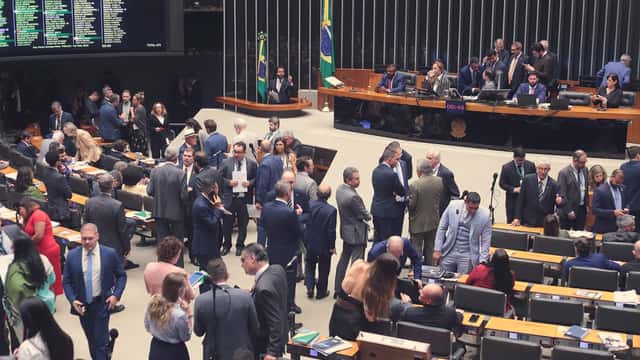
Brazil's Chamber of Deputies is scheduled to vote on Monday, November 23, on the fiscal adjustment bill that President Luiz Inácio Lula da Silva's government sent through the Senate last week. The government is counting on a deal with seven parties to pass it unchanged and send it straight to Lula's desk. The opposition Liberal Party (PL) plans to try to reopen four points the Senate already settled. The vote comes on the morning the dollar crossed R$6 for the first time in 19 months.
The bill, Complementary Bill (PLP) 299/2026, gives the federal government new tools to hold down spending and raise cash. It would allow a 10% across-the-board cut in tax benefits and limit how companies use tax credits to pay other federal taxes. It would also cap real spending growth at 2% in years when the government has to freeze funds. Because it is a complementary law, it needs an absolute majority of 257 of the Chamber's 513 deputies.
This article was written before the vote. The session had not begun when it was published, and the outcome will be reported separately.
What is on the floor#
According to the Chamber's own news agency, the session is set for Monday night. Its goal is to start debate on the bill, and a vote depends on debate ending. The agency says the measures are meant to deliver a primary surplus of about R$18.7 billion in 2027. Because the government expects to close 2026 with a deficit of about R$52 billion, it must improve the result by about R$70.6 billion to get there.
The bill's main tools, as summarized by the Chamber agency and g1, are:
- a 2% ceiling on real spending growth, instead of the 2.5% allowed by the fiscal framework, in years when the government must block spending to hit its target;
- a new 10% linear cut in tax incentives and benefits granted to many sectors;
- authority for the executive to restrict "cross" compensation, in which companies use tax credits from one federal tax to pay another, with different limits by amount; and
- changes to the calendar of federal payments.
Before deputies can vote on the text, they must approve an urgency request. The Chamber's legislative record shows one filed by Paulo Pimenta (PT-RS) and others. It also lists Senator Jaques Wagner (PT-BA), the government's Senate leader, as the bill's author, and Mauro Benevides Filho (União-CE) as rapporteur.
The vote count#
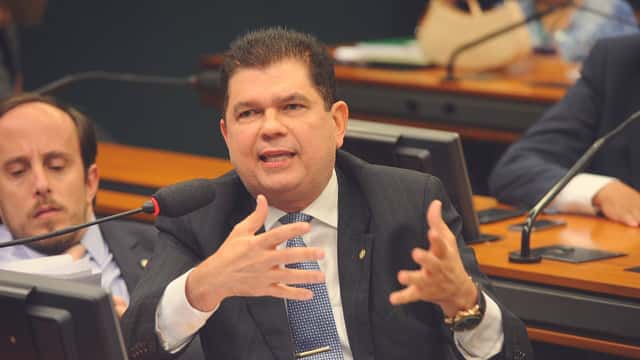
Benevides told O Globo on Monday that he has a deal with seven party caucuses: the Workers' Party (PT), União Brasil, the MDB, the PP, the PSD, the PSB and the PCdoB. By his count they hold 278 seats, 21 more than the 257 needed. That is not the same as 278 votes, because party agreements do not bind every member and not every deputy votes.
He was due to meet the opposition PL and the left-wing PSOL in the early afternoon. O Globo reported the vote was expected at about 6 p.m. Brasília time (4 p.m. Eastern) in a semi-presential session. Speaker Hugo Motta (Republicans-PB) scheduled it for a Monday, a day when the Chamber usually does not vote, which g1 said was meant to send a positive signal to markets.
Benevides kept the Senate's text word for word, so that the bill does not have to go back to senators. "I won't make changes to the text now to keep the fiscal adjustment from going back to the Senate," he told Folha de S.Paulo's Painel column. He said he expected a margin "well wider" than the 257 required.
The government also took a procedural step to add a vote. Lula temporarily removed José Guimarães, the minister in charge of relations with Congress, from his post so that he could return to his Chamber seat and vote, g1 reported. The decree, signed on November 19, was published in the official gazette on Monday. His office said the move was temporary, "at his request," so he could take part in work on parliamentary amendments and in the vote. He is expected to return to the ministry afterward.
Who estimates what#
Officials and lawmakers have attached different numbers to the package, and they measure different things. The chart sets out the main estimates.
Source: g1, O Globo, Ministry of Planning
Show the numbers
| Estimate | Savings |
|---|---|
| Senate rapporteur Eduardo Braga, 2027 | R$50bn |
| Government figure cited by O Globo | R$56bn |
| Planning Minister Bruno Moretti, 2027 (upper bound, Nov. 11) | R$60bn |
| Chamber rapporteur Mauro Benevides Filho, through 2030 | R$72bn |
Senate rapporteur Eduardo Braga (MDB-AM) projected an impact of R$50 billion in 2027, according to g1. O Globo reported that the government cites R$56 billion. Benevides says the savings will be larger, R$72 billion through 2030, and calls the executive's numbers conservative. When Planning Minister Bruno Moretti presented the plan to Congress's joint budget committee on November 11, his ministry said it could save up to R$60 billion in 2027. In his description, that was a R$50 billion cushion for meeting fiscal targets and about R$10 billion for the budget rapporteur to fund programs.
The tax-credit limit is the most contested single piece. O Globo reported that the government expects it to raise between R$12.8 billion and R$18.3 billion in 2027. A g1 survey of Federal Revenue data found companies used R$200.1 billion in credits to pay federal taxes between January and September 2026.
The opposition's plan#
The PL intends to re-present on the Chamber floor the four destaques, or separate votes on specific passages, that the Senate dealt with last week. Opposition leader Cabo Gilberto Silva (PL-PB) confirmed the plan to O Globo.
The passages concern the tax-credit restriction, a R$3 billion annual cap on payments under Comprev (the system that settles pension accounts between the general and public-servant pension regimes), and transfers to states under the Lei Kandir. In the Senate, three of those destaques were rejected and the fourth was withdrawn after a deal raised Lei Kandir transfers for 2027 to 2030. Any change approved by the Chamber would send the bill back to the Senate.
O Globo reported that opposition deputies, speaking privately, acknowledge the main aim is to delay the vote, given the difficulty of finding votes to change the Senate text. The PL was due to hold a closed caucus meeting after seeing the rapporteur to set its floor strategy. 567 Politics has covered the PL's internal split over the Chamber leadership.
The price of the left's votes#
The government's own coalition has its doubts. To win the PT and PCdoB, Benevides said, Moretti promised to look for a way to keep public investment from being sacrificed once the bill becomes law. Benevides has his own bill along those lines, filed before the executive's. "Once this is past and approved, I have Moretti's commitment," he told O Globo.
He told Folha he plans to send the government a set of further proposals in the first week of December, including taking investment out of the fiscal rules. That idea is also backed by the PT caucus and other left-wing parties, the column said. Left-wing critics argued against parts of the package before the Senate vote, as 567 Politics reported.
Markets and industry#
The dollar touched R$6 at about 10 a.m. Brasília time on Monday, its first time at that level since April 8, 2025, before slipping back to about R$5.99, CBN reported. The station linked the rise to market worries that the adjustment will not be enough to stabilize Brazil's debt. Exame counted 16 sessions of dollar gains and five of losses since October 26, the day after the runoff that reelected Lula, and said long-term interest-rate futures were also rising.
Industry has attacked the revenue side. In a statement on PLP 299, the National Confederation of Industry (CNI) said the bill "increases the tax burden" and shifts much of the adjustment onto business. It argued that the tax-credit restriction "does not create revenue," because it only forces companies to pay in cash now what they would otherwise offset. That falls hardest on exporters, it said, which build up credits they can recover only against other taxes. The CNI also said parts of the bill go in the direction it favors, including the 2% spending ceiling. São Paulo's Fiesp and Minas Gerais's Fiemg issued similar criticisms on November 12, according to g1.
Benevides rejects the "confiscation" charge. "There is no confiscation; what will cease to exist is cross-compensation," he told Folha.
- Moretti presents the package to Congress's joint budget committee
- Senate approves the base text 45-31; CNI, Fiesp and Fiemg criticize it
- Lula signs a decree temporarily releasing minister José Guimarães to vote
- Lula calls the bill an "adjustment," not a reform, and rules out social cuts
- Dollar touches R$6; Chamber session scheduled to take up the bill
Source: Ministry of Planning, g1
What Lula says it is#
Lula has played down the package's scale. "In fact, there was no fiscal reform; there was an adjustment so that the federal budget allows us to have governance over the budget next year," he said on Saturday, according to g1. "If we don't have governance, we can't govern." He repeated that he will not cut social programs.
Motta framed it as a matter of stability. "We need to guarantee a more robust economic and fiscal adjustment for the country, so that we have a healthy environment and conditions to keep socially protecting those who need it most," he wrote on social media, as quoted by the Chamber agency.
What comes next#
If the Chamber approves the text unchanged, it goes to Lula for signature. Benevides has argued that quick approval matters for the 2027 budget, which Congress's joint budget committee aims to approve by December 17, according to O Globo. If deputies change any passage, the bill returns to the Senate.
The bill is not the end of the government's fiscal agenda. Moretti's plan includes a deadline for Congress to vote on a separate bill to curb "supersalaries" in the civil service, which CBN reported the government is studying. Earlier 567 Politics coverage explains the package's spending and tax-benefit measures and the fight over the 2027 fiscal target.
Differing perspectives
Should Brazil's Chamber of Deputies pass the PLP 299 fiscal adjustment package as approved by the Senate?
Each position is summarized as its supporters make it, with equal weight and in alphabetical order. A summary is not an endorsement; the evidence for each is weighed in the story above.
Adjust by cutting spending, not by squeezing business
Who holds it: The National Confederation of Industry (CNI)
The CNI says the bill raises the tax burden and again shifts much of the adjustment onto the productive sector. It argues the tax-credit restriction does not create revenue, only forces companies to pay in cash now and delays the return of money that belongs to them, hitting exporters hardest, and that a linear cut in tax benefits fails to separate effective incentives from ineffective ones. It supports the spending-side measures, such as the lower 2% ceiling, but says the bill manages the adjustment more than it tackles its structural causes.
In their words: CNI, Agência de Notícias da Indústria ↗
Change it: drop the tax-credit limits and other contested points
Who holds it: The opposition Liberal Party (PL), led in the Chamber by Cabo Gilberto Silva (PL-PB)
The PL plans to force separate votes on four passages it lost or withdrew in the Senate: the restriction on companies' use of tax credits to pay federal taxes, the R$3 billion annual cap on Comprev pension settlements, and transfers to states under the Lei Kandir. Its leader confirmed the plan, which runs against the government's aim of sending the text straight to sanction. Any change would return the bill to the Senate.
In their words: O Globo, quoting opposition leader Cabo Gilberto Silva ↗
Yes, unchanged now, with more reform later
Who holds it: Chamber rapporteur Mauro Benevides Filho (União-CE) and the seven-party deal he describes
Benevides says he will make no changes now so the fiscal adjustment does not go back to the Senate, and expects a margin well beyond the 257 votes required after clearing up deputies' doubts about tax compensation, the health spending floor and the Lei Kandir. He rejects claims that the tax-credit limits amount to confiscation, saying only cross-compensation will end. He plans to send the government further proposals in the first week of December, including taking public investment out of the fiscal rules.
In their words: Folha de S.Paulo, Painel column interview with Benevides ↗
Yes: balance the accounts while protecting social rights
Who holds it: President Lula's government, led on this bill by Planning Minister Bruno Moretti
The government says the package combines fiscal balance with the preservation of rights, especially for the most vulnerable. Moretti told Congress it gives the government more tools to contain spending, including extra freezes that hold real spending growth to 2%, and a linear cut in tax benefits, creating a cushion to meet its targets without a recessionary adjustment. He said the plan contains no withdrawal of rights, keeps health spending floors on their current terms, and that new social measures will only work in an economy with balanced public accounts.
In their words: Ministry of Planning and Budget (Nov. 11, 2026) ↗
Cite this article
567 Politics staff. “Brazil's Chamber votes on Lula's fiscal package as the dollar hits R$6 and the PL plans delays.” 567politics. Published 2026-11-23. https://www.567politics.com/news/brazil-chamber-vote-plp-299-fiscal-adjustment-benevides-pl-destaques-november-2026
Wikipedia citation
{{cite news |title=Brazil's Chamber votes on Lula's fiscal package as the dollar hits R$6 and the PL plans delays |url=https://www.567politics.com/news/brazil-chamber-vote-plp-299-fiscal-adjustment-benevides-pl-destaques-november-2026 |work=567politics |author=567 Politics staff |date=2026-11-23 |language=en}}CSL-JSON for reference managers
{
  "id": "https://www.567politics.com/news/brazil-chamber-vote-plp-299-fiscal-adjustment-benevides-pl-destaques-november-2026",
  "type": "article-newspaper",
  "title": "Brazil's Chamber votes on Lula's fiscal package as the dollar hits R$6 and the PL plans delays",
  "URL": "https://www.567politics.com/news/brazil-chamber-vote-plp-299-fiscal-adjustment-benevides-pl-destaques-november-2026",
  "container-title": "567politics",
  "language": "en",
  "author": [
    {
      "literal": "567 Politics staff"
    }
  ],
  "issued": {
    "date-parts": [
      [
        2026,
        11,
        23
      ]
    ]
  }
}Citations identify this article and its publication date. Assess the reporting and its linked sources before using it as evidence.
Read this article as Markdown or JSON. Cite the original page and retain its sources, dates and qualifications.
Embed this article summary
Paste this HTML into your page. The summary stays linked to the full story and updates with it. No account required.
<iframe src="https://www.567politics.com/embed/news/brazil-chamber-vote-plp-299-fiscal-adjustment-benevides-pl-destaques-november-2026?theme=auto" title="Brazil's Chamber votes on Lula's fiscal package as the dollar hits R$6 and the PL plans delays by 567politics" width="100%" height="440" style="border:0;max-width:100%" loading="lazy"></iframe>
<p style="font-size:14px">Brazil's Chamber votes on Lula's fiscal package as the dollar hits R$6 and the PL plans delays by <a href="https://www.567politics.com/news/brazil-chamber-vote-plp-299-fiscal-adjustment-benevides-pl-destaques-november-2026" rel="nofollow">567politics</a></p>
<script async src="https://www.567politics.com/embed.js"></script>
READ BEYOND 567POLITICS
Alternate sources & perspectives
Independent coverage and primary evidence to help you compare arguments. A link is not an endorsement; perspective labels describe the linked material.
- primary evidence
Câmara deve votar ajuste fiscal; proposta do governo pretende economizar R$ 70 bilhões ↗
Agência Câmara de Notícias
The Chamber's own account of the session, the R$18.7 billion 2027 surplus target, the R$70.6 billion improvement needed and Hugo Motta's statement.
- primary evidence
PLP 299/2026 – ficha de tramitação ↗
Câmara dos Deputados
Official legislative record: author, rapporteur, urgency request and current status.
- other perspective
Projeto de Lei protocolado pelo Senado vai gerar economia de até R$ 60 bilhões, prevê Bruno Moretti ↗
Ministério do Planejamento e Orçamento
The government's own case for the package, in the planning minister's words.
- right argument
Projeto que vai ser votado no Senado transfere ao setor produtivo maior parte da conta do ajuste fiscal, aponta CNI ↗
Confederação Nacional da Indústria
Industry's critique of the revenue measures and support for the spending-side measures.
- independent analysis
Relator do ajuste fiscal na Câmara diz que tem acordo com sete partidos para aprovação e vai se reunir com o PL ↗
O Globo
Seven-party deal of 278 deputies, the R$56 billion and R$72 billion estimates, and Moretti's investment promise to the PT and PCdoB.
- independent analysis
Oposição vai reapresentar destaques ao ajuste fiscal na Câmara e mira restrições à compensação tributária ↗
O Globo
The PL's plan to re-present four destaques and the R$12.8–18.3 billion estimate for the tax-credit limits.
- independent analysis
Relator do plano Moretti vai sugerir novas medidas fiscais ao governo após votação na Câmara ↗
Folha de S.Paulo (Painel)
Benevides on keeping the Senate text, the confiscation charge, and his December proposals.
- independent analysis
Câmara vota projeto de ajuste fiscal nesta segunda; projeção de economia é de R$ 50 bilhões em 2027 ↗
g1
Bill's main measures, Braga's R$50 billion estimate, Lula's Nov. 21 remarks and tax-credit data.
- independent analysis
Lula exonera ministro para votação do projeto de ajuste na Câmara; medida é temporária ↗
g1
José Guimarães's temporary release from the ministry to vote.
- independent analysis
Dólar bate R$ 6 pela 1ª vez em 19 meses e acumula 16 altas desde reeleição de Lula ↗
Exame
Market reaction on the morning of the vote.
Reviewed 2026-11-23. Every link below was hand-picked from pages 567 Politics opened on Nov. 23, 2026, before the Chamber session began; the vote result is not reflected here. Savings estimates come from different officials and cover different periods, so they are not directly comparable. The Senate consultancy's technical note on the approved text could not be parsed and was not used.